

Selection and Application of Diesel Generator Sets in Data Center Industry ②
2026-08-03
Harmonic load
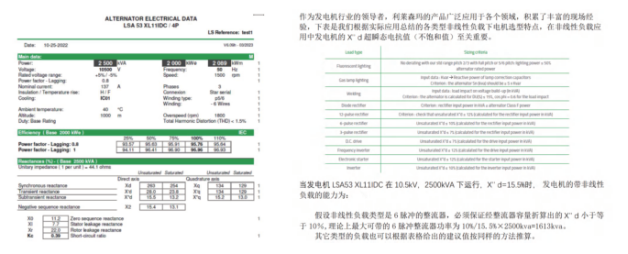
Variable frequency drives of data center IT equipment, UPS loads and refrigeration loads exhibit obvious harmonic characteristics, and the harmonic characteristics of different types of rectifier equipment are not the same. Harmonic loads will have a great impact on the power quality of the power system. Harmonic loads can lead to disturbances in the operation of operating equipment, such as overheating of motors and transformers, abnormal noise and vibration, and overheating of cables. Therefore, it is necessary to evaluate the impact caused by the harmonic load of the access system, in order to prevent the occurrence of faults in the system due to harmonics. The national standard GB/T14549 "Harmonics of power quality in public networks" sets the limits for harmonic voltage distortion tolerated by electrical networks at all levels.
To evaluate harmonic effects, it is necessary to understand the harmonic current content (THD1) of all harmonic equipment, and then calculate the degree of harmonic voltage distortion caused by it in the system based on the transfer resistance of the standby generator set. In short, when selecting diesel generator sets, it is necessary to not only check the engine power depending on the load size, but also calculate the effect of harmonic current depending on the harmonic load size.
Capacitive load
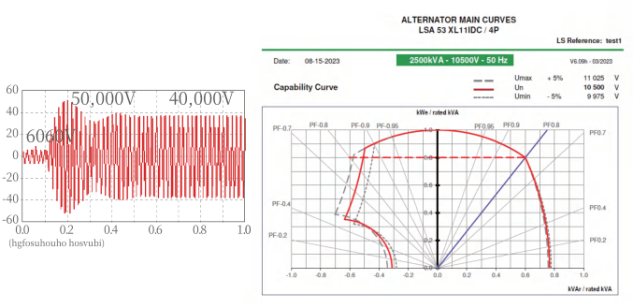
Currently, in the power supply system of IT equipment in the data center, there is a capacitive load on the electrical equipment, due to which the load characteristics of the system show operating characteristics exceeding the previous power factor, which puts higher demands on the technical management of the corresponding power supply system. Capacitive loads are associated with two important hazards in the power supply system, namely, the resonant overvoltage of the generator set at light load and the possible instability of the system at full load.
The power supply system strictly prohibits operation at high power factors. The electric power industry has clear rules for reactive power management: they not only require electricity consumers to prevent reactive power from flowing back into the electrical grid, but also require that the generator have a certain ability to absorb reactive power in order to absorb the reactive power generated by the power system itself.
Possibility of fast parallel system operation
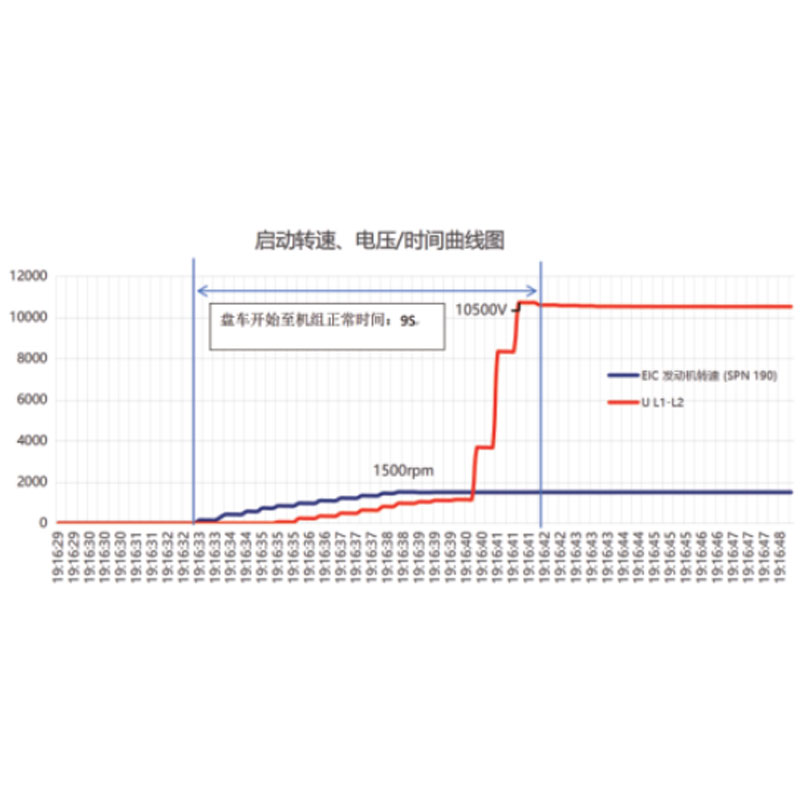
The data center power backup system mainly consists of UPS and diesel generator sets. A static UPS with batteries provides uninterrupted power supply to the data center, while a diesel generator set can continue to provide uninterrupted power supply after a short circuit in the UPS network. Cooperation between the two is very important. In addition to the choice of harmonics and power, time interactions must also be considered. If a diesel generator set can be brought into service quickly, this can significantly save the investment in UPS static batteries and reduce the battery footprint. The battery also needs regular maintenance and replacement, so it is very important to reduce the operating time of the diesel generator set and ensure fast supply of electricity to the diesel generator set.
-


-
-


WeChat

-
WeChat