

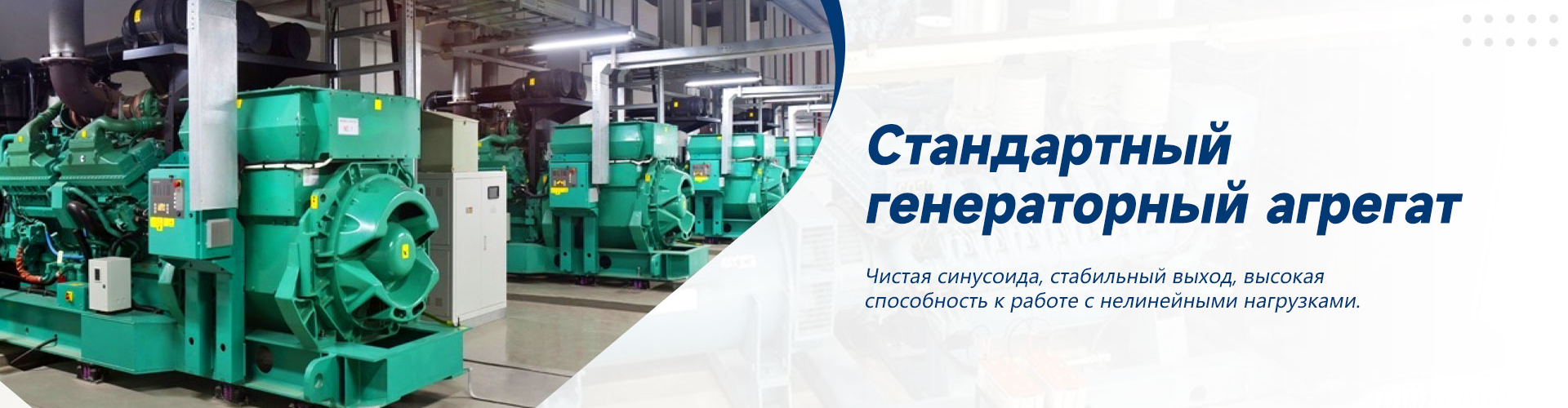
Where to buy a cheap low noise 150 kW generator set?
2026-02-22
Recently I was looking for just such a unit for a project - 150 kW, quiet and affordable for the money. I’ll say right away: “cheap?” and ?low noise? in one sentence - this is already a red flag. But there are real options if you understand what the price consists of and where to look.
Why ?cheap? and ?low noise? rarely meet together
This is where many customers fall into a trap. They want it like on a large construction site - it will work, but not buzz, and at the same time meet the budget as for a regular open generator. The design of the low-noise casing, high-quality noise-absorbing insulation, vibration supports - all this adds to the cost. Sometimes up to 30-40% compared to the base model. A cheap low-noise option often turns out to be just a conventional installation in a cheap casing, which rattles and rattles in the second month of operation.
I got burned by this myself five years ago. They allegedly bought a “European assembly?” at an attractive price. It turned out that the casing was made of thin steel, without proper damping. Six months later, the customer complained that the neighbors were indignant - the noise was even higher than the stated 75 dBA. I had to pay extra for modifications from local specialists. Conclusion: saving on casing design almost always backfires.
Therefore, now, when I say “cheap”, I mean the optimal ratio, and not the minimum price tag. You need to look at the configuration: which engine (for example, Weichai or Cummins), which alternator (Leroy Somer, Stamford), the thickness of the metal casing, the noise absorption class of the materials. Sometimes it’s more profitable to take a simpler model, but with a good basic engine, and buy additional sound insulation and install it locally - but this is for those who are ready to tinker.
Where to look: the market, dealers or directly from the manufacturer?
The classic way is to go to local dealers. Plus: you can see, touch, and there is often service. Minus: their markup. Forlow noise generator set 150 kWthe markup can be significant, especially if the brand is well-known. The second option is used equipment markets. It’s risky, but if you have your own mechanic who can assess the condition, you can find a good option. I once saw a Perkins installation with a casing, excellent condition, sold due to bankruptcy of the warehouse. But it's a lottery.
Now I am increasingly looking towards direct contacts with manufacturers, especially those who have representative offices or partners in the CIS. This eliminates multiple middlemen. But here it is important not to run into a “facade”? company. I check the history, ask for a video from production, a test run of a specific installation. One of the interesting options that I have come across lately is the companyYuke (Shandong) Electrical Technology Co.,Ltd. They are not as popular as giants like FG Wilson, but they have their own design bureau and they work to meet specific requirements.
I went to their websitevoyoko.ru. It is clear that the brandYuke Electricgrew out of the DEVER team, which has been working on the topic of energy technologies since 2003. This is not a guarantee, but a hint that the company was not created yesterday. I was attracted by the fact that they position themselves as an innovative enterprise with a full cycle: from R&D to construction. For me, this means that we can discuss customizing the same casing or control system for a project, and not just choose from a catalog. The price tag with this approach is often more flexible.
What to look for in the specification besides price and dBA
When you receive a commercial offer, the main thing is not to focus only on two numbers: cost and noise level. Noise, by the way, always needs to be clarified: at what distance it is measured (usually 1 or 7 meters). For a 150 kW low-noise installation, a good indicator is 70-75 dBA at 7 meters. If they promise 65 dBA, it’s worth checking to see if they’re exaggerating.
I definitely analyze the specification by components. Engine: resource up to capital, availability of spare parts in the region. Forgenerator set 150 kWWeichai, Yuchai, Cummins are often installed. The first two are cheaper to maintain. Alternator: it is better to have a brushless one, it is more reliable. The cooling system is almost always liquid at this power, look at the volume of the radiator.
And here is an important point that many people miss - the control system. A simple panel with analog instruments or a modern digital one with remote monitoring? The price difference can be thousands of dollars. For a construction site, maybe analog is enough. For constant backup power to an object, it’s worth thinking about “smart” power supply. system. The same Yuke Electric, judging by the description on the website, has precisely its strong point - integration and technical consulting. You can ask them to comment on the best management option for your tasks; sometimes they offer solutions that you didn’t initially consider, but which save money in the long run.
Logistics, customs and ?hidden? expenses
If you buy directly from a foreign manufacturer, like a Chinese one, then it’s “cheap?” in EXW incoterms can quickly become ?expensive? by the time of launch on site. In your head you need to immediately add the cost: sea freight (installation of 150 kW is already a full-fledged container), insurance, customs clearance (duties, VAT), certification (especially if you need a TR CU certificate of conformity).
I worked on a project where the customer allegedly chose the cheapest FOB option from China. As a result, the dimensions and weight for land transportation across Russia were incorrectly calculated, and special transport had to be hired, which ate up all the savings. Now I always ask the supplier not only for a technical passport, but also for a detailed packing list with the dimensions and weight of each item. Good manufacturers who work for export provide this without problems and help with documents for customs.
Companies that likeYuke (Shandong) Electrical Technology Co.,Ltd, claim a full range of services, including equipment supply and engineering construction, often offering DAP delivery terms or even full installation supervision. This, of course, is more expensive at the contract stage, but it saves headaches. For the first experience of direct procurement, this option may be safer.
Final choice: my practical considerations
So, where can you buy a cheap (relatively) low-noise 150 kW unit? There is no universal answer. It all depends on urgency, budget, willingness to take risks and availability of in-house technical specialists.
If the project is urgent and there is no time to wait 2-3 months for sea transportation, I go to a trusted local dealer with a good warehouse. I overpay, but I receive it quickly and with a guarantee of service here. If deadlines allow, and the budget is tight, I begin to study direct manufacturers. I send requests to several, including people like Yuke Electric. In the request I immediately indicate: I need a detailed specification for the components, delivery conditions, a video of a test run under load, a list of documents provided for customs and a reference list for deliveries to the CIS.
For me personally, the best way now is to find a manufacturer with an engineering approach who is ready to discuss the project, and not just sell hardware. Because it's ?cheap? in the end, this is when the installation works out its life without problems, and not when you save 10% on the purchase, but then spend 20% on improvements and downtime. Sometimes it’s better to pay a little more, but get a unit assembled to suit your conditions, with proper sound insulation “out of the box?” and with clear support. In this regard, companies that, as stated in the descriptionYuke Electric, combine R&D, technical consulting and construction, and look promising for complex or non-standard tasks. But this is a topic for a separate conversation and personal communication with their engineers.
-


-
-


WeChat

-
WeChat