

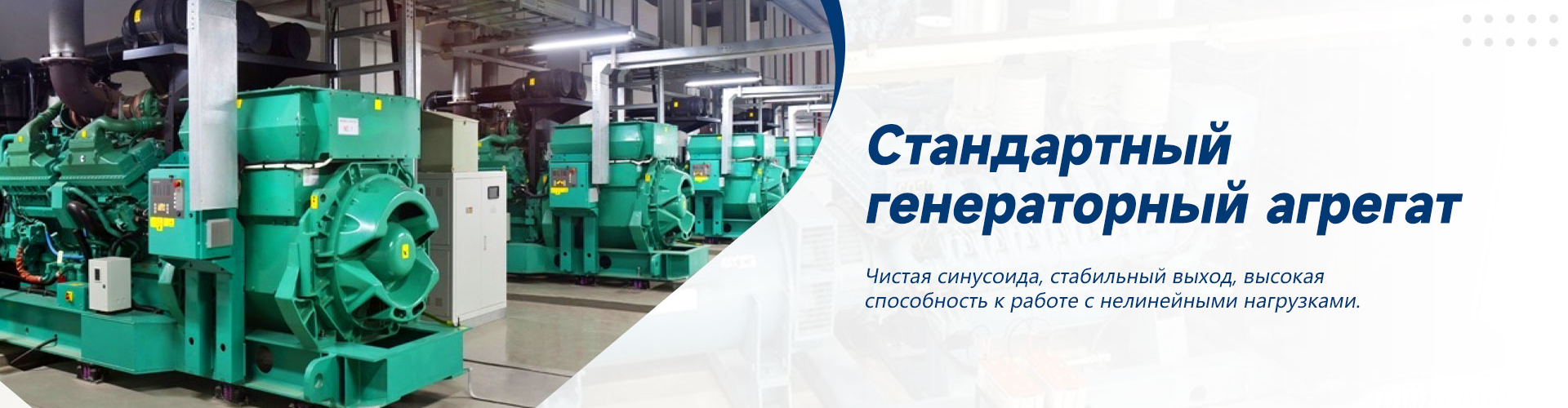
Cheap gas power plant: who is the main buyer?
2026-02-23
When you hear “cheap gas power plant?”, you immediately imagine either private owners saving on everything, or some dubious resellers. But the reality, at least from what I have seen on the market for ten years now, is much more interesting and not so obvious. Many people mistakenly believe that the main driver here is pure price, and that’s all. In fact, cheapness is just a door through which one enters, but who exactly enters and why is a much more subtle question, related to specific operating conditions, and not simply to the desire to save money.
Who is really attracted to the low price?
If we discard retail buyers for a dacha or garage (their flow is stable, but they do not form the main volume), then the picture changes. The main buyer for whom the segment of low-cost gas power plants operates is small and medium-sized businesses with cyclical or seasonal loads. We are talking about greenhouse farms, small processing plants in regions where there is a network, but its quality and stability leave much to be desired. They don't need a power plant ?forever? as the main source. They need a safety option for periods of power surges, planned outages, or during the peak season, when the power is not sufficient and connecting an expensive stationary installation is unprofitable.
Here lies the key point: they are not buying a ?power plant? as such, but rather a solution to the problem of outages or shortages of power with minimal capital investment. Therefore, the parameter ?cheap? becomes critical. Often they look at installations in the range of 50-200 kW, made in China, with fairly simple automation. The risks of low durability do not frighten them, since the operating mode is not supposed to be round-the-clock, but rather emergency-seasonal. The calculation is simple: even if the unit lasts not 15 years, but 7-8, it will already pay for itself by preventing downtime during critical periods.
Another category is contractors involved in temporary power supply to construction sites. For them, mobility and initial cost are often more important than efficiency and resource. I bought it, served it for 1-2 years, and sold it with minimal depreciation. In this segment, there is also a constant search for a balance between price and reliability. I have seen cases where people took frankly weak models, tried to push them to the limit, and quickly broke down. But for them it was a conscious risk - they included possible repairs or replacements in the estimate from the beginning.
What are budget sellers silent about? solutions?
The main thing that is kept silent in the pursuit of a low price tag is the cost of ownership. A cheap gas power plant may have an acceptable heart - the engine, but weak "periphery": control system, automatic transfer of reserve (ATS), build quality of the generator part. In practice, this results in frequent minor breakdowns, sensitivity to the quality of gas (especially liquefied gas), and difficulties in finding spare parts for a specific model after 3-4 years.
I remember one project for a vegetable storage. The client bought an inexpensive station, delivered it, and installed it. Everything worked until the season began and the load became floating. The overload protection worked, but due to the simplified logic of the controller, the system could not smoothly return the load after a reset. We had to make changes to the control scheme, in fact, pay extra for modifications. As a result, the savings on the purchase were partially “eaten up?” these unplanned jobs. The client concluded: next time he will look at ready-made complexes, where the automation has already been adapted for such scenarios.
Hence an important nuance: the buyer of a cheap station is often not an energy specialist. He buys a “box” that should just work. And when problems arise with setup, coordination or maintenance, he finds himself at the mercy of the supplier or service company. Therefore, the reliability of the supplier, its ability to provide technical support and the availability of spare parts in stock in the region are no less important factors than the price in the price list. Sometimes even more important.
The role of integrators and niche manufacturers
This is where companies appear that work not just as hardware sellers, but as technology partners. They can offer that same balance. For example, take a proven power plant as a basis, but equip it with a better control system, adapt it to the specific requirements of the client - be it working on biogas or integrating it into a complex microgrid system.
As an example I can giveYuke (Shandong) Electrical Technology Co.,Ltd(Yuke Electric). They are positioned as an innovative enterprise combining R&D, technical consulting and equipment supply. Their approach, judging by the projects I have encountered, is often based not on selling the cheapest unit, but on offering the optimal solution from a life cycle point of view. You can read more about their approach on their websitevoyoko.ru. That is, they work with exactly the same audience - businesses that want to save money, but do not want headaches. Their strength is their ability to carry out engineering and offer customization even for a relatively inexpensive station, which ultimately increases its value for the end user.
Such companies often become the link between the manufacturer of low-cost electrical units and the demanding market. They are “growing up” product to a state acceptable for industrial use, albeit limited. This is their niche. They do not compete directly with giants like Caterpillar on price or resource, but they benefit from flexibility and understanding of the local needs of that “core customer”.
Typical purchase scenarios and mistakes
How does a transaction usually take place? Most often, a request is generated after some kind of incident: the power was turned off for a day, products spoiled, or losses were incurred. The manager gives instructions: ?Find a backup power source. Not very expensive? The manager enters the market, sees the price range, and begins to compare kW and rubles. And here the first mistake is made - comparison based on nameplate power without taking into account real conditions: altitude above sea level, ambient temperature, fuel quality. A cheap 100 kW station in ideal laboratory conditions and at a real facility in the cold, operating on liquefied gas with a high propane content, are two different stations. Its real return may fall by 20-30%.
The second mistake is ignoring the cost of installation and connection. A budget power plant is often supplied in a minimal configuration: frame, engine, generator, panel. Everything else - the casing, the noise reduction system, the exhaust system, the foundation, the gas supply, the electrical wiring - are separate expense items that can amount to up to 40-50% of the cost of the unit itself. An unprepared buyer experiences a shock when he receives a final estimate.
Third is service. Many people think: “I’ll buy it, install it, and forget it?” But a gas piston installation, even the simplest one, requires regular maintenance: changing oil, filters, spark plugs, checking valves. If you don’t do this, a cheap unit will die very quickly, and the savings will turn into a direct loss. Smart buyers immediately budget for a service contract or train their staff. Stupid people then look for someone to blame.
Conclusions: the final portrait of the buyer
So who is he, the main buyer of a cheap gas power plant? This is not an abstract “thrifty man?”. This is usually a representative of a small or medium-sized business, often in the agricultural, processing or service sectors, who:
1. Faces the problem of unreliable central power supply or periodic power shortages.
2. Has a clear, often seasonal, economic calculation, where downtime from interruptions is more expensive than investing in a backup source.
3. Seeks minimal capital investment at the start, recognizing (or not) potentially higher operating costs in the future.
4. Values simplicity and speed of solution deployment, sometimes at the expense of long-term reliability.
5. More and more people are beginning to pay attention not only to the price tag of the unit, but also to the reputation of the supplier, the possibility of technical support and the availability of service.
The market for low-cost gas power plants is a market of compromises. The buyer here pays not only with money, but also with his time, attention to operation, and willingness to take risks. There is no perfect solution. There is a more or less successful hit on a specific business problem. And the main task of the seller or integrator in this chain is not to sell the cheapest kilowatt, but to help the client correctly calculate this compromise and minimize hidden risks for him. This is precisely what competition is now based on among those who want to work in this segment not as a one-time seller, but as a long-term partner. Kind of the sameYuke Electric, which rely on technological innovation and an integrated approach even in this seemingly price-oriented segment.
-


-
-


WeChat

-
WeChat