

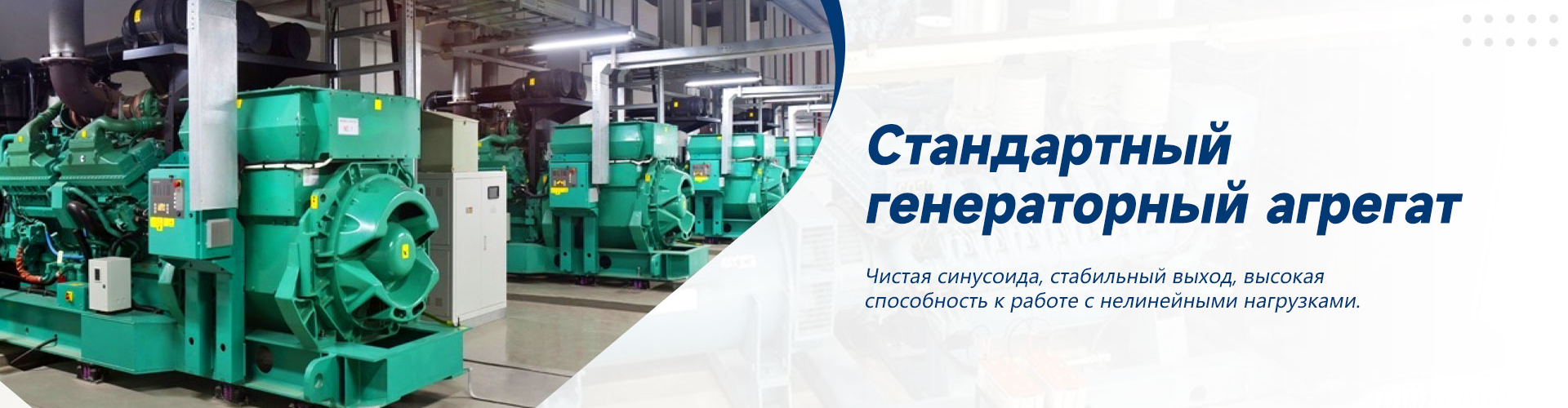
Cheap diesel power plant: whose country is the leader?
2026-02-23
When they talk aboutcheap diesel power station, they immediately think about China. But it's not always that simple. Many in the industry are mistaken in thinking that a low price is only about the country of origin. In fact, everything comes down to the chain: from casting the cylinder block to assembling the generator set on site. And this is where leadership floats. Sometimes it’s cheaper to bring a ready-made unit from India, sometimes it’s cheaper to bring a frame from China, and install a European engine. There are rakes everywhere.
What does "cheap" really mean? in this business?
The concept of ?cheap? very deceptive. The client calls and asks for “the most inexpensive diesel power plant?”. You start to find out: why? For permanent work on a construction site, for backup in a hospital, or for seasonal use on a farm? Experience shows that the lowest price per kilowatt often comes from Chinese manufacturers, but only when we are talking about large quantities and standard configurations. But a nuance immediately emerges: who makes the “heart?” - engine? If this is a Chinese analogue of Perkins or Volvo Penta, then the price may indeed be attractive, but there may be questions regarding the service life up to 10,000 hours. I personally saw how such installations began to “cry” at a facility in Kazakhstan. oil after two seasons of intensive work. The cheapness of the initial purchase resulted in downtime and expensive repairs.
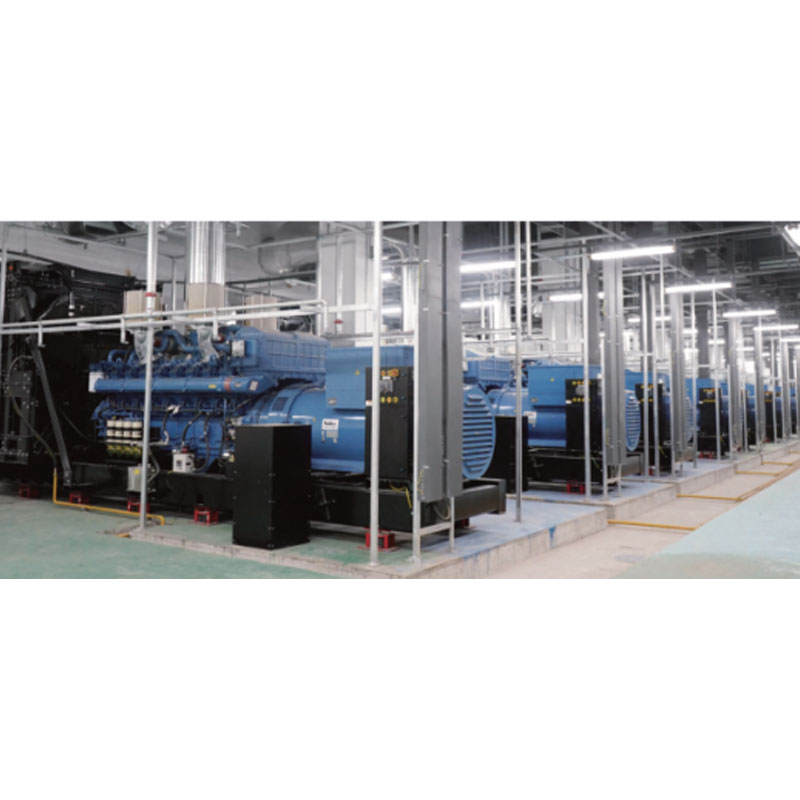
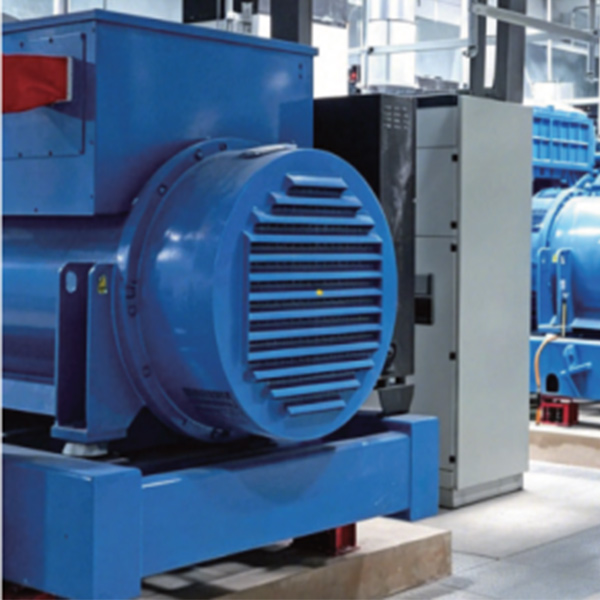
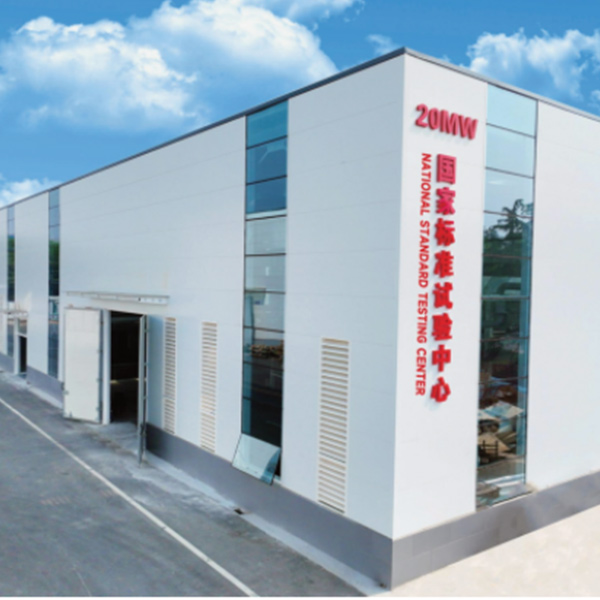
But if you take a ready-made power unit - say, a John Deere or MTU engine, assembled in China at a factory with good quality control, then the picture changes. The price is higher, but the offer package is different. Some Chinese technology companies are doing just that: licensing technologies or creating joint ventures. For example, on the siteYuke (Shandong) Electrical Technology Co.,Ltd (voyoko.ru) it is clear that they position themselves as an innovative enterprise that combines R&D and equipment supply. This is no longer a handicraft assembly, but an attempt to reach the level of added value. But again, for the end buyer the key question is: how innovative and “brand” is this? influence the final cost per kilowatt? Often - not much if production is localized in Shandong.
Therefore, when answering the question “is it cheap?”, you need to look at the total cost of ownership. A cheap power plant from a country that is a leader in mass production can be expensive to operate. Conversely, a relatively expensive installation from the same Chinese manufacturer, but with competent engineering and high-quality components, can provide great benefits in the long term. This is the main professional pitfall, which is rarely written about in catalogs.
Player countries: unexpected turns
If we discard stereotypes, the picture turns out to be mosaic. Of course, China is a manufacturing giant. But ?production? is a broad concept. There are hundreds of factories there that make everything from cheap household generators to serious industrial installations. Their strength lies in complete vertical integration and colossal volumes, which allows them to keep prices low. When we purchased a batch for a project in Siberia, we considered the option of a plant in Weifang. Prices were 20-25% lower than their Turkish counterparts. But the specification for frost resistance (-40°C) required improvements, and these “inexpensive” ones improvements ate up some of the benefits.
Türkiye is a separate interesting player. They are often called ?European China? in a good way. They masterfully work at the interface: they can supply a good engine (often their own or a licensed one), use European components for the control system (such as Deep Sea Electronics), assemble it into a high-quality casing and offer it at a price that competes with Chinese mid-range brands. Their advantage is geographical and mental proximity to the CIS, fewer problems with logistics and customs. For many regions of Russia, a Turkish power plant is the optimal “price-quality” ratio, the verycheap diesel power stationin quotation marks reasonable savings.
What about India? This is often overlooked. India is a powerful manufacturer of diesel engines (for example, Kirloskar). And their complete power plants can be very, very inexpensive. But, according to my observations, there is a problem with the assembly culture and quality control at the output. I came across a situation where, out of one batch of three installations, two worked perfectly, and in the third the phasing on the generator terminal block was mixed up. It’s a small thing, but at the site, during startup, this led to the failure of several pumps. So the low cost here is sometimes offset by increased risks, requiring very strict input control.
Case study: when is a ?leader? let me down
I would like to give an example that clearly illustrates that the country of origin is not the main indicator. We had a project - to provide energy to a remote geological exploration camp. The customer was chasing the minimum budget cost. We chose, as it seemed then, the best option:diesel power plantChinese assembly, but with a well-known engine brand (Chinese license for the European model). The price was really low.
The following was revealed on the spot. The unit arrived and was installed. But the automatic start system from the ATS (automatic transfer switch) was unstable. Engineers dug around on site, changed relays, and checked wiring. It turned out that the problem was in the firmware of the control unit itself, which was made “custom” by the same assembly plant. The documentation for this firmware was only in Chinese, and technical support responded with a long delay. As a result, in order not to disrupt the work, we had to install an external, third-party control unit. All the savings were spent on the urgent purchase of this unit and the work of engineers. The leading country in terms of price? Yes. But the overall effectiveness of the project was in question.
This incident forced us to reconsider our approach. Now we always include in the estimate not just the cost of “hardware”, but the cost of “turnkey”, including the adaptation of control systems to customer standards and the availability of accessible technical support. Sometimes it is better to pay 10% more, but deal with a supplier who has an engineering team in your region, as, for example, statesYuke Electricon its website, offering a full cycle from consulting to construction. This is not an advertisement, but a statement of fact: such a structure of services often neutralizes the risks inherent in the initially low price of the equipment.
Where to look for balance today?
So, who is the leader in the “cheap” segment today? There is no clear answer. It all depends on the parameters. For one-time, non-critical tasks, where downtime is possible, you can certainly take the most budget-friendly Chinese option. For critical infrastructure, where the cost of downtime is high, you need to look at assembly in Turkey or even localized production in Russia/Belarus with well-known components, although this will no longer be “cheap?” in its purest form.
An interesting trend in recent years is Chinese companies that are no longer just factories. They invest in R&D, like the sameYuke (Shandong) Electrical Technology Co.,Ltd. Their product may be more technologically advanced and, importantly, better adapted to the specific requirements of the CIS markets (climate, fuel quality, power surges). And the price can remain competitive precisely due to scale and in-house developments, and not just cheap labor. This changes the balance of power.
My final, slightly chaotic conclusion, based on practice: the leading country in the “cheap” category. - this is still China, but only if we talk about the bare price of equipment at the plant terminal. But when you look at cost of ownership and reliability, the leadership erodes. Türkiye and even some Russian assemblers who work competently with Chinese and Indian components can give a more profitable final result. Therefore, the question is “whose country is the leader?” gradually loses its meaning. More important is who the assembler is, what reputation and engineering support he has, and from what components (and from what countries) he assembles hisdiesel power plant. This is real professional calculation, and not a search for a label on a map.
Instead of a conclusion: what price lists are silent about
When working with a request for a cheap solution, you should always remember about hidden clauses. The first is logistics and customs. A container from China may take a long time to arrive, and certification issues may arise at the border. The second is commissioning. On cheap installations it often has to be done from scratch. on your own, because it is not included in the price. The third is spare parts. How accessible and cheap are filters, belts, and injectors for a specific model? Sometimes a model is discontinued after a year, and you are left with a unique unit for which nothing can be found.
And one last thing. Often truecheap diesel power stationIt turns out not when you bought the cheapest “hardware”, but when you correctly calculated the required power, took into account all the loads and chose the model that has the optimal service life for a specific operating mode. Overpaying for excess capacity is also a waste of money. This is not taught in catalogues, it comes with experience, often bitter. Therefore, perhaps the main leader in this matter is not the country, but a competent calculation engineer on the buyer’s side. Without it, any, even the most advanced power plant from any country, can turn into a very expensive problem.
-


-
-


WeChat

-
WeChat