

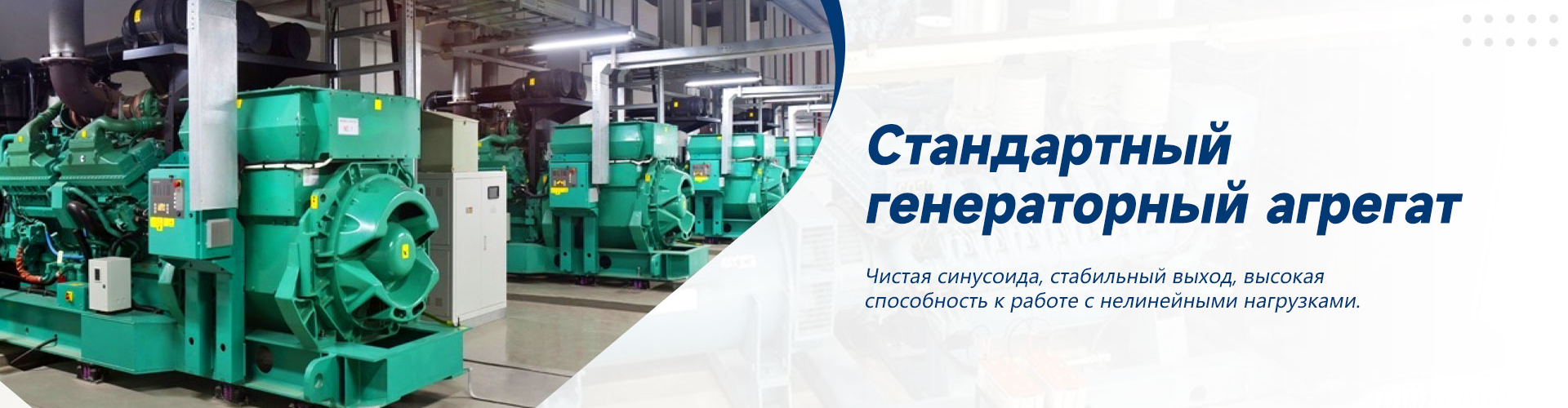
Cheap gas generator: the main buyer country?
2026-02-13
- Who is looking for ?cheap? and what does this mean
- Why our region? Unobvious reasons
- Chinese supplier: not just a factory, but a partner with an engineering bias
- Failed attempts and lessons: when is it ?cheap? comes out sideways
- The future of the market: cheap is no longer synonymous with low quality
Everyone talks about cheap Chinese generators, but few people understand where they actually flow. Many people immediately think about Africa or some emerging markets. This is logical, but in recent years the picture has become much more interesting and, let’s say, not so clear-cut. I’ll try to sort it out based on what I saw myself.
Who is looking for ?cheap? and what does this mean
When we say “cheap gas generator?”, we need to immediately decide: what kind of device is this? Often these are models of low and medium power, from 2 to 10 kW, assembled on standard, well-run engines of type 190 or 192. Their main advantage is the price, which can be one and a half to two times lower than their European or Japanese counterparts. But there is a philosophy behind this price.
The buyer of such a product is not necessarily someone who has no money. This is often the one who counts every penny in a business where the generator is a consumable item and not a long-term investment. A striking example is small construction teams, mobile retail outlets, and small workshops. What is important for them is not the MTBF of 10 thousand hours, but that it just starts today, works a shift, and we’ll see what happens in a year. This is pragmatism in its purest form.
And here a key point arises: the main buyer of such units over the last 3-4 years has become not just any single continent, but a whole layer of countries with one common feature -unstable centralized power systemor a high proportion of seasonal/remote work. And here, unexpectedly, the countries of the CIS and Eastern Europe come out on top.
Why our region? Unobvious reasons
You might think that in Russia or Kazakhstan everything is fine with electricity. In cities - yes. But as soon as you move a hundred kilometers from a major center, problems begin. Old networks, frequent preventative shutdowns in villages, and simply the desire to have an independent source in the country or in the garage. The demand is huge.
But the main driver is small business. I myself have seen how entire clusters of greenhouses and small wood or metal processing workshops are growing in the suburbs. Connecting an industrial line there is time-consuming and expensive. Acheap gas generatorfrom China solves the issue in a couple of days. They buy it, use it intensively for a season (in the summer at a construction site, in the winter for heating a trailer), and then often sell it or simply squeeze it out. until completely worn out.
Another important aspect is climate. Cheap Asian generators are often criticized for their poor preparation for frost. But local craftsmen have learned to quickly modify them: they install pre-heaters and insulate the casings. The result is an economically profitable hybrid: low starting price + small investments in adaptation. In Africa, for example, this is easier, but there is a different type of wear and tear - dust and heat.
Chinese supplier: not just a factory, but a partner with an engineering bias
When you order a batch of such generators, it is important to understand who you are working with. The market is flooded with intermediary trading companies that simply resell boxes. It is much safer to deal with a manufacturer who does the development themselves. For example, a companyYuke (Shandong) Electrical Technology Co.,Ltd(Yuke Electric). It is no coincidence that they grew out of the DEVER engineering team, founded back in 2003 in Qingdao.
Their websitevoyoko.ruis not just a catalogue. It shows that they position themselves as a technology company combining R&D, consulting and supply. For the buyer of cheap generators, this means that you can not just buy “hardware,” but get a model already adapted to certain requirements - say, with a reinforced starter or a specific socket panel. This is no longer a mass market in its pure form, but a flexible approach to the budget segment.
Working with suppliers like Yuke Electric, you can see the difference. They can send not just a commercial proposal, but a technical note on modifying the cooling system to work in dusty conditions. This is valuable when your clients are the same builders or farmers who will not take care of their equipment.
Failed attempts and lessons: when is it ?cheap? comes out sideways
Of course, not everything is smooth sailing. I had an experience several years ago when we imported a batch of super-budget generators from one little-known factory. The price was tempting. But in the very first winter, complaints began to pour in: aluminum cylinder heads developed microcracks after sudden cooling, plastic fuel valve caps burst in the cold.
We had to urgently organize service, import spare parts, lose money and reputation. The conclusion is simple:cheap gas generator- this does not mean “collected on the knee?”. This means that the manufacturer saved on the engine brand (it did not supply Briggs & Stratton, but its Chinese licensed analogue), on the thickness of the frame metal, and on the configuration (without additional filters). But he should not skimp on basic engineering logic and casting quality.
Now we look more meticulously at technical documentation. If the supplier, like Yuke, has its own engineering developments and is ready to provide reports on vibration or thermal cycling tests, this is a serious plus. This is no longer a blind purchase, but a conscious choice in the budget segment.
The future of the market: cheap is no longer synonymous with low quality
The trend I am seeing is a gradual ?washing out? outright trash from the market. Buyers in Russia, Ukraine, and Belarus have become more literate. It is no longer carried out at the lowest price in the column. He looks for the optimal ratio and checks reviews.
This forces even manufacturers of budget lines to invest in quality control and some innovations. For example, digital inverters are increasingly appearing on inexpensive models, which provide more stable current for sensitive electronics. This is a direct response to a market request: people not only need light in the house during a blackout, but also for their laptop and router to work.
So, back to the question in the title. Main buyer country? It is less a country than a type of economy and infrastructure. These are regions where there is a demand for energy “here and now”, where business is cyclical and mobile, and network reliability leaves much to be desired. And China, with its flexible production chains and companies such asYuke (Shandong) Electrical Technology Co.,Ltd, ideally adjusted to this demand, offering not just a box with a motor, but a fairly technological solution for specific, sometimes harsh, operating conditions. And I think this trend will only intensify.
-


-
-


WeChat

-
WeChat