

Cheap silent generator: where are the main buyers?
2026-02-16
Cheap and quiet are two words that often go against each other in the world of generators. Many people are looking for just such a combination, but few understand what is hidden behind this request and who actually makes up the backbone of buyers. I’ll say right away: if you expect that these will be mass retail clients for the garden, you are probably mistaken. The reality is much more specific.
Who is looking for cheap and why is it a trap
When a client says cheap, he almost always means inexpensive for its characteristics. But here lies the first pitfall. Complete seamlessness in inverter generators is achieved by complex electronics, and this is expensive. Therefore, the market is divided into segments: there are conditionally silent ones (with improved damping and casing) and truly inverter ones, with a pure sine wave. The first ones are cheaper, the second ones are not. The main requests for a cheap silent generator come from small businesses that operate in residential areas - cafes with summer verandas, mobile coffee shops, small street events. Low noise levels are critically important to them so as not to conflict with neighbors and the SES, but the budget is often limited. They are ready to put up with a non-ideal sine wave if it does not harm their basic equipment - coffee machines, refrigerators, lighting.
The second group are advanced private owners who have already stepped on the rake with a conventional generator. There was a story: a client bought a Chinese generator for 30 thousand to back up a gas boiler in a country house. The boiler burned out within a month. The boiler electronics did not survive power surges and harmonics. After that, he was looking for an inverter, but as inexpensive as possible. This, if possible, creates demand. Such people often study forums, compare brands like Honda, Hyundai, Fubag and lesser-known but technologically advanced lines.
The third layer is small construction teams engaged in interior decoration in commissioned houses or repairs in habitable premises. The noise from a hammer drill is one thing, but the constant hum of a generator in the yard is a guaranteed complaint. They are looking for a compact and quiet source to operate screwdrivers, grinders, and sometimes to power spotlights. For them, the key parameter is not so much the purity of the current, but the weight, noise level (preferably below 65 dB) and the ability to work for 8-10 hours without a break. They often save on the brand, but not on the presence of overload protection.
Where demand is born: geography and niches
If you look by region, it’s not just Moscow and St. Petersburg. Very active demand comes from the resort cities of the South - Sochi, Gelendzhik, Crimea. Seasonality dictates the rules: many mini-hotels, cafes, and rental offices operate in places where connecting to networks is expensive or impossible. They purchase generators for the season, and price is a deciding factor. But cheap here means worth the investment in 3-4 months. Often they take 2-3 kW models with a noise-absorbing casing.
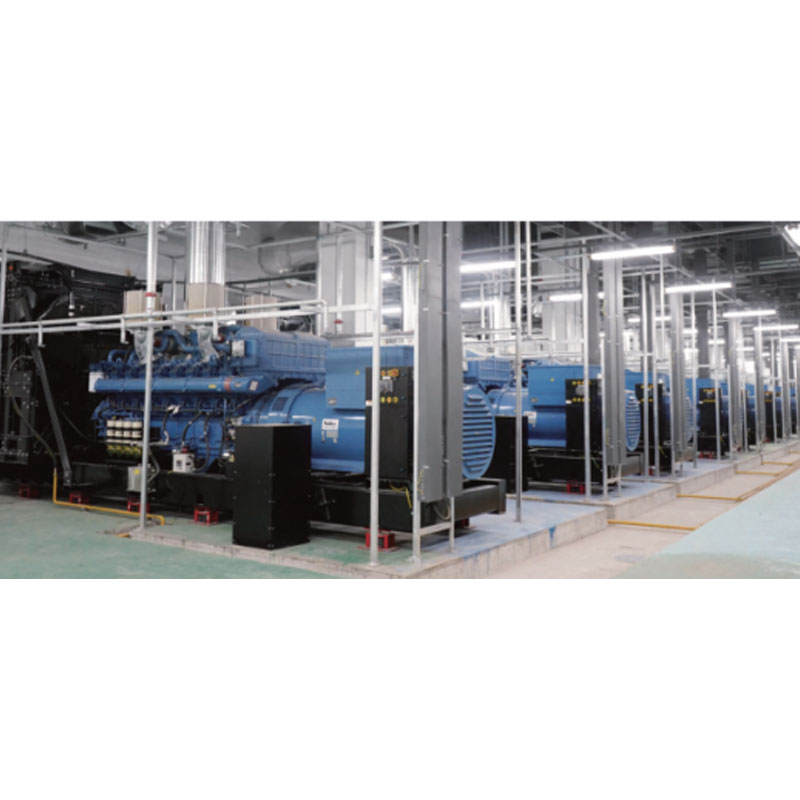
Camping and glamping are a different story. The trend for comfortable outdoor recreation has created a demand for invisible energy. The generator must be not just quiet, but as inconspicuous as possible - it is hidden in special boxes or behind decorative fences. Owners of such facilities often contact manufacturers or large distributors directly because they need not just one piece, but several, plus installation advice. This is where companies operate that offer a complex - equipment, installation, service. For example,Yuke (Shandong) Electrical Technology Co.,Ltd(Yuke Electric), which grew out of the DEVER team founded back in 2003. They are one of those who do not just sell hardware, but can offer technical consulting and engineering solutions for a specific task - which is critically important for camping.
Another niche that many people miss is small workshops and studios in industrial zones or basements. Artists, sculptors, restorers, jewelers. They need stable power for precision tools (such as engravers or soldering stations), but the rental space is old and the wiring is weak. The noise is also disturbing. They are looking for a compact and quiet solution, often 1-2 kW, and are willing to pay for reliability, but in their understanding it is expensive - it costs 50+ thousand. Therefore, they take a long time to choose, look at the guarantee, availability of service. For them the site is likevoyoko.ruIt might be useful if there is not just a catalog, but analyzes of which models are suitable for working with sensitive electronics, and which ones are suitable only for lighting.
Behind the Silence: Technical Compromises
In advertising they often say silent, meaning 60-70 dB at a distance of 7 meters. But in practice, if you place such a generator under a window, there will still be a hum. Real silence begins with inverter models in special casings, but their prices skyrocket. The main compromise for the low-cost segment is the materials of the casing and muffler. Instead of a double housing with a noise-absorbing gasket, there is a single steel housing with perforation. Instead of a complex exhaust system, there is a conventional muffler. This reduces the cost by 20-30%, but adds that same 5-10 dB that will be noticeable in a quiet courtyard.
Another point is engine speed. True inverter generators can flexibly change speed depending on the load, which saves fuel and reduces noise. Cheap pseudo-inverter models often have a simple speed controller that operates in steps. Under a load of 30% it can work quietly, but as soon as you turn on the kettle (a jump to 80%), the engine reaches high speeds with a characteristic howl. This disappoints many people. Clients then say: It's only quiet when nothing is on.
And the third trade-off is durability. To reduce the price, manufacturers save on the cooling system and vibration isolation. The model may be quiet in the first 50 hours of operation, but after 100 hours of operation, the bearings and fastenings become loose, and extraneous vibrations and ringing appear. Therefore, experienced buyers look not only at the passport noise level, but also at reviews after six months of use. Here again it is important whether the supplier has a service likeYuke Electric, which positions itself as a full-cycle enterprise - from R&D to engineering construction. Having their own service often means that they are more confident in the resource of the equipment and are ready to support it.
Failed attempts and how to learn from them
Previously, we tried to import a batch of very cheap generators from one Asian region that was not associated with the main brands. The price was attractive and the noise performance on paper was good. But in reality it turned out that the declared 65 dB were achieved under ideal laboratory conditions at minimal load. At a load of 50%, the noise reached 78-80 dB. In addition, the casing was fastened in such a way that after two weeks of transportation on our roads, half of the generators in the batch began to rattle. We had to organize additional delivery of vibration-isolating pads and carry out finishing work with a file for clients. Reputational costs outweighed all the benefits from the purchase.
The lesson learned from this is that for the cheap and quiet market, pre-sale testing in real conditions is critical. Insufficient manufacturer tests. You need to turn on the generator yourself, load it in stages (30%, 50%, 75%), measure it with a sound meter at different distances and see how the casing behaves after 10-15 hours of continuous operation. Now we do this for new lines. This, of course, makes the process more expensive, but it eliminates outright defects and inconsistencies.
Another failure was related to marketing. We focused on absolute silence and low price, thereby attracting private owners for backup power supply to boilers. But when it turned out that some models had a signal shape that was far from a pure sine wave, problems began with those very complex electronics. We had to dramatically change the positioning, clearly segment it: these models are only for active loads (lamps, heaters), and these are for sensitive equipment, but they are already more expensive. Honesty ultimately paid off in fewer returns.
Where is the market heading and where to look for the main buyers now
Now the trend is shifting towards hybrid solutions. There are fewer and fewer people looking for just a cheap, silent generator. The request becomes more complex: a quiet generator for constant operation in tandem with solar panels or a backup source for a smart home with autostart. The main buyers are no longer those who are looking for the lowest price, but those who consider the total cost of ownership. These are the owners of small guest houses, recording studios, and medical offices (for example, dentistry in villages).
They are willing to pay more for equipment if it integrates into their system, has remote monitoring and is guaranteed not to fail. For them, key partners are companies capable of technological consulting and turnkey delivery. This is where the advantage of innovative enterprises manifests itself, which, likeYuke Electric, combine development, technical consulting and engineering services. Their websitevoyoko.rufor such a buyer it is not just a showcase, but a source of information about possible configurations and solutions.
As for the purely price segment, the main buyers there now are subcontractors at large sites where there are strict noise requirements in residential areas (for example, night-time landscaping work). They rent generators or purchase them in bulk for a project. For them, it is not so much absolute silence that is important as compliance with standards (for example, not exceeding 45 dB at night at the border of the site). They know well which models pass these standards and choose the cheapest ones from this list. Their search is very specific: 3 kW generator, noise level no more than 71 dB at 7 m, cost up to 40 thousand rubles... And they find it.
The result is simple: the main buyers are a floating concept. Today these are small businesses in resort areas, tomorrow - teams working under strict environmental standards. They have one thing in common: the need for a balance between price and acceptable noise level, which allows you to work without creating problems around you. And the understanding that an absolutely cheap and absolutely silent model is almost always a myth. The real choice is the search for the optimal compromise, and it is precisely the work of a normal supplier that helps with this choice.
-


-
-


WeChat

-
WeChat