

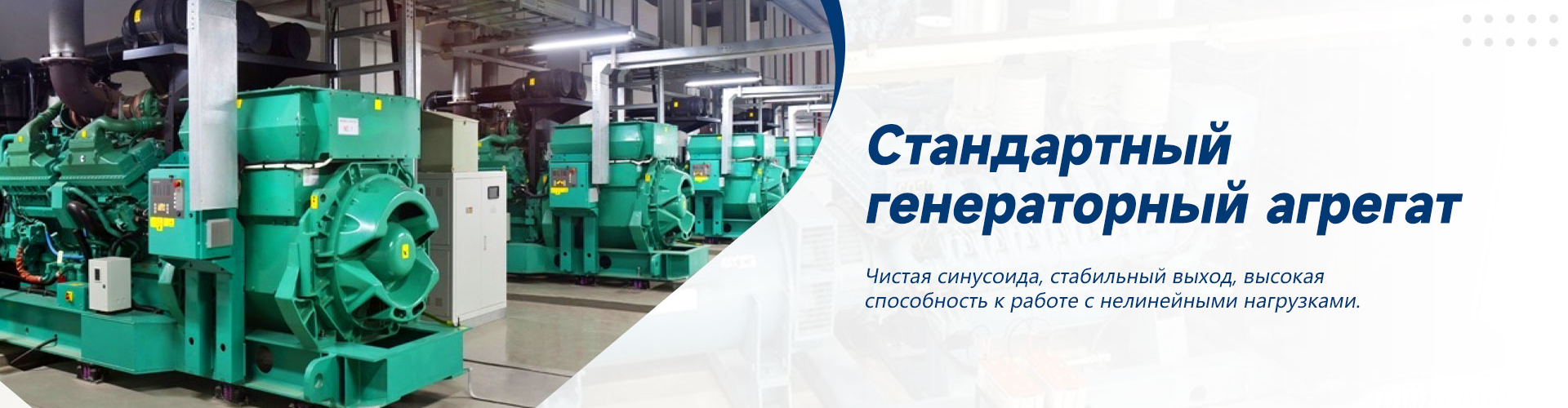
Chinese 200 kW generators: who is the purchasing leader?
2026-01-17
When it comes to Chinese 200 kW diesel generators, many people immediately think about the price. This, of course, is a key factor, but if you are in procurement, then you know that this figure hides a whole world of nuances, which then determine whether the installation will work like clockwork or become a headache on site. A common mistake is to chase the cheapest offer without digging deeper. And then there is the build quality, the real availability of spare parts, and even such “little things” as the noise level or adaptation of the control system to our standards. Let's go in order.
Market and main players: not only brands
If we look at volumes, the purchasing leaders are, as a rule, not retail buyers, but large contracting organizations working in construction, logistics hubs and, which is especially noticeable in recent years, in the field of telecommunications and backup power supply for infrastructure facilities. For them, 200 kW is often the optimal power to power an average warehouse, production site or base station.
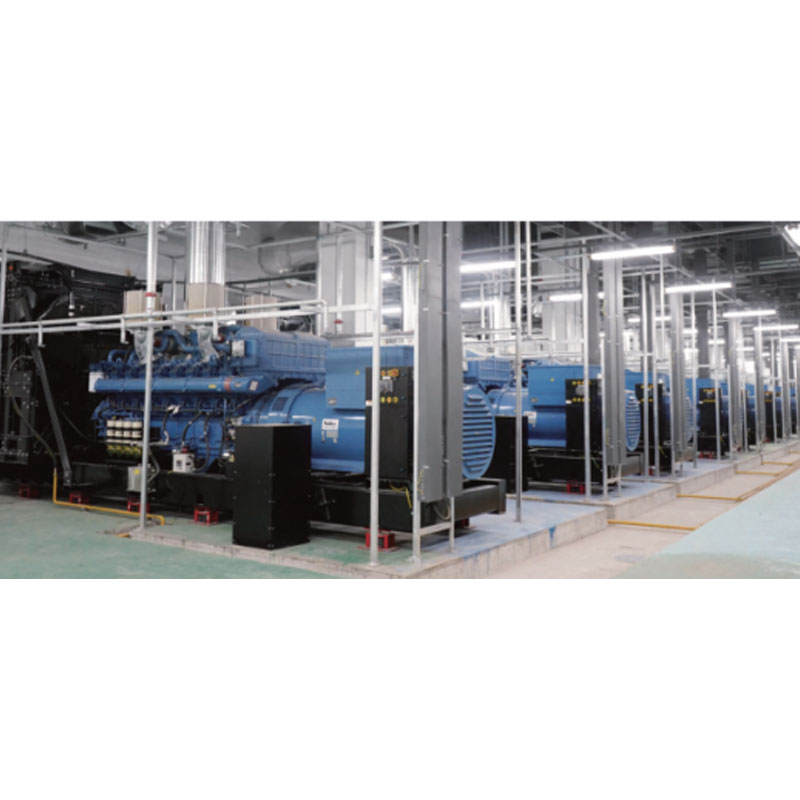
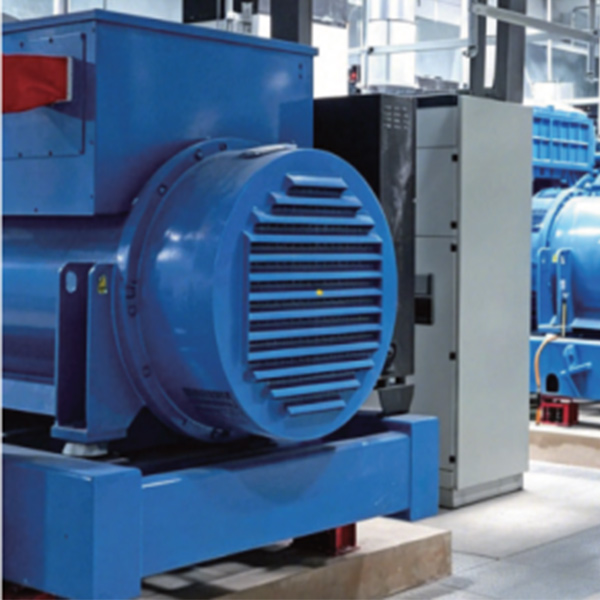
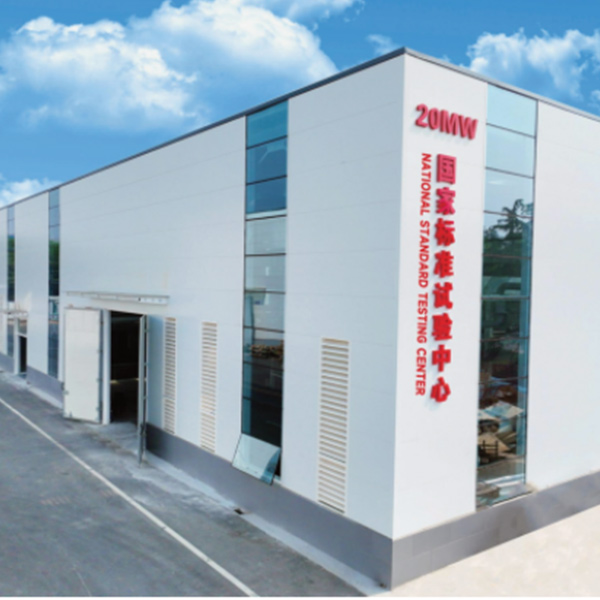
Among Chinese manufacturers themselves, the picture is blurry. There are well-known factories like Weichai, SDEC that make good engines, but the final generator set is often a product of another manufacturer that assembles them. Therefore, it is important to look not at one name, but at the combination: whose engine, whose alternator (alternator), and most importantly, who carries out the final assembly and control. This is where the difference lies. Some assemblers work on the welding-painting-shipping principle, while others, especially those focused on exporting to countries with strict requirements, invest in test benches, certification and design improvements.
For example, I came across a situation where they purchased a batch that seemed to have a normal engine, but the cooling system was designed for a mild climate. At our -30, the radiators simply could not cope at full load. Then we had to modify it locally and increase the fans. This is the same case when the manufacturer did not think through the adaptation, and the buyer did not specify this parameter. Therefore, procurement leaders are those who ask dozens of clarifying questions not about price, but about performance characteristics for specific tasks.
Selection criteria: what a professional really cares about
The price per kilowatt is the starting point, but then the details begin. The first is fuel efficiency. Engines of even the same power can have different specific consumption. A difference of 5-10 grams per kWh over a year of operating time of several thousand hours results in a serious amount. The second is maintainability. How common is this engine range in our country? Are there filters, belts, injectors in warehouses in the region? It happens that the unit is excellent, but you have to wait three months for the simplest gasket from China.
Third, and this is often underestimated, is the control and automation system. Basic manual trigger panels are one thing. What if you need an ATS (automatic transfer switch) with fine-tuning line priorities and remote monitoring via GSM? The quality of the components in these panels (relays, controllers) varies greatly. I saw expensive units where the control cabinet had frankly weak Chinese contactors that burned out after fifty operations. This is a matter of competence and integrity of the collector.
And of course, noise. The 200 kW generator is a noisy machine. For installation in a populated area or near an office building, the hood and muffler must be appropriate. Some suppliers offer all-weather hooded installations as an option, but their design also varies: metal thickness, sound insulation quality, access for maintenance. Sometimes it is easier and cheaper to order a basic open frame and build a casing around it using local builders, but this is additional work for the project.
Experience and cases: from practice
A couple of years ago, we participated in a tender for the supply of several units for a network of telecom towers in one of the regions. The main requirement was maximum autonomy and remote control. There was competition between several well-known brands. In the end, the winner was not the most popular brand, but the supplier who offered a comprehensive solution: the unit itself was based on a proven Perkins engine (licensed assembly in China), but with a deeply integrated monitoring system that interfaced with the customer’s existing SCADA system. And the key was not the generator itself, but this integration and the guarantee of technical support from the supplier.
Another case, less successful. We bought an inexpensive generator for a small woodworking shop. Weichai engine, Leroy Somer alternator (also made in China). Everything worked well for the first six months. Then problems began with starting in wet weather. It turned out that the control unit that came with the kit had poor protection against moisture and condensation. The manufacturer, naturally, referred to incorrect operating conditions. I had to change the unit to a more secure one, at my own expense. Moral of the story: Sometimes saving 5-7% upfront will result in additional costs later.
In this context, it is interesting to look at companies that position themselves not just as trading houses, but as technology partners. For example,Yuke (Shandong) Electrical Technology Co.,Ltd(Yuke Electric). They grew out of an engineering team founded back in 2003 in Qingdao. Their websitevoyoko.ru- this is not just a catalogue, there is an emphasis on R&D and integrated solutions. In their case, judging by the description,Chinese 200 kW generators- this is not a standard product for export, but a platform that can be modified for a project: strengthen the frame, install a specific control panel, prepare it for certain climatic conditions. For a large customer, this flexibility is often more important than the minimum price.
Trends and what to watch now
Now there is a clear trend towards “smart” ones. functions. Requests are not just for ATS, but for the ability to forecast load, plan maintenance based on actual operating hours, integrate with solar panel systems or other sources. Chinese manufacturers are actively picking up this wave. But here it is important to separate marketing and reality. Having a mobile monitoring application is almost standard. But how stable this application works, how secure the data transmission channel is, how quickly the support service responds to failures - these are the questions.
Another point is ecology. Emission requirements are becoming stricter. Stage II, Tier 3 engines are no longer uncommon in this capacity. For buyers working in environmental protection areas or simply thinking about the future, this becomes an argument. And again, not all Chinese assemblers promptly update their engine lines to these standards; it needs to be clarified.
Finally, logistics and after-sales service. The pandemic and subsequent events have shown that supply chains can break. Procurement leaders now often require suppliers to maintain a safety stock of critical parts in a local warehouse in the importing country. This is a new level of responsibility for the supplier. Companies that can provide this (as Yuke Electric seems to be striving to do through its structure) have a serious advantage for large contracts, even if their unit price is slightly higher.
Final thoughts: who is the leader?
So who is the leader in purchasing Chinese 200 kW generators? In abstract terms, this is the one who buys the most pieces. But if you dig deeper, the leader is not a specific construction company or gas station chain. Rather, it is a certain type of customer. This is a professional buyer or energy engineer who understands that he is not buying hardware, but a solution to the problem of uninterrupted power supply.
Such a leader looks less at glossy catalogs and more at technical documentation, test reports, and the supplier’s project history. He asks not “how much does it cost?”, but “what is the consumption at 75% load?”, “what is the oil change interval according to your recommendations?”, “can you provide foundation drawings and a diagram for connecting the ATS?”. He considers companies likeYuke (Shandong) Electrical Technology Co.,Ltdnot as a dealer, but as a potential partner capable of completing some of the engineering tasks.
Therefore, the market is now segmented. At one extreme are traders of standard hardware. at the lowest price. They are bought for one-time jobs where the requirements are minimal. On the other side are technology-oriented integrators who sell not a unit, but a ready-to-use system with service. The volume of purchases from the latter may be smaller in units, but greater in the cost of contracts and, importantly, in repeatability. So, according to my observations, they form a new trend and become those most demanding leaders who pull the entire market behind them, forcing everyone to play by more complex but correct rules.
-


-
-


WeChat

-
WeChat