

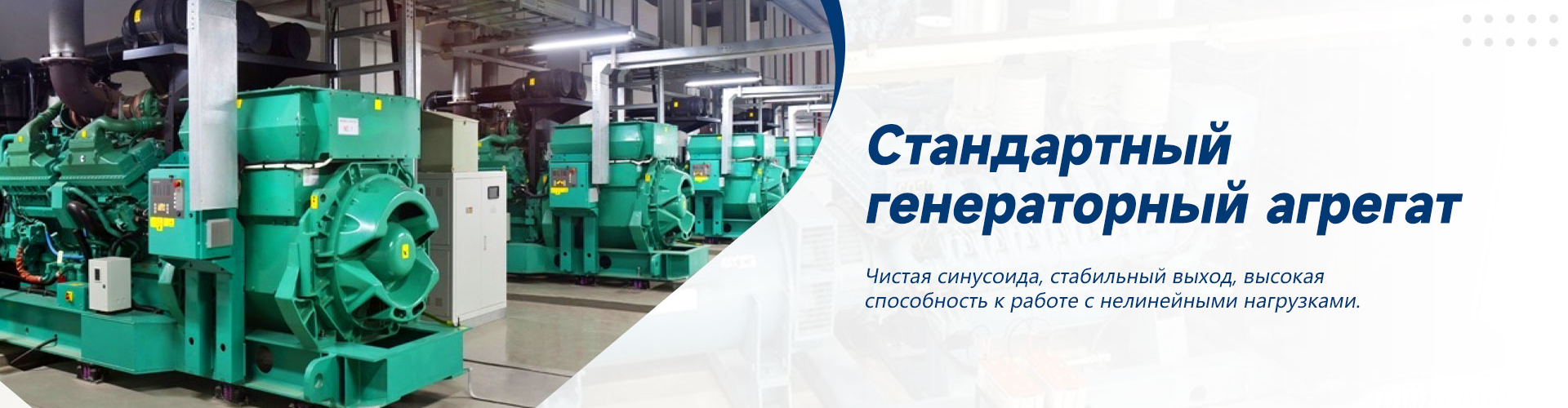
China: the main buyer of gas thermal power plants?
2026-01-19
The question in the title sounds almost rhetorical, especially if you look at the news headlines of recent years. But the reality, as always, is more complicated. Many people immediately imagine gigantic contracts for the supply of entire turnkey power plants from Germany or Japan. However, if you dig deeper into supply chains and modernization projects, the picture becomes much more interesting and nuanced. The key word here is not so much the buyer as the integrator and customer of technological solutions. And this is where the fun begins.
From megaprojects to component logic
Previously, yes, there was a trend for large-scale purchases. But experience has shown that an imported gas turbine is not the whole thermal power plant. It needs to be integrated into the existing infrastructure, control systems, fuel supply, and heat exchange must be adapted. It is often more profitable and faster to purchase the brains and heart of the installation abroad, and do the peripherals and integration work locally. This is no longer a pure purchase, but a complex technological partnership.
Here, for example, is the story of the modernization of a unit at one of the regional stations. We purchased excellent new generation combustion chambers, but were faced with the fact that the domestic vibration control system did not recognize their specifics. We had to not just install the equipment, but actually create a hybrid diagnostic system. This is a typical situation that does not appear in purchase reports, but defines real technological exchange.
It is in this niche - integrated engineering solutions and supplies of critical auxiliary equipment - that the main activity is now unfolding. Companies that can offer not just a product, but a deep understanding of the process and adaptation, are in demand. Like for exampleYuke (Shandong) Electrical Technology Co.,Ltd (Yuke Electric). They grew out of an engineering team founded back in 2003 in Qingdao, and their approach is precisely a combination of R&D, technical consulting and equipment supply for specific project tasks (https://www.voyoko.ru). Their strength is not in selling boxes, but in their ability to participate in creating the final solution.
What are they actually purchasing? Not only turbines
When it comes to purchases, the focus has shifted from entire units to components and systems that increase efficiency and reliability. These are real-time monitoring and diagnostic systems, modern control systems (APCS), highly efficient heat exchangers, and solutions for deep heat recovery. Chinese energy companies have become extremely pragmatic: they need a concrete result in the form of efficiency, reduced emissions or increased mileage between repairs.
I remember a project where the key issue was not the gas turbine itself, but the fuel gas preparation system, which had an unstable composition. Selection and setup of the process line, including analyzers and control valves, took more time and required more expertise than installation of the main unit. This is real shopping: buying know-how to solve a specific technological problem.
In this context, directory sites like Voyoko.ru become not just showcases, but tools for engineers. When you are looking not for a gas thermal power plant, but, say, a specialized frequency converter for a generator cooling system pump with certain explosion protection parameters, the availability of detailed technical information and the possibility of direct contact with the supplier’s technical specialists decides everything.
A case from practice: when the hardware comes up against the software
A typical example is the introduction of new combustion systems to reduce NOx emissions. We supplied excellent burners from a European manufacturer. But the algorithms for controlling them, built into the standard controller, did not work well with local gas and in the mode of frequent variable loads characteristic of this network. A team of engineers, including local and invited specialists (including from integrator companies likeYuke Electric), we had to actually rewrite the control logic, conducting hundreds of hours of testing. This was a purchase of technology, but with subsequent deep modification. And such cases are the majority.
The role of Chinese engineering companies: no longer just intermediaries
It is important to avoid a common misconception here. Chinese companies in this area have long ceased to be just trading houses or installation teams. Players like the one mentionedYuke Electric, position themselves as innovative technology enterprises combining R&D, consulting and construction. Their value lies in their ability to act as a bridge between advanced foreign technology and the specific requirements of the Chinese energy market.
They often handle the hardest part: adaptation, interfacing, commissioning and, critically, subsequent maintenance and upgrades. They understand the logic of local networks, standards, and approval procedures. For a Western equipment manufacturer, cooperation with such a competent engineering company is often the only effective way to enter this market.
Their website is a reflection of this approach. This is not just a list of products, but a demonstration of competencies: research and development, technical consulting, custom processing. This is the language spoken with equal project partners, not with passive buyers.
The future: a paradigm shift from purchasing to co-development
The trend that I have seen in the last 2-3 years is taking us even further. Increasingly, we are talking about joint development of solutions for future projects. The Chinese side is formulating a request not for equipment, but for achieving certain technical and economic indicators (specific fuel consumption, flexibility, emission level). How this will be implemented in hardware is a matter of joint work between the customer’s engineers, the Chinese integrator and the foreign technology partner.
This is already a level at which it is pointless to say who is buying whom. There is an exchange of competencies. China brings vast experience in scaling up, building at speed and integrating into complex power systems. Foreign partners - the depth of fundamental technological solutions. And integrator companies act as a catalyst and translator between these worlds.
Therefore, returning to the title. Is China the main buyer? If we mean by this the most active consumer of advanced technologies for gas generation in their most practical, applied form, then absolutely yes. But it would be more correct to say that he became the main customer-co-developer, shaping global trends in the industry with his demand and his challenges. And in this new role, his influence only increases.
-


-
-


WeChat

-
WeChat