

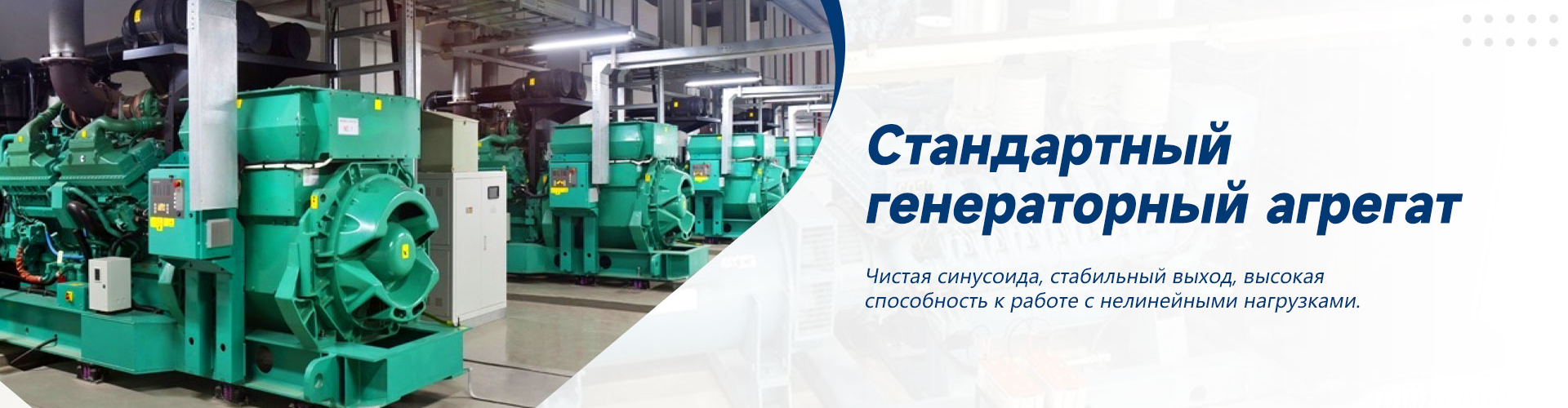
China is the main buyer of ?Azimuth?? generators.
2026-01-02
Here's a question that comes up periodically in conversations between distributors and on industry forums. I’ll say right away: the answer is not as clear-cut as we would like. Many immediately imagine gigantic volumes, containers heading to Shanghai or Guangzhou, and the all-encompassing Chinese market, sweeping away everything in its path. But reality, as usual, is more complex and interesting. If we talk about the “main buyer?” in the sense of the end consumer - then no, China is not one. But if you dig deeper into the supply chain and industrial cooperation, the picture changes dramatically. This is what creates the very confusion that I want to discuss, based on my own experience of working with energy equipment.
Where the legs grow from: confusion in terms and supply chains
When you hear a question like this, the first thing that comes to the mind of an experienced person is the question: “What kind of purchase?” speech??. The fact is that the Azimuth brand, which most often refers to Russian-made diesel and gas power plants, has a difficult fate with regard to production capacity. A significant part of the components, and sometimes the assembly of units, have historically been localized or purchased in China. It's no secret.
This is where the first nuance arises. Chinese engineering and manufacturing companies, especially in Shandong and Jiangsu, are often not ?buyers? in the classical sense, but cooperation partners. They purchase licenses, technologies, individual high-tech components (like Deep Sea or ComAp control systems) or, conversely, supply basic components to assembly lines in Russia: frames, casings, fuel tanks, radiators. It turns out that the financial flow for the components actually goes to China, but this is not the purchase of ready-made ?Azimuth? generators. for the domestic market of the People's Republic of China.
I myself came across a situation where our Russian customer demanded the “original Azimuth”, but when opening the passport and analyzing the components, it turned out that up to 70% of the components were of Chinese origin, including the engine itself (for example, Weichai or Shangchai), which was then “overgrown”. Russian management system and brand. So who is buying whom here? Rather, it is a symbiosis.
The role of Chinese technology hubs: a case study
To make it clearer, I will give an example not directly in “Azimuth”, but very indicative. Several years ago we worked on an integrated power supply project for a small mining and processing plant. We needed a diesel generator set in a container design, with an automatic transfer system (ATS). We were not satisfied with the Russian proposals regarding production time.
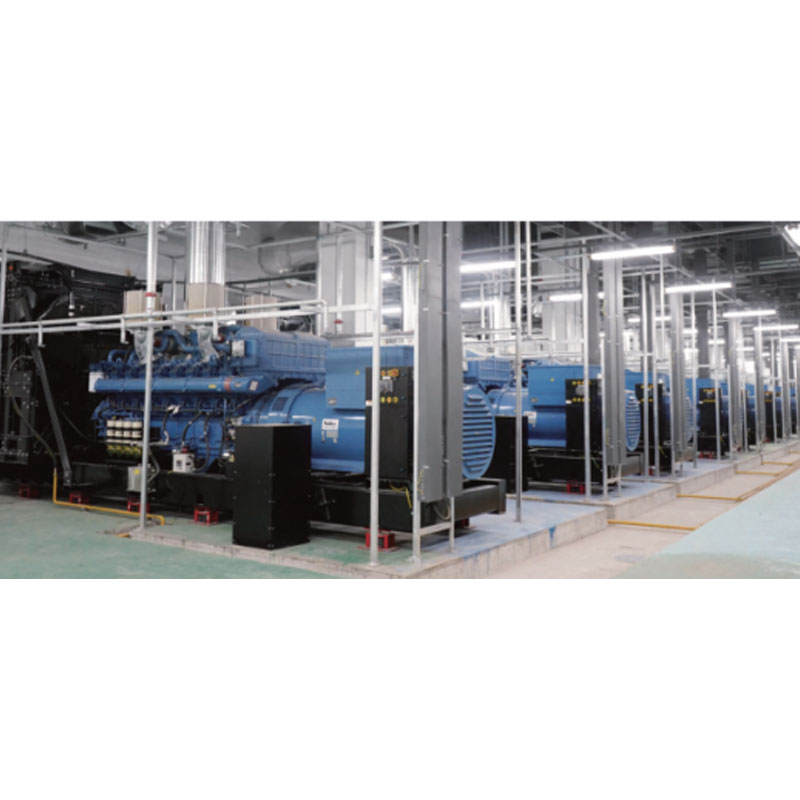
Then we contacted the companyYuke (Shandong) Electrical Technology Co.,Ltd(their website isvoyoko.ru). This is exactly the same story: a team founded back in 2003 in Qingdao, which positions itself not just as an assembly shop, but as an innovative enterprise with a full cycle from R&D to construction. Their approach interested us. They offered not just “hardware”, but technical consulting for our specific needs - high dust levels and temperature changes.
As a result, we received a station based on a Chinese engine, but with a completely customized control and cooling system that fit perfectly into the conditions. And here’s the key thing: later I saw almost identical technical solutions in some modifications of “Azimuth”, which were supplied, for example, to the northern regions of Russia. Coincidence? Hardly. Rather, both manufacturers—Russian and Chinese—drew from the same pool of technological solutions and production competencies, which are concentrated in technological hubs such as Shandong.
Where does China really ?buy?? End-use scenarios
And now about direct purchases. China, as a country with a huge domestic market and developing infrastructure, is by far the world's largest consumer of generator sets. But these installations are from Chinese brands (Weichai, Cummins China, SDEC, Yuchai) or international giants that have localized production (Caterpillar, Perkins).
?Azimuth? on the domestic Chinese market it is an exotic product. Its niche could be in specific projects where Russian certification or nostalgia for the “reliable Soviet school” is required. (which, by the way, sometimes works in the CIS countries and Africa). But to compete in price with local manufacturers or in prestige with the same “Caterpillars”? It’s extremely difficult for him.
However, there is one scenario that I have personally observed. This is re-export. A Chinese trading company buys a batch of ?Azimuths? (often at a very competitive price, perhaps even with a volume discount) and then supplies them to a third country, for example Mongolia, Kazakhstan or Pakistan, as part of its complete engineering offer. In this case, China formally acts as the “main buyer?” in customs statistics, but is actually a transit hub. Such schemes create statistical noise, which gives rise to myths.
A failed attempt and a lesson: when is a ?brand? didn't work
I’ll tell you about a case that well illustrates market realities. One of our partner organizations in the Khabarovsk Territory tried to promote ?Azimuth? for small Chinese construction teams working on Russian territory. The logic was simple: close to home, the service should theoretically be faster, and “our own”? sort of like that.
But the project failed. And not because of the quality of the equipment. Firstly, the brand’s service network in the border Chinese provinces was practically zero, in contrast to the same Weichai, which has a service center in every major county. Secondly, the Chinese foremen frankly did not understand why they should overpay (and Azimuth was more expensive in this niche) for a brand that was not listed in their home market hierarchy. For them, a generator is a consumable item, a tool. Price, availability of spare parts and speed of repair are important. ?Azimuth? lost on all counts in this segment. It was a tough but valuable lesson that an abstract ?brand? Without deep localization of service and logistics in the buyer’s territory, it is worth nothing.
The future: cooperation instead of ?purchase?
So, back to the title question. Calling China the “main buyer?” generators ?Azimuth? - this is a strong simplification that rather distorts the real picture than explains it. It is much more accurate to say that China iskey supplier of components and technological solutionsfor Russian energy generation as a whole, including brands such as “Azimuth”.
The trend that I see now is the deepening not of trade, but of cooperation ties. Not “buy and sell”, but joint R&D for specific climatic or industrial conditions. As in the example withYuke Electric— their model is aimed at precisely this. The Russian side brings an understanding of local standards, specific customer requirements and, conditionally, a “brand”, while the Chinese side brings production capacity, flexibility in customization and access to an advanced component base.
Therefore, if we talk about the main role of China in this story, then it is production and technological. And questions like “who is the main buyer?” often lead away from the essence - and the essence is in a complex, interconnected value chain, where are the boundaries between the “buyer?” and ?seller?, ?manufacturer? and ?collector? have long been blurred. And in this new reality you need to be able to navigate, and not look for simple but erroneous labels.
-


-
-


WeChat

-
WeChat