

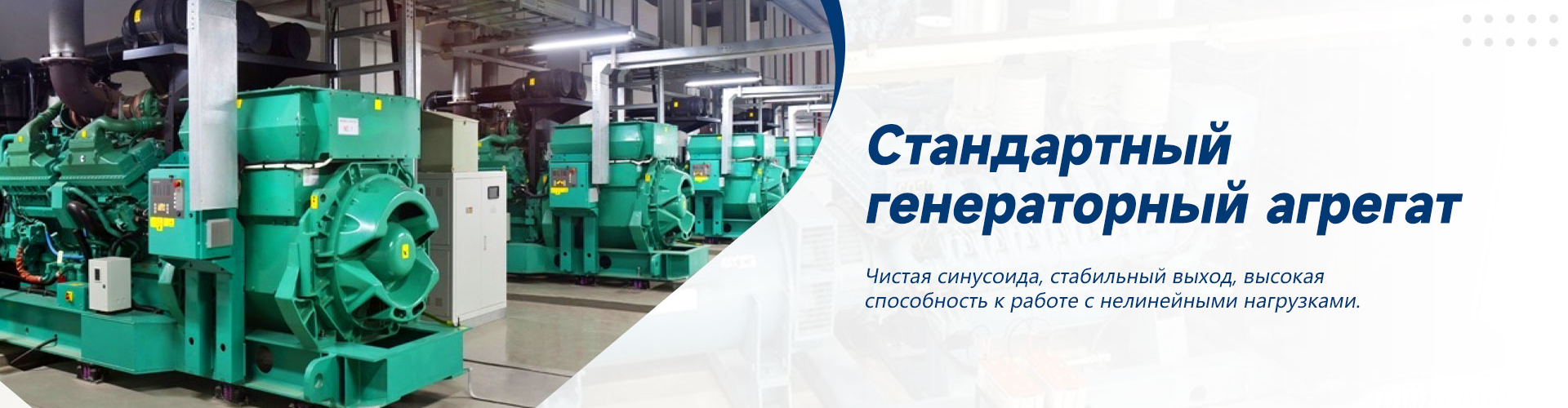
China: the main buyer of diesel power plants?
2026-01-29
This is a question that often comes up in conversations at exhibitions or in correspondence with component suppliers. Many immediately imagine endless construction sites and factories sucking energy, and nod: yes, of course, China is a giant sales market for generators. But if you dig deeper, working directly with projects and tenders, the picture becomes much more interesting and not so clear-cut. Yes, they buy a lot. But the ?main thing? is it? And what exactly are they buying? This is where nuances begin that are not written about in general analytical reports.
Where does this opinion come from?
The volumes are, of course, amazing. China's own production of diesel power plants is colossal, that's a fact. It would seem logical: a huge country, rapid growth of infrastructure - all this requires backup and main energy supplies. That is why the stereotype is tenacious. But here lies the first pitfall: a significant part of this production goes not to the domestic market, but to export. China has long beenthe world's leading manufacturer, and this is not the same as the main buyer.
The domestic market has specific demand. Government projects, large industrial enterprises - they often work according to their own strict standards and prefer certain, time-tested brands or even have their own production lines. The mass segment - medium and small businesses, regional contractors - is very sensitive to price. There is a constant struggle here between the quality of components (the same control system or block head) and the final cost. Often the latter wins, which gives rise to a whole layer of “budgetary” ones. solutions that we then see in Africa or Southeast Asia.
Personal experience: we once participated in a tender for the supply of several diesel power plants for a network of mining enterprises in Shandong province. Our calculation, with a European engine and high-quality automation, lost to the local offer. The price difference was almost 40%. At the same time, the technical task was completed... formally. But everyone understood that resource and reliability would be incomparable. This is a typical situation that shapes the domestic market: they don’t always look for “the best”, they often look for “good enough for the money”.
What China actually buys: components, not finished products
This is where we come to a key point that many people miss. China is not so much a giant buyer of finished diesel power plants as a huge, perhaps the main, sales market forhigh-tech componentsand know-how. Yes, they collect it themselves. But the ?stuffing? often imported.
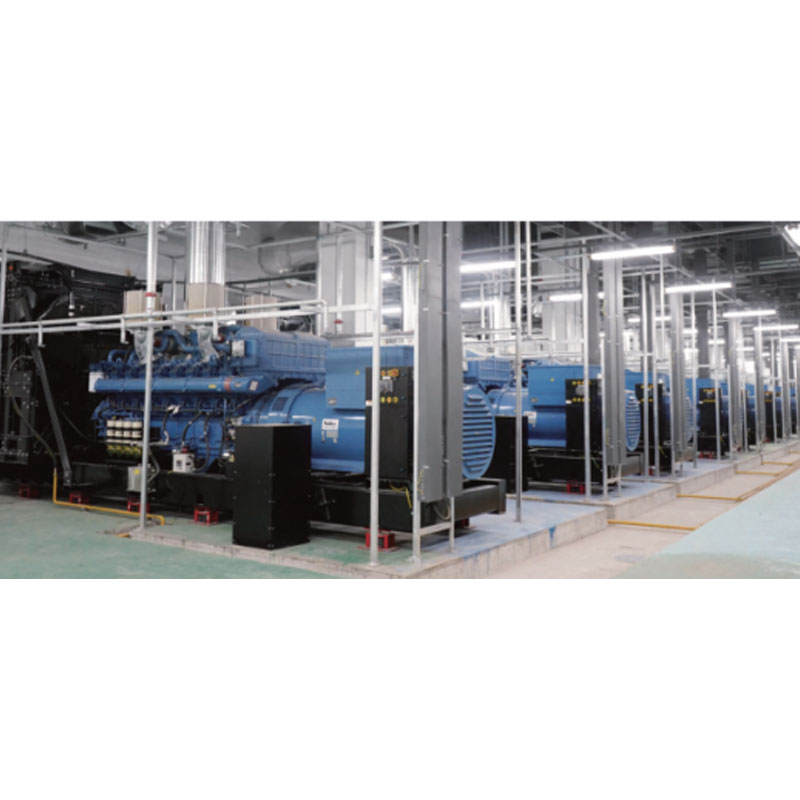
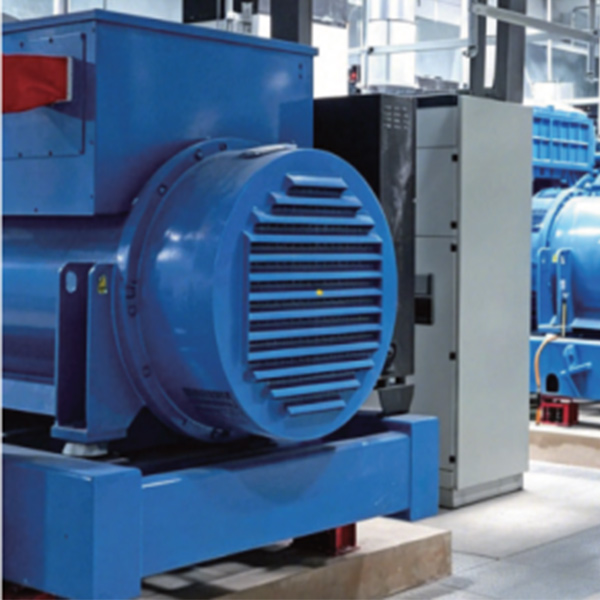
The demand for high-quality engines (not just licensed copies, but original Perkins, MTU, Cummins), for modern control systems (Deep Sea, ComAp, Woodward), for Stamford, Leroy-Somer generator heads - it is huge. Chinese engineers are well versed in what depends on what. They can order a frame from one, an engine from another, a control panel from a third, and assemble a station for a specific project, saving money and obtaining the necessary parameters. This is flexibility that many European pre-built station manufacturers cannot afford.
Working with engineering companies, I saw how such orders were formed. For example, the ability to work in parallel with the network and high frequency accuracy were important for the project. We took a German-assembled engine, a generator head from Italy, and ordered the control system and integration from a local company that specializes in such solutions. This is the modern Chinese market: assembly for a specific task from global components.
The role of integrator companies and a case study
Against this background, a particularly important role is played by companies that act not as simple sellers of hardware, but as technology integrators. Those who can not only install a station, but also fit it into a complex system, provide engineering support, and adapt it to local standards. It is these players who become key partners for complex projects.
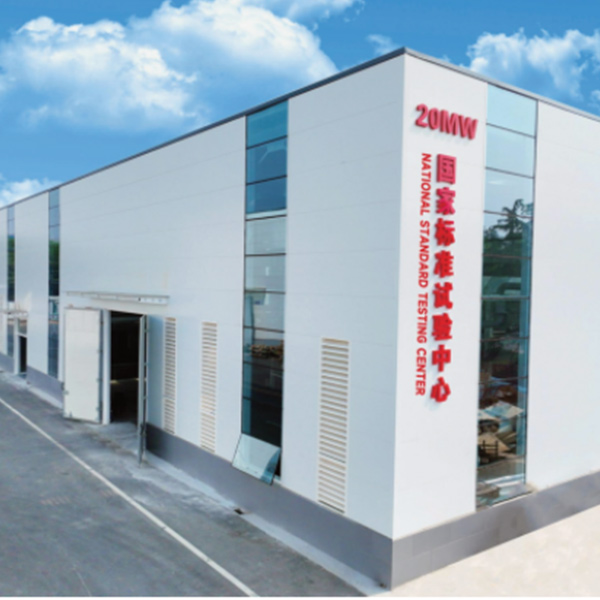
For example, let's takeYuke (Shandong) Electrical Technology Co.,Ltd(Yuke Electric). This is a typical example of a modern Chinese technology enterprise. They grew out of a team founded back in 2003 in Qingdao, and their websitevoyoko.rureflects their approach well. This is not just a catalog of generators. The emphasis is on R&D, technical consulting, engineering and comprehensive services. That is, they position themselves as problem solvers, not distributors. And that's right.
It is interesting to work with such companies. They often have their own vision and are ready to offer custom solutions, for example, a cooling system for work in high altitudes or noise reduction for installation in a residential area. They understand that their value lies in knowledge and adaptation, and not in the cheapest price per kilowatt. And what’s important is that they often act as buyers of those very high-quality components for their projects, which I mentioned above.
Foreign markets as a demand driver
We must not forget about another aspect. A huge number of diesel power plants assembled in China immediately go abroad. These include Belt and Road projects, contracts in Africa, and supplies to developing countries in Asia. In this sense, China acts as a powerful re-export hub. Demand is generated by external orders, and internal production closes it.
This is where its own specificity arises. Different markets require different configurations. For the Middle East, resistance to heat and sand is critical, for Siberia - to frost, for Southeast Asia - to humidity. Chinese manufacturers have learned to react flexibly to this. I saw how at one plant they assembled stations that were almost identical in power: one with a reinforced radiator and a pre-heating system for Kazakhstan, the other with an anti-corrosion coating for all elements and waterproof connectors for Indonesia. This is the answer to the question “what are they buying?” — buy customized solutions for global needs.
At the same time, the quality of execution of such “export” options are often higher than those of stations for the domestic market. Customer requirements are stricter, competition with other global players is more noticeable. It turns out to be a paradox: sometimes it is easier to find a reliable Chinese assembly outside of China.
Results: so who is the main buyer?
Returning to the title question. Is China the world's top buyer of diesel power plants? If we count the pieces of finished products standing on its territory, probably not. The USA, the Middle East, and Africa with its growing energy needs can compete.
But if we consider the issue more broadly - as the main consumer of value chains in this industry, as a key node in the global system of production, assembly and adaptation of generator sets to the needs of the whole world - then yes, its role is difficult to overestimate. China is a gigantic, complex and multi-layered market that is largelyabsorbs technologies and components, processes them and delivers ready-made solutions back into the world. It sets the tone in the price segment, creates trends towards miniaturization and digitalization of management (look at how many offers with remote monitoring there are now from China).
Therefore, the next time the conversation comes up about the “main buyer?”, it is worth clarifying: what exactly do we mean? Ready ?boxes? with a sticker or the same technological appetite that drives the entire industry forward, seeking more efficient engines, smarter control systems and stronger materials? From this point of view, China is not just a buyer. He is an active participant and often sets the rules of the game in this complex, noisy and absolutely necessary energy market in its diesel incarnation.
-


-
-


WeChat

-
WeChat