

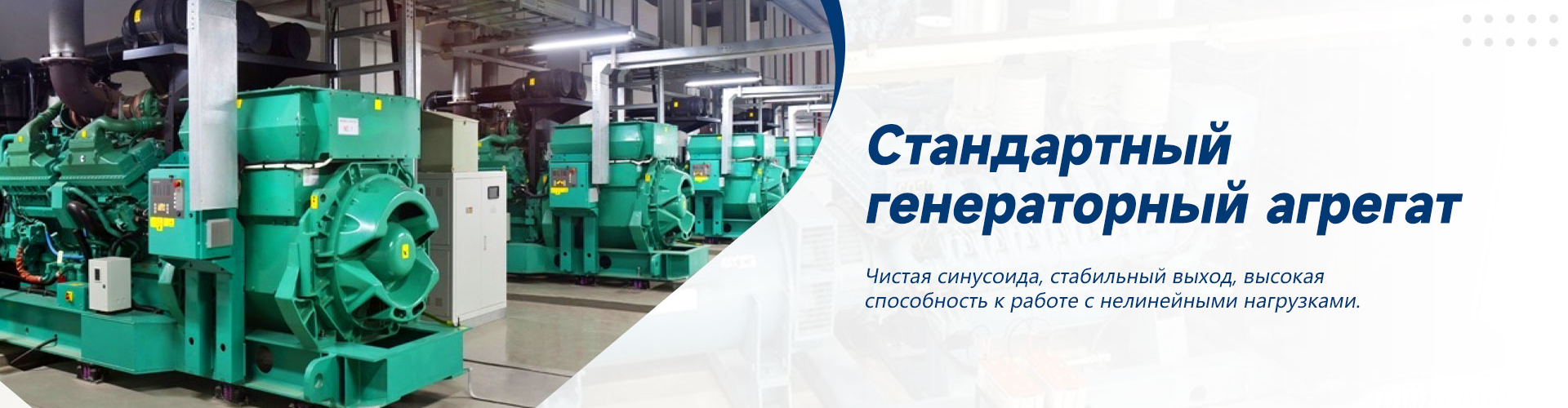
China: the main market for generators?
2026-01-07
When you hear this question, the first thought is, of course, yes. But is this really so? Many colleagues immediately imagine giant factories and endless production lines. However, if you dig deeper into your own practice, everything turns out to be not so clear. China is not just a huge sales area, it is a complex organism with its own cycles, prejudices and incredibly specific needs. And the word "main" here can be interpreted from a dozen different angles.
From gigantomania to concrete numbers
Let's start with the obvious: volumes. Yes, in terms of production and domestic consumption, China is certainly in the lead. But when you have been supplying equipment for years, for example, for local power supply networks or backup systems, you begin to see the details. Not all ?Chinese generators? is a homogeneous mass. There is a huge gap between the products of giants like Weichai or Cummins China and the hundreds of regional manufacturers who fill niches that the big players don't even think about.
Here is an example from personal experience. They tried to promote to one of the northeastern provinces a standard model of a medium-power diesel generator, which had proven itself well in Europe. We were faced with an unexpected request: what was critical for the client was not so much the rated power, but the ability of the unit to withstand frequent but short-term peak loads in a specific “work-idle” cycle, characteristic of its type of production. No standard specification reflected this. I had to work with engineers at the partner plant for months to adapt the control and cooling system. It was not a consumer market, it was a co-creator market.
This is where the role of companies comes into play: they don’t just sell, but integrate into this environment. Let's take, for example,Yuke (Shandong) Electrical Technology Co.,Ltd(Yuke Electric). Their websitevoyoko.ruis not just a catalogue. Studying it, it is clear that the company grew out of the DEVER team, founded back in 2003 in Qingdao. Their approach is not just “supply of equipment”, but rather “technological consulting and engineering construction”. In the Chinese context, such depth of immersion is not an option, but a necessity for survival in the market. They understand that their customer often needs more than just a generator, but an energy solution integrated into a complex process chain.
Demand: not only ?more and cheaper?
A common misconception is that the Chinese market only wants a low price. This is an outdated stereotype. Yes, the price pressure is insane, especially in the residential and low-power industrial generator segment. But as soon as it comes to projects for critical infrastructure, data centers, high-tech industries or Belt and Road facilities, priorities change dramatically.
Reliability, compliance with strict environmental standards (which, by the way, are now stricter in developed regions of China than in many European countries), the possibility of remote monitoring and integration into smart systems come to the fore. enterprises. I saw how large international brands lost tenders because they were “smart?” The control panel did not support the protocols required by local regulators or customer corporate standards. The winner was the one who could quickly improve the software.
Another subtle point is the service. A contract to supply hundreds of generators to a network of gas stations is just the beginning. The real struggle is over the service contract. And here are Chinese companies, including such asYuke Electric, have a natural advantage. Their network of engineers and spare parts logistics, well established within the country, often proves to be a decisive factor against Western competitors, who have everything “through their head office in Europe”. The client wants the engineer to arrive within 24 hours, not 72 with permission from abroad.
Failures and lessons: when is ?universal? doesn't work
I’ll tell you about my own failure, which taught me a lot. Several years ago we were involved in a project for a mining enterprise in Xinjiang. They offered a proven, energy-efficient model of a gas piston generator, ideal, according to our calculations, for their loads. The feasibility study was impeccable. But we failed at the discussion stage with local operators.
It turned out that the key for them was not efficiency, but maintainability in the field, with a minimum set of tools and the ability to use not original, but analogue spare parts more available on the local market. Ours is ?ideal? the car was too technologically advanced and “closed?” for their realities. The local manufacturer won with a simpler, even outdated, but absolutely repairable design. This lesson was costly: in China you cannot sell only iron. You sell the entire life chain of this iron in a specific ecosystem.
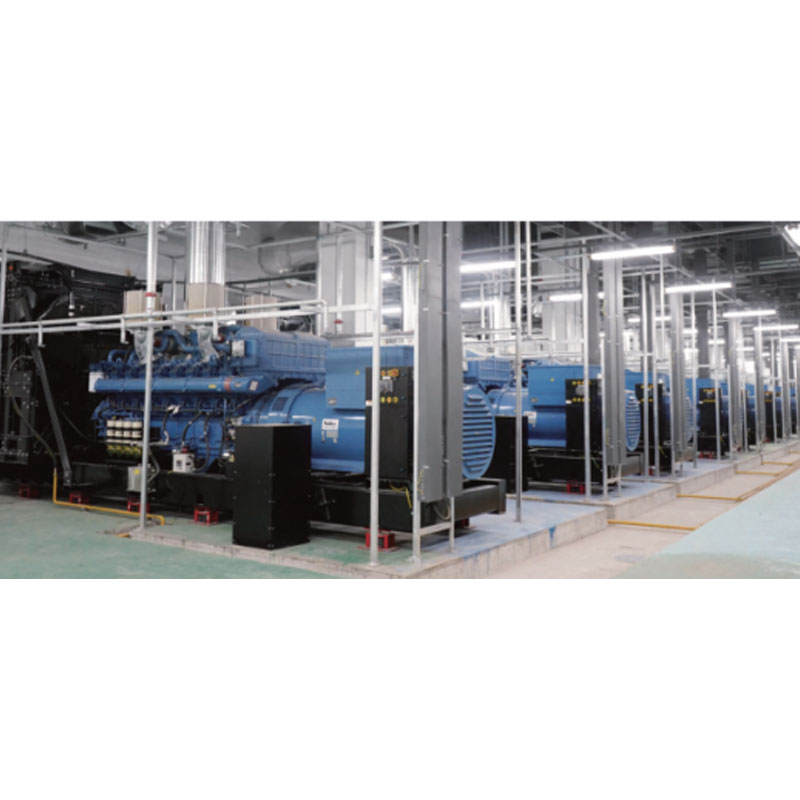
This is why the portfolio of successful players in this market is so diverse. It includes high-tech gas cogeneration plants for Shanghai, simple gasoline generators for farms in Sichuan, and powerful diesel stations for infrastructure construction. There is no universal solution.
The role of innovation and local brands
Here it is worth dispelling another myth: that innovation comes to China only from the West. This has not been the case for a long time in the generator set segment. Local companies actively invest in R&D. The focus is often shifted towards hybrid systems (generator + solar panels + storage), heat recovery systems and, crucially, towards reducing noise and emissions for use in densely populated areas.
CompanyYuke Electric, judging by its description as an “innovative technology enterprise” that combines R&D, technical consulting and engineering construction, is a typical example of such a new player. They are not just collectors. Their competitiveness is built on product and technological innovations adapted to local challenges. For example, to meet the needs of the growing commercial real estate market, where the generator must not only be powerful, but also compact, quiet and with an aesthetic casing to fit into the architectural project.
Such companies become drivers of market reformatting. They create products that they then begin to export, competing on the global stage. And this brings us back to the original question. Is China the main market? Yes, as a testing ground for a wide variety of solutions, which can then be scaled up. But he is also the main source of innovation, born from his own, unique needs.
The future: not a market, but an ecosystem
So where is everything going? My prediction based on current trends is that the generator market in China is no longer an isolated category. It is increasingly being absorbed into the broader energy ecosystem. The generator is now one node in a microgrid, which can include renewable sources, energy storage systems and intelligent control.
Demand is shifting from purchasing a “unit in case of a shutdown?” to order “guaranteed quality of electricity 24/7”. This requires completely different competencies from the supplier. We need not just mechanical engineers, but specialists in energy management systems, programmers, and data analysts. Those who can offer not a boxed product, but a tailor-made solution will be on top.
Therefore, to answer the question in the title. China is, of course, the main market in terms of scale and complexity. But its main feature today is its transformation from a passive consumer into an active creator of standards and solutions for a new energy structure. And in order to not only be present in this market, but to be successful, you need to stop thinking about it as a sales point. You need to immerse yourself in its logic, its contradictions and its speed. This is the most difficult, but also the most interesting challenge.
-


-
-


WeChat

-
WeChat