

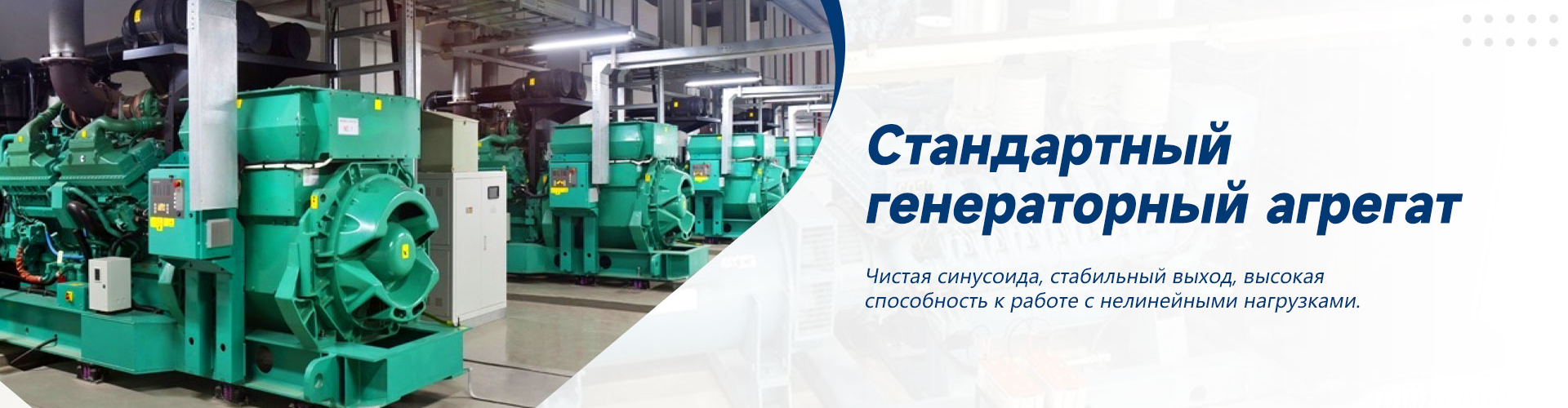
China: leader in supplies of diesel generator sets?
2026-01-10
When you hear “China is the leader in the supply of diesel generator sets?”, a picture immediately pops up in your head: endless factories, containers filled to capacity and low, low prices. But if you dig deeper, working in this area for ten years, you understand that the question of leadership is not about volumes, but about what is hidden behind these volumes. Many people, especially at the start, think that the main thing is to find a supplier with the most attractive price. And then they are faced with the fact that the generator, which was supposed to work in a critical situation, at the most crucial moment fails due to a trifle - due to a substandard fuel valve or problems with the control system. This is where the real understanding of “leadership” begins.
Evolution from ?iron? to the "brains"
Previously, about ten years ago, a Chinese diesel generator set was often perceived as a simply assembled unit. Perkins or Cummins engine, Leroy Somer alternator, Deep Sea or ComAp control panel. The task of the Chinese factory was to carefully mount it all on the frame, paint it and ship it. The competition was mainly based on price and speed of assembly. The quality depended heavily on how strictly the process was controlled and what specific components were purchased.
Now the focus has shifted. Leadership is not just an assembly, namelytechnology integrationand our own engineering. Let's take control systems, for example. Many serious manufacturers have long been no longer content with simply installing ready-made panels. They develop their own software shells that not only control startup and synchronization, but also provide remote monitoring, predict maintenance, and integrate into the general BMS or SCADA systems of the facility. This is a different level of value for the customer.
I myself came across a project for a mining enterprise in Kazakhstan, where the key requirement was the control system's resistance to extreme temperature changes and the ability to operate in a fully automatic, “maintenance-free” manner. mode for months. There were no ready-made solutions on the market. We had to work closely with engineers from a Chinese company, who literally rewrote part of the software to our specifications and carried out additional tests for vibration resistance. This was not a simple “delivery of diesel generator set”, it was a joint engineering task. And there are more and more such cases.
Where are the pitfalls? Personal experience
Despite all the power of the industry, risks have not gone away. The most common stumbling block islogistics and customs clearance. It would seem like a routine. But this is where the “turnkey” deadlines are missed. Once delivery was delayed by a month due to problems with the certification of the noise-absorbing enclosure in the destination country. In the documents from the plant it was described as “part of a generator set”, and customs demanded a separate certificate as a “construction material”. Trifle? But the project stopped.
Another point is after-sales service and spare parts availability. Big brands have global networks. But with a niche or new Chinese manufacturer it can be more difficult. I always advise clients to immediately include in the contract the creation of a minimum warranty warehouse of spare parts on site. At least filters, spark plugs, relays, sensors. This insures against downtime. Once there was a case when a specific pressure sensor in the fuel rail failed. He was not in the region, the wait from China was 3 weeks. Downtime of an expensive object. It’s good that we found an analogue from a European manufacturer and, together with engineers, remotely reflashed the controller to its parameters. It saved the situation, but it took a lot of nerves.
Case: when it is not the unit that is important, but the solution
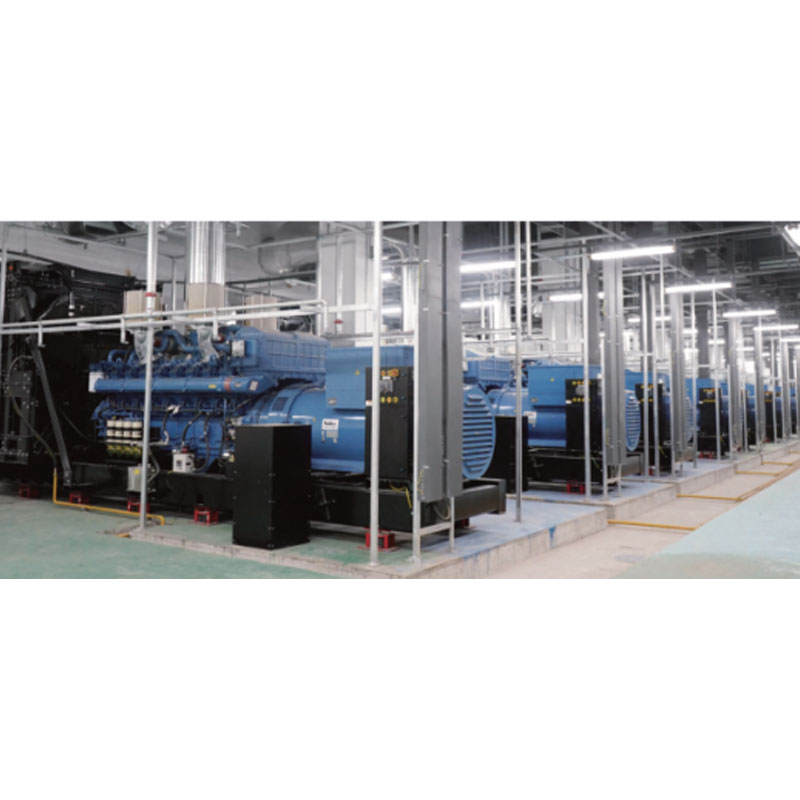
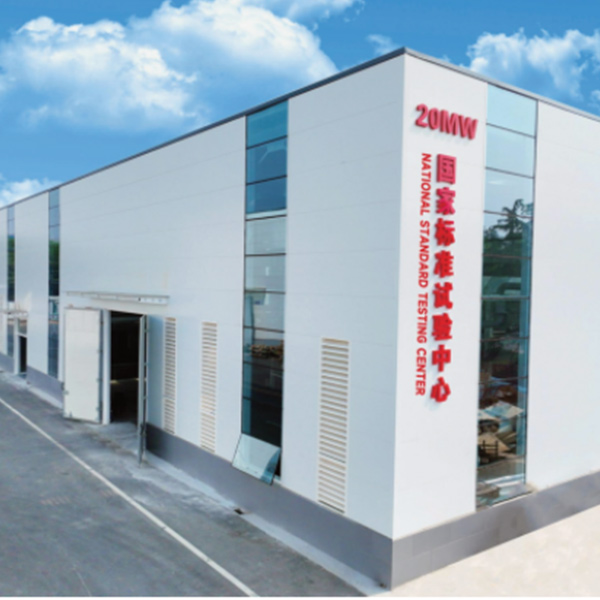
A good example of an integrated approach is working with companies that grew out of engineering departments. They think not in machines, but in projects. Here, for example,Yuke (Shandong) Electrical Technology Co.,Ltd(Yuke Electric). If you go to their websitevoyoko.ru, it is clear that the positioning is not just as a “Diesel Generator Plant”. They claim a full cycle: R&D, consulting, special order processing, delivery, construction. This is important.
There is an indicative moment in their history: the company was formed from the DEVER Electric Energy Technology team, which has been operating since 2003. This is not a trading house created yesterday. Such companies often have deep expertise in the energy sector in general, and not just in generation. They can competently advise on the issue of network redundancy, select a solution taking into account peak loads, and offer hybrid systems with solar panels and energy storage devices.
I interacted with them on a power supply project for a small hotel complex in the coastal zone. The task was non-standard: it needed quiet operation (strict noise standards), protection from salt air and the ability to use generators in cogeneration mode to heat the water in the pool. Standard ?catalogue? the models didn't fit. Yuke's team proposed a custom solution - a diesel generator set based on an engine optimized for low speeds to reduce noise, with enhanced anti-corrosion treatment of the casing and an integrated heat exchanger. Essentially, we designed the installation from scratch. This is the transition from the supply of equipment to the supply of technological solutions.
The Future of Leadership: Sustainability and Greening energy
Now a trend that can no longer be ignored is environmental friendliness and efficiency. The future leader of the diesel generator set market is not the one who will sell more kilowatts, but the one whose installations will consume less fuel per kilowatt-hour issued, will be able to operate on biofuel or syngas, and will be easier to integrate with renewable energy sources.
Chinese manufacturers are actively investing in this area. I see lines of generators emerging that were originally designed to run on natural gas or even hydrogen. Heat recovery systems are being developed that increase the overall efficiency of the installation to 80-90%. This is no longer an auxiliary source of energy, but an important element of an energy-efficient complex.
For the CIS markets this still seems like something far away, but the requirements are becoming more stringent. And those suppliers who can offer not just “hardware”, butenergy efficient and future compliantthe decision will determine the face of the market. Here, Chinese companies, with their flexibility and speed of introducing new developments, have a serious advantage over some traditional European brands that change their lineup once a decade.
Bottom line: is he a leader or not?
Returning to the title question. In terms of production volumes and breadth of assortment, China has, of course, been the leader for a long time. But if we talk about leadership as the ability to set trends, to offer the most technologically advanced and comprehensive solutions to complex problems, then the picture is heterogeneous.
Leadership today is not the prerogative of the country as a whole, but of specific companies that have relied on innovation and a deep understanding of customer needs. These are those who have gone from assembler to engineering and technology partner. When choosing a supplier now, you need to look not at the country of origin in the first place, but at the history of the company, the portfolio of implemented non-standard projects, the approach to development and, what is critically important, the presence of strong technical support that can solve the problem not “we’ll ship a new module in two months?”, but “we’ll analyze the log files and give instructions for reconfiguring tomorrow?”.
So, yes, China is a powerful player and market driver. But the real leader in your specific project is the one who can hear the problem and offer a working, not just a catalogue, solution. And there are more and more such companies from China.
-


-
-


WeChat

-
WeChat