

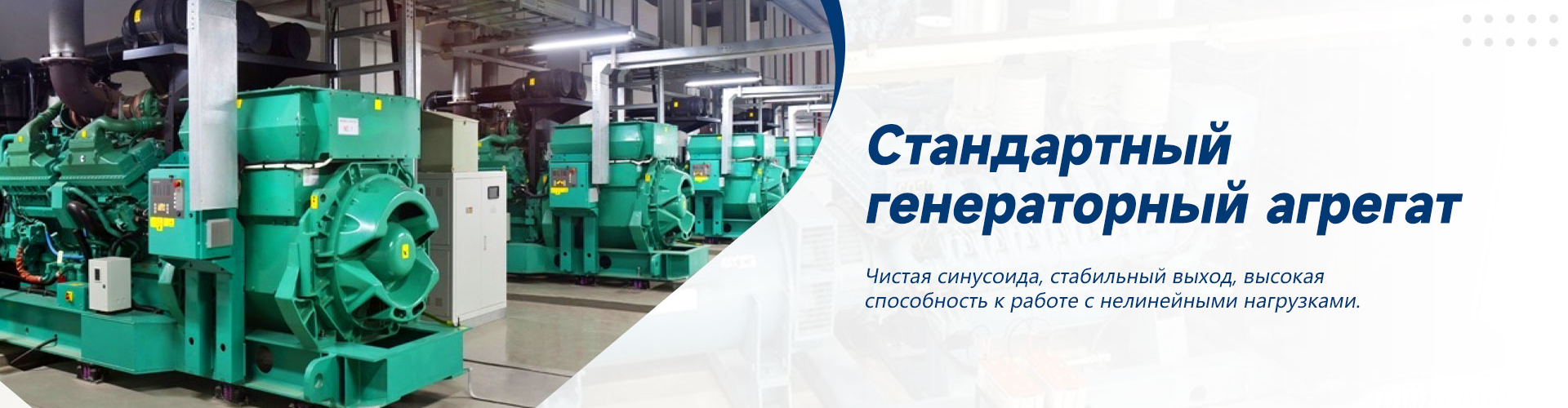
Is China the main buyer of power plants?
2026-02-02
The question in the title sounds like the answer is obvious - yes, of course. But in practice everything is more complicated. Figures about multi-billion-dollar Chinese contracts for the construction of power units around the world often flash in the news. It seems that the Chinese market is a bottomless pit swallowing up turbines and generators. However, if you dig deeper into the logistics of specific projects, into the specifics of tenders and real delivery times, the picture becomes much more mosaic. China is not just a “buyer”; it is often an architect, an engineer, and an equipment supplier all rolled into one. And this is where nuances begin that are not visible in summary reports.
From the ?buyer? to an “integrated supplier”: a paradigm shift
Previously, ten to fifteen years ago, the scheme really often resembled a classic purchase. A country or a private operator would announce a tender for the supply of, say, a gas turbine unit. Major Western players - Siemens, GE, Mitsubishi - competed for the contract, and Chinese energy companies acted as customers. But this model began to change rapidly as China's own technological capabilities grew. Now Chinese corporations, such as SEPCO, POWERCHINA or DEC, enter international projects not empty-handed, but with a ready-made engineering solution, where a significant part of the equipment is their own production or localized.
So the question is “is it a buyer?” is gradually transforming into the question “the end user of what equipment?”. A Chinese contractor may win a contract to build a thermal power plant in Africa or Asia, but at the same time purchase steam boilers for this project from one manufacturer, turbines from another (perhaps even under license), and control systems from a third. This is where there is room for more niche but critical suppliers. Not just for mega-corporations.
For example, within the framework of such complex projects there is always a demand for high-quality auxiliary electrical equipment, compensation systems, and specific distribution devices. This is an area where companies with deep expertise in a specific segment can shine. Just one of these can be attributedYuke (Shandong) Electrical Technology Co.,Ltd(Yuke Electric). If you look at their websitevoyoko.ru, it is clear that their profile is not the construction of turnkey stations, but technological solutions in electrical engineering: R&D, consulting, equipment supply. For a general contractor from China building a project abroad, such a specialized partner, capable of solving a non-trivial problem in terms of energy supply or control, is often more valuable than a mass supplier.
The Aggregate Data Trap: What's Hidden Behind the Numbers
When analysts say China is the largest market for power equipment, they are usually talking about gigawatts of installed capacity. That's true. But inside these gigawatts there are completely different stories. The construction of a coal block in Shanxi province, a hydroelectric power station on the Yangtze and a distributed solar power plant in Qinghai are three different worlds in terms of technology, suppliers and chain logistics.
I personally came across a situation where, for one large hydroelectric power station, a Chinese engineering holding purchased hydraulic turbines from a European concern (essentially being a buyer), but all the transformers, relay protection and automation systems were Chinese manufacturers, and not giants, but second-tier technology companies, but with strong R&D. They didn't "buy" station, they supplied key components for it. And their business grew precisely on the wave of this internal technological cooperation.
Moreover, some of the equipment that is formally “purchased” China, in fact, is intended for re-export as part of the “Belt and Road” projects. The station is assembled in China as a set of modules and then shipped to a site in Pakistan or Indonesia. In import statistics this may be seen as a purchase, but in fact it is an intermediate stage in the value chain. This is important to understand so as not to overestimate the extent to which the Chinese energy sector is dependent on net imports.
Case: when is it ?standard? the solution doesn't work
Let me give you an example from practice. There was a project to modernize a thermal power plant in one of the industrial clusters. The customer wanted to increase efficiency by integrating a heat recovery system. Standard offerings from major turbine brands were not suitable in terms of layout and cost. The solution was found through the involvement of a specialized engineering bureau, which designed a non-standard circuit using variable frequency drives and smart load control systems. The key components for this system, as it turned out, were supplied by a company similar in model toYuke Electric— with an emphasis on innovation and customization. Their websitevoyoko.rupositions them precisely as an innovative enterprise that combines development and delivery. It is in such niches that real, sustainable demand is formed, which is not visible in the top lines of reports.
The role of technological innovation, not just scale
This is where the answer to the original question lies. China, of course, remains a colossal consumer of energy capacity. But his role has evolved from a passive buyer to an active selector and co-developer of technologies. The market is now driven not so much by volume as by the complexity of the tasks: increasing efficiency, flexibility of working in a network with renewable energy sources, digitalization, deep use of data for predictive maintenance.
For a foreign supplier, this means that it is simply “hardware” to offer. is no longer enough. It is necessary to offer an intelligent system, readiness for localization of production, transfer of know-how. Or, as an alternative, to be indispensable in some narrow technological chain. Chinese companies have learned to produce excellent basic components. The shortage is felt in high-margin, complex subsystems, materials with special properties, modeling and control software.
I am observing how the request from our Chinese partners is changing. Previously, the main issues were price and delivery time. Now the first questions are increasingly about compatibility with a specific digital platform, the possibility of customization for non-standard network parameters, and the availability of certificates for working in special climatic conditions. This indicates the maturity of the market.
The future: symbiosis, not just sales
So, is China a major buyer of power plants? If we understand by ?purchase? transaction “money-commodity”, then yes, but this is a simplification that prevents us from understanding the real dynamics. Today, China is the main testing ground and the main integrator of world-class energy technologies. It creates demand not for ?power plants? as a product, but as solutions for specific energy challenges.
Success in this market will not come from those who try to sell more megawatts, but from those who can fit into these complex value chains as a technology partner. Like the sameYuke (Shandong) Electrical Technology Co.,Ltd, which, judging by its description, relies on product and technological innovation as its main competitiveness. Their model - R&D, technical consulting, engineering - exactly corresponds to the demands of the time.
Therefore, returning to the title. Yes, he buys. But just like an experienced chef buys products - not just any kind, but specific ones, for a complex recipe, part of which he creates himself. And understanding this cuisine from the inside is the only way to be a useful supplier to him.
-


-
-


WeChat

-
WeChat