

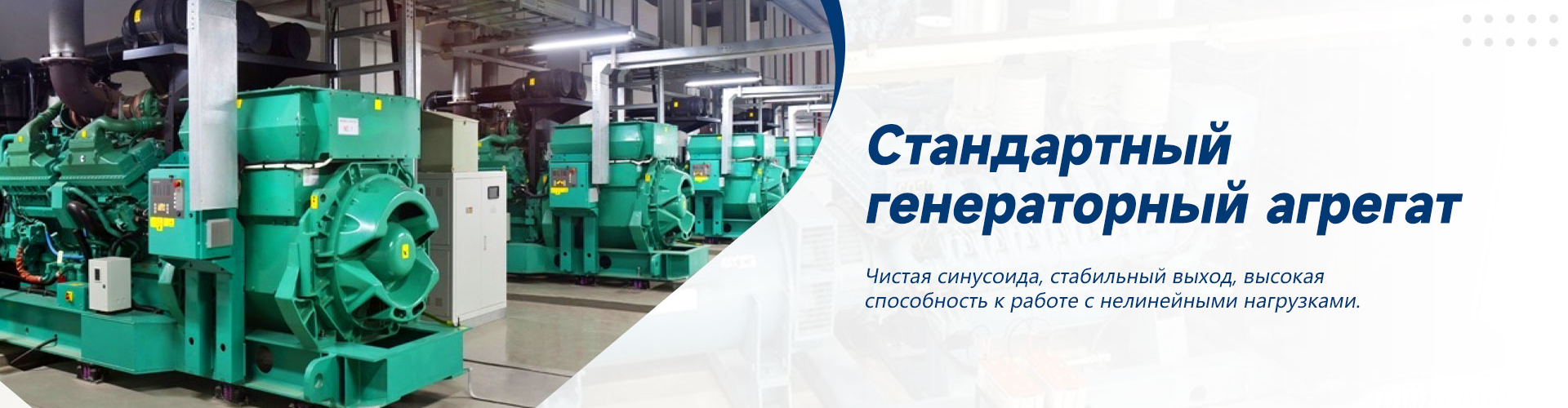
China: 200 kW diesel power plants - who are the main buyers?
2026-02-02
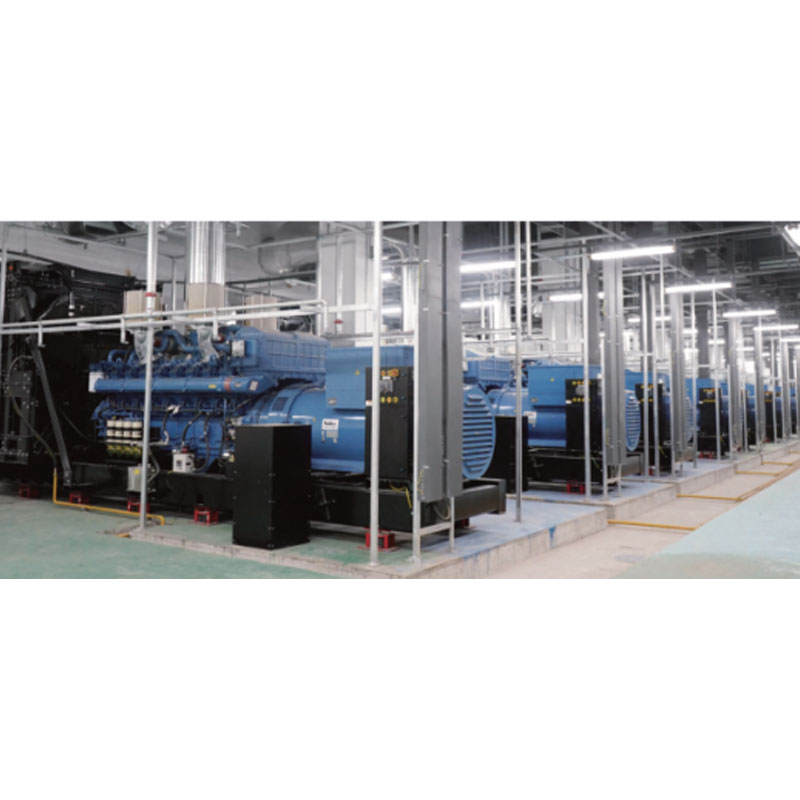
I often hear this question, and many immediately think about large construction projects or factories. In fact, the picture is more complex and interesting. 200 kW is a very specific niche, not the main reserve for mega-facilities, but also not a low-power unit for a shop. This, one might say, is the “golden mean”, and its clients are determined not so much by the industry as by specific conditions, where central networks are either unreliable, or non-existent, or their connection costs a pretty penny. I’ll try to sort it out based on what I saw myself and what our partners encountered, likeYuke (Shandong) Electrical Technology Co.,Ltd.
The unobvious leader: remote mining and primary processing
Here the demand is stable. We are not talking about giant deposits with their own substation, but about points of the initial stage - exploration parties, small quarries, washing plants for placer gold or precious metals. Often in the taiga, in the mountains, where power lines are hundreds of kilometers away.Diesel power plant 200 kW- this is just the power to power drilling rigs, high-pressure pumps, camp lighting and cabins. Clients here are pragmatic to the extreme: the main thing is uninterrupted operation and maintainability in the field.
We had experience in supplying such a geological exploration party in Siberia. The customer initially wanted a more powerful unit, but after calculating peak loads and, more importantly, fuel consumption during helicopter delivery, they settled on the 200 unit. The key argument was the modular design - it could be disassembled into units weighing up to 2 tons for transportation. This is the case when technical nuances decide everything.
It would be a mistake to assume that only turnkey installations are purchased. Often taken ?naked? the generating set is on the frame, and the control panel, fuel tanks, etc. are tied on site by our mechanics. Therefore, manufacturers who can flexibly configure the order, like the sameYuke Electric, is a winner here. Their profile is precisely the integration of solutions, and not just the sale of hardware.
Reserve for objects with “sensitive” load
The second large group is objects that are formally connected to networks, but where even a short-term voltage failure is fraught with large losses. Small production with a continuous cycle, for example, plastic packaging or milk processing. Stopping the line means defective equipment, cleaning of equipment, and downtime for workers. A centralized ATS (automatic transfer switch) of 200 kW for the entire workshop is often better than increasing the contractual capacity and paying for each kW.
There are different requirements here. Not just to start, but to start quickly and smoothly, without surges that can damage the frequency converters on the same extruder. Therefore, buyers delve into the details: the type of generator (synchronous, brushless), the quality of voltage stabilization, the switching time of the ATS. People are often asked to integrate a remote monitoring system so that an engineer can see parameters from a smartphone.
An interesting nuance: in this segment there is often a request for sound insulation and all-weather casing. If the noise is not critical for the taiga, then for production on the outskirts of the village the neighbors may complain. We have to explain the price difference between open installation in the hood and a full-fledged container version. Sometimes clients save money, and then use their own money to improve the sound insulation, which turns out to be more expensive.
Private sector: not what it seems
It may seem that private individuals are talking about 5-10 kW for their dacha. But there is also a segment of “large private owners”. For example, owners of modern farms with fully automated cowsheds, ventilation and milk cooling systems. Or eco-villages that consciously create autonomous infrastructure. For them, 200 kW is already a mini-power plant for the entire settlement.
Working with such a client is the most difficult. He is not a professional energy engineer, but he wants to understand everything, reads forums, compares specifications. There are many questions about durability and the availability of service centers in the region. This is where the brand reputation and history of the supplier company play a key role. When you say that the company is likeYuke Electric, traces its history back to 2003 from the DEVER Electric team and is engaged in engineering solutions, and not just trade - this inspires more trust than just a “Chinese manufacturer?”
State and municipal procurement: specifics and pitfalls
Tenders for the supply of diesel generators for hospitals, schools, boiler houses in remote villages. A power of 200 kW is also in great demand here - it is enough to ensure the life of a social facility. The main criterion in public procurement is formal compliance with the technical specifications (TOR) at the minimum price. This gives rise to its own specificity.
Manufacturers and suppliers, in order to meet the price, often offer the most simplified package. The technical specification may say “diesel generator set 200 kW?”, but the details are not specified: type of starter (electric or manual), radiator material, fuel tank capacity. In the end, the one who offers the basic version wins. And then at the site it turns out that at -40°C the electric starter cannot cope, and there is no manual starter. Or a tank for 2 hours of operation, and the boiler room must operate for 24 hours.
Therefore, serious players try to participate in the formation of technical specifications at the early stages, consulting designers. The goal is not to “steam” expensive, but to adequately specify the requirements so that the equipment then actually works. This is a long story, not always successful, but necessary. Sometimes it is more profitable not to participate in what is obviously “cut down”? tender, rather than having to deal with complaints and a damaged reputation for years.
Construction business: temporary power supply
Yes, construction sites are classics. But not skyscrapers in Moscow, but rather infrastructure projects far from communications: the construction of bridges, road sections, and power lines. The 200 kW generator is used as a mobile power station for welding machines, concrete mixers, lighting, and a foreman’s camp.
The key here is mobility and survivability. The installation is often transferred from site to site, loaded onto low-loader trawls, and shakes off-road. Buyers look at frame rigidity, quality of welds, and protection of components from vibration. Open installations (hooded) are more popular here than container ones - they are easier to maintain in the field, and it is easier to clean the radiator from dust.
The main problem at such facilities is uncontrolled operation. Mechanics may forget to check the oil, operators may overload. Therefore, now many customers are asking to install not just control devices, but also interlocks and alarms. So that when there is overheating or a drop in oil pressure, the engine does not just signal, but switches off, preserving the expensive “core”? — the diesel itself. This is a matter of culture of use, which is gradually being instilled.
Bottom line: not power, but a solution to the problem
So who is the main buyer? As you can see, this is not one industry, but a set of situations where a reliable, autonomous source of medium-power energy is needed. They all have one thing in common: they are buying not just a unit, but a solution to the problem of lack or unreliability of electricity.
Successful sales in this segment are built on a deep understanding of these problems. You need to ask the right questions: ?Where will it stand? Who will serve? How to deliver fuel? What will feed??. Often the right configuration advice is worth more than a discount. It is the approach of a technology partner that combines R&D, supply and engineering, as stated in the missionYuke (Shandong) Electrical Technology Co.,Ltd, here it shoots.
Therefore, to summarize, the main buyers of Chinese 200 kW diesel power plants are pragmatists from the remote resource extraction sectors, medium-sized businesses with sensitive production, and contractors at complex infrastructure facilities. And their choice is determined not by the country of origin, but by the combination of price, adaptability of the supplier to the task and a clear understanding of what they are actually buying: kilowatts in wires or a guarantee of a continuous workflow.
-


-
-


WeChat

-
WeChat