

Who is the main buyer of Chinese 100 kW gas power plants?
2026-01-24
I often hear this question, and many immediately think about large industrial facilities or government tenders. In practice, everything is a little different, and sometimes not at all as it seems from the outside. I’ll try to sort it out based on what I’ve seen on the market in recent years.
Waiting vs. Reality: not giants, but the middle
When I first started working with such installations, I myself assumed that the main demand would come from large factories or mining companies that needed reserve power of hundreds of kW. It turned out that for them 100 kW is often too little for the main reserve and too much for a local solution. They are looking at units from 500 kW and above. But the 100 kW niche is being filled by completely different players.
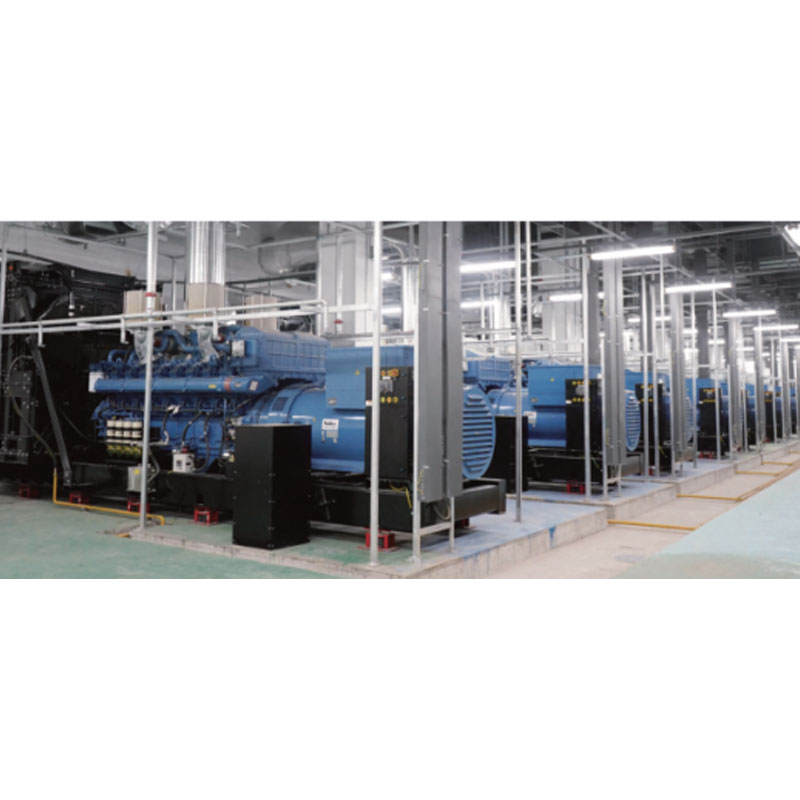
Real buyers are, as a rule, medium-sized businesses with specific, sometimes rather narrow, tasks. For example, small production workshops where some sensitive equipment cannot be stopped for a second. Or modern greenhouse complexes, where ventilation and climate control systems are a matter of harvest preservation. For them, a breakdown of the general network is a disaster, and their own 100 kW gas station becomes insurance. Moreover, gas engines are often chosen rather than diesel engines due to a combination of factors: cheaper fuel (if there is a line), quieter operation, fewer emissions issues.
Here it is worth making a digression about one unsuccessful case. Once they tried to promote such a station for a small hotel complex in the suburbs. The logic was ironclad: backup power for the security system, elevators, refrigerators. But they did not take into account the difficulties with obtaining permits for connecting to a gas pipe and noise standards (although gas ones are quieter, they are not silent). The project stalled at the approvals stage. This experience has clearly shown that the technical characteristics of an installation are only a third of success. The rest is local regulations and installation pitfalls.
Non-obvious segment: distributed generation facilities
This is perhaps the most interesting and growing segment in recent times. We are talking about those cases when the station does not operate in reserve, but in the main power supply scheme, often in conjunction with solar panels or simply to cover peak loads. I have seen how small private farms or even logistics terminals install such a station so as not to overload the network and pay less for peak power.
The key word here isgas power plantscogeneration type. The buyer receives not only electricity, but also heat, which can be used for heating the same hangar or for technological needs. The economy immediately becomes more attractive. We had a client - a manufacturer of building blocks. Their process requires heat for drying. The installation of a 100 kW cogeneration station solved two problems at once: it stabilized the power supply to the pressing equipment and provided almost free heat for the drying chamber. The scheme paid for itself faster than if they had just used a backup generator.
In such projects, sound engineering is critical. It's not enough to just sell hardware. It is necessary to calculate the thermal load, operating modes, and integration with existing systems. Companies that offer a complex, from design to service, win. Here, for example,Yuke (Shandong) Electrical Technology Co.,Ltd(Yuke Electric), which grew out of an engineering team, often works this way. They are not just a supplier, but rather a technology partner, as on their websitevoyoko.rucan be seen from the structure of services: R&D, consulting, supply, turnkey construction. For a buyer in this segment, this approach is a big advantage.
Geography of demand: not capitals, but regions
The sales map is very revealing. The main flow of applications comes not from Moscow or St. Petersburg, but from regions, especially those where there are problems with worn-out networks or where local industry and agriculture are actively developing. Volga region, Southern Russia, some regions of Central Russia.
There, there are often longer and more frequent power outages, and businesses are forced to rely on themselves. At the same time, many such places have access to main gas, which makes the choice in favor of a gas generator logical. Sometimes they are even purchased for objects that are not connected to networks at all - remote quarries, logging sites. But for 100 kW this is less common; there are more diesel engines or more powerful gas solutions.
An interesting nuance: in the regions they trust proven brands more and are less inclined to experiment with new names. Reputation and the presence of a service network decide everything. Therefore, many Chinese manufacturers, in order to gain a foothold, work through local engineering integrators with a good history, rather than entering the market directly under their own name.
What is the buyer looking for? Price is not the main thing
At first, it seems that low price is everything in this segment. Especially when you talk about Chinese equipment. But experience shows that a competent customer who buys an installation for business, and not for show, takes a much broader view.
In the first place - reliability and compliance with the stated parameters. Motor, alternator - whose? Are there any real reviews about the mean time between failures? The second is the availability of spare parts and service. If it breaks, how quickly will it be fixed? Wait a month for a part from China? This is downtime and losses. Third is configuration flexibility. Do I need AVR (automatic transfer of reserve)? Is an all-weather cover necessary? Is it possible to integrate a remote monitoring system?
Price becomes a decisive factor only among equals in these three parameters. Many times I saw how a client chose not the cheapest option, but one where the supplier could provide a full package of documents for approval, gave an extended warranty and had an engineer within 500 km from the site. By the way, about documentation. This is a separate pain. Certificates of conformity with TR CU, permission from Rostekhnadzor - without this, even the bestpower plant 100 kWturns into a pile of metal. Good suppliers help with this too.
The role of the integrator and the future of the market
So, who is the main buyer? This is not an abstract industry, but a specific owner or director of a medium-sized enterprise who is faced with the problem of unreliable energy supply or high tariffs and is looking for a practical solution. He does not buy a generator, but confidence in the continuity of his business process.
In this chain, the key role is played not by the manufacturer, but by a competent integrator or engineering company. Such as the one mentionedYuke Electric, which can take on the entire cycle: calculate the economics, select equipment (perhaps even assembly for the client’s tasks), coordinate, install and maintain. Their websitevoyoko.rupositions them precisely as an innovative full-cycle enterprise, which is in demand now more than ever.
The trend that I observe is the complexity of queries. Just giving light is not enough. We need energy efficiency, we need integration into smart microgeneration networks, we need consumption analytics. And Chinese manufacturers, who previously played on price, are now actively investing in these smart technologies and in the quality of components. The struggle is no longer in the lower price segment, but in the segment of the optimal price-quality-functionality ratio. And the buyer began to understand this better and better.
So, returning to the title question... The main buyer is a pragmatist. A person who counts money not only when purchasing, but throughout the entire life cycle of equipment. And his choice increasingly falls on complex solutions, whereChinese gas power plantis not a goal, but a high-quality and technological tool in a larger project to supply energy to his business.
-


-
-


WeChat

-
WeChat