

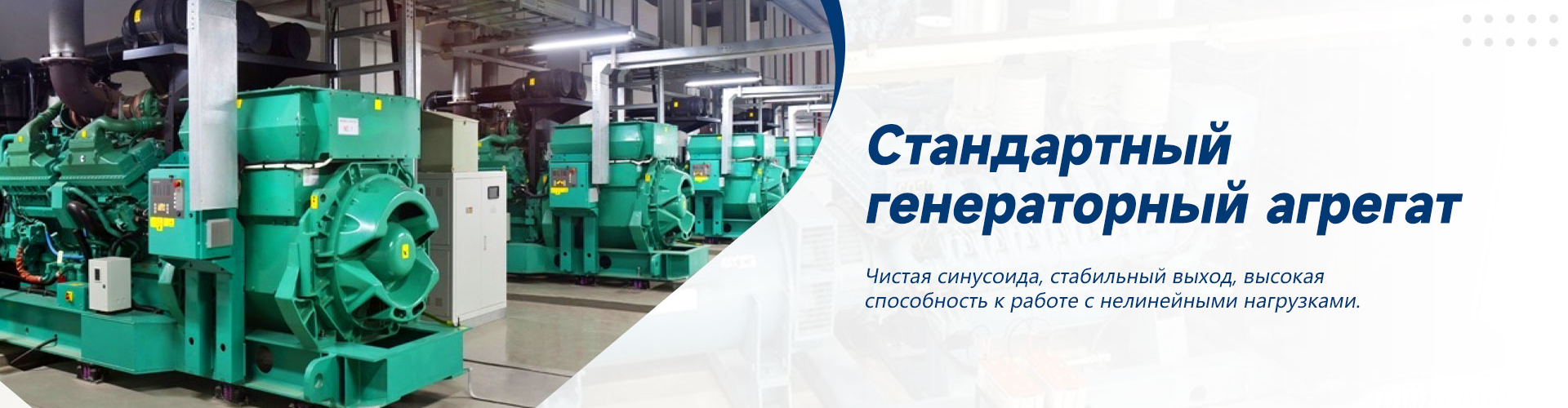
The main buyer of cheap hooded generators?
2026-02-22
Who even takes them, these budget bonnets? I often hear that this is for garage workshops or summer residents. But the reality, as usual, is more complex and prosaic. If you dig deep into the market, and not look at advertising brochures, a completely different picture emerges.
Let's break down stereotypes: not a summer resident, but a professional
The first and main myth is thatcheap hood generatorsThis is the lot of non-professionals, who “if only there was light?” Complete nonsense. Quite the opposite. The main mass buyer is small professional teams: builders, road workers, telecommunications installers. Why? Their task is to provide energy for the tools on site: an angle grinder, a hammer drill, and sometimes a welding inverter. They don’t need the stability of 220 volts like in an outlet at home, they need “traction”, the ability to handle inrush currents and work for 8-10 hours in dirt and dust. They often simply cannot afford an expensive European unit with a bunch of electronics, and it’s a pity to leave it in the rain. But the Chinese “workhorse” for 25-30 thousand rubles - ideal. Broke? It is often repaired on the knee, and if not, it’s easier to buy a new one. This is a consumable item, like wheels for an angle grinder.
The second large segment is small and medium-sized businesses in the field of trade and outbound services. Coffee vans, shawarma sellers, festival organizers in the fields. For them, a generator is a source of life, but also an expense. Profits are not always stable, so investments must pay off quickly. They don’t take the cheapest one, but the one that is optimal in price and, critically, in terms of noise level. There are already more expensive models here, but still in the budget bonnet category. Often seen in price lists, for example, fromYuke (Shandong) Electrical Technology Co.,Ltd— they have just a line of such “workers?” models, without frills, but with an emphasis on engine endurance. On their websitevoyoko.ruit is clear that the emphasis is on utilitarianism rather than glamour.
And the third, unobvious buyer is... the manufacturers themselves and large distributors of special equipment. No, they don't use them, they supply them as optional equipment. If a client has bought a new drilling rig or compressor, they often offer an inexpensive generator included in the package. This is a typical OEM supply. And this is where price decides everything. When purchasing a complex, the customer looks at the total amount. And if you can save 50-70 thousand on a generator by choosing a proven budget option, they will always choose it. Risks? They are transferred to the guarantee of the generator supplier.
Selection criteria: what are they really looking for?
When such a buyer comes to buy a generator, he does not ask the questions that managers are taught in showrooms. His checklist goes something like this. The first is weight and dimensions. The hood generator is often carried alone, loaded into a Gazelle. or ?Bull?. If it is too heavy, they won’t take it. The second is the engine type. Gasoline, 4-stroke, preferably with a well-known engine name like Lifan or its equivalent. Not because it is the best, but because spare parts are available in any village. Third - sockets. What is needed is power connectors, not household European sockets. And their location is so as not to be flooded with rain.
The fourth, and perhaps the most paradoxical criterion is maintainability. The buyer looks at the generator in advance as a future breakdown. How easy is it to remove the cover? Is an alternator available for brush cleaning? Is there a service in the city that will take on this brand? This is where companies like Yuke Electric, which trace their history back to 2003 from the DEVER Electric team, have an advantage. They have been on the market for a long time, their products are familiar to service centers, and there are established supply chains for spare parts. This is not some noname that appeared yesterday.
And the last thing is documentation. It’s funny, but good, understandable paper instructions in Russian with pictures are very highly valued. Because it will be read in the field, not by engineers. If the passport contains only Chinese characters and poor translation, there is less trust.
Failed Attempts and Why They Happen
I myself have seen how people make mistakes. The most common mistake is an attempt to save another 5-10 thousand and buy a frankly “market” one. consumer goods. No indication of the actual manufacturer, with an engine assembled God knows where. Such generators can work perfectly for a season, and then die completely - the alternator winding burns or the crankshaft jams. The repair is comparable to the cost of a new one. The buyer, having been burned once, often goes to a more expensive segment, but to trusted suppliers.
Another mistake is incorrect power calculation. They take it right next to each other. to their tools, not taking into account that another consumer may appear at the site or the voltage in the network will sag. The generator operates at the limit, overheats and quickly fails. The rule of experienced foremen is to take with a reserve of 25-30%. Yes, it's more expensive, but it lasts longer.
And finally, complete disregard for service. These people exploit the equipment to the point of wear and tear. The oil is not changed on time, the air filter is not cleaned. Then they wonder why the engine started knocking after 500 engine hours, and not after the stated 1500. This is both the fault of the manufacturer, who did not convey in simple language the importance of maintenance, and of the buyer. Some brands now make very simple and clear service books, which is immediately evident in the products of technology companies that, like Yuke, combine R&D and engineering. They understand who they are dealing with.
The role of the supplier: not just to sell, but to integrate into the process
Successful suppliercheap hood generatorsfor this segment it is not a warehouse with managers. It is a logistics and consulting hub. Because the order is often urgent: “it’s broken, needs it at the site by tomorrow?”. We need the ability to quickly deliver or pick up from a warehouse in the region. Websitevoyoko.ru, by the way, is made with an emphasis on this: clear catalogs, technical specifications, contacts - a minimum of unnecessary things.
In addition, a good supplier always has established relationships with service centers. He doesn't just sell hardware, he sells a solution with further support. This is critical for the professional buyer. He is not buying a generator, he is buying the confidence that his work will not be interrupted due to a breakdown of the power plant. Therefore, companies that position themselves as innovative technological enterprises with a full cycle from development to construction are more credible. Because behind them is not just a trademark, but an engineering thought.
That is why in the niche of budget hood generators, those who survive and thrive are not those who make the lowest price, but those who provide predictable quality, availability and service. Price is an entry point, but not the main factor of loyalty. Loyalty appears when your generator burned out on Friday evening, and on Saturday morning they brought you a new one or promptly found a spare part.
Conclusions that are not written in brochures
So who is the main buyer? This is a pragmatic professional for whom the generator is a tool, not a toy. His choice is determined by the economics of a specific task, and not by abstract “brand advantages”. He is willing to put up with increased noise, rougher workmanship and the need to service equipment more often in exchange for low initial cost, maintainability and availability.
The market for these generators is a consumables market. And it's huge. He lives by his own laws, where word of mouth and the recommendation of the foreman mean more than beautiful advertising. Manufacturers and suppliers who understand this seem toYuke (Shandong) Electrical Technology Co.,Ltd, build their product and logistics around the needs of this specific, demanding and mass user.
Therefore, the next time you see a shabby, oily hooded generator at a construction site or at a retail outlet, know that this is not “cheap”. This is most likely the result of a very balanced economic calculation of a person who makes money with his instrument. And his choice is the main verdict on the quality and necessity of this entire segment of technology.
-


-
-


WeChat

-
WeChat