

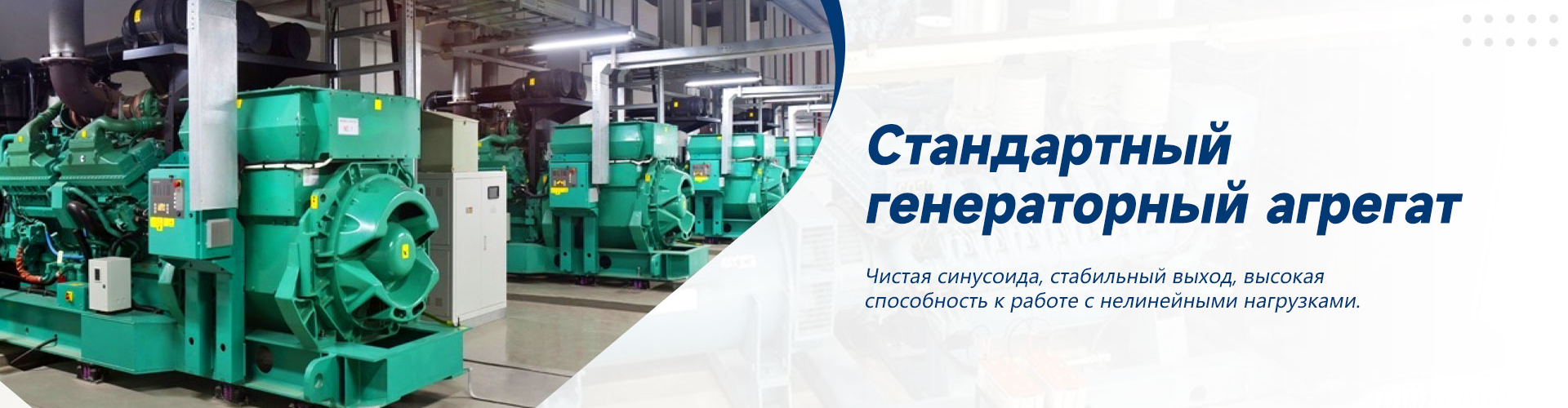
The main buyer of cheap container generators?
2026-02-09
This is a question that constantly comes up in negotiations and on industry platforms. Many people immediately think about developing countries or small businesses, but the real picture, in my opinion, is much more interesting and not so clear-cut. What is often overlooked is that ?cheap? - this is not always about low quality, but about a specific balance of price and functionality for specific, sometimes harsh, operating conditions.
Who are they really?
If we discard theory, then according to my observations, the bulk of orders come from contractors working on temporary facilities. We are talking not only about construction sites in remote areas, but also about repair crews at existing enterprises where power was suddenly turned off for scheduled work. They need a mobile, ready-to-go source “here and now”. They often buy not directly, but through intermediaries, who are precisely looking for the best price solution. An important nuance: for them, it is not so much the service life before major repairs that is critical, but rather the reliability for the duration of the contract - a year, two, maximum three. After this, the generator is often written off or sold at a huge discount.
The second large group is municipal and communal services in small cities or towns. The budget is limited, tenders are won by the one who offers the minimum price. The purchase is for a specific purpose: reserving a boiler room, powering a pumping station during a flood. This has its own specifics: there is a lot of documentation, strict certification requirements, but in fact the equipment can stand idle for years. The main thing is that it starts at the right moment. I have seen cases where something purchased at a tendercheap container generatorIt didn’t start at -25°C because the batteries were wrong and the oil wasn’t changed. The problem was attributed to “force majeure”, and the generator was then quietly replaced.
And the third thing that is less often talked about is startups in the field of events and logistics. Young companies that organize festivals open temporary warehouses. They have little capital, but there is a need for autonomous energy supply. They are ready to put up with increased noise or not the most convenient service, the main thing is to meet the budget and ensure that the equipment works for the season. Often they become the very same secondary buyers that I mentioned above, purchasing decommissioned units from contractors.
Selection errors and false economies
The most common failure is an attempt to save on equipment. Buying ?naked? a container with a generator set, and then over the years it is completed with: a ventilation system, fuel tanks, automatic reserve input. As a result, they overpay significantly and get a “Frankenstein” that no one wants to work with under warranty. I always recommend looking at the total cost of ownership rather than the catalog price tag. But, alas, the logic is “we’ll buy it now, and then we’ll see?” often wins.
Another pitfall is trusting unverified suppliers. The market is flooded with offers. Some companies, even with big names, are essentially just collectors. They take an engine of one brand, an alternator of another, weld the frame and put it in a used sea container. During testing, everything works, but after 500 operating hours, problems begin with the synchronization of components. Warranty repairs take months because you have to wait for spare parts from different manufacturers. In this context, by the way, the work of such integrators asYuke (Shandong) Electrical Technology Co.,Ltd(their website isvoyoko.ru), which position themselves as a technological enterprise with a full cycle from development to construction, looks more logical. Their model, based on product innovation as a core competency, should theoretically produce a more balanced product. But this is in theory; in practice, everything depends on the execution of a specific order.
Personal experience: one of our clients, the owner of a quarry, bought such a “prefabricated” one. generator. Saved about 15% against our offer. Six months later the voltage regulator failed. It turned out that it is incompatible with the frequent start-stop mode characteristic of quarry equipment. The supplier “nodded?” to the alternator manufacturer, who - to the engine manufacturer. As a result, the downtime of the equipment cost more than the correct installation would have cost in the first place. The client returned to us, but for a full-fledged solution.
Key Points When Evaluating a Proposal
What is the first thing I look for when people come to me asking about a low-cost solution? Climate. For work in conditions of Siberia or the Far East? Cheap? the generator must have an appropriate package of options: pre-heating, insulated container, frost-resistant materials. If it is not in the database, then its cheapness instantly disappears. Often sellers are silent about this, but equipment for a temperate climate is included as standard.
The second is the availability of service and spare parts. It’s better to overpay a little for installation on a common platform (for example, with a Cummins or Weichai engine) than to get an exclusive one, the spare parts for which take 45 days to ship from abroad. This is a basic rule, but it is constantly neglected in the pursuit of the lowest figure in the commercial proposal.
And third, purely technical: the level of automation. Do you need a full-fledged ATS synchronized with the network or is a simple autostart unit sufficient? For emergency lighting of a warehouse, even simple lighting is enough. To provide a surgical department in a hospital - no. It is stupid to overpay for unnecessary functions, but their absence where they are critical can lead to large losses. This is where the supplier’s competence in technical consulting is important, as stated, for example, by Yuke Electric. Will their engineer be able to ask the right questions and suggest an adequate configuration, or will he simply sell what is in stock?
Market and future of the segment
I think the demand for low-cost container solutions will not fall, but will transform. Previously, the main thing was the engine. Now more and more attention is being paid to the “stuffing”: monitoring systems, remote control, fuel efficiency. Even in the low price segment, hybrid solutions are emerging, where the generator is paired with solar panels or energy storage to cover peak loads. This is no longer just an “iron box with a motor”.
Another trend is the growth of the secondary market. Companies are appearing that professionally refurbish used generator sets: they carry out major repairs, change consumables, update the electrical part and sell them again with a guarantee. For many tasks this is the ideal balance of price and reliability. And this is a direct response to the request of the samemain buyer, who is looking for reasonable savings without catastrophic risks.
What's next? I think the segment will split. On the one hand - extra-budgetary "expenses" solutions for short-term projects. On the other hand, there are smarter, adaptive systems, where savings are achieved by optimizing operating and maintenance modes, and not by reducing the cost of components. And here, companies that, like Yuke Electric, rely on innovation and the full cycle, may have an easier time adapting than pure assemblers.
Final Considerations
So who is he, the main buyer? This is not an abstract category, but a pragmatist with a clear, often urgent task and a limited budget. His choice is always a compromise. Sometimes this compromise is justified and the solution works for years. Sometimes it leads to headaches and additional expenses.
My advice, hard-earned in practice: never choose a generator set, especially a containerized one, based on price alone. You need to dig deep into the conditions of future work, demand detailed specifications and reference lists, and check to what extent the supplier is ready to share responsibility. An integrator who offers both construction and services is often more interested in the long-term outcome than a one-time equipment seller.
Ultimately, a “cheap container generator?” - this is not a verdict on quality, but a technical and economic category. The ability to find an adequate solution in this segment that will accomplish its task is the sign of a competent specialist. And the market, as we see, offers both a lot of traps and interesting opportunities for such a search. The main thing is to understand why exactly you are buying this power in an iron box.
-


-
-


WeChat

-
WeChat