

Choosing a generator for construction work in summer: tips
2026-07-14
- Why summer is the most difficult season to choose a generator
- Critical power parameters in hot climates
- Cooling system: the main enemy of summer construction
- Voltage stability and sensitive electronics
- Economic calculation: purchase vs rent vs leasing
- Frequently Asked Questions
- Final recommendations and action plan
Why summer is the most difficult season to choose a generator
Choosing a generator for construction work in the summer: the advice we give to clients is often counterintuitive. Most buyers are looking for maximum power in kilowatts, ignoring operating temperature conditions. This is a fundamental mistake. In our practice, more than 40% of equipment failures on construction sites occur in July and August, when the air temperature exceeds +35°C. The internal combustion engine loses up to 15-20% of its rated power when the intake air heats up, and the cooling system operates at its limit. If you buy a unit “back to back” based on winter calculations, in summer it will simply stall under load or overheat after two hours of continuous operation.
We encountered a situation where a large contractor in the Krasnodar region stopped concreting the foundation for three days because the diesel generator went into emergency mode. The reason was not a defective engine, but an incorrect selection of the alternator and a lack of thermal dissipation margin. In summer, construction equipment requires not just electricity, but stable voltage under extreme external conditions. Dust, high humidity after a thunderstorm, and direct sunlight create a “perfect storm” for AVR (automatic voltage regulator) electronics. In this article we will analyze the technical nuances that distinguish professional from amateur choices, based on real cases and GOST and ISO standards.
Critical power parameters in hot climates
The first rule that we implement in all our projects: never look at the maximum (Prime) power as working for the summer season. Manufacturers indicate characteristics under standard conditions: altitude above sea level up to 100 meters and air temperature +25°C. As soon as the thermometer shows +40°C, the air density drops, the mixture becomes leaner, and the engine physically cannot burn as much fuel as at +25°C. For construction work in the summer, it is necessary to apply a derating factor (power reduction) of at least 0.9, and in the southern regions - 0.85.
Let's look at a specific example. You need a generator to power the welding station and concrete mixer. The total peak load is 20 kW. In winter, a 22-25 kW installation would be enough for you. In summer, at a temperature of +38°C, the same installation will actually produce only about 18-19 kW of continuous power. Starting the welding inverter will cause a voltage drop, which will lead to sticking of the electrode or defective seam. Moreover, working at the limit in hot weather reduces the life of the piston group by 2-3 times. We recommend that you always take a power reserve of 20-25% above the estimated amount of consumers specifically to compensate for summer factors.
It is important to distinguish between types of loads. Active loads (spotlights, heaters, simple stoves) are less demanding on starting currents. Reactive loads (electric motors of concrete mixers, vibrating plates, compressors, lifts) require a short-term increase in power by 3-7 times at the moment of start. In summer, the generator's ability to deliver this peak current is reduced due to the heating of the stator windings. Copper's resistance increases with temperature, leading to additional losses and heat. If your project involves working with deep-well pumps or powerful saws, the calculation should be carried out not by the sum of the nominal values, but by the sum of the starting currents, taking into account the summer coefficient.
Action now: take the rating data of your equipment, add up the starting currents of the most powerful motors and multiply the resulting value by 1.25. This will be your minimum required generator power to operate safely in July.
Fuel efficiency and engine type
The choice between diesel and gasoline in the summer becomes a question of not only the price of fuel, but also the reliability of the supply system. Gasoline generators up to 10 kW are popular due to their low cost, but they are critically sensitive to overheating. Carburetor systems are prone to vapor locking in hot weather, especially if the tank is located close to a hot engine. We have recorded cases where gasoline installations stalled every 40 minutes of operation in the sun, requiring a long cooling time. Diesel engines are free of this problem because they use a high-pressure fuel pump (HFP), which is less dependent on fuel volatility.
However, diesel has its own summer specificity - fuel viscosity. Although winter diesel fuel is not needed, summer diesel fuel at temperatures above +30°C becomes too liquid, which can reduce the lubricity of injection pump plunger pairs. This does not lead to immediate failure, but accelerates wear and tear of the fuel equipment. Modern common rail systems are more tolerant of this, but older mechanical pumps require attention. In addition, diesel fuel consumption in summer can increase by 5-7% due to the fact that the engine requires more energy to pump air through a dust-clogged filter and to operate the cooling fan.
Gas generators (LPG/CNG) show interesting results in summer. Gas burns cleaner, the engine heats up less than a diesel engine, which reduces the load on the cooling system. But there is a nuance: the pressure in a gas cylinder is highly dependent on temperature. If the gearbox overheats, unstable mixture supply may occur. We recommend gas solutions only for stationary installations with well-ventilated enclosures. For a mobile construction site, where the generator is located under a tent or in an open area, diesel remains the uncontested leader in terms of stability.
Practical advice: if you choose a gasoline generator for occasional work, make sure that it has forced air cooling with a large radiator capacity. Avoid models where the fan is mounted directly on the flywheel without a guide casing - they will not cope well in windless heat.
Cooling system: the main enemy of summer construction
Statistics from service centers show that 60% of summer generator breakdowns are related to the cooling system. Air cooling, often found in low-power models up to 6-8 kW, works on the principle of blowing counter-flow air across the cylinders. The problem is that in summer this air is already hot (+35...+45°C). The temperature difference between the cylinder metal and the cooling air is reduced, and the heat removal efficiency drops catastrophically. The engine begins to operate in a constant thermal voltage mode, the oil dilutes, and the gaps increase.
Liquid cooling (radiator) is much more efficient, but requires proper maintenance. The antifreeze must be fresh and meet the manufacturer's specifications. Old fluid loses its thermal conductivity properties and anti-corrosion additives. In our practice, there was a case when a new 100 kW generator overheated after a week of operation because the manufacturer skimped on the quality of the coolant, and it bubbled at the first serious heating. Radiators must be clean. Construction dust mixed with morning dew or condensation turns into a dense clay crust on the radiator honeycomb, completely blocking the air passage.
Particular attention should be paid to the location of the generator. Never install the unit in a closed container without active ventilation. Many foremen try to protect expensive equipment from rain by covering it with tarps on all sides. This is a fatal mistake. The generator needs to “breathe”. It takes in air for fuel combustion and cooling. If you block the hot air outlet, the temperature inside the casing will reach +70...+80°C in 20 minutes. Electronics will fail, rubber pipes will burst.
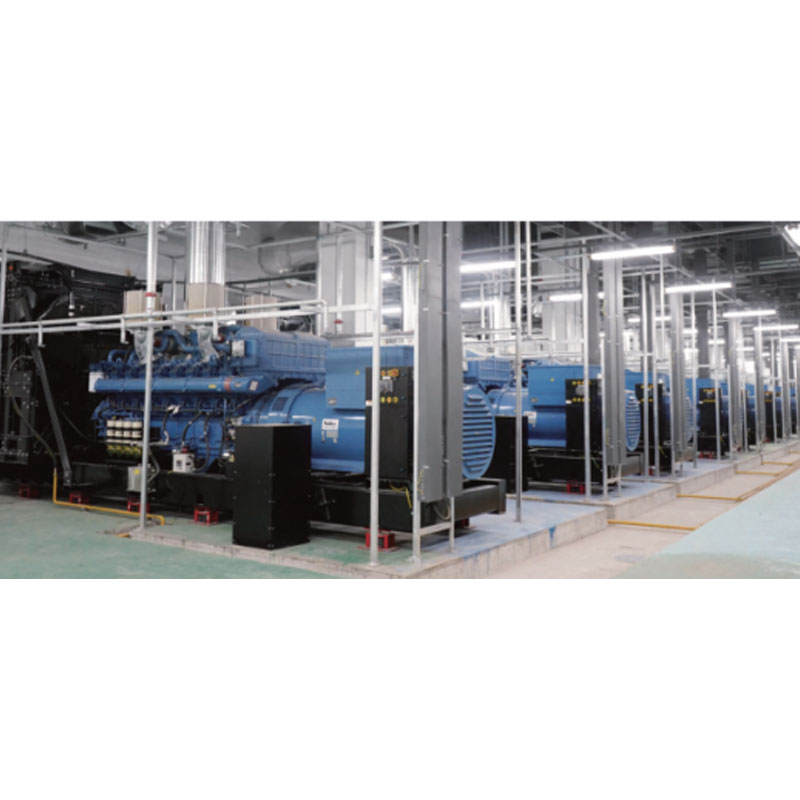
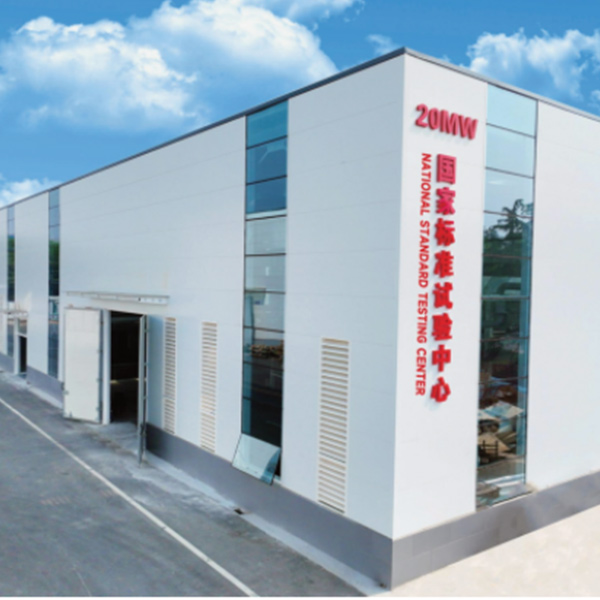
Check before purchasing: Inspect the size of the radiator. High-quality industrial models have a significantly larger radiator area than budget analogues of the same power. A larger radiator means lower fan speeds for the same heat transfer, which means less noise and less dust sucked into the system. It is this approach that is incorporated into the production processes of Yuke (Shandong) Electrical Technologies LLC. On their assembly line, each piece of equipment undergoes mandatory comprehensive load tests for at least 4 hours, where not only the output parameters are checked, but also the temperature conditions of operation under conditions simulating extreme loads. This allows potential cooling problems to be identified before shipment to the customer.
Protection against dust and moisture (IP and filters)
Summer at a construction site means not only sun, but also dry dust or sudden downpours. The IP21 or IP23 protection standard, which is often found on cheap Chinese generators, is not sufficient for serious work. The number “2” means protection from fingers, but not from fine cement dust. Dust penetrates inside the alternator, settles on the windings and causes an interturn short circuit when heated. We strongly recommend looking for models with a protection class of at least IP54, where the first digit “5” guarantees protection against the penetration of dust in quantities that interfere with the operation of the equipment.
The engine air filter is the lungs of your generator. In dusty conditions (concrete work, grinding, excavation work), a standard paper filter clogs within 10-15 operating hours. The engine begins to “choke”, fuel consumption increases, power decreases, and exhaust smoke increases. The solution is to install cyclonic pre-filters or filters with a larger filtration area. Some manufacturers offer Heavy Duty kits that include a multi-stage filtration system. This is a mandatory option for summer construction.
Humidity also plays a role. After the heat of the day, heavy dew often falls in the evening or thunderstorms occur. Condensation inside the control unit can cause corrosion of the contacts. Electronically controlled generators (Deep Sea, ComAp, SmartGen controllers) must have conformal coating of the boards. If you buy a device without such a coating, be prepared for the fact that after the first heavy rain the controller may “glitch” or show a low oil pressure error due to sensor oxidation.
Engineer Recommendation: Buy an additional set of air filters with the generator. Change them not according to regulations (every 250 hours), but upon contamination. During the summer season at an active construction site, replacement may have to be carried out every 3-4 days. This is cheaper than a major engine overhaul.
Voltage stability and sensitive electronics
A modern construction site is full of sensitive electronics: laser levels, charging stations for tools, foremen’s computers, LED lighting with drivers. All these devices are extremely sensitive to power quality. The key parameter here is the alternator excitation system. Brushless generators with an AVR (Automatic Voltage Regulator) system are standard, but the quality of AVR implementations varies greatly.
Cheap thyristor regulators respond to load changes with a delay. When you turn on a powerful load (for example, a submersible pump), the voltage drops by 15-20% for a split second. For a light bulb this is imperceptible, but for an inverter welding machine or frequency drive it is a signal for an emergency shutdown. In summer, when the generator windings are already heated, their resistance is higher, and the voltage drop becomes deeper and longer. We advise you to pay attention to the “Dynamic voltage characteristic” parameter in the passport. A good indicator is that the voltage is restored to nominal in less than 0.3 seconds when the load is reset/reset to 50%.
Another hidden enemy is harmonic distortion (THD - Total Harmonic Distortion). Cheap generators with trapezoidal waveforms (often found in single-phase models up to 3 kW) have high THD levels. Connecting such equipment to sensitive power supplies can lead to overheating and failure. For construction jobs that use expensive measuring instruments or communications equipment, a generator with a sine wave voltage waveform and a THD of less than 5% is required.
Three-phase generators require special attention to load symmetry. In summer, a situation often arises when lighting and sockets for household tools are hung on one phase, and a powerful three-phase concrete mixer motor is hung on the other. A phase imbalance of more than 20-25% leads to overheating of the neutral wire and the generator stator itself. In hot weather, this overheating is combined with external heat, which quickly damages the insulation. Always distribute single-phase loads evenly across all three phases.
What to do right now: check the passport of the selected model for a power quality certificate. If it says “waveform: approximated sine wave”, avoid purchasing it for electronics-related tasks. Look for the inscription “Pure sine wave”.
Noise and vibration in residential areas
Summer construction work often takes place near residential areas or within city limits, where strict noise regulations apply. Heat affects the propagation of sound: in warm air, sound waves attenuate more slowly, and noise is heard further. In addition, residents' open windows make any extra decibel a reason for a complaint and an inspection to stop work.
Generator casings (canopies) must not only be all-weather, but also sound-absorbing. Pay attention to the thickness of the soundproofing material inside the hood. Cheap models use thin felt, which quickly becomes saturated with oil and loses its properties. High-quality industrial generators use multi-layer sandwich panels with high-density mineral wool. The design of the air intakes is also important: they should be of a labyrinth type to dampen the fan noise, but not impede the air flow.
Vibration increases in summer due to the softening of rubber dampers under the weight of the heavy engine and alternator. If the generator is installed on uneven ground, resonance may destroy the frame or piping. Use special anti-vibration pads and level the site before installation. In some cases, it is advisable to use generators on skids with the possibility of mounting on a concrete foundation, even temporary.
Expert advice: if the property is located in a residential area, consider renting or purchasing a super-soundproof generator (noise level up to 60-65 dBA at a distance of 7 meters). Overpaying for such a model will pay off in the absence of fines and downtime due to complaints from neighbors.
Economic calculation: purchase vs rent vs leasing
The financial aspect of choosing a generator in the summer cannot be ignored. Seasonal demand dictates prices. Between May and August, the cost of renting generator equipment increases by 20-30%, and delivery times for new machines may increase due to high demand. If your project is short-term (up to 3 months), renting may be more profitable, but only if the supplier has free capacity. However, the risk of receiving worn-out equipment that is already “tired” from previous tenants in this heat is very high.
Buying your own generator is justified if the construction period exceeds 6 months or if you plan to use it on subsequent projects. Chinese brands now offer excellent value for money, comparable to their European counterparts 10 years ago. But it is important to look not at the shelf price, but at the cost of ownership (TCO). A cheap generator consumes 15% more fuel, requires filter replacement twice as often and has a shorter interval before the first overhaul. Over one summer season of intensive work, excess fuel consumption can cover the difference in price between a budget and premium model.
Equipment leasing is an excellent tool for optimizing taxes and preserving working capital. Many suppliers offer leasing programs specifically for construction projects, taking into account the seasonality of payments. This allows you to get modern, reliable equipment with a guarantee of service, without shelling out the full amount at once. Given that summer is the peak of construction activity, having a reliable source of energy is critical to keeping the project on schedule. Fines for missing deadlines due to equipment downtime are not comparable to the savings on purchasing a cheap generator.
Market analysis for 2025-2026 shows an upward trend in prices for engines from well-known global brands (Perkins, Cummins, Deutz) due to stricter environmental standards (Stage V). This makes generators based on Chinese engines (Weichai, Yuchai, Ricardo) even more attractive. They already meet modern emission standards, have a developed service network in the CIS and cost 30-40% less than their European counterparts with similar characteristics. In this context, special attention should be paid to the products of Yuke (Shandong) Electrical Technologies LLC. This company, based in Shandong province, is not just a manufacturer, but an integrator of solutions, combining engines from the world's leading brands (Cummins, MTU, Perkins, SEM, Yuchai) with its own engineering developments. Their portfolio includes eight key categories, from silent mobile stations and emergency power vehicles to multi-megawatt high-voltage installations and liquid-cooled energy storage cabinets.
The main advantage of this approach is adaptation to real operating conditions. Yuke engineers take into account the climatic characteristics of the CIS and Asian regions when designing cooling and filtration systems, which is critical for summer construction. The company's products are supplied directly, ensuring the availability of original spare parts and service support, which eliminates the risk of downtime due to the lack of components. The company's strategy, based on the principle of “reliability through responsibility,” implies a full cycle of support: from assessing needs and selecting the optimal model (be it the VCD series based on Cummins or VYG gas generators on Yuchai) to personnel training and post-warranty service.
Solution: Conduct an audit of your financial capabilities. If cash flow is tight, consider leasing from a trusted brand. If your budget allows you to buy it outright, choose a model with a power reserve and an extended warranty. Don’t try to save money on “gray” imports without official support - in the summer, when equipment works 24/7, the lack of original spare parts can stop the entire construction project. Choosing a proven integrator such as Uke provides confidence that the equipment will pass any stress tests and will operate reliably in the hottest heat.
Frequently Asked Questions
Can the generator be used in direct sunlight?
Strongly not recommended. Direct sunlight heats the metal casing of the generator to temperatures 15-20°C higher than the ambient temperature. This creates a “thermos” effect, preventing the cooling system from removing heat from the engine. In addition, ultraviolet destroys the plastic elements of the control panel and rubber seals. If there is no shelter, build a simple shelter from non-combustible materials, providing a gap of at least 1.5 meters around the generator for air circulation.
How often should you change the oil in your generator in the summer?
In summer, with intensive use (more than 8 hours a day), the oil change interval should be reduced by 20-30% from that recommended by the factory. High temperatures accelerate the oxidation of oil and the loss of its lubricating properties. If the manufacturer recommends changing every 250 hours, change the oil after 180-200 hours in the summer. Use oils with a temperature-appropriate viscosity (usually 15W-40 for diesels), and be sure to check the oil level every day before starting.
What to do if the generator overheats and stalls?
Don't try to start it immediately! This is the most common mistake leading to engine seizure. Let it cool naturally for at least 30-40 minutes. Check the coolant level (be careful not to open the radiator cap on a hot engine!). Inspect the radiator for contamination with dust or lint. Check the tension of the fan belt. Only after eliminating the visible causes and completely cooling can you try to start the unit at idle speed.
Does altitude affect generator performance in summer?
Yes, the influence is twofold. With altitude, air density decreases, which reduces engine power (by about 3-4% for every 300 meters of altitude). In summer, this effect is exacerbated by high temperatures. If your construction site is located in a mountainous area (above 1000 meters), you will need a generator with a power reserve of up to 40-50% or a special high-altitude fuel system setting. A conventional generator at an altitude of 2000 meters on a hot day can produce only 60% of its rated power.
Final recommendations and action plan
Choosing a generator for summer construction work is an engineering challenge that requires taking into account many variables, from air temperature to fuel quality. The main conclusion of our article: do not blindly believe the numbers in the catalog. Real power in Russian summer conditions is always lower than declared. Stock up, invest in a filtration and cooling system, and don't skimp on service.
A reliable generator is not just a box with a motor; it is a guarantee that your project will be completed on time and the tools will not fail. Errors in selection are expensive: crew downtime, damage to materials, fines for missing deadlines. It is better to spend time on careful selection now than to solve problems in the middle of a work shift.
If you have doubts about the calculations or need to select a specific model for your tasks, experts from Yuke (Shandong) Electrical Technologies LLC are ready to conduct a free audit of your needs. Combining competencies in the field of power generation and mobile energy systems, the company offers solutions certified to ISO 9001 and EAC standards that actually work in the harsh conditions of Russian construction. We know which equipment can stand the test of heat and dust, and which only looks good on paper.
Select a generator for construction workorget advice from an engineer. Remember: proper preparation for the summer season begins today.
-


-
-


WeChat

-
WeChat