

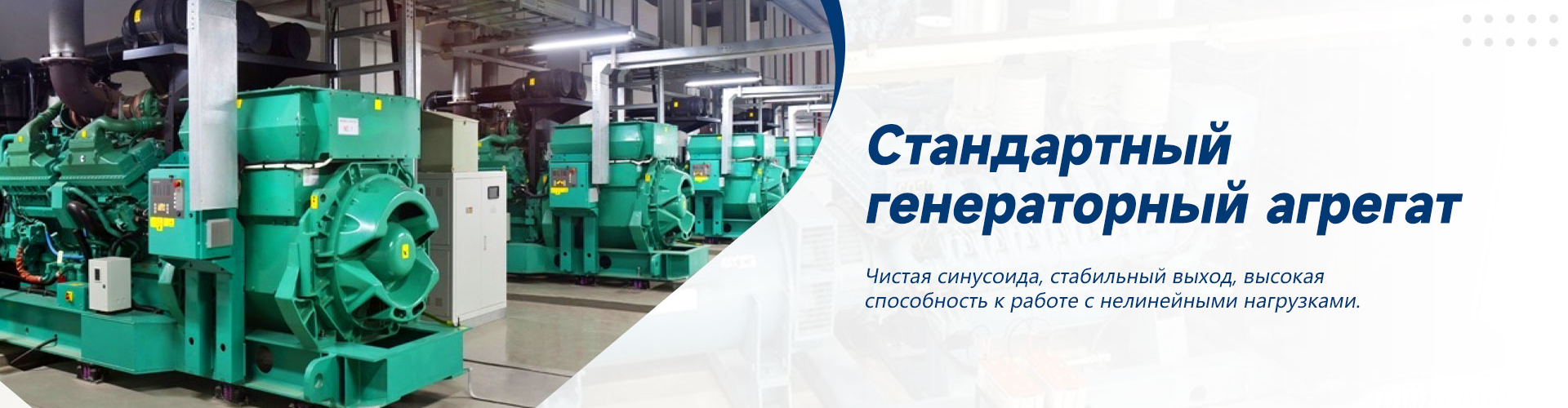
High quality voltage stabilization in generators
2026-07-18
- Why high quality voltage stabilization in generators determines the service life of your equipment
- Technical basics: how high quality voltage stabilization in generators is achieved
- Comparison of excitation systems: impact on output stability
- Standards and certification: how to document quality
- Typical operating errors that kill stability
- Case studies: economics of reliable energy supply
- How to choose a supplier: checklist for the buyer
- Practical implementation: experience of Yuke (Shandong) Electrical Technology LLC
- Frequently Asked Questions
- Conclusion
Why high quality voltage stabilization in generators determines the service life of your equipment
In our practice of servicing industrial facilities, we have repeatedly encountered a situation where an expensive imported machine broke down six months after its launch. The reason was not a manufacturing defect in the machine itself, but voltage surges from the diesel generator set (DGS), which the supplier positioned as “premium.” High quality voltage regulation in generators is not just a marketing slogan in a brochure, but a critical technical parameter that directly affects the insulation integrity of motor windings and sensitive electronics. If you are choosing a backup power source for a factory, hospital or data center, ignoring this factor will lead to losses that are many times greater than the cost of the power plant itself.
Many buyers make the mistake of focusing only on engine power (kW) and fuel consumption, completely overlooking the characteristics of the alternator and excitation system. We have seen projects where savings of 15% on the cost of the generator resulted in the replacement of frequency converters for an amount three times greater in the first year of operation. The stability of the output voltage depends on the complex interaction of the mechanical part of the motor, the speed of response of the automatic voltage regulation (AVR) system and the quality of the copper stator winding. In this article, we will analyze the technical nuances that distinguish professional equipment from budget analogues, and give specific recommendations for selection based on real cases and GOST/ISO standards.
Technical basics: how high quality voltage stabilization in generators is achieved
The physics of the stabilization process comes down to the system’s ability to instantly compensate for load changes. When you turn on a powerful consumer, for example, a pump motor or a welding machine, the voltage in the network inevitably sags. The task of the alternator excitation system is to increase the current in the rotor in a fraction of a second in order to restore the magnetic field and return the voltage to nominal (230/400 V). High quality voltage stabilization in generators is ensured by three key components: the type of excitation system, the accuracy class of the AVR and the design of the stator winding.
The most reliable solution today is a brushless excitation system with sub-excitation (PMG - Permanent Magnet Generator). Unlike self-excitation systems (SHUNT), where the energy to create a magnetic field is taken directly from the output of the alternator, PMG uses a separate magnetic generator. This means that even if there is a short circuit or a non-linear load with high inrush currents is connected, the excitation system does not lose power. In our practice, we have recorded cases where generators with the SHUNT system stalled when three powerful fans were started at the same time, while models with PMG coped with this task without the slightest drop in frequency and voltage.
The second critical element is the electronic voltage regulator (AVR). Cheap analogues use analog circuits with low response speed, which leads to voltage fluctuations in the range of ±5% or more. Professional digital AVRs provide stabilization accuracy within ±0.5% or even ±0.25%. This figure seems insignificant only on paper. For modern CNC machines, medical tomographs or server equipment, a deviation of more than 1% is already considered an emergency mode, leading to software failures or damage to power supplies. When choosing equipment, always ask for AVR datasheet: response time should be less than 20 ms.
The stator design should not be underestimated. High quality voltage stabilization in generators is impossible without the use of 100% copper in the windings and correct step winding. Aluminum windings, often found in the budget segment, have higher electrical resistance and dissipate heat less well. During prolonged operation under load, aluminum expands more than copper, which over time leads to contact failure and changes in the magnetic field parameters. In addition, professional alternators use two-layer impregnation with class H varnish, which protects the windings from vibration and moisture, maintaining stable performance for decades.
If you are evaluating a supplier's offer, pay attention to the THD (Total Harmonic Distortion) parameter - harmonic distortion. For sensitive equipment it should not exceed 3%. High harmonic levels heat the neutral conductor and transformers, reducing overall system efficiency. We recommend requesting a harmonic analysis report from the manufacturer under full linear and non-linear load conditions. This is a simple test that immediately separates quality equipment from mediocre ones.
Comparison of excitation systems: impact on output stability
To understand exactly what you're paying for, you need to compare the three main excitation technologies used in today's industry. The difference between them is colossal, and choosing the wrong technology for specific tasks can be a fatal mistake for the project.
| Comparison criterion | SHUNT (Self Excitation) System | AREP/PMG (Power Excitation) System | Thyristor-excited system |
|---|---|---|---|
| Operating principle | Energy is taken directly from the stator terminals. | A separate magnetic generator on the shaft is used. | Direct control of rotor current through thyristors. |
| Reaction to short circuit | Critical. The excitation current drops to zero, the protection operates with a delay. | Excellent. The AVR's power supply is independent of network conditions. | High. Instant response, but complex electronics. |
| Starting engines | Does not tolerate inrush currents > 3xIn. Deep voltage sag. | Capable of withstanding inrush currents up to 6-7xIn without loss of stability. | Ideal for heavy industrial loads. |
| Cost | Low. Basic option for lighting and simple devices. | Medium/High. Standard for industry and medicine. | High. Specialized solution. |
| Recommendation | For backup lighting or construction sheds only. | A universal solution for 95% of industrial problems. | For objects with extremely unstable loads. |
One of our clients in the oil and gas sector tried to save money by purchasing a batch of generators with the SHUNT system to power mud pumps. The result was predictable: every time the pump was started, the voltage dropped to 180 V, which caused overheating of the motors and frequent shutdowns of the protective automation. Replacing these settings with models with PMG solved the problem completely. It is important to understand: high quality voltage stabilization in generators with a PMG system is achieved due to the physical independence of the control circuit from the power circuit. This is a fundamental advantage that cannot be offset by any software tweaks on a cheap AVR.
When working with non-linear loads (UPS, frequency drives, LED screens), the situation is aggravated by harmonics. Self-excitation systems are extremely sensitive to distortion of the sinusoid shape. The regulator receives a “dirty” feedback signal and begins to work incorrectly, increasing oscillations. On the other hand, permanent magnet (PMG) systems generate a pure sine wave regardless of what is connected to the output. If your facility is saturated with modern electronics, there is no alternative to choosing PMG.
Standards and certification: how to document quality
In the industrial equipment market, many players claim to have “high quality”, but words are worthless without supporting documents. Real high quality voltage stabilization in generators must be verified according to international and national standards. In Russia and the EAEU countries, the key document is GOST R 53107-2008 (Three-phase synchronous generators), which strictly regulates the parameters of transient processes and steady-state conditions.
Pay attention to the voltage accuracy class. According to GOST, for general purpose generators a deviation of ±5% is permissible, however for special designs (medicine, telecommunications) this range is narrowed to ±1% or ±0.5%. A manufacturer who is confident in his product will indicate the specific accuracy class of his AVR in the product passport. If the documentation simply says “voltage stabilization” without indicating the percentage and recovery time, this is a red flag. We advise you to immediately screen out such suppliers, since the lack of clear specifications usually means the use of cheap components without incoming control.
Also critical is the certificate of compliance with the requirements of the technical regulations of the Customs Union (TR CU 004/2011 “On the safety of low-voltage equipment” and TR CU 010/2011 “On the safety of machinery and equipment”). The presence of the EAC mark ensures that the equipment has been tested in an accredited laboratory. However, remember: the certificate is issued for a series, and unscrupulous manufacturers can certify one ideal sample and launch a simplified version into the series. Therefore, for large purchases, we always insist on conducting acceptance tests (APT) at the manufacturer’s plant or at the customer’s premises with the participation of an independent expert organization.
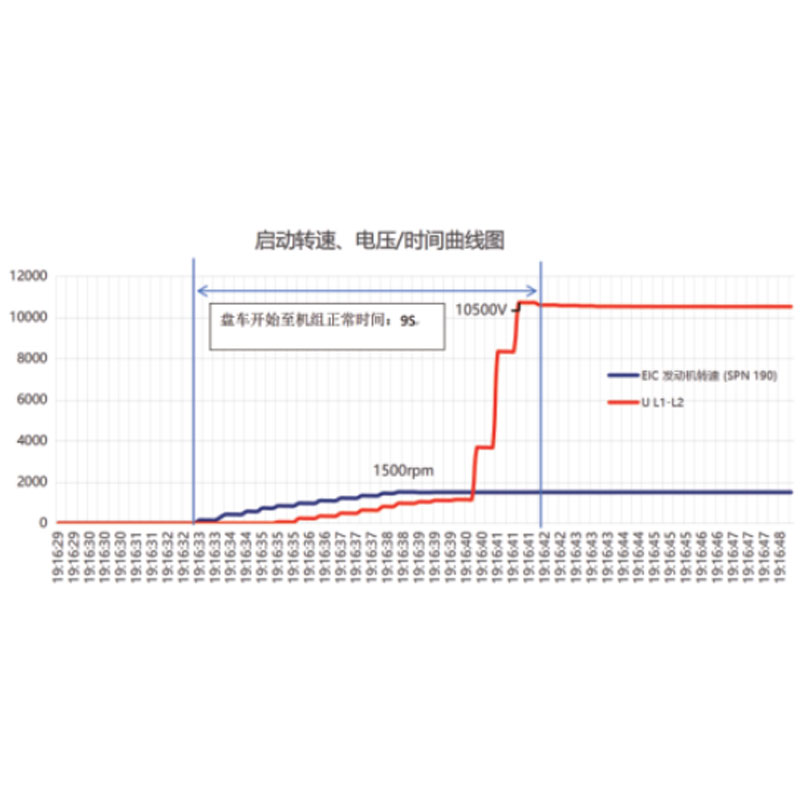
International standards ISO 8528-5 also provide clear criteria for assessing dynamic performance. In particular, the “voltage recovery time” parameter should not exceed 1 second to return to the range of ±5% of the nominal after a 100% load increase. The best examples of modern equipment fit into 0.1–0.3 seconds. Request an ISO 8528 test report from the supplier. If it is not there or it looks like a template document without specific oscillogram graphs, this is a reason to doubt the declared high quality of voltage stabilization in generators.
Typical operating errors that kill stability
Even the most advanced generator with the best excitation system can produce unstable voltage if it is not operated correctly. In our engineering practice, we have identified several common mistakes that negate all the benefits of expensive equipment.
The first and most common mistake is working at idle or with minimal load (less than 25% of the nominal load). Diesel engines, especially those with a mechanical injection pump, do not like prolonged operation without load. This leads to coking of the injectors, sticking of the piston rings and, as a result, uneven operation of the engine. Unstable engine speed directly affects frequency and voltage. We observed a case in a textile factory where a 500 kW generator was used only to power the office (load of about 15 kW). After a year of operation, the voltage began to “float” in the range of 200–240 V, although the AVR was working properly. The reason lay in the mechanical condition of the engine. Solution: setting the load to at least 30-40% or using an automatic loading system.
The second mistake is ignoring the quality of fuel and air. High quality voltage stabilization in generators is impossible with dirty filters. A clogged air filter restricts the oxygen supply, the engine loses power, the fuel regulator tries to compensate for this, but the dynamics of the response decreases. With a sudden increase in load, the engine simply “chokes”, the speed drops, and the voltage goes into a deep dip before the system has time to react. Regular replacement of filters is not just a service recommendation, but a necessary condition for maintaining normal electrical parameters.
The third problem is improper grounding and neutral connection. In systems with an isolated neutral or faulty grounding, phase voltage imbalances can occur even when the AVR is operating perfectly. One phase may show 245 V, and the other - 210 V. This is dangerous for single-phase consumers. Before putting the facility into operation, be sure to check the grounding loop and the connection diagram of the stator windings (star or delta) in accordance with the project. It often happens that installers accidentally swap phases or incorrectly connect the neutral conductor, which is interpreted by the protection system as an accident.
It is also worth mentioning the temperature regime. Alternators have an insulation class (usually H) designed for certain temperatures. If the generator is installed in a poorly ventilated container or in a hot workshop without additional cooling, overheating of the windings leads to a change in their resistance. A hot winding has greater resistance, which changes the characteristics of the entire electrical circuit and reduces the effectiveness of stabilization. We recommend installing winding temperature sensors (PT100) and outputting an alarm signal to the operator console. This will prevent operation in critical modes.
Case studies: economics of reliable energy supply
Theory is important, but numbers speak louder. Let's look at two real-life examples demonstrating how high quality voltage stabilization in generators affects business performance.
Case 1: Food production.A large dairy production plant was faced with regular defective batches of yoghurts. The filling line is equipped with servo drives and precise dosing electronics. When switching to backup power (an old 300 kW diesel generator), the products went to waste. The analysis showed that when starting the compressors of the refrigeration unit, the voltage dropped to 190 V for 0.8 seconds. The dispenser electronics reset their settings, and the volume of product in the package was disrupted. Losses amounted to about 50,000 rubles per hour of downtime. After replacing the generator with a model with a PMG system and digital AVR, the drawdown time was reduced to 0.15 seconds, and the drawdown depth did not exceed 10%. The marriage was completely eliminated. The payback period for the new equipment was less than 4 months only due to salvaged products.
Case 2: Regional data center.The facility required uninterruptible power supply for the server racks. Initially, the option of installing several cheap generators in parallel was considered. However, the risk of desynchronization and the occurrence of circulating currents with low quality stabilization was too great. The decision was made to install one powerful premium unit with PMG excitation system and parallel operation (ready for future scaling). The key requirement was THD < 2%. During commissioning, we conducted load tests simulating a main network failure. The transition occurred seamlessly; the server UPSs did not even switch to batteries. This confirmed that high quality voltage stabilization in generators is the foundation of fault tolerance of the IT infrastructure. Saving on equipment here could cost the company its reputation and millions of rubles in losses from service downtime.
These examples show that the cost of owning a generator consists not only of the purchase price and fuel, but also of the risks it poses to the underlying process. Investment in a high-quality stabilization system is insurance against unforeseen expenses.
How to choose a supplier: checklist for the buyer
The market offers hundreds of options, from homemade assemblies to global brands. To avoid mistakes and get real high quality voltage stabilization in generators, use the following algorithm for checking the supplier.
- Request single line diagram and alternator specification.Don't accept the answer "there's a good Chinese generator there." Request the name of the alternator brand (for example, Stamford, Leroy Somer, Mecc Alte or quality analogues) and the AVR model. Check if the PMG system is included as standard.
- Check the warranty for the winding.An honest manufacturer gives a guarantee on the stator winding for at least 2-3 years or 2000 operating hours. If the warranty is only 6 months, this is a sign of low quality materials being used.
- Request a factory test report (FAT).The document must record the parameters of idle, full load, sudden load and load shed. Pay special attention to voltage recovery schedules.
- Check the service network.Even the most reliable equipment requires maintenance. Find out if the supplier has its own service teams and a warehouse of spare parts (filters, belts, AVR boards) in your region. The delivery time for spare parts should not exceed 3-5 days.
- Assess reputation through industry sources.Find reviews from other industrial companies. We recommend looking for contacts of the main power engineers of similar industries and asking their opinion directly. Word of mouth in the B2B sector works better than any advertising.
Remember that low price often comes at the expense of hidden compromises: thinner wire in the winding, simplified cooling system, lack of torsional vibration dampers. All this ultimately affects voltage stability. High quality voltage stabilization in generators is the result of careful engineering of each component, and not a successful combination of circumstances.
Practical implementation: experience of Yuke (Shandong) Electrical Technology LLC
Theoretical knowledge and checklists are important, but they must be supported by the supplier's actual production capabilities. A striking example of a company that integrates the quality principles described above into every stage of equipment creation isYuke (Shandong) Electrical Technology LLC. This professional Chinese company specializes in the development and production of comprehensive solutions for autonomous and backup power supply, combining engineering competencies in the field of power generation and modern energy storage technologies.
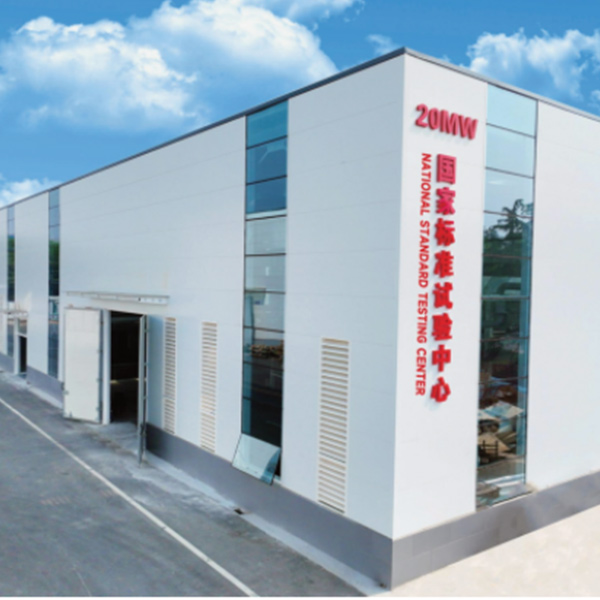
In the context of ensuring high voltage stability, Yuke's approach is based on a strict production control system. Unlike many competitors who limit themselves to random testing, the company's production base in Shandong province implements a mandatory procedure for comprehensive stress testingeachpieces of equipment. Each generator set is tested for a minimum of 4 hours at rated and part load. This allows any abnormalities in the excitation system (whether PMG or other advanced solutions) to be identified and corrected before shipment to the customer. The final test includes monitoring noise, vibration, temperature and, critically, output voltage stability under dynamic conditions.
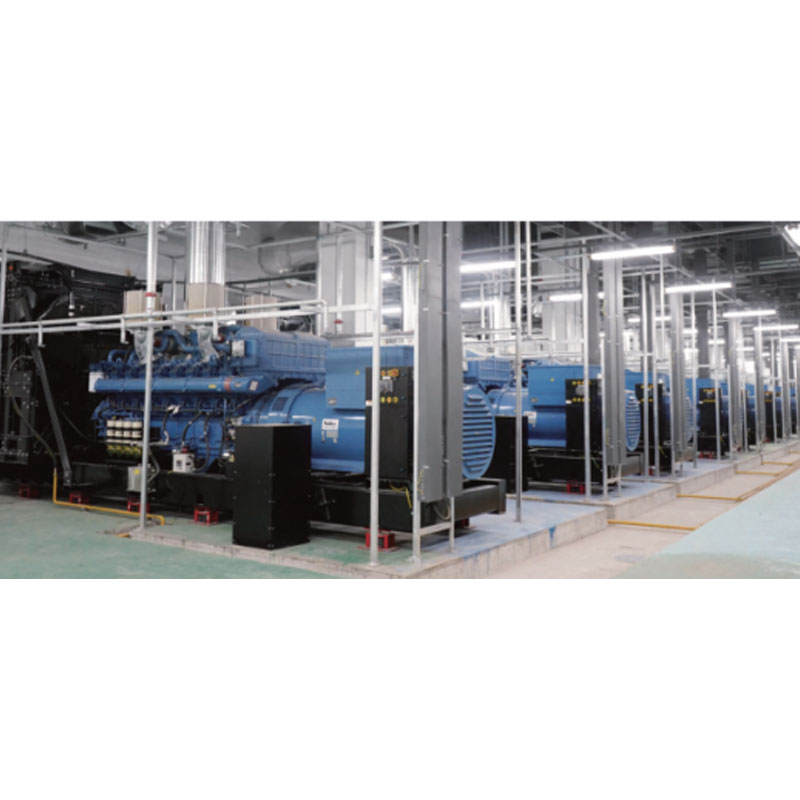
The company's engineering flexibility allows us to adapt solutions to the specific requirements of customers from the CIS countries, Asia and the Middle East. Using engines from the world's leading brands (Cummins, MTU, SEM, Perkins, Yuchai) in its own designs, Yuke creates units of the VCD, VSD, VPD and other series that comply with international standards of electromagnetic compatibility and safety. The product portfolio covers a wide range of applications: from silent mobile stations and emergency power vehicles to multi-megawatt high-voltage generator sets and liquid-cooled energy storage cabinets.
The company pays special attention to post-sales support, understanding that the quality of stabilization depends not only on the factory settings, but also on proper operation. Uke is developing a network of authorized service partners, providing customers with technical support at the design stage, personnel training and prompt supply of original spare parts. The principle of “reliability through responsibility”, which underlies the company’s corporate philosophy, ensures that the generator you choose will not be just a set of metal parts, but a reliable shield for your business.
Frequently Asked Questions
What is the price difference between a SHUNT and a PMG generator?
The cost difference is approximately 15-25% depending on the power and brand. For small powers (up to 20 kW) this amount may be insignificant in absolute numbers, but for industrial units from 100 kW we are talking about thousands of dollars. However, taking into account the cost of possible repairs of connected equipment, this overpayment pays off many times over. We believe that for any commercial or industrial facility, skimping on the type of excitation is unacceptable.
Is it possible to upgrade an old generator with SHUNT to PMG level?
Theoretically, it is possible to replace the entire alternator with a model with PMG if the mounting dimensions and the shaft are the same. However, replacing only the excitation system inside the old alternator is impossible, since the design of the rotor and stator is fundamentally different. Most often, it makes more economic sense to buy a new generator than to try to upgrade an old one, especially if it is already more than 5-7 years old.
Does the length of the cable from the generator to the consumer affect stabilization?
Yes, it has a significant effect. With long line lengths, the voltage drops in the cable can be significant, especially at high inrush currents. The AVR regulates the voltage at the generator terminals, but does not compensate for line losses. For long routes it is necessary to increase the cable cross-section or use transformers with adjustment of the transformation ratio. The project must include a voltage drop calculation.
How often should you calibrate your voltage regulator (AVR)?
Modern digital AVRs do not require regular calibration; they save settings in non-volatile memory. Parameters must be checked annually as part of scheduled maintenance using verified measuring instruments. Analog regulators may require adjustments with potentiometers every 1-2 years due to drift in the characteristics of electronic components.
Conclusion
Choosing a source of autonomous power supply is a strategic decision that determines the reliability of your entire business. High quality voltage stabilization in generators is the invisible shield that protects your assets from the chaos of transient processes and network anomalies. Don't let the marketing gimmicks and low starting price fool you. Request technical documentation, check the presence of a PMG system, review test reports and trust only trusted partners with real engineering expertise, such as Yuke (Shandong) Electrical Technology LLC, where quality control is an integral part of the production cycle.
We are ready to help you choose the optimal solution that is guaranteed to provide stable voltage for your specific tasks. Our engineers will audit your current power supply scheme and offer options for upgrading or supplying new equipment with a full package of warranties and service support.Contact us todayto discuss the details of your project and receive an individual commercial offer.
For more information about our industrial energy solutions, visitgenerator equipment catalog, where detailed specifications and certificates of conformity are presented.
-


-
-


WeChat

-
WeChat