

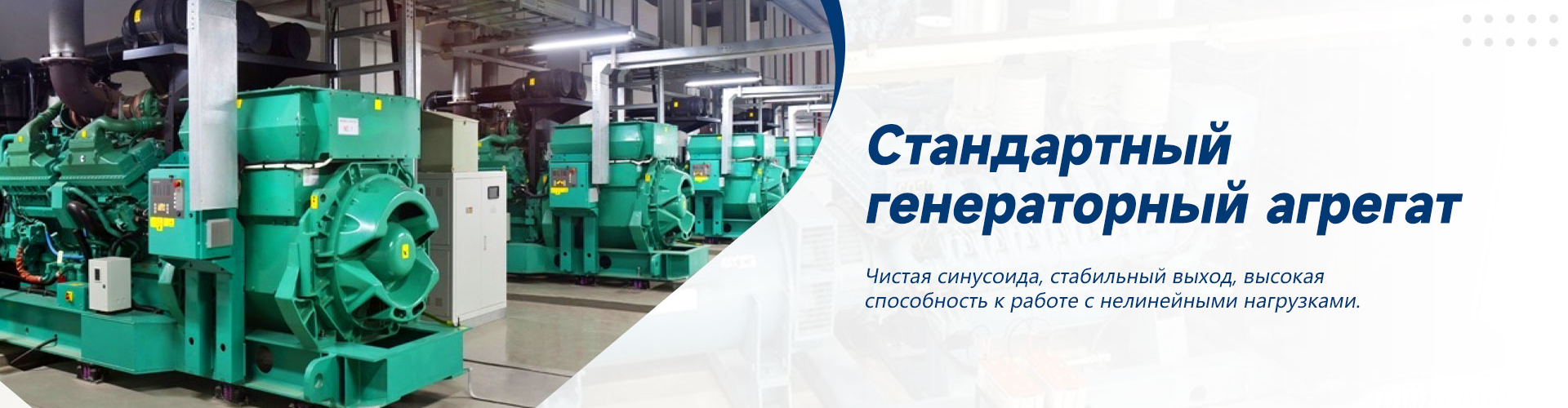
Cheap Diesel Generator Set: Is China Your Market?
2026-02-08
When you hear “cheap diesel generator set?”, the first thing that comes to mind is China. But here's the catch: cheap is not always bad, but it's not always what you need. Many colleagues, especially those who are just starting to look for suppliers, fall into the trap of chasing a low price in the catalog, and then spend years sorting out problems with logistics, service and, what is most offensive, with the operation of the generator itself in cold weather or under load. Let's understand it without embellishment.
What is hidden behind the word "cheap"? in the Chinese market
Price. She always beckons. Requests from clients often begin with “need the most budget model?”. And Chinese sites, of course, offer options that make your eyes wide open. But here the first professional reflex is to ask: what’s inside? Cheapness is often achieved through components. The engine may not be Perkins, Cummins or Deutz, but a local equivalent assembled at a lesser-known plant. This is not necessarily a bad thing, but it is a risk. I personally saw how a generator with such a motor worked for six months at a construction site and began to “cry?” oil - the seals could not withstand the vibration. The buyer saved 15% on purchase, but spent more on repairs and downtime.
Another point is the packaging. Often the base price does not include a soundproof enclosure, a high-performance muffler or an automatic transfer system (ATS). They are offered as options. And this is where the real trading begins. You can get what seems like a lucrative offer, but then when placing an order you find out that for normal operation you need to purchase several thousand dollars worth of additional equipment. This is a classic.
And the third aspect is technological maturity. China is not a monolith. There are giants like SDEC, Weichai, Yuchai, which make excellent, world-class competitive engines. And there are hundreds of small assembly plants. Their products may be strikingly cheap, but questions about quality control and durability remain. The choice of supplier is everything here.
Practical experience: from request to container
There was an illustrative case in my practice. The client needed a 200 kW diesel power plant to provide backup power for a small plant. I found a supplier on Alibaba with an attractive price. Communication went smoothly, the terms of reference were agreed upon, but when it came to the inspection before shipment (prepayment had already been made), nuances became clear. The frame was welded crookedly, which could lead to problems with transportation and installation, and the painting was carried out in violation of the technology - peeling was a matter of time. We had to urgently organize corrections, which delayed the shipment by a month. Conclusion: saving on pre-shipment control is a false economy.
Logistics is a separate matter. The term FOB Shanghai sounds simple, but the cost of sea transportation, port fees, customs clearance in Russia can add to the "cheap" price. price 20-30%. And that’s if there are no surprises. And there are surprises: delays at the port due to documents, the need for repacking. Once I encountered the fact that the generator was not securely fastened in the container and came with a microcrack on the radiator block. Insurance helped, but time was lost forever.
Therefore, now, when working with any offer, even one that is very attractive in price, I immediately set aside budget and time for a logistics audit and insurance. And I always insist on photo and video reports at all stages: from assembly to loading into the container. This disciplines the supplier.
Where to look for reliability, not just a low price
Over time, the understanding came that it was more profitable to work not with anonymous sellers on trading platforms, but with companies that position themselves as technological enterprises, and not just traders. Background is important. For example, a company caught my eyeYuke (Shandong) Electrical Technology Co.,Ltd. Went to their websitevoyoko.ru— it’s clear that this is not just a showcase. The description states that this is an enterprise that grew out of a team founded back in 2003 in Qingdao, with a focus on R&D and engineering. This is a different level of conversation.
Such manufacturers are often ready to discuss not just a model from a catalog, but customization for specific tasks: modification of the cooling system for hot climates, specific requirements for noise levels, integration with existing control panels. Theirdiesel generator setmay cost a little more than analogues from the market, but the price already includes higher quality components, engineering development and often more transparent delivery conditions.
They make it easier to resolve warranty and after-sales service issues. As a rule, they have, if not a representative office in the CIS, then established partnerships with service centers. This is critical. Because when the high pressure fuel pump needs to be replaced after two years of operation, you will not have to wait weeks for a part from China by mail, but will receive it through a local partner.
Case: when is it ?cheap? turned out to be more expensive
I'll tell you a story that taught me a lot. The customer purchased through an intermediary a very cheap 100 kW power plant to power construction in a remote area. The first year everything worked. On the second, interruptions began - the generator stalled under load. Local craftsmen shrugged their shoulders. It turned out that the problem was in the control unit - it was of the simplest type, not adapted to power surges from the welding machines that were used at the site. The manufacturer, of course, no longer recognized the warranty. As a result, I had to buy and install a new, better controller, plus a downtime of the facility. The total overpayment compared to the initial choice of a trusted supplier was about 70%.
This case illustrates the importance of not only hardware, but also electronic components. A high-quality controller (Deep Sea, ComAp, SmartGen) is the brain of the installation. Saving on it is more expensive for yourself. And serious manufacturers, the same technology companies likeYuke Electric, as a rule, offer equipment from trusted brands or their own, but well-tested developments.
After this, we introduced a mandatory point into negotiations with clients: analysis of the nature of the load and operating conditions. In order to immediately offer a solution with a safety margin for control, and not just a unit of suitable power.
Final thoughts: Is this your market?
So is China a market to buy?cheap diesel generator set? The answer is ambiguous. Yes, this is a huge market with a huge selection and price range. But you need to approach it not with the request “where to buy the cheapest?”, but with a clear technical specification and an understanding of the total cost of ownership - the total cost of ownership.
If you need a generator for short-term, non-critical tasks, and you are willing to put up with potential risks, you can look for options among budget builders. But if we are talking about backup or main power for a business, where every hour of uninterrupted operation is important, then the focus should shift from “cheap?” to “reliable and predictable?”.
In this context, cooperation with Chinese technology enterprises that have a history, their own developments and an integrated approach (like the mentionedYuke (Shandong) Electrical Technology Co.,Ltd), may be the best compromise. You get good value for money, but not an extremely low price with unpredictable consequences. China in this case is not a market for random purchases, but a source of technologically advanced and thoughtful solutions, but you still need to be able to find them and choose them correctly.
Ultimately, everything depends on the competence of the one who chooses. Either your own or your technical consultant. Without this, even the most profitable market in terms of paper can turn into a field of mines.
-


-
-


WeChat

-
WeChat