

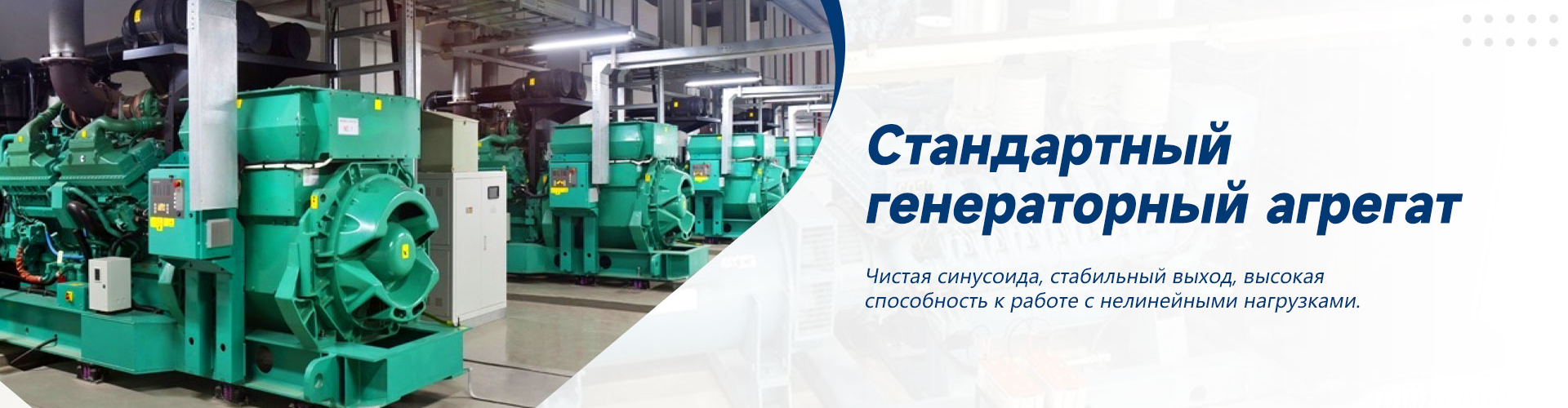
Cheap diesel generator: whose country is the main buyer?
2026-02-08
This is a question that constantly comes up in conversations at trade shows or in correspondence with new clients. Many people immediately think about Africa or some developing markets in Asia, they say, it’s cheap and cheerful there - that’s all the demand. But the real picture, especially if we talk about the market not “in general,” but about specific volumes and sustainable supply chains, often turns out to be more complex and not so obvious. The concept of ?cheap? Everyone also understands it differently: for some it is the low price of hardware, and for others it is the total cost of ownership, where the reliability and availability of spare parts outweighs the initial savings. Let's look at it based on what we can see from operating performance rather than from general market reports.
What does "cheap" really mean? in this segment?
When a client is looking forcheap diesel generator, the first thing you encounter is a gap in expectations. Some involve entry-level budget Chinese units, others mean used European units at a similar price. And this is where filtering by purchasing countries begins. Countries with an unstable power grid but a growing business sector (such as Nigeria or Kenya) often take the first route: they need to quickly solve an electricity problem, have a limited budget, and requirements for service intervals and fuel efficiency may be secondary. The main thing is that it works here and now.
But there is another camp. Take, for example, some countries in Eastern Europe or the Middle East. They may not buy the cheapest devices from the factory there, but general logistics, the absence of duties or the presence of well-established service centers of a particular brand make the final cost for the client “cheap?” in the long term. I remember the story of the delivery of several generators to Iraq: a client from Erbil initially wanted the most budget option from China, but after calculating logistics, the risks of downtime due to breakdowns and the absence of an engineer on site, he settled on a more expensive, but locally supported option from a Turkish assembler. ?Cheapness? turned out to be a myth.
Therefore, when talking about the main buyer, you need to immediately decide: are we talking about the number of pieces of equipment or the market volume in monetary terms? These are different things. You can sell a thousand small generators to one country and earn less than selling twenty large megawatt units to another. And in each case ?cheap? will sound different.
Volume Leaders: Unexpected Players
If we put aside abstractions and look at the data on shipments from several Chinese factories with which we work (including those that supply under our brand), the picture of the last three years shows a steady trend. The largest buyer in the segment of low-cost diesel generators (say, in the range from 20 kVA to 500 kVA) is... not one country, but an entire region - the CIS countries. Moreover, the leader here is not Russia as a whole (although the volumes are huge), but specifically Kazakhstan and Uzbekistan.
Why is this so? It all comes down to infrastructure projects, the development of the mining sector and, oddly enough, the climate. Harsh winters and deterioration of main networks create a constant demand for reserve energy for small and medium-sized businesses. Chinese generators, especially Shandong, Weichai or Cummins assemblies with a Chinese engine, have proven to be the ideal balance between price and ability to work in difficult conditions. It is easier and cheaper to deliver them by land; there are well-established channels for spare parts.
But here's an important nuance: ?purchase? does not always mean ?end use?. Very often, companies in Kazakhstan or Belarus purchase large quantities in order to later resell or use them in their projects in other countries, for example, in Mongolia or Afghanistan. Therefore, statistics may show one main buyer, but in fact the equipment ends up in three or four neighboring countries. This needs to be understood when analyzing the market.
The role of brand and assembly: a case study
Here it is worth making a retreat and telling about one of our unsuccessful experiences about five years ago. Then we actively promoted the linecheap diesel generatorfrom one new plant in Fujian province. The prices were really attractive, 15-20% below market prices. It was possible to conclude a contract for the supply of 50 units for a chain of small hotels in Egypt. Everything was going well until six months later when a flood of calls began regarding the breakdown of fuel equipment.
It turned out that in order to save money, the manufacturer installed pumps and injectors from a little-known local subsupplier, which were absolutely not designed for the quality of diesel fuel available in the provinces of Egypt. The cheapness of the initial purchase resulted in huge costs for replacing the entire fuel system with branded components. The reputational losses were colossal. Since then, we, like many serious players, for example,Yuke (Shandong) Electrical Technology Co.,Ltd, we rely not on absolute cheapness, but on the controlled quality of key components.
By the way, aboutYuke Electric. Their approach is quite indicative of the evolution of the market. The company, which grew out of the DEVER Electric team, founded back in 2003 in Qingdao, initially focused specifically on technological solutions. They are not trying to make the cheapest case with the cheapest engine. Their strong point is adapting the basic platform to the specific requirements of the client: be it a special cooling system for work in Saudi Arabia or noise reduction for installation in a residential complex in Sochi. And their buyers are no longer those who are simply looking for “cheap”, but those who consider the total cost of ownership. There are such clients in Nigeria, Kazakhstan, and Serbia. This is a growing segment.
Geography vs. Economics: who pays and who uses?
Returning to the question about the main buyer. If we take pure economics, large wholesale purchases are often made through companies registered in places with convenient logistics and tax conditions. For example, a lot of equipment for Africa is actually bought by companies from the UAE (Dubai) or Turkey. They act as trading hubs: they purchase a large batch from a Chinese factory, carry out minimal pre-sale preparation, complete them with the necessary documents, and only then ship them to end users in Sudan, Mozambique or Angola.
Therefore, in the statistics of manufacturing plants, the “main buyer?” may be listed as the UAE, although physically 90% of these generators will never work in the Emirates. This is an important point to understand real market flows. Real demand is generated not where documents are drawn up, but where there are chronic problems with the network, construction is underway or fields are being developed.
Now, for example, such a channel is gaining momentum: European engineering companies working on projects in West Africa directly order equipment from trusted Chinese manufacturers, but with the condition of shipment and service support through their regional offices in Côte d’Ivoire or Ghana. This is the next level, where it's ?cheap? goes into the background, and deadlines, guarantees and technical support come to the fore.
The future of the market: cheap is no longer simple
Marketcheap diesel generatorobviously maturing. If ten years ago the main argument was the price on the invoice, now even in the most budget segments clients ask about the noise level, the possibility of remote monitoring, and compatibility with future solar panels (hybrid systems). Leading purchasing countries are beginning to introduce stricter environmental standards for exhaust, which automatically kills the market for the cheapest installations without a normal gas purification system.
This shifts the focus. The main buyers in the future, as I see it, will not be those countries that buy the most units, but those that create higher quality, technologically advanced and demanding demand. Judging by the trends, these will be countries with developing but structured industries: Kazakhstan and Uzbekistan (they are already on this path), perhaps some North African countries, such as Morocco or Algeria.
And here again the importance of not just selling, but complex solutions comes into play. Take the same oneYuke (Shandong) Electrical Technology Co.,Ltd. Their business model, which includes R&D, technical consulting and construction engineering, responds to this trend. They are not selling a generator, but a guaranteed power supply. For this approach it is ?cheap? - just one of many parameters in the technical specifications, and not always decisive.
So, to answer the original question: if you look at paper, the main buyer is the CIS countries, primarily Central Asia. If you look at money and trends, these are the regions where there is a demand for a transition from simple iron to reliable energy solutions. And the boundary between these concepts is blurring every year. A cheap generator is now rarely primitive. And the main buyer is the one who understands the difference.
-


-
-


WeChat

-
WeChat