

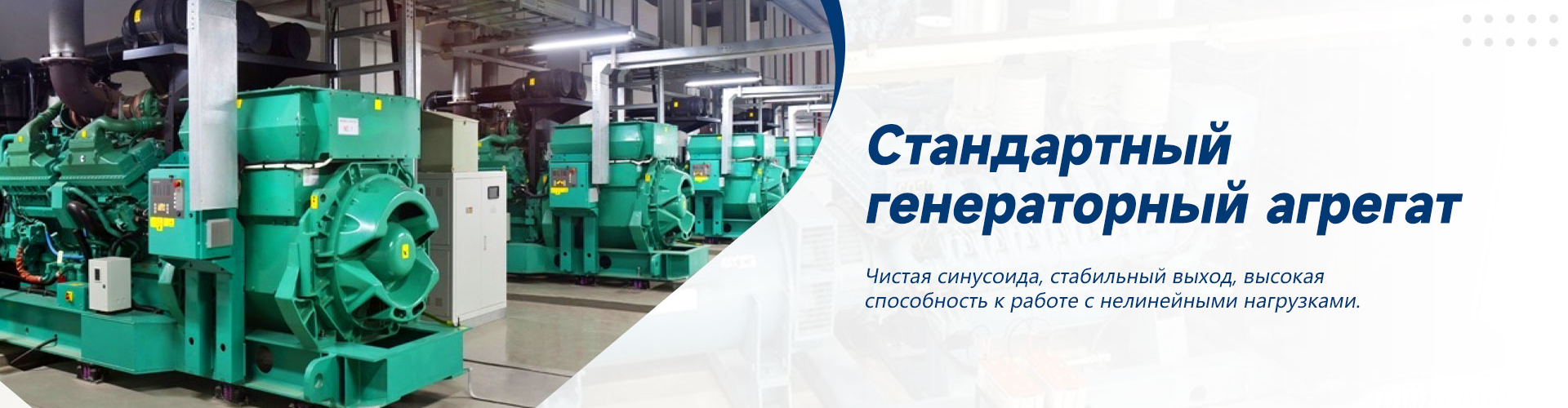
Cheap containerized generator set: main buyer country?
2026-02-07
When you hear the request “cheap containerized generator set?”, the first thing that comes to mind is the massive demand from developing regions, where price is everything. But in practice, everything turns out to be not so clear. Many people mistakenly believe that the main buyer is the countries of Africa or Southeast Asia, looking for the most budget-friendly solution. However, based on our experience of deliveries and negotiations in recent years, the picture is much more complex and interesting. Price is, of course, a critical factor, but it is rarely the only one. Often the request ?cheap? there is a hidden need for specific adaptation, service, or even a certain logistics chain, which ultimately forms the portrait of the main client.
Who is actually looking for ?cheap? and what does this mean?
Look, we've been working withcontainer generating sets, and a client from Nigeria or Pakistan will indeed often start the conversation with price. But if you go deeper, it's ?cheap? - this is not just a low number on the invoice. This requires a design that can withstand high humidity and dust, a simplified maintenance scheme because qualified engineers are at a premium, and spare parts that can be obtained relatively quickly even if the port is clogged. Therefore, cheapness here is a complex: the price of equipment plus the cost of the entire life cycle. If the installation breaks down after six months due to corrosion or the inability to find a filter, then all the initial savings go to waste.
But for clients from the CIS countries, say, from Kazakhstan or Uzbekistan, the request is “cheap container generator?” often has a different shade. They may have developed their own service network, but there are strict budget restrictions on purchases. They are more concerned about compliance with certain specific standards (albeit not always international), the possibility of quick customs clearance and the availability of documentation in Russian. What is important to them is not the absolute minimum price on the market, but the best ratio in its segment - “like the same Chinese factory, but with support?”. This is where working with companies that have an established presence in the region comes to the fore.
By the way, about factories. Many people try to buy directly from the manufacturer in China, thinking that it will be cheaper. Sometimes this is true, but only for very standard configurations and if you are willing to take on all the risks: logistics, customs, commissioning and warranty. More often than not, it turns out that the savings are eaten up by unforeseen expenses, and the deadlines are extended. Therefore, smart buyers are looking not just for a cheap product, but for a reliable supplier partner who will adapt, deliver and support this product. For example, our company -Yuke (Shandong) Electrical Technology Co.,Ltd(YuKe Electric) - just grew out of such a production team (DEVER Electric, founded in Qingdao back in 2003), so we understand both the production kitchen and what the end customer needs on site. Our websitevoyoko.ruis essentially a gateway for such clients, where you can find not just a catalog, but technical support.
Real cases and where the pitfalls lie
Let me give you an example from practice. There was a project for a mine in East Africa. The client wanted the maximumcheap container installationat 500 kW. We found an option with one well-known plant, the price was tempting. But a detailed study of the specifications revealed that the engine cooling system is designed for a moderate climate, and not for a constant +45°C in the shade. The standard container had no additional thermal insulation. As a result, the ventilation and cooling system had to be practically redesigned, which negated all the initial savings. Conclusion: cheap does not mean turnkey and does not mean “ready to work in my conditions?”.
Another case is delivery to the border region of one of the Central Asian countries. There was an urgent need for backup power for a small village. The client bought a supposedly cheap installation through an intermediary. When a scheduled service was required, it turned out that the engine was a “hodgepodge”? from old and new components, and finding spare parts for it is another task. They stayed for almost a month. After that, they contacted us, Yuke Electric, because we, as a technological enterprise with a full cycle - from R&D to construction - can provide both transparency of the origin of components and technical support. Sometimes a slightly higher initial price can save you from multimillion-dollar losses due to downtime.
These are the stories that shape the market. The main buyer of cheap container power plants today is not an abstract “poor country”, but a specific customer with a project who has a clear (or not so clear) understanding of their operating costs and risks. These could be contractors working on temporary sites, small mining companies, agro-industrial complexes or even municipalities with limited budgets. They have one thing in common: the need for a reliable, autonomous energy supply, where the initial investment is critical, but not at the expense of reliability.
The role of the region of production and logistics in pricing
It is clear that China is the main hub for productioncontainer generating setsin the budget and mid-range segment. But ?made in China? - this is also a spectrum. There are giants who churn out standard models in huge quantities, and there are more niche manufacturers, like the team from which our company grew, who specialize in customization. Low cost often comes at the expense of scale and minimal customization. But if your facility is not in Shanghai, but, say, in Mongolia or in a remote area of Russia, then the cost of delivery and customs clearance can be a good 30-40% of the price of the equipment. And here the question arises about localizing warehouses for spare parts or even assembly.
For example, we carry out some projects in this way: the main assembly and testing is done at the plant in Shandong, and the final configuration (for example, connecting specific distribution boards to the standards of the recipient country) is already on site using our engineers or local partners. This is not always cheaper in absolute terms, but it is more reliable and faster. For the client this is risk reduction. Therefore, when we talk about the buyer’s main country, we need to look not at geography, but at supply chains and the availability of service infrastructure. Often the ?main buyer? becomes a region where the supplier has managed to build sustainable logistics and provide adequate service guarantees.
An interesting recent trend is requests from Russia itself for inexpensive container diesel generator sets after the departure of a number of Western brands. The demand is huge, but the requirements are also high: adaptation to cold climates, certification according to local standards, and fast delivery are needed. And here price again becomes not the only factor. The speed of project closure and the supplier's willingness to work in new conditions often matter more. Our company, as an innovative enterprise with a wide profile (from technical consulting to engineering construction), feels like a fish in water here, because we can offer a complex - not just a box with a generator, but a solution for a specific task.
Technical nuances that make it ?cheap? dear
Let's go a little deeper into the technique, there's no way around it. What is often saved in budgetcontainer generating sets? Firstly, the control system. They can supply a simple controller without the possibility of remote monitoring and integration into an automated process control system. For a temporary construction site, maybe it will do. But for an object that must work for years, this is a minus. Then the client purchases the monitoring system separately, pays for integration, and the savings disappear.
Secondly, materials. Container metal thickness, paint quality, UV resistance. Cheap versions often skimp on anti-corrosion treatment. The installation was brought to the sea coast, and after a year or two problems began with the hull. Repairing and repainting in the field is an expensive proposition. At Yuke Electric we always calculate this point with the client: if the object is in an aggressive environment, then we immediately lay down appropriate protection. This slightly increases the cost, but significantly extends the life of the installation.
Thirdly, and this is the most important thing, the power part: the engine and the alternator. The range here is huge: from proven brands like Cummins or Stamford (but this will no longer be “cheap?”) to lesser-known, but quite reliable Asian analogues, and frankly dubious assemblies. Our principle, which comes from our main production partner DEVER, is transparency. We always clearly indicate which engine and alternator we offer, what their actual performance characteristics are and where to get spare parts. Because selling a “pig in a poke?” - this is a one-time deal, and we are focused on long-term projects and reputation.
So, what is the profile of the core buyer?
If we summarize all of the above, thenbuyer's main countrycheap containerized generator set is less about the country and more about the state of the project and its level of maturity. This is a buyer who values balance. Balance between initial cost and cost of ownership. Balance between a standard solution and the necessary customization. Geographically, this is still often Africa, Southeast Asia, the CIS and the Middle East, but the point is not the borders.
This is a customer who may have already been burned by too cheap options and is now looking for a reliable partner. Or, conversely, a new player who is just entering the market and collecting information. His key questions are no longer “how much does it cost?”, but “what exactly is included in this cost?”, “how will it be serviced?” and “what happens if something breaks?”.
Therefore, for us, as a supplier, the task is not just to find the most budget-friendly manufacturer in China and resell. The goal is to be that technology partner who can, on the one hand, offer a competitive price due to direct links with production (as is the case with Yuke Electric and its parent structure), and on the other hand, take on the headache of adaptation, logistics, documentation and after-sales support. Ultimately, this is what determines who ultimately becomes a buyer and who passes by. The market for cheap container diesel generator sets is not a market for price tags, but for solutions and trust.
-


-
-


WeChat

-
WeChat