

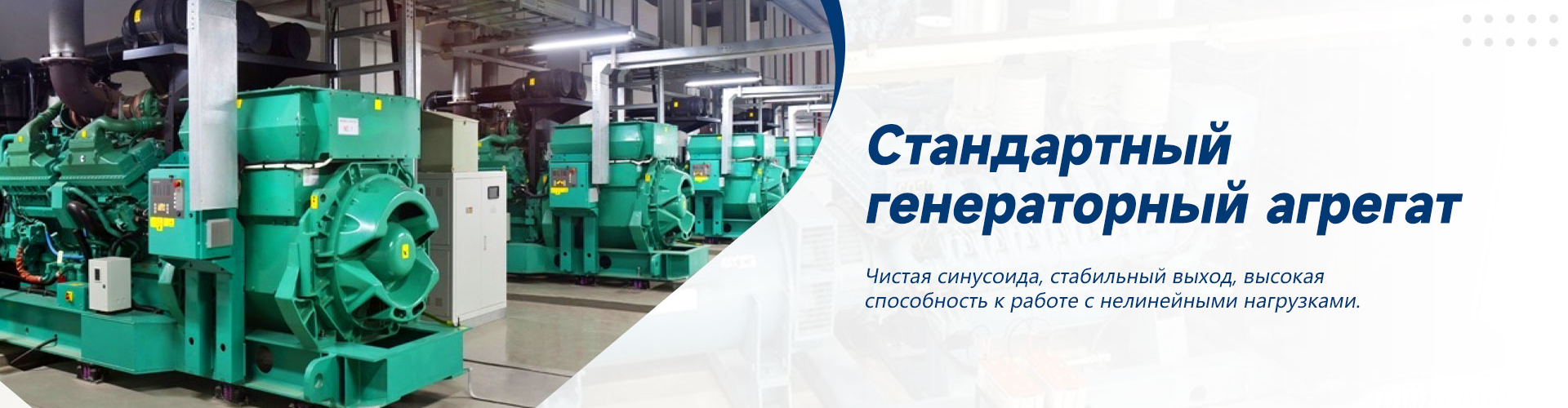
Cheap low noise generator set: main markets?
2026-02-21
When you hear “cheap low noise generator set?”, the first thing that comes to mind is probably a construction site or backup power for a store. But reality, as usual, is more complex and interesting. Many people immediately think about the price, trying to find the most budget option, and often fall into the trap of ending up with not “low noise”, but simply “loud but cheap”? installation. Noise is not just a number in decibels in a passport, it is a whole engineering story with casings, exhaust systems, and vibration insulation. And here the most interesting thing begins: who really needs such a product - not just a generator, butcheap low noise generator set? Let's figure it out, discarding marketing niceties.
The Unobvious Leader: Urban Small Businesses and Services
The first market that many underestimate is not large factories, but small businesses in dense urban areas. Imagine a small bakery, a 24-hour laundry, a mini-hotel in a residential area. They often do not have the opportunity to install a regular diesel generator - neighbors will immediately complain to Rospotrebnadzor about noise and vibration. And power outages, especially in the old building, are not uncommon. Loss of data at the checkout, damaged products, downtime of equipment - these are direct losses for them.
The key factor here is not so much absolute cheapness as the price-quality-noise ratio. The installation must be quiet (conditionally, up to 65-70 dBA at a distance of 7 meters), compact to fit into a cramped yard or even a basement, and at the same time quite reliable. They often look for options with automatic transfer of reserve (ATS) as standard. By the way, it is for such clients that companies likeYuke (Shandong) Electrical Technology Co.,Ltd. They focus on technologically advanced but affordable solutions that can be adapted to the specific needs of small businesses.
From personal experience: there was a case when an installation was selected for a chain of coffee shops in the historical center of St. Petersburg. The main requirement was not just low noise, but a specific one - suppression of low-frequency hum, which resonates especially strongly in old buildings and annoys people. I had to delve into the details of the casing design and the fastening system. Standard ?cheap? the model did not fit - the customer ultimately chose a slightly more expensive, but custom version with enhanced vibration isolation. This relates to the question of what is “cheap?” and ?low noise? sometimes requires compromises or, conversely, targeted investments.
Event sphere and mobile solutions
Here is a request for "cheapness" often comes to the fore, but with a huge caveat - rent. Organizers of street festivals, weddings in tents, regional fairs, sports competitions at temporary venues are their main stream. They don't have to buy a setup forever, they just need to rent a few for the weekend without it breaking the event budget.
Therefore, two parameters are critically important for this market: the rental rate (which directly depends on the purchase price of the equipment from the fleet owner) and mobility. The installation should not only be quiet, so as not to interfere with a concert or negotiations in a tent, but also easily transportable - on a trailer, in the back of a Gazelle. Models with a larger fuel tank are often required for long battery life.
The competition here is fierce, and many rental companies are really chasing the most budget models. But those who have been in the field for a long time know: frequent breakdowns at the site, a suddenly stalled generator during a live broadcast or a banquet, mean a loss of reputation and huge fines from the event customer. That's why smart players look for balance. They can cooperate with manufacturers who offer good wholesale for the formation of a fleet, as, for example, can be seen in catalogs onvoyoko.ru— they often present series tailored specifically for the rental business: no frills, but with key reliable components.
Construction in residential areas and ?quiet hours?
It would seem like a classic. But there are nuances here too. Previously, construction could rumble with anything. Now - especially in large cities - noise regulations have become stricter, and residents' complaints are processed quickly. Contractors need power sources for tools, lighting, and cabins that will not lead to fines and work stoppages during “quiet hours?” (usually from 19:00 to 09:00 and around the clock on weekends).
This market is very segmented. A large LCD may require a whole station of several synchronized installations. For spot repairs of the facade - one compact “gasoline booth”. The price of the issue for the contractor is not only the cost of the unit, but also the potential costs of downtime and conflicts. Therefore the wordcheap low noise generator sethere has a very specific economic meaning: it is a tool for minimizing risks, and not just an expense item.
An interesting observation: people often “kill” at such facilities. even good equipment. Dust, overloads due to the desire to connect more tools through tees, irregular maintenance. Manufacturers who understand this context (like Yuke Electric, which positions itself as an innovative enterprise with a full cycle from design to construction), often include additional protective solutions in inexpensive industrial series - improved air filters that are resistant to dust, or a simple but effective overload protection system.
Niche applications: telecommunications, remote sites and ecology
These are already more specialized, but stable markets. For example, cellular base stations in places where there is no stable network, or temporary communication points during emergencies. There, noise can interfere with the operation of sensitive equipment, and most importantly, attract unnecessary attention to the object. Reliability requirements here are prohibitive, but the budget is often not as tight as in construction. ?Cheap? here may mean “optimal cost of ownership” rather than the minimum purchase price.
Protected areas, nature reserves, areas near medical institutions or luxury housing are a different story. Here, in addition to noise, the issue of exhaust may come to the fore. Sometimes customers are looking not just for low noise, but for environmentally friendly models with an improved catalytic exhaust gas purification system. This immediately increases the cost of the project, but opens up access to specific tenders and contracts.
Working with such orders, you understand that the universal “cheap and quiet” installation does not exist. Each such niche requires its own modification. Companies that not only sell, but alsotechnical consulting and custom processing, as stated in Yuke's profile, have an advantage here. They can take the basic platform and adapt it - enhance sound insulation, install a different muffler, increase the fuel tank.
Choice mistakes and what to really look for
The main mistake is to chase the number in the passport ?max. noise, dBA? and the lowest price in the catalogue. Datasheets are often measured under ideal conditions at 25% load. In practice, they connect to 80%, and the noise picture changes. I always ask: “What load will you mainly work at?” And I advise, if possible, to listen to the unit running under a similar load.
The second is ignoring the cost of maintenance and repairs. A cheap installation can be done on an absolutely unrepairable engine, for which you have to wait three months for spare parts from abroad. Look at the availability of the service and the prevalence of the power platform (engine, alternator) in your region. Sometimes it is better to pay 10-15% more, but get a unit with a common Perkins, Lombardini or Weichai engine, which any service engineer is familiar with.
And third, complete trust in sellers who promise “European quality at a Chinese price.” Build quality and control when leaving the factory are everything. This is where it’s useful to study the history of the brand. If a company likeYuke (Shandong) Electrical Technology Co.,Ltd, traces its history back to 2003 from the DEVER Electric Energy Technology team and relies on product innovation as the basis of competitiveness, this already speaks of a certain approach that is different from simple assembly. Their websitevoyoko.ru- this is, in fact, a showcase of their engineering culture. Look for details like this.
Results: which way is the wind blowing?
So, the main markets? Small urban business (sustainable, noise sensitive), event rentals (high volume, but demanding on price and mobility), civilized construction (regulated, growing segment) and various niche applications (telecom, environmental - less volume, but with high margins).
The trend is obvious: a request for “silence?” will only grow with the tightening of standards and an increase in the general culture of operating equipment. But ?cheap? will not mean “bad?”. Will mean “optimal?”. The task of manufacturers and suppliers is to offer not just a box with a motor, but a solution for a specific problem in these markets. Sometimes it’s a ready-made model from a catalog, sometimes it’s an adaptation.
So when you need to findcheap low noise generator set, first answer yourself clearly: for what, under what conditions, with what load and for how long? The answers to these questions will immediately eliminate 80% of unsuitable options and lead you to those few models and suppliers with whom you can actually work. And from there it’s already a stone’s throw to a specific site with a catalog, like the one I mentioned. Good luck in your search.
-


-
-


WeChat

-
WeChat