

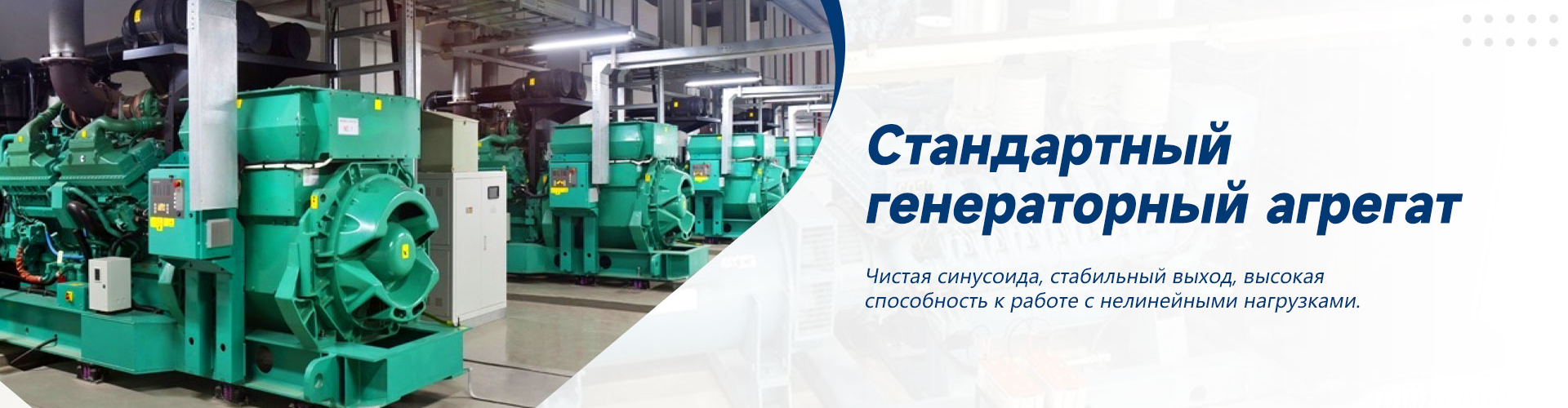
Cheap 400 kW diesel generator set: Is China the main buyer?
2026-02-17
This is a question that constantly comes up in conversations with suppliers and customers in the energy equipment market. Everyone is looking for “cheap”, especially when it comes to diesel generator sets with a capacity of around 400 kW. And a stereotype immediately arises: since the equipment is Chinese, it means that China is its main and almost only consumer. But is this true? In fact, based on experience with supplies to the CIS and Eastern Europe, the picture is much more complex. China is certainly a huge market, but the concept of ?cheap? It has its own specifics, and often what we consider a budget solution for export may be perceived differently within the country. Let's understand it without gloss.
What does "cheap" really mean? DGU 400 kW?
When a client asks for ?cheap? option, the first thing that comes to mind is saving on components. Perkins or Cummins engine, but assembled under license in Asia, alternative alternator, simplified control panel. But here lies the first pitfall. ?Cheap? should not mean ?unreliable?. I have seen dozens of cases where an installation that saved 15-20% at the start, “eaten up” in the first two years of operation. this difference in repairs and downtime. This is especially critical for objects with a continuous cycle of operation.
Chinese manufacturers, especially those aimed at export, understand this very well. That's why they're "cheap" rulers are often not low quality, but optimization for a specific, less demanding standard. For example, for backup power supply to a warehouse, and not for the main source at a remote mine. The price is 40-50 thousand dollars for such a turnkey installation. with delivery - this is a reality, but certain logistics and supplier margins are already built into it.
An interesting point: China itself is a market for such solutions. There is a huge demand for generation within the country, but they often take the path of creating their own powerful brands or using installations as part of larger projects. Direct import of ready-made ?cheap? DSU from abroad is not the most common story. More often than not, they themselves are the source.
Who buys, if not only China?
The main flows that I have personally encountered go to countries with developing infrastructure and unstable networks. These are countries in Africa, Southeast Asia, the Middle East and, importantly, the post-Soviet space. In Kazakhstan, Uzbekistan, and in some regions of Russia, there is a demand for affordable400 kW diesel generator setconsistently high. They are purchased for small industries, mining enterprises, agricultural complexes and commercial real estate.
The logic here is not “the cheapest”, but “the best in terms of price and endurance?”. The client is willing to pay a little more if he is provided with clear documentation in Russian, warranty support and the ability to quickly obtain spare parts. This is the case when value is created not only by the unit, but also by the service system around it.
There was a demonstration project for a quarry in Kyrgyzstan. The customer initially wanted to save as much as possible, but after analyzing the conditions (dust, elevation changes, low-skilled personnel) he settled on a more expensive option with an enhanced filtration system and redundant control. ?Cheap? the basic model simply would not survive in such conditions. This relates to the question of what the request is for ?cheap? often transforms after consultation.
The role of engineering companies and brands
Here we cannot fail to mention companies that act as a bridge between production and the end user. Let's take for exampleYuke (Shandong) Electrical Technology Co.,Ltd(Yuke Electric). This is a typical example of a modern Chinese technology enterprise. They don’t just sell hardware, but offer a complex: from R&D and consulting to delivery and construction. By going to their websitevoyoko.ru, it is clear that the emphasis is on brand and innovation.
For such a player, a “cheap 400 kW diesel generator set?” is not an inferior product, but perhaps a well-optimized product line designed to compete in a specific segment. Their strength is that they can adapt a standard platform to customer requirements while maintaining cost balance. The team behind Yuke Electric has experience since 2003 (from DEVER Electric Energy Technology), which indicates an understanding of long-term trends, not just short-term sales.
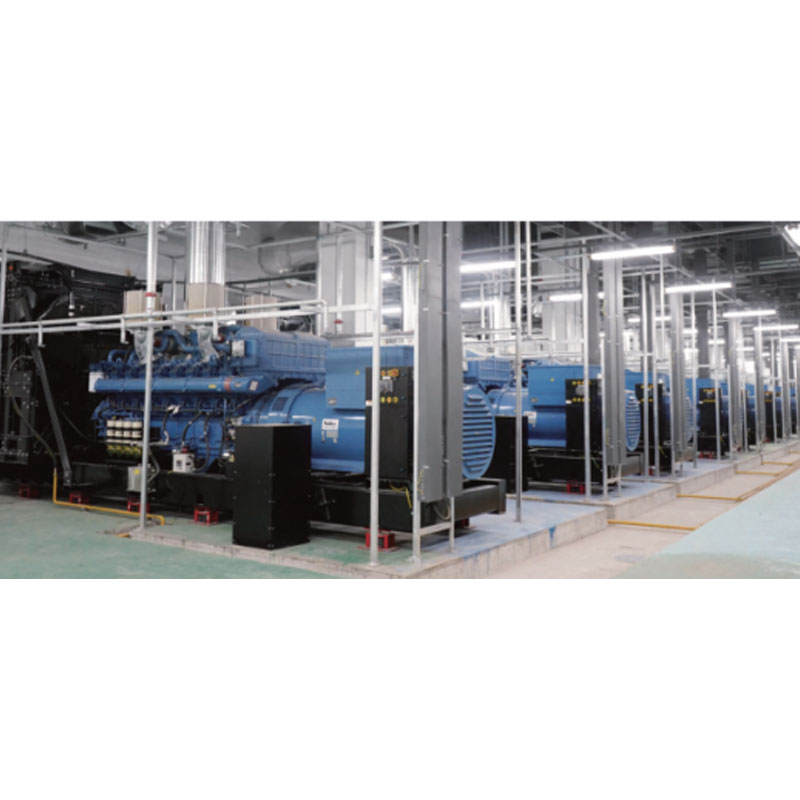
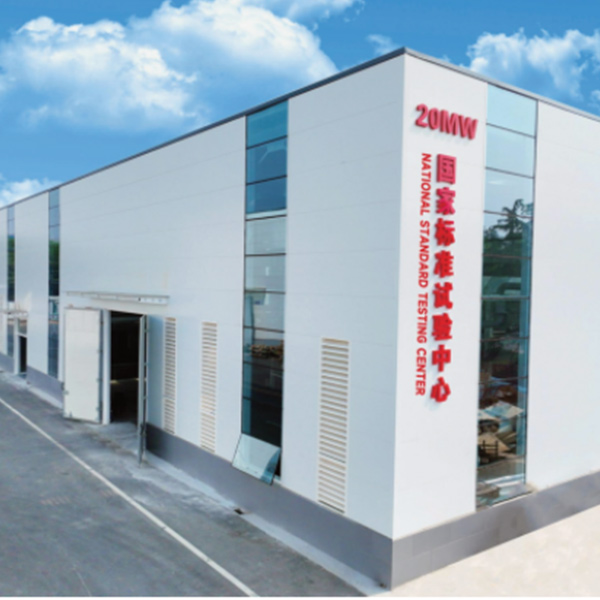
When working with such suppliers, their technological “health” is important. Are they willing to provide detailed test reports? Do they have their own load testing benches? These are the questions whose answers separate just a trading company from a reliable partner. Yuke Electric, judging by their stated competencies, positions itself as the latter.
Practical difficulties and pitfalls
And now about the sad thing. Even with the most price-balanced offer, you can lose money on logistics and customs. Standard 40ft container sea freight from Qingdao is just the tip of the iceberg. Inconsistency in documentation (even a typo in the invoice), discrepancies in HS codes, sudden certification requirements in the importing country - all this can delay delivery for months and destroy all savings.
Once there was a case when the border demanded an explosion-proof certificate for a control panel, although the diesel generator set was intended for an open area. I had to urgently look for a local accredited expert and conduct additional tests. The client, naturally, was not happy. Now I always clarify these nuances in advance, even if the supplier is the sameYuke Electric, assures that “all documents are in order?”. Their ?order? and the requirements of the customs union are not always the same.
Another point is climate adaptation. ?Cheap? A diesel generator set designed for mild climates may require additional costs for a winter kit (fuel and coolant heating) for operation in Siberia. And this is no longer 500 dollars, but several thousand. This needs to be discussed with the customer right away, and not when the equipment is already at the port.
Future of the market: where is demand heading?
A trend that is becoming increasingly visible is hybridization and smartness. control. Request for ?cheap diesel generator set? is gradually evolving into a request for an “efficient and controllable source of energy?”. The consumer wants not just an emergency source, but a system that can work in tandem with solar panels or optimize fuel consumption depending on the load.
Chinese manufacturers, including innovative companies likeYuke (Shandong) Electrical Technology Co.,Ltd, are actively investing in these areas. Their website shows that R&D is one of the pillars. It is likely that in a couple of years the standard ?cheap? The 400 kW unit will be equipped with a monitoring and telemetry system by default, which will increase its attractiveness for serious projects.
So is China the main buyer? Rather, he remains the chief architect and solution provider for this market. And buyers are the whole world, who are looking for a reasonable compromise between price, reliability and functionality. And in this race, the winner is the one who offers not just a unit, but an understandable, adapted and service-supported solution. ?Cheap? - a relative concept, but “profitable”? - that's what the end user really cares about.
-


-
-


WeChat

-
WeChat