

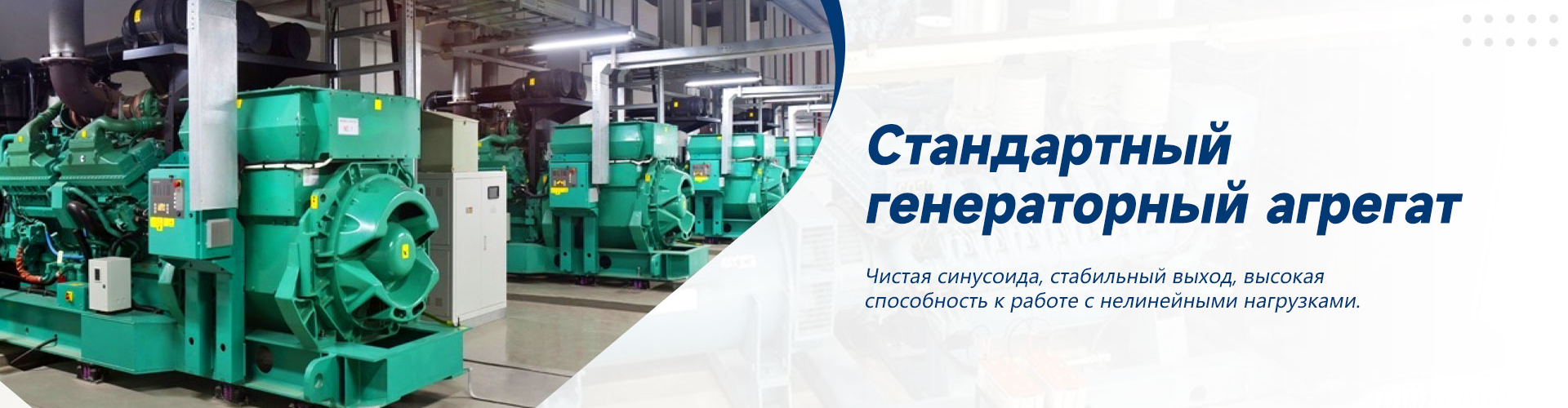
The main buyer of cheap diesel generators?
2026-02-17
Who Really Buys Cheap Diesel Generators? Many will immediately think of a small business or private owners for a summer residence, but the reality, as usual, is more complicated and in some places more unexpected.
Who is behind the order and why? Cheap? - the concept is flexible
Over the years of work, you see that the main flow of orders for budget models does not come from those who want to save once and forget. No. Most often thiscontractorswho take the generator to a specific site - a construction site, a temporary installation site. For them, it is a consumable material, almost like welding electrodes. A service life of a couple of seasons is the norm. The main thing is that it starts, produces the stated kilowatts and does not require dancing with a tambourine every time it starts. Interestingly, many of these contractors eventually switch to more reliable brands, but only after several of these ?consumables? will fail at the most inopportune moment. Losses from equipment downtime at the site quickly cover the difference in price.
Another large group isowners of small production shopsor workshops in regions where there are problems with the network. They often look for not just cheap, but “reliable enough?” option. Their logic: buy an inexpensive Chinese generator, and use the money saved to immediately buy a good stabilizer or a spare fuel filter. Working with them is more difficult, but more honest. They ask questions about specific components: “And this R4105 engine, it’s on those mini-loaders over there?” Can I find the details??. They can’t be bullshit about “European assembly”; they look straight into the specifications.
And the third type that many people miss iswholesale resellerswho purchase batches in China under their own or a neutral brand. That's "cheap" for them. is a key parameter. They often chase the lowest price in the catalog, and then wonder why half the lot at customs or upon acceptance has small, but annoying mistakes: either the muffler mount is welded crookedly, or the instrument panel is marked incorrectly. Working with them is risky, but the volumes can be significant.
Where are the pitfalls of the “budget”? segment
The main myth is that all cheap generators are equally bad. This is wrong. The problem is unpredictability. You can take two identical-looking models with an engine, say Changfa, but assembled at different factories. One will work like a clock for years, only requiring an oil change, and the second will begin to “cry?” oil through the oil seals after one hundred operating hours. And this lottery scares off many serious buyers. They are willing to overpay 20-30% for stable, albeit not the most advanced, quality.
A common story is saving on the control system. They install a simple controller that only holds voltage. And they forget about protection against low oil pressure or overload. The buyer is happy with the low price until the generator seizes a wedge due to a sudden loss of oil. And it’s good if the warranty covers repairs. What if it was ?gray? import? A complete headache. Therefore, now even in the budget segment, basic protection has become more common - this is a trend.
Another nuance is the equipment. ?Base price? often means a generator without a fuel tank, without a battery, without a muffler. The client, seeing a beautiful figure in the catalog, is then shocked by the final estimate. We have to explain that a 100-liter tank and a starter battery are not a whim, but a necessity, and their cost can add to the price of the “body” another 15-20%. Honest suppliers, it seemsYuke (Shandong) Electrical Technology Co.,Ltd, immediately post commercial offers with several configuration options so that there is no misunderstanding. By the way, on their websitevoyoko.ruyou can see how they structure their offerings - from a bare unit to a ready-to-run enclosed solution.
Case study: when is it ?cheap? turned into expensive downtime
I had a client, the owner of a chain of small self-service car washes. I decided to purchase cheap diesel generators for backup power to high-pressure pumps. The logic was: they turn on rarely, only during power outages, which means you can save money. I bought a batch of 5 pieces. The first serious failure in the network in winter showed that three out of five generators did not reach their rated power under load. The pumps did not pull. It turned out that the engines were inexpensive and not calibrated for operation in cold weather, plus the rather weak alternator sagged in voltage. The result is angry customers at car washes and loss of revenue. The client had to urgently rent powerful generators, and these “state employees”? then sell at a huge discount. The savings turned into multiple losses.
This case clearly shows the difference between the acquisition price and the cost of ownership. For a business where continuity is critical, the second indicator is always more important. After this, the client turned to a more comprehensive approach and now cooperates with companies that offer not just hardware, but a solution, including load calculations, operating recommendations and service. Like for exampleYuke Electric, which positions itself precisely as a technological enterprise that combines R&D, supplies and engineering. For business, such support is more reliable.
Supplier's role: hardware warehouse or an engineering partner?
This brings up an important point. The main buyer of a cheap diesel generator often does not fully understand their real needs. And here a lot depends on the seller. You can simply sell the most popular and cheapest product from the warehouse, ship it and forget it. Or you can spend time asking questions: “Where will it stand?” What is the peak load? How often do you plan to service??. This immediately cuts off those who are only looking for price, but builds long-term relationships with those who need a solution.
For example, for the same contractor, you can recommend not the cheapest model, but the one with the radiator and generator part better protected from dust - this is important at a construction site. Or for the workshop owner - pay attention to the noise level so that there are no conflicts with neighbors. Such consultations require experience and inside knowledge of the product, not just the ability to read a catalog.
Companies that grew out of engineering teams likeYuke (Shandong) Electrical Technology Co.,Ltd(the same one that formed from the DEVER team in 2003), they often build dialogue this way. Their strength lies not only in brand promotion, but in the fact that they can offer technical consulting and custom processing to suit the client's needs. For the buyer who hesitates between ?cheap and how lucky? and “reliable, but a little expensive?”, this approach can be decisive. It reduces risks.
Conclusions that are not written in advertising brochures
So who is he, the main buyer? This is not a static portrait. This is a situational choice. Often this is a person or company at the start of a project, with a limited budget, ready to put up with increased risk for the sake of saving money “here and now”. Or those for whom the generator is not the main, but an auxiliary, almost expendable asset.
But the trend that I observe is that even in this segment the demand for predictability is growing. People are tired of the lottery. They are willing to pay a little more, but to a supplier who clearly outlines what is included in the price, what the weak points of a particular model are and how to minimize them. It’s not enough for them to just buycheap diesel generator, they need to understand what this generator can result in in the future.
Therefore, to answer the question from the title, we can say this: the main buyer is the one who is looking for a balance between the initial cost and an acceptable level of hassle. And the more professional the supplier, the more he helps to find this balance, and does not just sell a box of hardware. Ultimately, the market for cheap diesel generators is not so much a market for technology as it is a market for trust and manageable risks.
-


-
-


WeChat

-
WeChat