

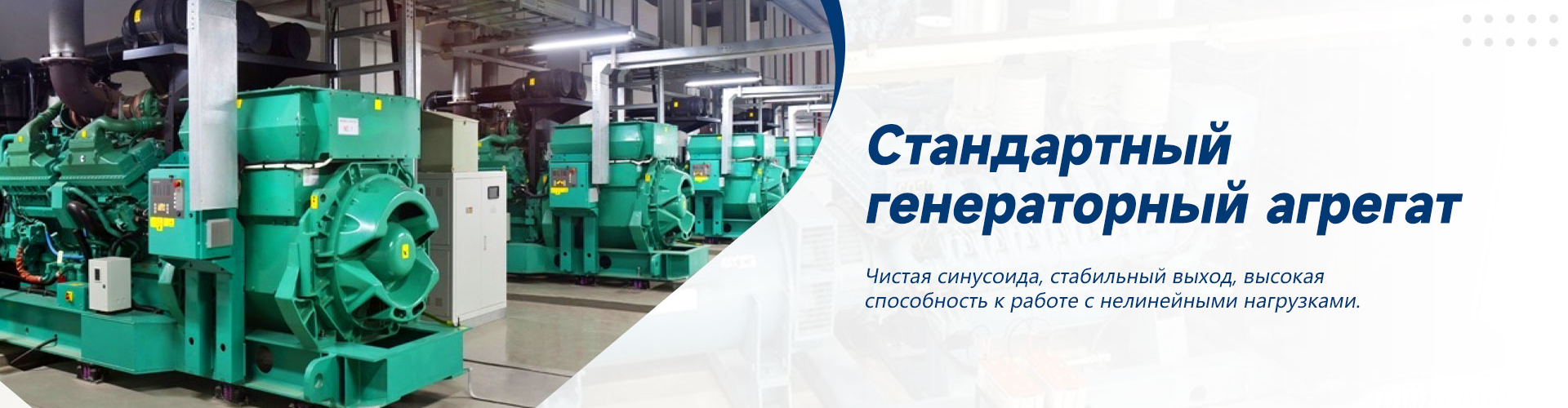
Cheap gas power plants: who is the main buyer?
2026-02-19
When people talk about cheap gas power plants, many people immediately think of small entrepreneurs or summer residents. But the reality, according to my observations, often turns out to be more complicated and in a slightly different place. I’ll say right away that cheapness is a relative concept here, and the key question is not so much the price of a kilowatt, but rather for what purposes and, most importantly, for what people is this “availability”? becomes the decisive argument. I’ll try to sort it out, based on what I saw myself in the market and in negotiations.
What is hidden behind the word “cheap”?
Here we immediately need to divide. There are relatively low-cost new installations, often made in China, and there are supported or so-called “refurbished” ones. units. When a client is looking forcheap gas power plants, he most often has the first option in mind, but very quickly stumbles upon the second. New but inexpensive are usually compact units up to 100 kW, often based on Volkswagen-type or similar engines. Their main trump card is the price “out of the box”. But here’s what’s important: the low cost of the initial purchase is almost always compensated by the nuances of operation.
For example, they often save on the control system. They install a simple controller that only starts and stops the engine, but does not know how to smoothly regulate the load when connecting sensitive equipment. For a workshop with welding machines, this may be okay, but for a small food shop with refrigeration compressors, this is already a problem. I myself encountered when a client bought such an installation, and then for months he could not eliminate the network interruptions that were “knocking out?” its freezers. I had to buy additional stabilizers, which negated all the initial savings.
Another point is adaptation to Russian gas. Many budget models are initially designed for stable methane. In our country, the pressure in the network can “loose”, and liquefied gas (propane-butane) is a common problem for remote objects. If you do not provide for reconfiguration or an appropriate set of injectors, efficiency drops and wear increases. This is the same hidden cost that sellers sometimes keep silent about, but the buyer finds out during the process.
Portrait of the main buyer: not who you thought
Based on the above, the main buyer is not someone who simply wants to save money at any cost. This is someone for whom saving is a forced but calculated measure. Most often, these are owners of small industries that have grown out of a garage. For example, a metal or wood processing workshop located in the industrial zone of the old city, where it is inappropriate to run an expensive power line. They want autonomy and cost predictability. Gas, even taking into account fluctuations, is still more stable in price than diesel.
The second large segment is construction contractors. Not large federal players, but regional teams that carry out spot construction or reconstruction. They need a power plant for the period of construction of the facility, for 1-3 years. It is not profitable to buy an expensive installation for such a period of time; renting sometimes also “bites”. Therefore, they are looking for the best-priced option that will serve its life on one or two objects, and then it can be sold with minimal losses. For them, it is not so much the durability of 20 years that is critical, but rather the reliability for this short but intense period.
And the third type, which is often overlooked, is municipal institutions in small towns. Boiler rooms, medical and obstetric centers, cultural centers. They have a limited budget; tenders are won by the one who offers the minimum contract price. But, interestingly, they often become clients of companies that offer not just hardware, but a complex: supply, installation and service. Because they don’t have their own specialists to provide service. This is where the model offered by some integrators can work, for example,Yuke (Shandong) Electrical Technology Co.,Ltd(Yuke Electric). They position themselves not just as a supplier, but as a technological enterprise with a full cycle - from development to construction. For a budget buyer, this is sometimes a decisive factor: one company solves all issues, from design to warranty repairs.
The role of integrators and niche suppliers
The market does not consist only of producers and end users. There is a layer of companies that adapt, modify and complete installations for specific needs. This is exactly the area where you can find a balance between price and quality. The same basic one is takencheap gas power plant, but they “finish it” on site: they install more reliable gas valves, add a monitoring system remotely (at least via a GSM modem), and strengthen the frame for transportation on our roads.
Websitevoyoko.ru, which represents the company Yuke Electric, is a good example of this approach. If you look at their materials, you can see that the emphasis is not on the bare sale of the unit, but on “technological innovation as the main competitiveness?” In practice, this often means that they are ready to assemble a power plant to the customer’s specific parameters, using proven power units, but with their own control or heat recovery system. For that same buyer - small production - this may be a solution: not to overpay for the giant’s brand, but also not to take a “pig in a poke?” from a purely market place.
However, there are also pitfalls. Working with such integrators requires the customer to have some technical literacy. It is necessary to clearly formulate the tasks: how many hours a day the station will operate, what the peak load is, what voltage drops are permissible. Otherwise, there is a risk of getting a perfectly assembled device that simply does not fit your processes. I remember a story when a powerful installation was assembled for a bakery, but they did not take into account the high starting load from many ovens with heating elements. The station was constantly defending itself. We had to redo the launch circuit and install additional soft start units, which, again, was already over budget.
What is silent about in advertising: exploitation and pitfalls?
The biggest expense for the owner of a cheap gas power plant is not the fuel or the initial purchase. This is maintenance and repair. And here lies the main filter for the buyer. If a person is ready or forced to delve into the technology himself, have an agreement with a local gas specialist and electrician, then he can afford the most budget option. If he relies on “bought, installed, forgotten?”, then a cheap installation will ruin him.
For example, regularly changing oil and spark plugs is a mandatory procedure. But cheap models often have non-standard filters or spark plugs that cannot be found in a regular car store. You have to order from the dealer and wait for weeks. Production downtime at this time costs more than all the savings. Or another example: vibration. Light frames on budget models sometimes do not dampen vibration from engine operation, which leads to loosening of bolt connections and cracks in the exhaust system. This is not critical right away, but after six months or a year leaks begin and efficiency drops.
Therefore, the most thoughtful buyer is the one who immediately budgets not only the station, but also a set of consumables for a year or two, and the services of a service engineer, even if he comes once a quarter. He understands thatgas power plant- this is not a generator for the dacha, which was taken out of the barn once a year. This is a productive asset that requires attention.
Conclusions and practical advice
So who is the main buyer? In my opinion, this is a pragmatist with a limited but clear budget who understands (or is quickly beginning to understand) the entire cost chain of ownership. He may be the owner of a small workshop, a contractor or the head of a public utility. It has one thing in common: the need for a reliable and predictable source of energy where central grids are inaccessible, unstable or too expensive to connect.
My advice, based on many situations I have seen: when choosingcheap gas power plantconsider not the price in the catalog, but the cost for the entire period for which you need it. Be sure to talk to those who are already operating similar models in your region and with a similar type of load. And don’t hesitate to ask your potential supplier awkward questions about the availability of spare parts, the ability to adapt to your gas and the terms of the service contract. As practice shows, companies that operate on a full-cycle model, like the sameYuke Electric, are often more open to such a discussion because their business is not a one-time sale, but a long-term relationship to service a technology solution.
Ultimately, the market for low-cost gas power plants is a market for reasonable compromises. And the main buyer here is not a miser, but a prudent practitioner who is looking for the optimal ratio of price-reliability-operating costs? for their specific, sometimes imperfect, conditions. And it is precisely to his requests that the whole variety of proposals is formed - from simple “workhorses” to adapted complexes from technology integrators.
-


-
-


WeChat

-
WeChat