

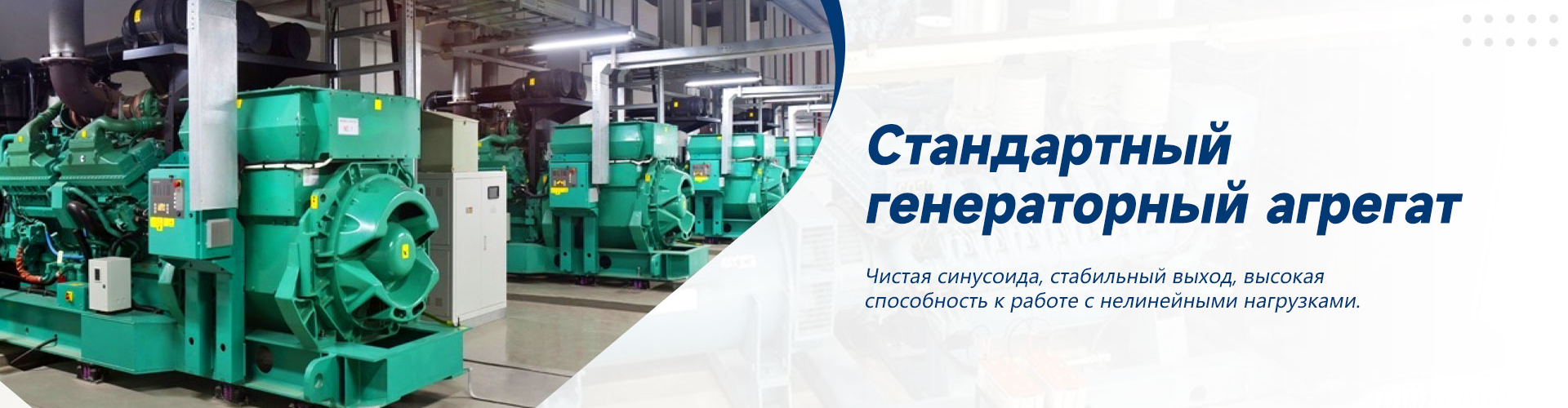
Cheap generators: who is the main buyer?
2026-02-10
When people talk about cheap generators, they immediately think of either summer residents or construction sites somewhere on the outskirts. But the reality, in my experience, is much more complex and interesting. Entire segments that form the main demand are often overlooked, and for reasons far from simple savings.
Who actually takes state employees and why?
If you look at the shipment figures, then private traders - yes, a significant part. But this is not just for the home, for the family. More often this is a small business at the start: a tiny bakery, a hairdresser in the village, a repair point in the garage. They have no choice - they need an energy source, but they won’t give a loan for an expensive unit. They buycheap generatorsas a survival tool, knowing that he has a limited resource. I have seen such a generator, purchased from a local supplier, run almost 24 hours a day in a small dried fish production facility. After eight months, of course, it had to be changed, but during this time the business got back on its feet and was able to buy something more serious.
Another large layer is subcontractors at large facilities. Not the main contractors, but those who do specific work: welding local structures, lighting temporary shelters, powering tools. They often need a generator for a specific stage, for 2-3 months. It makes no sense to buy expensive; renting is sometimes more expensive due to logistics. Therefore, they take an inexpensive model, use it for wear and tear, and then sell it second-hand, often to the same summer residents. It turns out to be a kind of cascading economy.
And here is an important nuance: cheap does not always mean bad for the task. For many of these buyers, the key parameter is not engine hours or noise level, but availability here and now, the ability to connect an angle grinder or a couple of spotlights, and have it start with half a turn even in cold weather. I remember how we tested a batch of compact gasoline generators for one of the regional distributors. According to the passport - modest characteristics. But their main trump card turned out to be a simple and repairable carburetor system, spare parts for which were available in every village. For a buyer from the outback, this is more important than a Japanese engine.
Selection errors and hidden costs
The biggest illusion of the buyer is that he is saving. Two points are often not taken into account: fuel consumption and maintenance costs. A cheap generator with an unoptimized engine can consume 20-30% more gasoline than a more technologically advanced mid-priced model. Over a season of continuous operation, this difference eats up all the initial savings. We once did some calculations for a client who was purchasing generators to power several retail stalls. As a result, after six months he en masse switched to models fromYuke (Shandong) Electrical Technology Co.,Ltd, because their engineers initially included an economical operating mode in the design, which was critical for such commercial use.
The second common mistake is ignoring the type of load. They take a conventional synchronous generator to power equipment with high starting currents (for example, submersible pumps or refrigeration compressors), and then they are surprised that it does not work or quickly fails. For such tasks, other solutions are needed, often inverter generators, which are rarely found in the budget segment. On the websitevoyoko.ruI saw how they quite clearly segment their products precisely by type of load, which for an inexperienced buyer can be a good clue.
And of course, the pitfall is the warranty and service. Very cheap generators are often supplied as is. If the stator winding or AVR unit is broken, the cost of repairs is comparable to that of a new car. Therefore, the main advice I always give is: the budget should include not only the purchase price, but also the potential costs for one or two seasons. Sometimes it is better to add 10-15% to the budget and take the device from a trusted supplier with a normal service network.
The role of integrator companies and manufacturers
It's interesting to watch companies like Yuke Electric. They don't just sell hardware. Their approach, as I understand it, is based on offering not justcheap generator, but an adequate energy solution for a specific scenario. Their team, growing out of DEVER Electric Energy Technology, founded back in 2003, has clearly gained experience understanding what the market needs. They see this very cascading economy and work with it.
For example, they can offer a small business not just a generator, but advice on power supply design to minimize peak loads and extend the life of equipment. Or for subcontractors - mobile solutions based on their generators, which are easily integrated into their temporary networks. This is no longer a product story, but a bit of a service story. And this is what distinguishes a mere supplier from a technology enterprise, which, as stated in Yuke’s description, combines R&D, technical consulting and equipment supply.
With their manufacturing base in Qingdao, they can manage costs quite flexibly without sacrificing key components. I heard from colleagues that, for example, they do not skimp on the quality of copper windings or on the stability of control systems (AVR), even in budget lines. This is reasonable, because the breakdown of these units is a warranty case and reputational losses. It’s better to save a little on the design of the case or the complete socket, which is not so critical for the end user.
Scenarios where a cheap generator is the best choice
Based on all of the above, we can identify several clear scenarios where buying a budget generator is not a forced, but a completely rational strategy.
The first is a generator in case. This is for houses with a fairly stable central power supply, where outages occur 3-4 times a year for several hours. It is expensive to keep an expensive diesel generator as a reserve. A small 2-3 kW gasoline generator that can support the operation of a boiler, refrigerator and some light is ideal. It will serve in this gentle mode for many years.
The second scenario is starting a business. I already mentioned it. Here the generator is the starting asset. Its task is to ensure operation exactly until the moment when the business begins to generate enough profit to modernize its equipment fleet. In this case, its resource and engine hours are a planned expendable asset, like renting a premises.
The third is specialized short-term work. For example, teams involved in pumping water, emergency repairs, and washing facades. Their equipment operates cyclically; a generator needs to be mobile and unpretentious. Expensive electronics and soft start systems are unnecessary here. The main thing is reliable starting and resistance to overloads at the moment of starting the pump. For such tasks, some manufacturers, including the aforementioned Yuke, make special simplified modifications with enhanced current characteristics.
A look into the future of the segment
What will happen to the market for cheap generators? I think it will not disappear, but will transform. Pressure towards ecology will displace the most primitive and dirty engines. But the demand for affordable autonomous power sources will remain, especially in regions with underdeveloped infrastructure.
Perhaps we will see more hybrid solutions even in the budget segment. For example, a generator paired with a small buffer battery to reduce fuel consumption and noise levels. Technologies are becoming cheaper, and companies that innovate, like Yuke Electric, are well positioned to offer this.
In addition, smart saving will become an important trend. Not due to the deterioration of materials, but due to the optimization of control systems that will more accurately dose fuel and regulate speed depending on the real, and not the nameplate, load. This is exactly an area where companies with strong engineering and R&D departments will have an advantage. The buyer of the future, even one looking for an inexpensive option, will increasingly pay attention not to the price tag in the store, but to the total cost of ownership. And those who can offer the best ratio on this parameter will determine who is actually the main buyer of cheap generators - not by status, but by the awareness of choice.
-


-
-


WeChat

-
WeChat