

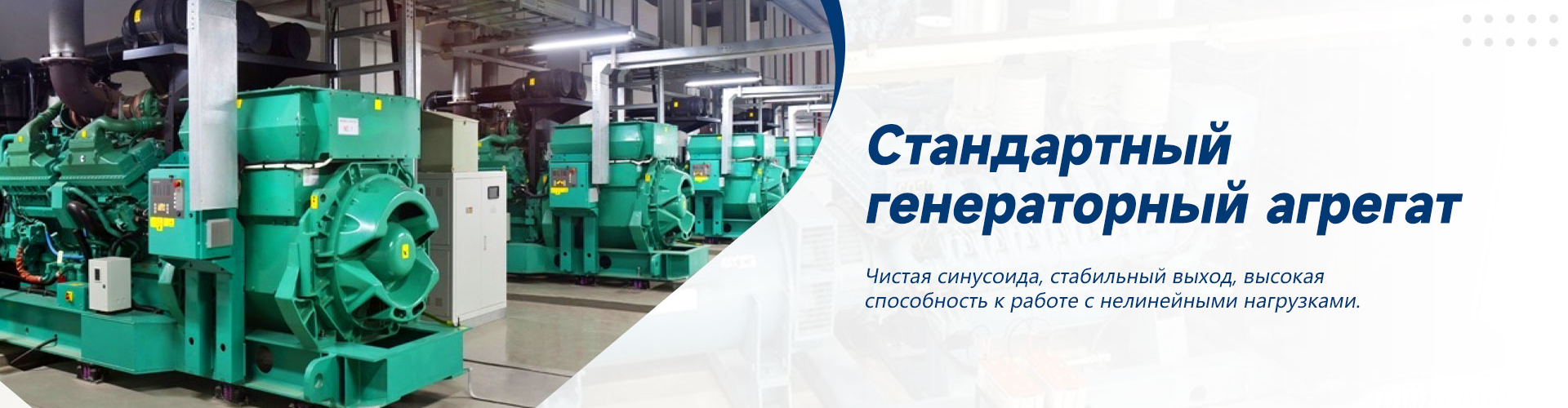
The main countries that purchase cheap diesel generator sets?
2026-02-10
When people talk about the market for cheap diesel generator sets, they often immediately think about Africa. This, of course, is not entirely true, but rather a simplification that prevents you from seeing the real picture. In fact, the geography of demand is much more complex and interesting, and it greatly depends on what exactly is meant by “cheap”. It's not just a matter of dollar price, but a balance between cost, reliability, parts availability, and local operating conditions. I’ll try to sort it out based on what I’ve seen myself and what I’m constantly talking about with my partners.
Who is looking for budget ones and why? solutions?
It is important to separate the two streams here. The first is countries where there is simply no stable centralized network, and diesel generator sets are not a reserve, but the main, often round-the-clock, source of energy. The second is regions where there is a network, but it is unreliable, and the installations operate in frequent or periodic mode. For the first case, ?cheapness? often means minimal initial cost, even at the expense of the resource. For the second, they look more at the cost of ownership, including repairs.
If we take sub-Saharan Africa, there is really massive demand there. But not for everything. In Nigeria, Ghana, Kenya, Tanzania there is a huge market for installations with a capacity of 20 to 500 kVA. Key buyers are small and medium-sized enterprises: workshops, hotels, telecom towers, farms. They often choose installations based on engines that are already present in the local aftermarket, for example, Perkins, Cummins or even Chinese equivalents that are actively entering. ?Cheap? here it is often synonymous with “repairable by local mechanics?”. I saw how in Lagos a master in a couple of hours sorted out the fuel system on an installation that in our country would be considered almost hopeless. This is the norm for them.
Another large segment is government tenders for the supply of remote clinics, schools or administrative buildings. Here price is a deciding factor, but the specifications can be very strict in terms of documentation. Often the winners are those suppliers who can offer a complete package: diesel generator set, container, installation, training. Companies likeYuke (Shandong) Electrical Technology Co.,Ltd(Yuke Electric) work in this niche, offering comprehensive turnkey energy solutions, which is critically important for such customers. Their websitevoyoko.ruLocal engineers often use it as a catalog to formulate technical specifications.
Unexpected players: CIS and Middle East
Many are surprised, but there is a stable demand for inexpensive diesel generator sets in the CIS countries, especially in Kazakhstan, Uzbekistan, and Kyrgyzstan. There are not so much problems with the network, but the active development of the mining industry, agriculture and construction in places where the networks have not yet reached. Here the buyer is already more sophisticated. He may ask about the noise level, about compliance with the climate (winters can be harsh), about the possibility of integration with the future network.
The Middle East is also an interesting case. It would seem that there is money, why cheap? But cheap diesel generator sets are used en masse for temporary facilities: construction sites, events, auxiliary power supplies for small businesses. Mobility and speed of commissioning are important to them. Installations are often purchased in a casing on a chassis. At the same time, the quality of fuel in the region is usually good, which extends the life of even simple units.
In these regions, a big role is played not by official dealers, but by networks of local distributors who themselves adapt the equipment to requirements. They can, for example, replace standard batteries with more powerful ones or immediately install additional fuel tanks. Working with them is a different story, requiring flexibility from the manufacturer.
What do you mean by “cheap”? in Southeast Asia?
Vietnam, Indonesia, Philippines, Myanmar - here the market is perhaps the most competitive and complex. Requirements are high, budgets are limited. Local production of assemblies is very developed, when an engine (often Chinese, for example, Weichai, Yuchai), a generator head is brought in and the installation is assembled on site. Therefore, ready-made ones are “cheap” External diesel generators must offer a clear advantage: either a better-known engine brand, a better control system, or a willingness to work under conditions that local assemblers cannot offer.
Projects that are done “according to the textbook” often fail here. They brought an installation that meets all standards, but it doesn’t work. Because, for example, the cooling system is designed for 40 degrees, but in the shade near the fence at a construction site it is 50 degrees, and it gets clogged with dust in two days. Or is the automatic transfer system (ATS) too “smart”? and sensitive to local network sags, which are the norm. We have to simplify, make the systems more “rough?” and tenacious.
Experienced suppliers such asYuke Electric, which position themselves as an innovative enterprise combining R&D and engineering construction, often follow the path of hybrid solutions. They can offer basic, reliable hardware. part at a competitive price, but with the option of installing a more advanced monitoring system or fuel cleaning. This turns out to be more profitable than trying to sell an ultra-budget option that will break down in the first rainy season.
Latin America: continental specifics
In Latin America the picture is mixed. There are countries like Venezuela where chronic problems in the power grid have made diesel generators a necessity for business survival. There is a demand for any working installations, but there are huge difficulties with logistics and payment. And there are, for example, Peru or Bolivia, where demand is associated with the mining industry in remote high mountain areas. The engines there have special requirements - they must operate reliably in thin air.
?Cheap? in this context often means “optimized for a specific task?”. There is no need for unnecessary functions, but key parameters must be strictly observed. A mistake that is often made is sending a standard unit designed to operate at sea level to the Andes without recalculating and reconfiguring the fuel equipment. The result is a dissatisfied client and a damaged reputation.
There is also strong competition in the region with used units from the US and Europe. Sometimes a overhauled unit from a well-known brand from 10 years ago can be more attractive than a new, but less popular unit at a similar price. This can only be combated by a guarantee, the availability of service and a clear understanding of the customer’s life cycle economics.
Selection criteria and hidden pitfalls
So, to summarize, the main buyer countries are the developing economies of Africa, Asia, the CIS and Latin America. But simply listing countries is not enough. It is important to understand what drives the purchase. Often the deciding factor is not the price on the website, but the total cost of ownership for 3-5 years. A smart buyer (and such ones are gradually appearing everywhere) thinks so.
The biggest stumbling block is parts and service. You can sell a thousand cheap diesel generator sets into the country, but if in a year or two there are no filters, belts, glow plugs or simple electronic modules, the brand will be cursed and the market for it will be closed. Successful players either create spare parts warehouses there, or work with units that are completely unified with other common equipment (for example, truck engines).
Another point is documentation and training. A technical passport in poor English or Chinese, which is then crookedly translated into the local language, is a recipe for disaster. The start-up and operation instructions should be intuitive, with pictures and diagrams. I conducted training for local mechanics in Africa a couple of times - it’s better to spend a week on this than to then have to deal with the consequences of improper maintenance for months.
Ultimately, the market for cheap diesel generator sets is not the market for the cheapest iron. This is a market for adequate solutions adapted to real, often difficult, conditions. Companies that, likeYuke Electric, rely on technological innovation and a full range of services - from consulting to construction - in the long run they win. They sell not just a generator, but the confidence of having electricity. And this is worth a lot in the regions we are talking about. Therefore, looking at the map of buyers, I see not just countries, but a set of specific problems that need to be solved, and it is the ability to solve them that determines whether the country on this map will be promising for you or not.
-


-
-


WeChat

-
WeChat