

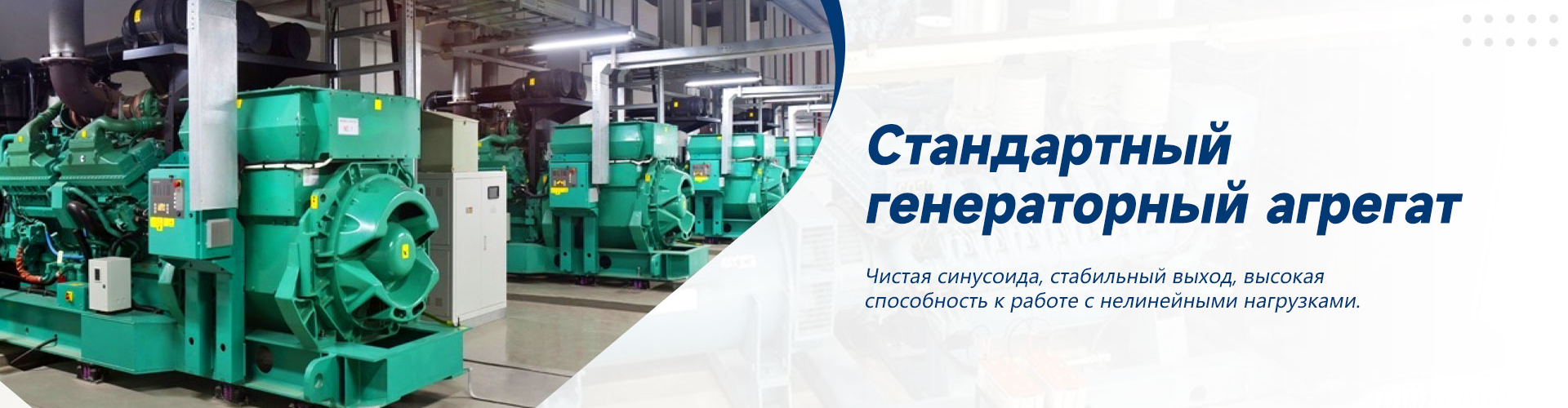
Cheap gas generator: the leading country for purchases?
2026-02-14
When you hear about a cheap gas generator, you immediately think of China, right? But here's the catch - often this is simply understood as the low price on Alibaba, and not the real cost of ownership. I have been working with power equipment for many years, and I will say this: if you are looking for a purchasing leader, you need to look not at the country of origin, but at a country where people understand the difference between the sticker price and the repair costs in six months. Russia, by the way, is a very interesting case in this regard.
Why cheap is not about the price tag in rubles
Look here. An acquaintance comes to me and is happy - he bought a Chinese generator for 50 thousand, it seems like an analogue of Honda. Launched it, it works. And after three months - a drop in power, interruptions. We begin to understand: the carburetor is not designed for our gas, the seals become dull in the cold, and the ignition system is capricious at -15. Bottom line: service, spare parts, simple. And the initial cheapness melts before our eyes. This is a classic.
Therefore, when they talk about the leading country in purchases, I would look at those who en masse buy not just budget models, but those that are adapted to local conditions. In Russia, especially in regions with frequent power outages or for construction sites, the demand is for reliable solutions. Yes, you can buy a conditional nameless device from the site, but many who have already been burned are looking for a balance.
Here I remember one project near Tver. We needed a backup power source for the boiler room. The estimate was limited; the client first wanted the most budget option. But we insisted on looking at the specifications more deeply: the presence of protection against low gas pressure, the quality of the generator winding, the ability to work in an unheated room. As a result, we took a more expensive model, but from a trusted supplier. And she has plowed for the fourth winter without any complaints. It’s this difference in approach that defines a true shopping leader.
Chinese generators: between myth and reality
Yes, the lion's share of the market is equipment from China. But there is a difference between Chinese and Chinese. There are handicraft assemblies, and there are enterprises with serious R&D that make products specifically for export, taking into account the climate and standards. The problem is that at first glance it is difficult to distinguish them.
For example, I came across the company's productsYuke (Shandong) Electrical Technology Co.,Ltd. They are a good example of evolution. This is not just an assembly shop. The company grew from the DEVER Electric team, which has been operating since 2003. Their websitevoyoko.ru- this is not just a showcase, it shows that they are positioning themselves as a technology enterprise with an emphasis on innovation. When you study their generators, it is noticeable that they rely not only on price, but also on modifications for stable operation on liquefied gas, and on the control system. This is another level of cheapness - when you get a well-thought-out design for the right amount of money.
But again, this is not a panacea. I also saw their early models, which could bring surprises in the damp autumn. The key point is that such companies have development. They collect feedback and modernize. Therefore, when assessing purchasing leadership, it is worth looking at the dynamics: which brands or manufacturers are gaining popularity not because of a one-time promotion, but because their equipment really works.
Russian buyer: what is he really looking for?
Our market is specific. Huge territory, different climate, different quality of gas in networks. And the requests are very practical. People in the country need a simple and repairable device so that they can start it and forget it. For small businesses, continuity, otherwise losses. For industrialists - integration into the system and a long service life.
Hence the paradox. The leading country for purchasing cheap generators? If we take pure numbers, perhaps yes. But if you dig deeper, a leader is one who has learned to choose. I know entire villages where people chip in and order a batch of a certain model, having previously tested one copy for a season. Or construction crews who rent a specific brand because they know it won’t fail on deadline.
What is important here is not abstract reliability, but specific features: is it easy to find brushes for this generator in the city? Is there a filter-drier for gas in the design? How clear is the connection diagram? These are the points at which the screening takes place. A cheap generator that does not meet these conditions will go to the garage or for spare parts after the first serious test.
Costly mistakes (personal experience)
I admit, I also made mistakes. About seven years ago I recommended it for a small bakerycheap gas generatorfamous Asian brand. According to the passport - everything is fine, the power was suitable. But they didn’t take into account the cyclical nature of the load: the stoves turned on, consumption jumped sharply. The generator was not designed for such surges, the overload protection was triggered, and as a result, production stopped. The client, of course, was unhappy. I had to urgently change to a model with a higher starting current and a different type of voltage regulator.
This incident taught me to look not at the rated power, but at the load curves that the client provides. And also, always ask about the nature of the load: are there engines, compressors, induction cookers. Each case requires its own nuances in the design of the generator. A cheap model most often does not cover these nuances.
Another point is the service. The biggest myth is that Chinese ones don't break. Everything breaks. The question is how quickly and at what cost to fix it. Now, when people come to me for advice, the first thing I ask is: who will serve it and where? If there is no representative within a radius of 300 km or no access to schemes, it is better to refuse such a purchase, no matter how attractive the price.
So who is the leader?
Returning to the title question. If we talk about volume, about the number of pieces, then you can probably find statistics that most people buy them in some developing country with an unstable network. But for me it's like practicetop shopping country- this is where the most demanding and experienced consumer was formed. One that is not chasing a low price, but an optimal ratio.
In this sense, the Russian market is becoming very mature. Yes, the demand for the budget segment is huge. But more and more people, especially in business, are asking the right questions about efficiency at partial load, about noise levels, about compatibility with ATS systems. They have already passed the stage of just having it work and now they are looking for something to work well and for a long time.
Therefore, if you look for a leader, then not by the number of boxes purchased, but by the quality of the choice made. And there is something to think about here. Perhaps the true leader is not a country, but a community of engineers, suppliers and owners who, through (often expensive) trial and error, formulate an unspoken ranking of what a truly good buy is. And a cheap gas generator is just a starting point in this complex calculation.
-


-
-


WeChat

-
WeChat