

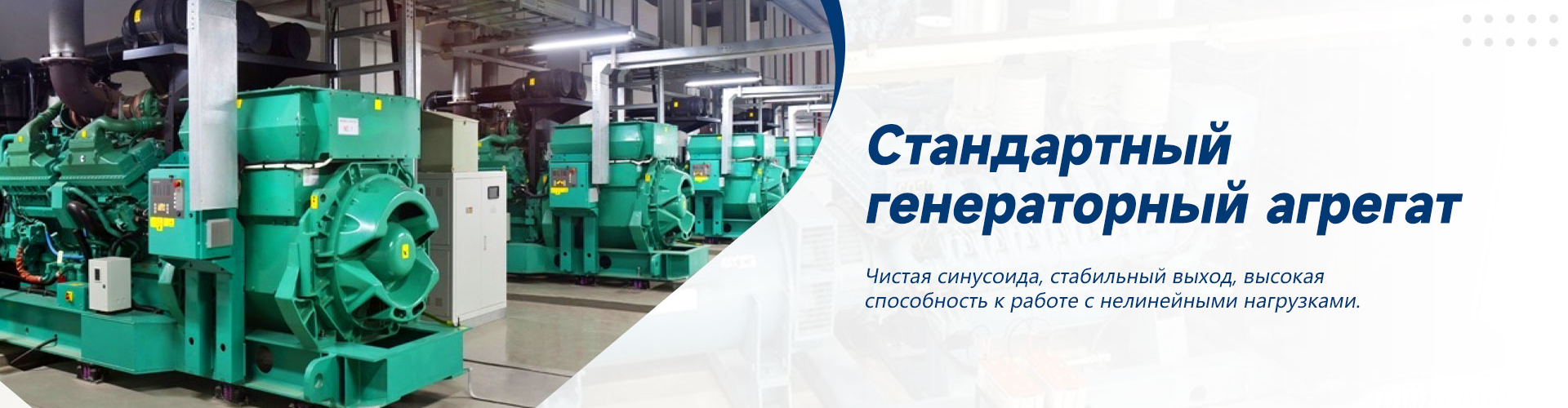
Cheap generator: who is the main buyer?
2026-02-14
Here’s what’s interesting: when you hear “cheap generator?”, the first thought is, of course, a private owner, a summer resident, maybe a small builder. But if you dig deeper, the picture turns out to be much more complex. Many in the sector mistakenly believe that a low price automatically determines the consumer. In fact, the key buyer is often not the one who is simply looking for “the most budget-friendly”, but the one who is looking for a specific solution for very specific, sometimes one-time tasks. And this is where the fun begins.
Who actually orders ?state employees? and why
Yes, there is a private sector, but it is not a monolith. Let's take, for example, small mobile teams involved in installing suspended ceilings or plumbing work. They don't needcheap generatoron an ongoing basis, but is needed for 2-3 days to operate a drill or blowtorch somewhere in a new building without communications. Buying an expensive one is pointless, renting is not always logistically convenient. So they take an inexpensive model, roll it out at one site, and then often sell it to the next similar team. This is a whole informal phrase.
Another layer is small subcontractors at large facilities. Formally, the general contractor has his own power supply, but when you urgently need to power scaffolding for plastering work in a remote area, it is easier and faster to buy several inexpensive gasoline devices than to coordinate a connection. These generators are then written off or transferred between objects. Their fate is rarely long, but they fulfill their function.
And the third, often overlooked segment is regional small chains of stores or collection points. They may have a stable grid, but they keep a cheap diesel generator as insurance against frequent but short power outages in the area. What is critical for them is not so much durability as the fact of availability and the ability to quickly launch refrigerated display cases. They won't overpay for a name or a 10-year safety margin.
Choice mistakes and how they pay for them
The main buyer mistake is to chase watts at the lowest price. I have seen dozens of cases where people were happy after buying a 5 kW device at a price of 3 kW, and then it turned out that the peak power was indicated, and the nominal power was one and a half times lower, and it was no longer enough to operate even two heaters. Manufacturers of cheap lines often play on this. The buyer thinks that he is getting a powerful unit, but in fact he receives a device that does not pull the declared load in continuous mode.
The second mistake is completely ignoring the type of engine and its service life. In the budget segment, engines of unknown modifications or assembled from unknown components are often installed. A resource of 500 engine hours instead of the stated 1500 is a reality. But for the same subcontractor who needs to work 100-150 hours on one site, this is acceptable. He knows about it or guesses. But a private owner, counting on years of service at his dacha, is then disappointed.
Here it is worth mentioning companies that are trying to work efficiently with this segment. Here, for example,Yuke (Shandong) Electrical Technology Co.,Ltd(Yuke Electric). They grew out of the DEVER team, which has been in the energy industry since 2003. Their approach is interesting: they don’t just sell ready-madecheap generators, and often work in contract manufacturing, adapting basic platforms for the specific tasks of those same subcontractors or regional networks. That is, in their case, “cheap?” - this is not always about low quality, but sometimes about optimization for a narrow use case, removing functions unnecessary for the customer. More details about their engineering approach can be found athttps://www.voyoko.ru.
Scenarios where cheap is the only option
There are also absolutely pragmatic scenarios. For example, temporary vaccination centers or election sites in remote communities a few years ago. Energy was needed for 1-2 days, exclusively for lighting and laptop operation. Lots of the simplest inverter generators were purchased. After the event, they were often transferred to rural clubs or sold off balance. This was a conscious choice: the task is extremely clear, the service life of the device in such a context is secondary.
Or let’s take the event sphere. Organizers of street festivals in the regions. The budget is limited, you need to power a couple of tents with merchandise and sound on a small stage. Renting a powerful stationary generator will cost? too much money. 3-4 inexpensive gasoline devices are bought, they will serve the season (3-4 events), and then they are sold at auction. The economic calculation here is ironclad.
In such cases, the key becomes not abstract reliability, but the availability of spare parts and ease of repair “in the field”. Sometimes it is better to take two cheap generators than one expensive one - for redundancy. If one breaks, you can quickly replace it or remove a part from it to repair the second. This is a logic that is incomprehensible from the point of view of domestic use, but is absolutely normal in a professional, albeit budget-constrained, environment.
The role of distribution and sales channels
Who the main buyer is largely determines where the product is sold. Cheap generators are rarely sold through large chain power tool hypermarkets. Their channel consists of specialized wholesale bases on the outskirts of cities, online platforms working with small businesses, and, oddly enough, regional building materials stores. There, the buyer is already targeted: he came not just to “look”, but to solve a specific problem with the energy supply at the site.
The selection process at such a point is very revealing. The manager, often a former electrician or builder, immediately asks questions: “For what?” How many hours a day? What will you eat? Will you carry it?? Based on the answers, he offers 2-3 options. The emphasis is not on the brand, but on “how long will it work continuously?” and “how much does it weigh?”. Often in such places they sell products from companies such as the one mentionedYuke Electric, because they can offer clear conditions for lots and there is technical support for dealers.
Online sales also have their own specifics. The main buyer here is often the same small entrepreneur from another region who is looking for ?cheap generatorfor construction?. He studies not pretty pictures, but photos of the nameplate with parameters, reviews (often dubious) and, first of all, delivery conditions. It is critical for him to receive the equipment by a certain start date.
What's the result? Portrait not by price, but by need
So who's in charge? This is a kind of collective image of a practitioner who clearly sees the limits of the use of the tool. His decision to buy a cheap generator is not a consequence of poverty, but a consequence of precise economic calculation. He buys not a thing “for centuries”, but a tool for performing a specific amount of work with minimal costs. For him, possible repairs or even complete failure of the unit after completing the task is a risk included in the estimate, and not a catastrophe.
This buyer is skeptical of big marketing slogans, but can appreciate the clever layout, access to terminals for service and the availability of common spare parts. He is the reason why the market for cheap generators not only exists, but has clear segmentation and its leaders. This is a market that values not long-term warranties, but immediate functionality and low cost of ownership over a short period of time.
Therefore, when you see on the website of a company likeYuke (Shandong) Electrical Technology Co.,Ltdmodels in the budget segment, you should understand: behind them there is not just a desire to make them “cheaper”. Rather, this is a response to the request of that same main buyer - a prudent practitioner for whom the generator is a consumable material in the technological chain, and not a capital asset. And this has its own absolutely healthy business logic.
-


-
-


WeChat

-
WeChat