

Cheap generator: top shopping country?
2026-02-15
This is a question that constantly comes up in negotiations and in industry forums. Everyone is looking for that same “leader?” on the purchase of cheap generators, as if it were some kind of magical land where quality is given away almost for nothing. I’ll say right away that this is a dangerous misconception. Over the years of working with power plants from 5 to 2000 kW, I have seen how the desire for low prices without understanding the context has resulted in downtime on construction sites and burnt-out control units. Cheapness is not about the country, but about the chain of decisions: from the engineering design and metal in the frame to logistics and, critically, after-sales service. Let's understand it without gloss.
Where is “cheap” born? Price vs Cost of Ownership
When a client says “cheap generator?”, he often means a low purchase price. But our job is to gently shift the conversation to cost of ownership. A striking example is the market for compact gasoline power plants for small businesses. Massively imported models, say, from one well-known Asian industrial cluster, can have an attractive price tag. However, after 200-300 operating hours, nuances begin to emerge: rapid wear of the generator brushes, plastic fan casings that crack in the cold, or weak anti-corrosion treatment of the frame. This does not mean that everything is bad there - it means that the product is optimized for certain, rather gentle operating conditions. Buying it for seasonal work at the dacha is one thing, but for daily energy supply to a stall at the market is quite another.
Here it is worth making a digression about alternatives. Several years ago, we actively monitored supplies through one Eastern European site, where prices seemed ultra-competitive. A detailed analysis of several units revealed that savings were achieved through the installation of engines from old, discontinued lines - spare parts for them were no longer available. The seller, naturally, did not mention this. This is a classic case where cheapness turns into an expensive problem after a year and a half.
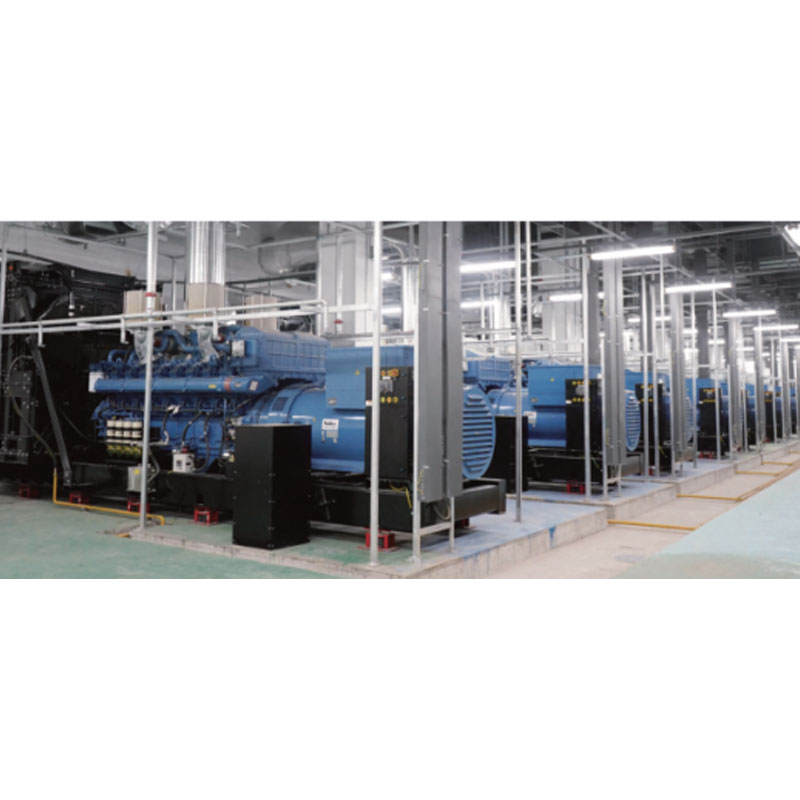
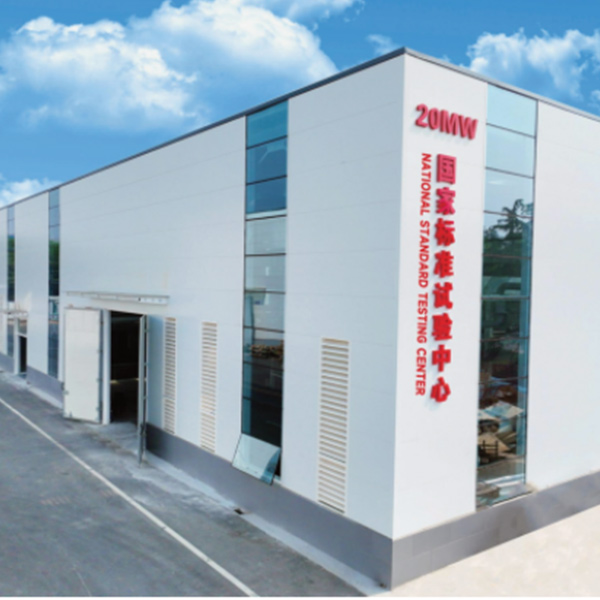
Therefore, when answering the question “where is it cheap?”, I always clarify: “for what and for how long?”. Sometimes it is more correct to look at the offers of the mid-price segment from manufacturers with a full cycle of control. For example, ontechnology companieswho conduct their own R&D. TakeYuke (Shandong) Electrical Technology Co.,Ltd(Yuke Electric). Their story began not with the brand, but with the DEVER engineering team back in 2003. When a manufacturer builds a chain from design to turnkey construction, as they do, it often allows for better balancing of cost during the design phase rather than skimping on assembly. Their portalvoyoko.ruis rather a showcase of their approach, where the technological base is visible behind the model range.
Criteria that are not visible in the catalog
The catalog price is the tip of the iceberg. The real work starts with the technical specifications, which often have to be "drawn out" at the supplier. The first is data about the actual engine manufacturer and alternator. Many assemblers use well-known brands of motors (for example, Lombardini, Yamnar), but on low-power or outdated models. The second is the degree of automation.Cheap generatoroften means manual start and a basic panel with a couple of outlets. But today, even for backup power at home or in a workshop, an ATS (automatic transfer switch) is often needed. And here’s where things get interesting: the integration of a third-party AVR shield with a “budget” one. generator can cost the same as the difference with a more prepared model.
From personal experience: there was a project to provide backup power to a small boiler room. The client insisted on an economical model. When it came time to connect the automation, it turned out that the standard generator controller did not have the necessary dry contacts for external control, and the electrician-installer was unable to correctly “bypass” it. standard scheme. As a result, I had to buy an additional module and redo the connection. The deadlines have moved forward, the total cost has become equal to the initially more expensive solution, but ready for integration. The lesson is simple: a cheap base makes adaptation more difficult and expensive.
The third non-obvious criterion is the availability and location of service centers. Very cheap offers often follow the “sell and forget” scheme. If a generator is purchased for a critical facility, then having a sane service partner in your region or at least in the country is not a whim, but a necessity. And here are the big players who position themselves asinnovative technology enterprises, not just traders, have an advantage. Their website is the samevoyoko.ru, is not just an online store, but part of an ecosystem that provides both technical support and consulting.
Market vs. niche: why there is not just one leader
The idea of finding one leading country is a myth born of generalization. The generator market is extremely segmented. For a construction site where a 100 kW mobile diesel station is needed, the “leader” in terms of price and reliability, Türkiye or, under certain conditions, some Chinese manufacturers with a proven reputation may be in their class. For backup power supply of a country house, where low noise level and appearance are important, Japanese or German brands are often considered (although assembly may be in other countries), and their price will be completely different.
But for industrial applications, where you need not just hardware, but a system with guaranteed parameters and the ability to remotely monitor, the focus shifts. Here, value is created by companies that can offer not equipment, but a solution. Let's go back to the exampleYuke Electric LLC. Their profile is precisely the integration of R&D, supply and turnkey construction. In this case, the country of origin of the brand becomes a secondary factor. Primary is the engineering pool and experience in implementing projects that allow optimizing overall costs, and not just the price of the generating set.
We once compared two offers for a similar diesel generator: one from a European brand (assembled in Eastern Europe), the other from a Chinese engineering holding. The price difference was about 25%. But the proposal of the Chinese partner, who worked on a model similar to Yuke, already included adaptation of the project to our networks, installation supervision and personnel training. The European one was selling a “box”. After calculating additional services, the difference was reduced to 5-7%, while the level of customization in the first case was higher. This is the very transition from a product to a technological solution.
Failures and lessons: when savings failed
There are no failures in this business. One of the most memorable relates precisely to an attempt to please a client who demanded the “cheapest option?” to power the pumping station. We found a supplier who offered units at a price lower than the market by 40%. We were attracted by reviews (as it turned out later, fake) and beautiful photos. The generator arrived and started. But after 50 hours of continuous operation, the engine jammed. The diagnosis is substandard piston rings and low-quality oil in the system from the factory (yes, this happens). The supplier “evaporated”, the warranty obligations turned out to be fictitious. The client suffered losses due to downtime, and we had to urgently look for a replacement at our own expense in order to preserve our reputation. Since then, we have had an ironclad rule: we work only with those whose production or engineering base we can, if not visit, then at least check through industry contacts and real completed projects.
This experience made me look at manufacturers’ websites differently. Now this is not just a directory. I look at the sections “About the company”, “Our projects”, “R&D”. If there are specifics - years of work, brand evolution, patents, photos from objects - this is a serious signal. If the site is just an online showcase with a “buy” button? and a maximum of marketing slogans - this is a reason for deep due diligence. Because forcheap generatorIt should not just be the country of manufacture, but an understandable and verifiable manufacturing company or engineering integrator.
Bottom line: a leader is not a point on a map, but a point in the value chain
So which country is the leader in purchasing cheap generators? The answer that I have learned from many transactions and projects: there is no such country. There is a global market where different countries and regions occupy their niches in certain segments and price categories. Cheapness is a function of many variables: production standards, logistics costs, brand marketing strategy and, crucially, the degree of engineering of the product.
Therefore, today a competent buyer or procurement specialist is looking not for a country, but for a partner. He is looking for someone who understands his task and can offer the optimal solution in terms of total cost of ownership. Be it a large plant, like many famous world brands, ortechnological enterprisefull cycle, similarYuke Electric, which combines development, production and service. Their online presence throughvoyoko.ru- this is just one of the channels behind which there must be real competence.
The key takeaway is simple: don't focus on geographic origin or the lowest price tag. Focus on the big picture: what tasks, what support, what hidden costs, and ultimately, what kind of partner you're dealing with. This is what determines whether your purchase will be a good investment or a source of headaches. And “cheapness”... it often turns out to be the most expensive of the possible options.
-


-
-


WeChat

-
WeChat