

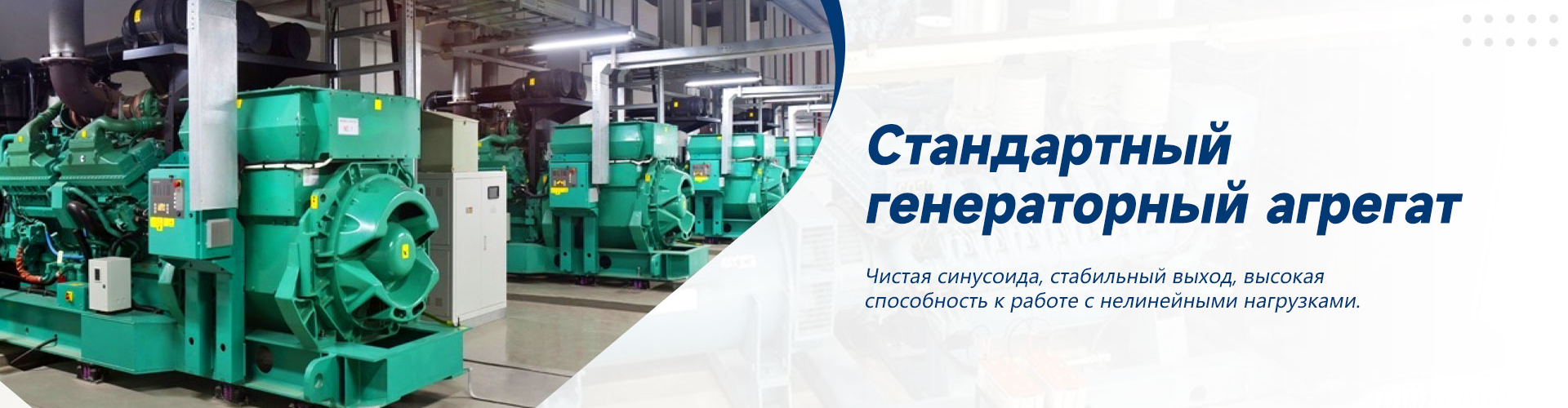
Cheap engine for generator: main buyer countries?
2026-02-13
When they talk about a cheap engine for a generator, many people immediately think about China - and in general, yes, but it’s too simple. In fact, the picture is much more interesting, because “cheap?” for one market may be ?unsuitable? for another. In my line of work, I have been involved in the supply of power equipment for many years, and I often see how buyers focus only on price, losing sight of a lot of nuances that ultimately result in problems on site. Let's figure out who really buys such units and why.
Who is looking for ?cheap? and what does this mean
Abstractions aside, the key buyers are not energy giants, but small and medium-sized businesses, as well as contractors in regions with unstable infrastructure. We are talking about construction crews, owners of small workshops, farmers, operators of temporary facilities. For them, an engine is a consumable item, a tool that must work for a season or a specific project. They don’t expect 20 years of service, they expect performance here and now for minimal money.
But here’s the paradox: often the request sounds like “the cheapest engine?”, but in fact the client needs the optimal price/service life ratio for his conditions. For example, one design is suitable for working in a dry climate, another for humid coastal areas, and “cheap?” an option from the first category to the second will quickly fail. I experienced this the hard way when they delivered a shipment to an African country - engines that worked perfectly in Central Asia began to corrode en masse there due to the salty air. We had to urgently change the specifications, although initially the customer demanded a minimum price.
Therefore, purchasing countries are often determined not only by the economy, but also by climate, availability of services, and culture of technology use. In Southeast Asia, say, they are ready to fix anything, so even the simplest designs go there. In Eastern Europe, they often want something stronger, but without bells and whistles.
Geography of demand: from Africa to the CIS
If you look by region, steady demand comes from Africa - Nigeria, Kenya, Tanzania, South Africa. There are many small businesses and private power plants there, the infrastructure is weak, so generators are a vital necessity. The engines are mostly made in China, often not even branded, but assembled from available components. An important point: in these countries, maintainability “in the field” is critically important, so complex electronics are not held in high esteem; preference is given to simple carburetor or diesel models with a minimum of sensors.
The second large group is the CIS countries, especially Kazakhstan, Uzbekistan, Belarus, as well as Russian regions outside large cities. The situation here is twofold. On the one hand, there is nostalgia for Soviet “hardware”, which served forever, on the other hand, the budget is limited. Therefore, they are looking for analogues that will be reliable but inexpensive. They often buy through local dealers or directly from Chinese manufacturers, who have adapted their products to post-Soviet voltage and frequency standards.
The third interesting segment is the Middle East, but not the rich oil monarchies, but countries such as Iraq, Yemen, Syria (where there is a need for reconstruction). They buy a lot there through contractors and humanitarian organizations. Specific requirements: resistance to dust, temperature changes, ability to work on low-quality fuel. Price, again, is a key factor because purchases are often massive.
Why China dominates but does not monopolize the market
Obviously, the lion's share of cheap engines comes from China. But if you dig deeper, not everything is so simple. There are giants like Loncin, Lifan, Rato - they produce huge volumes, their products are recognizable. But there are also a lot of small factories that work to order or produce no-name products. Their engines may be 20-30% cheaper, but the quality of control is a lottery. I personally encountered when two engines from one batch worked like clockwork, and the third had a casting defect in the cylinder block, which appeared only after a month of operation.
At the same time, Chinese manufacturers have learned to segment the market. For Africa they make the most simplified versions, for Eastern Europe - slightly modified, with better anti-corrosion treatment. Some, by the way, are actively working to create normal brands, and not just “cheap” ones. For example, I know a companyYuke (Shandong) Electrical Technology Co.,Ltd(YuKe Electric). They grew out of the DEVER Electric team, which has been operating since 2003, and position themselves not as just another assembly shop, but as an innovative enterprise with a full cycle - from R&D to engineering. Their websitevoyoko.ruyou can look at it for an example. Such companies try to offer not just a cheap engine, but a solution to the problem, which gradually changes perceptions.
But other players also compete. In India, for example, there is a fairly strong production of low-power diesel engines - they are often more reliable than the most budget-friendly Chinese analogues and compete on price. Production has also been established in Turkey, and they are actively working in the markets of the Middle East and the CIS due to logistics and cultural proximity.
Buyer Mistakes and Hidden Costs
The biggest mistake is to buy an engine based only on the price tag in the catalog. In fact, the cost of ownership can increase significantly. Firstly, compatibility. Cheap engines often come without a complete set - frame, casing, muffler, sensors. All this must be purchased separately, and if the fastenings or seats are non-standard, a headache with adaptation begins. There was a case when a client bought a batch of motors, but they did not mate with the generator heads that he already had - he had to redo the adapter plates, which ate up all the savings.
Secondly, fuel efficiency. Very cheap models often have an outdated carburetor system that wastes money. gasoline as if not in itself. For a generator that runs many hours, the difference in annual consumption may exceed the initial purchase savings. Now many are switching to injection or even gas modifications, but they are naturally more expensive.
Thirdly, the availability of spare parts. It seems that the engine is also the engine in Africa. But if you have a specific crankshaft or piston group that cannot be found in the region, when it breaks down, the unit turns into a pile of scrap metal. Therefore, experienced buyers first look at what spare parts are available on the local market, and then choose a model based on them. I always advise clients: before ordering a large batch, buy one sample, disassemble it, look at the quality of surface treatment, bearing fit, and most importantly, find where you will get the repair kit.
Trends: where the cheap engine market is heading
The market does not stand still. Even in the budget technology segment there is a noticeable shift towards greater efficiency and environmental friendliness. This is connected not so much with concern for nature, but with tightening standards in importing countries and rising fuel prices. More models are appearing with electronic ignition and emission reduction systems. They are still more expensive, but demand for them is growing, especially in countries that are adopting European standards.
The second trend is the hybridization of demand. Increasingly, they are buying not just an engine, but a ready-made power unit complete with a generator head, control panel and automation system. It is more convenient, although a little more expensive. Companies that offer such comprehensive solutions as the sameYuke Electric, with their focus on engineering services and custom processing, are outperforming those who sell only "naked" products. motors.
And the third point is sales channels. Previously, everything revolved around large wholesalers and exhibitions. Now a huge share of sales goes through online platforms, specialized marketplaces for industrial equipment. A buyer from Nigeria can directly contact the factory in Shandong, discuss the specification and receive an offer. This reduces the price, but requires greater competence from the buyer - not to get confused in the parameters and delivery conditions.
Final Considerations
So who are the main buyers? These are practitioners from developing regions, for whom reliability is not an abstract parameter, but the ability of a unit to work in specific, often harsh conditions, without unnecessary costs. The geography is wide: sub-Saharan Africa, CIS countries, partly the Middle East and Southeast Asia.
Choosing a "cheap engine" - it's always a compromise. Between initial price and cost of ownership, between simplicity and efficiency, between affordability and quality. The most correct approach that I have seen from smart customers is to clearly formulate the requirements (hours of operation per year, type of fuel, operating conditions) and look for a product that is maximally tailored to these conditions, and not just the cheapest on the list.
And yes, the market is gradually maturing. Manufacturers are appearing who understand that “cheap?” should not mean "disposable". They invest in quality control, engineering, and support. Perhaps in a couple of years the very concept of a “cheap engine for a generator” will come into play. will not be associated with low quality, but with the optimal solution for a limited budget. But this is still more hope than reality. In the meantime, keep your eyes open, consider not only the purchase price, and ask for real feedback from the objects.
-


-
-


WeChat

-
WeChat