

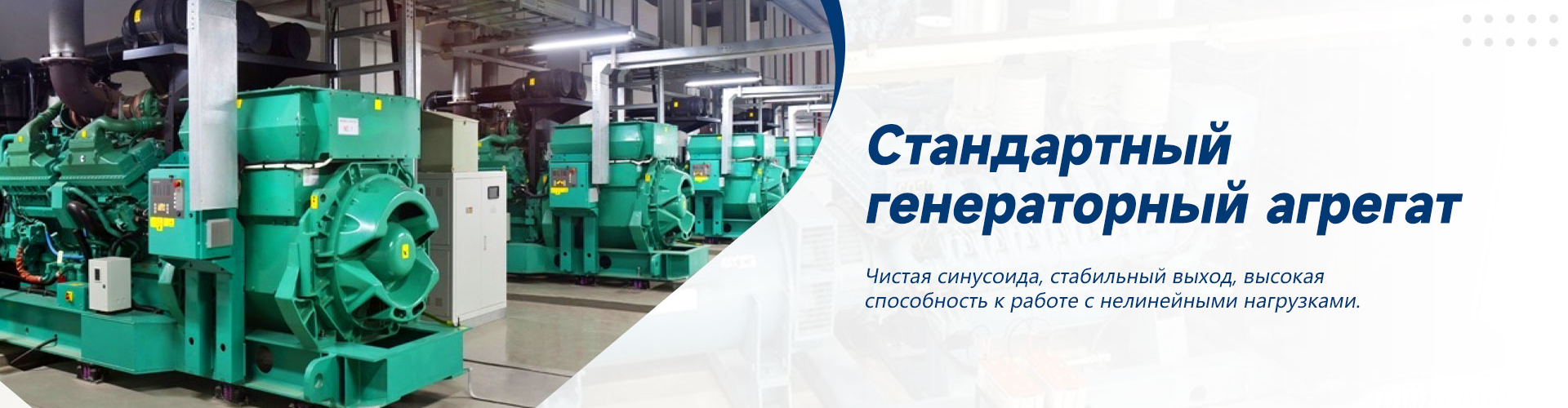
Cheap powerful generator: who is the main buyer?
2026-02-18
This is a question that is often asked, and often incorrectly. Many people immediately think about private homes or small businesses, looking for the “cheapest kilowatt”. But if you dig deeper into the logic of the purchase itself, everything turns out to be not so obvious. Cheapness and power in one bottle is always a compromise, and the one who takes it usually knows exactly why he needs it. Let's understand without gloss, with what is visible from inside the market.
Who should not be considered the main buyer?
Let me immediately note a common mistake: considering the main client the owner of a summer house or a small construction team. Yes, they buy, and often. But for them the key word is “cheap” rather than “powerful”. - secondary. Their choice often falls on generators from well-known household brands with a power of up to 5-7 kW. This is a mass segment, but not one where they are looking for a combination of high power and low price. There are other priorities: brand recognition, service availability, simplicity.
The same goes for small shops or cafes. For them, continuity is critical, not peak power. They often install inverter models or, if the budget allows, mini-power plants of well-known European brands. A cheap, powerful generator scares them - there are too many risks for the main business. Noise, possible problems with starting in cold weather, questions about voltage stability for sensitive equipment. This is not their story.
So who's left? Someone for whom a generator is not insurance, buttool for making money. Or for whom the cost of equipment directly eats up the margin on the project. This is where the real hunt for “horses” begins. for minimal money.
Portrait of the main buyer: crews and subcontractors
The main client for units, say, from 10 kW and above, at a price noticeably lower than the market for branded analogues, are subcontractors at large facilities. Imagine building a shopping center or laying a highway in a field. A generator is needed to operate a welding machine, a concrete mixer, lighting, and several hammer drills at the same time.
For a foreman who is responsible for his site, such a generator is a consumable item. His task is to make the technology work here and now. He cares less about the 10-year service life than the price here and today. He buys for a specific project, often with his own money, and then writes off or sells it. Reliability is important, but it is measured not in years, but in whether it will work without breakdowns for the next six months or a year. If it works, it’s already paid off. Therefore, Chinese or Turkish installations, like those supplied by e.g.Yuke (Shandong) Electrical Technology Co.,Ltd, find their consumer here. The company, which grew out of the DEVER team founded in Qingdao back in 2003, has a good feel for this segment: their products often balance on the brink of price and acceptable characteristics for such conditions.
The second type is mobile repair or service teams. Those who maintain networks respond to emergencies. They always have a generator in the back, running off-road. They also have no time for tenderness. The main thing is that it started up and provided the required power for the tool and compressor. Cheap - because the budget is limited, and powerful - because the tool can be power hungry. Often they take used ones or new ones, but without a “name”.
Where is the catch in this “cheapness”?
There are some compromises to be made here. The client from the previous section knows them well, but consciously takes risks. What do manufacturers of such units usually save? Firstly, on the cooling system. Often they install less efficient radiators or a simplified blower circuit. As a result, overheating may occur during prolonged operation under load in hot weather. The buyer understands this and builds a work schedule with breaks.
Secondly, on the components of the control system and voltage stabilization. AVR (Automatic Voltage Regulator) may be the simplest, not the most accurate circuit. It’s fine for lamps and drills, but for powering complex electronics or medical equipment it’s a risk. But our main customer rarely powers anything more complex than a welding inverter.
Thirdly, on sound insulation and details. The body is thinner, the frame is lighter, the instrument panel is more primitive. The generator is louder and vibrates more. But it is often placed twenty meters from the object, so it is tolerable. The key thing is that the engine and alternator are of a functional assembly. And this is where the division between outright rubbish and a conditionally acceptable product occurs. Companies like Yuke Electric, positioning themselves as innovative technological enterprises with an emphasis on R&D, are trying to get into exactly this gap: to offer a balanced solution, where savings are not made on everything, but on what is not critical for the target client.
Case study: generator for temporary lighting
Let me give you a specific example. We had an order from a subcontractor who was laying asphalt at night on a section of the highway. A generator was needed, first of all, to power several powerful searchlight masts - about 15 kW of constant load plus starting currents. The budget was strictly limited.
We considered several options. The branded European one was no longer needed - it was expensive. We offered the client just one of the models in the catalogvoyoko.ru(this is just Yuke’s site). The arguments were as follows: Lifan engine, copper winding alternator, strong frame. But the panel is simple, only a voltmeter and sockets, there is no noise-proof casing. The client, a guy with experience, looked at the specifications, asked about the availability of spare parts for the engine (they are common) and agreed.
The generator worked for that season - about 4 months almost every night. Then the client said that he sold it to another team, this time at a discount. For him it was a successful story: he bought it, used it as a resource, and partially returned the money. He did not expect ten years of service from him. This is the typical consumption pattern in this segment.
Here's another story, less successful. The same company supplied a generator for a small metal processing shop. There was a load with CNC machines. And this is where the instability of the output voltage that I was talking about failed. I had to install an external stabilizer, which ate up all the savings. Lesson: ?cheap and powerful? not for sensitive loads. This is an important clarification.
The role of suppliers and assemblers
Who shapes this market? Often these are not giants like Cummins or SDMO, but integrators like Yuke Electric. They take ready-made, often Chinese, components (engines, alternators, frames), assemble them, test them, give their guarantee and take them to the market. Their strength lies in their understanding of local specifics and the ability to assemble a package upon request.
Their website, technical consultations, services for engineering construction and supply of equipment - all this is tailored for a client who wants not just to buy hardware, but to get a solution for his task, even on a budget. They are not selling a fairy tale about a perpetual motion machine, they are selling functionality for a certain period and conditions.
For the end buyer, such a supplier is often more convenient than working directly with a giant factory. There is point-by-point responsibility, you can discuss details, sometimes even make minor changes to the package. This is the flexibility that our “main customer” values.
Bottom line: not the price, but the cost of ownership in a specific context
So who is the main buyer of a cheap, powerful generator? This is a professional who views it ascurrent assetrather than as a capital investment. His calculation is based not on a service life of 3000 engine hours, but on whether the unit will work 500-1000 hours on his project without serious breakdowns. His motto: “The main thing is to stretch out the season.”
He is willing to put up with increased noise, simple design, manual starting (or a simple electric starter) and the need for more careful maintenance. In return, he receives power that allows him to earn money, for money that does not eat up all the profit from the contract.
Therefore, when you see a request for “cheap powerful generator?”, do not look at homeowners. Look at a man in work clothes who is asking the price of equipment on the supplier’s website, mentally calculating the cost of renting a similar installation for three months and comparing it with the purchase price. His decision is always a cold, practical calculation. And the market in which companies operate from engineering consulting to turnkey delivery exists precisely for it.
-


-
-


WeChat

-
WeChat