

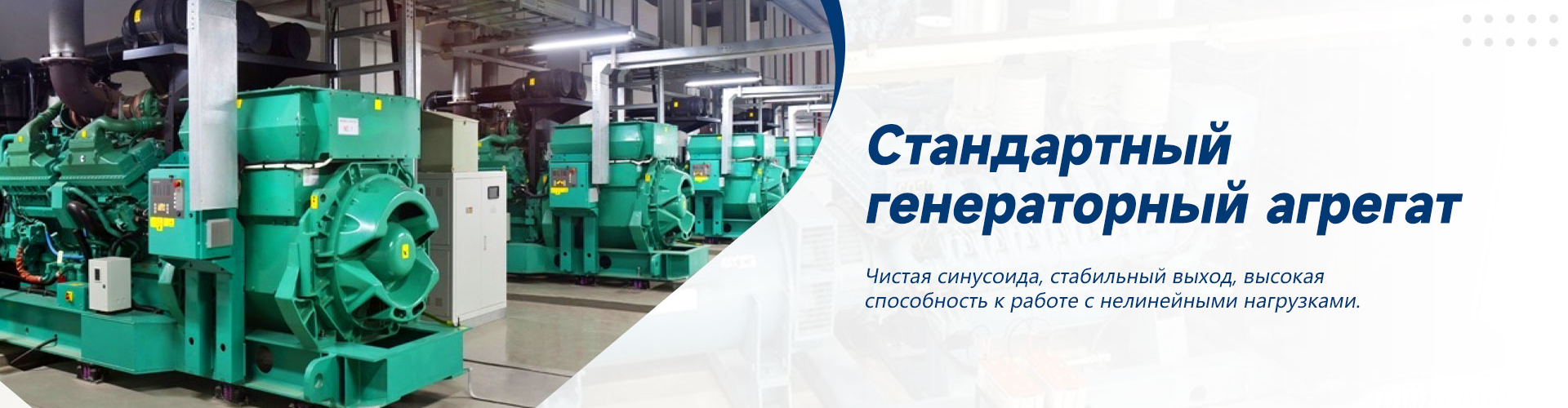
Cheap industrial generator: whose market is buying?
2026-02-17
When they say “cheap industrial generator?”, many people immediately have an image of something low-quality, almost disposable. But in practice everything is more complicated. Cheapness is a relative concept, and its reasons can be different: from simplified design and savings on materials to the aggressive pricing policy of a new player. The main question is not the price as such, but who is willing to buy for this price and, what is critically important, for what purposes. A common mistake is to assume that the buyer is “cheap”. always the same. This is wrong.
Who is looking for ?budget? option and why
In my practice, clients can be roughly divided into three camps. The first are small workshops or startups that simply do not have the capital for expensive equipment. For them, a generator is a tool for occasional work, and the key parameter is “to work when needed.” They are ready to put up with increased noise, shorter engine life and a simple, even inconvenient, control panel. Their slogan: “First make money on it, then buy a normal one?” Often they come with a request for Chinese brands, but not the top ones, but those that can be found on Alibaba at the most attractive price.
The second group are contractors at temporary sites. Let's say, building a fence or installing it for a couple of weeks. The logic here is simple: buy what you can cheaply, use it intensively on one project, and then sell it with minimal loss. For them, it is not so much reliability in the long term that is important, but rather uninterrupted operation here and now, and the ability to quickly “reset” it. equipment after. They are well versed in the used market and often buy new “state-owned” cars. exactly with this in mind.
And the third, less obvious category is large companies that make large volumes of purchases for auxiliary needs. For example, to provide light for perimeter security in several warehouses. They don't need advanced features, they need many pieces of equipment that perform one simple task. And here the price per piece becomes a decisive factor. They can buy a batch of cheap generators, knowing that some will fail, but the total cost of purchase and maintenance will still be lower than if they bought a “premium” class.
Saving pitfalls: unobvious expenses
It would seem that I bought it cheaper and saved money. But in reality, the savings are often imaginary. The simplest example is fuel consumption. We once compared two units of the same power: our “average” one. and a frankly budget model from the market. The price difference was almost 40%. But "state employee" I ate 15-20% more diesel fuel per hour. During the season of active work, the overpayment for fuel easily “eaten up” initial benefit. A client who hired him for permanent work in a logging site complained six months later that he had counted everything except this.
Another point is maintainability and availability of spare parts. Cheap models, especially from no-name manufacturers, are often assembled using unique or outdated components. A sensor or control unit breaks down - and the detective story begins. There is no official service, spare parts cannot be found in stock, you have to wait a month for delivery from China or “collective farming?” solution. Downtime of equipment during the season for the same contractor is a direct loss. Therefore, now smarter buyers from the second group first call and ask: “And if anything, do you have spare parts for this model in stock?”
And, of course, safety. Some frankly homemade assemblies skimp on the overload protection system, the quality of insulation, and the stability of the output voltage. For charging batteries or powering sensitive electronics, this can be fatal. I heard a story when, due to a power surge from such a generator, a client’s entire pump control cabinet burned down. The damage was many times greater than the cost of the generator itself. The savings turned into a disaster.
Case: when is it ?cheap? doesn't mean ?bad?
But don't demonize all low-cost solutions. There are situations where they fit perfectly. Let me give you an example from my experience working with the company.Yuke (Shandong) Electrical Technology Co.,Ltd. They, as an innovative enterprise with a full cycle from development to construction, sometimes offer solutions where the generator is not the main, but an auxiliary equipment as part of a larger project.
There was a project to modernize the local energy system at a small enterprise. The basis was inverters and batteries, and the generator was needed solely as a backup source for recharging the battery during periods of prolonged absence of sun. His work was designed for 50-100 hours a year. It was irrational to invest in an expensive diesel generator with a long service life. CompanyYuke Electricoffered a compact and inexpensive gasoline generator with basic automatic start. The key was that they took care of integrating it into the overall control system and provided a guarantee for the entire assembly. The price of the entire solution turned out to be very competitive.
Here the low cost of the generator was justified by its limited but clearly defined function in the system. The buyer did not pay for “hardware”, but for a guaranteed result - uninterrupted power supply. And this is a good example when the market buys not just a cheap unit, but a cheap, but adequate and professionally selected solution for a specific task. Information about their holistic approach can be found on their websitevoyoko.ru.
The market is shifting: what can be seen from queries
Five years ago the request ?cheap generator? almost always led to a search for the lowest price in the catalog. Now the picture is changing. More and more often in conversation it sounds: “Please advise the best price-quality option for constant work for 8 hours?”, or “We need the most unpretentious one, for dusty construction conditions?”. That is, the buyer, even when saving, wants to understand what exactly he is saving on and what consequences this will lead to.
This indicates an increase in literacy. People got into trouble and heard a lot of stories. They no longer believe in “European quality at a Chinese price.” They are interested in specifics: what kind of engine it is (Honda, Loncin, or no-name), who assembled it, whether there are service centers. The buyer's market is becoming more discerning. And this is a good trend that washes away outright trash.
Paradoxically, this trend opens up opportunities for companies such asYuke Electric. Because their strength is not in selling the cheapest “box”, but in technology consulting. They can come to the site, assess the real energy needs, peak loads, operating conditions and propose a scheme where, perhaps, there will be not the most expensive generator, but its operation will be optimized and protected by other elements of the system. This is a different level of value.
Bottom line considerations: not price, but cost of ownership
So whose market is buying a cheap industrial generator? Answer: different. But what unites these buyers is not the desire to simply save money, but the need to meet a tight budget, often with a full understanding of the compromises. A smart buyer today considers not the price in the catalogue, but the cost of ownership over the planning horizon - a year, two, a season.
Therefore, when I am approached with such a request, the first question I ask is: “Tell me how and where you plan to use it?”. The answer to this question immediately cuts off the wrong options. Sometimes after such a conversation a person realizes that it is more profitable for him to lease a good, used generator than to buy a new, but dubious one. And sometimes - that he really needs a simple and cheap device, and we select an option where the risks are minimized.
The market has become more complex. ?Cheap? ceased to be synonymous with “bad”. It has become synonymous with “specific”. And understanding this specificity - both on the part of the seller and on the part of the buyer - is the main key to a successful transaction. Everything else is just numbers in the price list.
-


-
-


WeChat

-
WeChat