

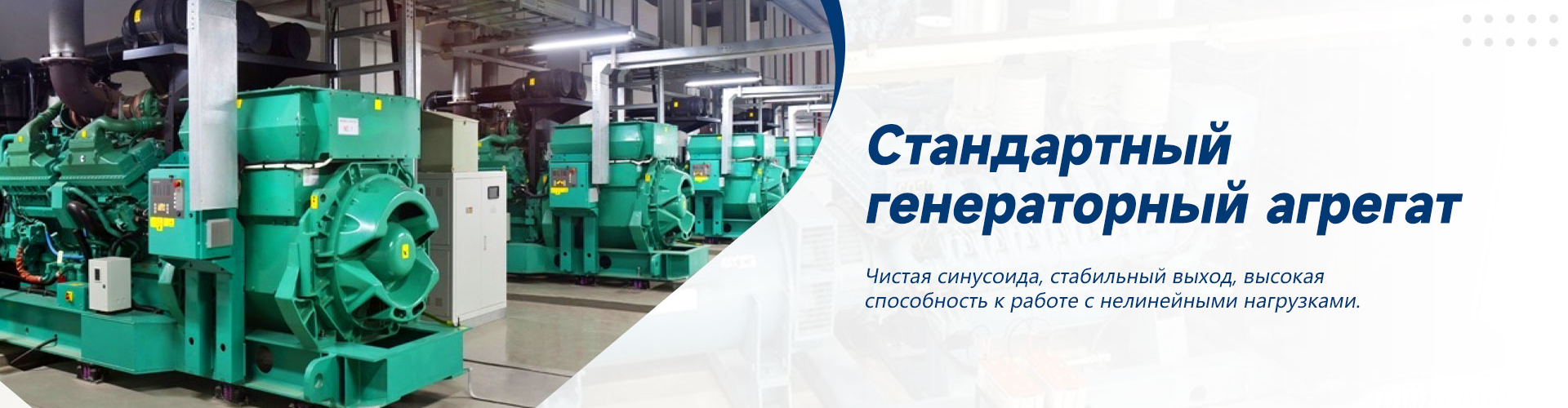
Cheap repair of generators: trends in China?
2026-02-15
When you hear “cheap generator repairs”, you immediately think about China, right? But here’s the catch: many expect that cheap means low quality, and Chinese is generally synonymous with disposability. This is the first and most persistent myth you come across in the industry. In fact, over the past five to seven years the picture has changed a lot. I went through this myself, trying to find a balance between cost for the client and reliability of the result. And do you know what surprised me? It turned out that the very approach to repair and maintenance of power equipment in China has evolved, giving rise to several very specific and pragmatic trends. Not the ones they write in glossy magazines, but the ones you come across in the workshop or when sorting out joints after a not-so-successful experiment.
From ?replace everything? to pinpoint surgery
Previously, the standard scheme, especially among local services that worked with Chinese generators, was simple: a unit failed - we replace the entire unit or a large unit. Cheap? Regarding the original - yes. But in essence it is wasteful. Now the trend has shifted towards deep repairs at the component level. We are not talking about soldering capacitors, but, say, restoring stator windings with specific varnishes with improved dielectric strength or regrinding commutators with selection of brushes for a specific operating mode. This requires a different level of competence and equipment.
Here is an example from practice: I arrivedgeneratorChinese assembly with suspected interturn short circuit. Ten years ago he would have been written off. Now the standard procedure is diagnostics with a pulse tester, localization of the damaged coil, its careful removal (and yes, this is a jewelry job so as not to damage the neighboring ones), winding a new one on the same machine that was used at the manufacturer, impregnation and drying. The key word is “on the same?”. Many Chinese manufacturers, especially those aimed at exporting, have become more open in terms of transferring not only the units themselves, but also repair technologies, equipment, and approvals.
Why did this become profitable? Because the final cost of such repairs for the client can be 3-4 times lower than replacing the unit, and the service life of the restored unit is 80-90% of the new one. This is no longer a “crutch”, but a major restoration. Companies that understood this and invested in staff training and special equipment took the lead. I know several Russian services that now operate precisely according to this scheme, purchasing components and technologies directly from Chinese engineering centers.
Components: market from gray to white
Previously, the main source of ?cheap? There was, conditionally, a market in Shenzhen or unofficial channels. Quality is a lottery. Now the situation is being structured. Official distributors and repair hubs have appeared that work directly with component manufacturing plants. Not with the brand that assembles the generator, but with a factory that makes, for example, bearing units or AVR systems (automatic voltage regulators).
Let's take AVR - the brain of the generator. Previously, when there was a breakdown, they installed an “analogue”, which could behave unpredictably. Now you can legally buy an original module from a manufacturer, say,Shangdong Yuke Electric Technology(this is exactly the same oneYuke (Shandong) Electrical Technology Co.,Ltd), which grew out of the DEVER engineering team and specializes in technological solutions in the electric power industry. Their website (voyoko.ru) is no longer just a business card, but a portal with technical documentation, specifications and, importantly, contacts for engineering consultations. That is, you can not just buy a board, but describe the symptoms of the breakdown and receive recommendations for replacing or even modifying the circuit for increased loads.
This is a game changer.Cheap repairsceases to be synonymous with “it is unknown from what collected?”. Now this can be a repair with an accurately calculated cost, where the lion's share of savings comes not from the low quality of parts, but from the elimination of the chain of intermediaries and competent engineering at the diagnostic stage. True, there is a nuance: in order to work in this paradigm, the service engineer himself must be well versed in circuitry and have access to these new, “white” ones. channels. This is a barrier for garage workshops, but an opportunity for professional service centers.
Focus on diagnostics and predictive maintenance
The most expensive thing to repair is an error in diagnosis. I spent time replacing the supposedly faulty unit, but the problem remained. Chinese trends are now actively shifting towards the sale of not just spare parts, but diagnostic solutions. Many relatively inexpensive but effective instruments have appeared for analyzing vibration of bearings, thermal imagers for searching for overheating points in windings, and portable power quality analyzers at the generator output.
For example, the ?Surge Test? test has become a de facto standard. to check winding insulation in the early stages of degradation. Equipment for it is now produced in China, and at a price affordable even for an average service provider. This makes it possible not to lead to a complete interturn short circuit, but to recommend preventative impregnation or drying of the generator at the first sign of a problem. This approach is the quintessence of modern “cheap” repairs: pay a little now so as not to pay ten times more later.
Personal experience: we once took on the task of diagnosing an industrial diesel generator with periodic voltage dips. Classic - everyone sinned on AVR. Checked - normal. Only the thermal imager under load showed local overheating in one of the power diodes of the rectifier bridge, which had not yet failed, but was already “breathing”. Replacing one diode module (made in China, by the way) instead of hypothetically replacing the entire AVR unit or generator head saved the customer several thousand dollars and weeks of downtime. Without the right diagnostic tool, we would go down the classic, long and expensive path.
Risks and pitfalls: where is it ?cheap? still dangerous
You can't paint a perfect picture. Trends are trends, but the market is still full of pitfalls. The main risk has now shifted from outright counterfeit to the area of “simplified versions?” or “analogues compatible with seats?”. Externally, the part is similar and costs 40% less, but, for example, the same AVR uses less heat-resistant capacitors or a microcircuit with reduced control logic.
Such a part can work for a year, and then fail at the most crucial moment, taking something else with it. And here the war begins: the supplier says that you operated it in unsuitable conditions, the service nods at the quality of the part, and the client is left with broken equipment. I myself found myself in such a situation when I staged a “budget” one. engine speed regulator. It passed all the tests, but in real operation it failed during transient processes. I had to redo it at my own expense, the lesson was paid for.
Therefore, the main rule now: low cost must be justified technologically, and not just geographically. If they offer you a bearing at half price, ask for a vibration test certificate. If they offer ?analogue? AVR, request a comparison sheet for key parameters (stabilization coefficient, response time, operating temperature). The absence of such documents is a red flag. Chinese manufacturers from the B2B segment, the sameYuke Electric, which position themselves as an innovative enterprise with a full cycle from R&D to construction, are banking on providing this technical transparency. This is their competitive advantage over anonymous suppliers.
What's in the bottom line? Pragmatic synergy
So where is the topic going?cheap generator repairsin a Chinese context? In my opinion, to the synergy between affordable cost and increased technical culture. This doesn't mean that everything has become perfect. This means that a working path has appeared for professionals.
This path looks like this: investing in modern diagnostics + establishing direct contacts with technology manufacturers (not trading companies) in China + retraining personnel for fine, component repairs. In this case, ?cheap? transforms into “cost-effective and reliable”. The client receives a restored unit with a clear repair history and a forecast of residual life, and the service is a stable business with a reputation, and not an imitation of activity.
China is not just a country that supplies cheap parts. It has become a source of very specific engineering solutions and equipment that allow us to raise the quality of repair services to a new level while maintaining control over the budget. But the key to success is selectivity and technical literacy. Blindly chasing the lowest price on Alibaba is a road to nowhere. But to find a partner likeYuke Electric, with their background in DEVER Electric and a stated focus on innovation, and building a dialogue with them in technical language is already a strategy. True, it takes time and effort. But, as practice shows, it's worth it. At least in my workshop, generators came back much less often after this approach.
-


-
-


WeChat

-
WeChat