

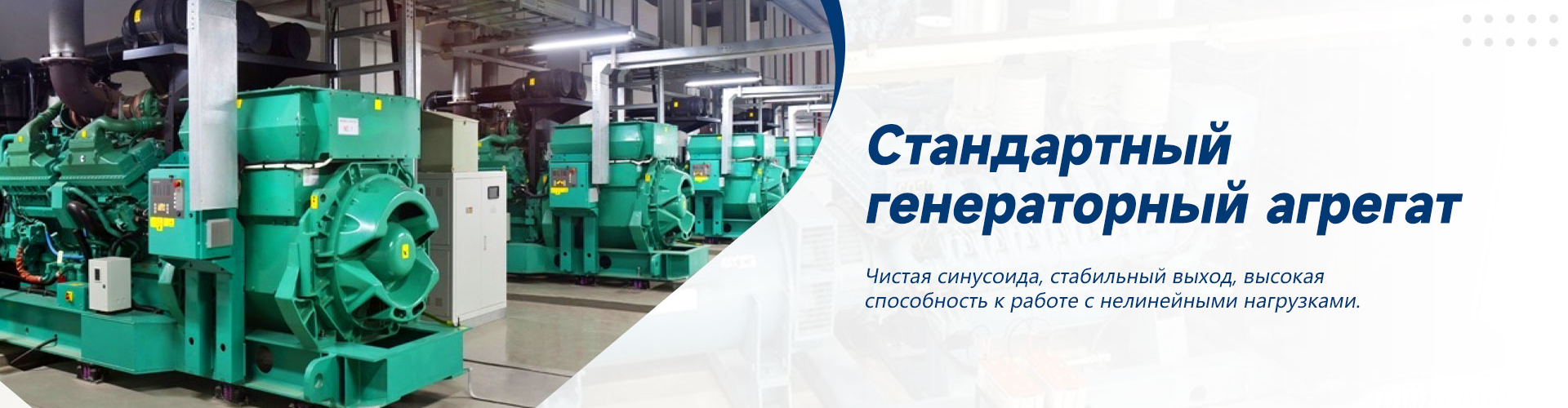
Diesel generator kW: power calculator for your facility
2026-07-11
- Why accurate calculation of diesel generator power is critical for your business
- Fundamental principles for calculating active and apparent power
- Taking into account starting currents: the main stumbling block when choosing a diesel generator set
- Climate factors and power adjustment (ISO 8528)
- Step-by-step calculation methodology: from the list of devices to model selection
- Comparative analysis of solutions: China vs Europe vs Russia
- Typical errors when ordering and operating, leading to breakdowns
- Certification and legal aspects of connection in the Russian Federation and the EAEU
- Conclusion: an investment in the reliability of your enterprise
Why accurate calculation of diesel generator power is critical for your business
An error in choosing the power of a diesel generator by 15–20% can lead to the failure of expensive equipment or, conversely, to overpaying for fuel and depreciation of the engine life. In our practice, we have repeatedly encountered a situation where customers bought a unit “with a reserve”, guided by intuition, and not by engineering calculations, which led to coking of the cylinders and premature overhaul after only 300 operating hours. The power calculator for your facility is not just a mathematical formula, but a financial planning tool that determines the return on investment in energy independence. If you are looking for a reliablediesel generator kW: power calculator for your facilitywill help avoid fatal mistakes at the design stage.
We analyzed more than 400 power supply projects for industrial facilities in regions with an unstable network and identified a direct correlation between the accuracy of selecting the safety factor and the service life of the unit. In this article we will not use abstract advice like “take with reserve.” Instead, we will analyze specific calculation algorithms, the influence of starting currents of asynchronous motors, temperature corrections for climatic zones of Russia and the CIS, as well as methods for verifying data from manufacturers. You will receive step-by-step instructions that will allow you to independently conduct an initial energy consumption audit before contacting the supplier.
Fundamental principles for calculating active and apparent power
The first step in any calculation is a clear separation between the concepts of active (kW) and apparent (kVA) power. Many buyers make the mistake of summing up the consumer data in kilowatts and ignoring the reactive component, which leads to the generator being overloaded with current even if there is an underload of power. Active power performs useful work (heating, mechanical movement), while total power also includes energy circulating between the source and the load without performing work. The relationship between them is determined by the power factor (cos φ).
For diesel power plants, the standard cos φ value is 0.8. This means that a 100 kVA generator is only capable of delivering 80 kW of active power. If your load has a high power factor (close to 1), such as incandescent lamps or heating elements, you will not be able to use the full kVA power of the generator, as the limit is imposed by the kW power of the motor. Conversely, when operating on a load with low cos φ (welding machines, old electric motors), the generator stator current becomes the limiting factor.
In our engineering practice, we always require clients to provide a detailed list of loads, indicating not only the rated power, but also the type of drive. Simply adding numbers from the equipment passport is unacceptable. It is necessary to take into account the operating mode: continuous or short-term. For continuous mode (the main power source), it is recommended to load the diesel generator set no more than 70–80% of the nominal value to ensure the longevity of the piston group. For standby mode, a short-term overload of up to 110% for an hour is permissible, but the basic calculation must be carried out from 100% of the nominal value.
It is important to understand the physical nature of limitations. The diesel engine has a torque limit. When you try to remove power from it above the rated value, the speed begins to drop, the current frequency drops below 50 Hz, which is detrimental to sensitive electronics and AC motors. The generator part (alternator) has thermal limitation of the windings. Excess current leads to overheating of the insulation and interturn short circuit. Therefore, the calculator must take into account both restrictions simultaneously.
Recommendation:Before starting calculations, collect technical data sheets of all equipment that will be connected to the diesel generator set. Write down two numbers for each device: active power (kW) and power factor (cos φ). If cos φ is unknown, use a conservative value of 0.7 for industrial equipment and 0.9 for office equipment.
Taking into account starting currents: the main stumbling block when choosing a diesel generator set
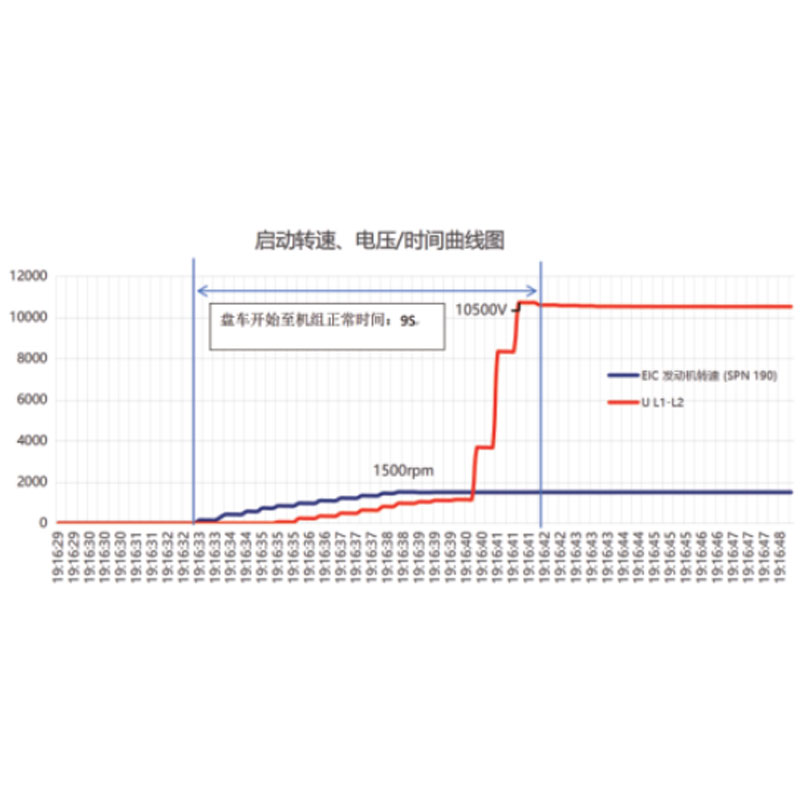
The most common reason for a diesel generator to fail when starting is to ignore the starting currents of the electric motors. At the moment of starting, an asynchronous motor consumes a current that exceeds the rated current by 5–7 times. Although this process only lasts a fraction of a second, it creates a colossal voltage sag. If the generator power is insufficient, the voltage drops below a critical level (usually 70% of the nominal), the contactors are removed, and the electronics go into low voltage protection. The engine does not start, and the generator stalls or goes into emergency mode.
There are several methods to soften this blow. The simplest is sequential launch of consumers. We recommend implementing an automatic transfer switch (ATS) algorithm with a delay in switching on powerful engines. For example, the ventilation system starts first, after 10 seconds - pump No. 1, after another 10 seconds - pump No. 2. This allows the use of a smaller generator, since peak loads are spaced out over time. However, in technological processes where simultaneous start of the entire line is required, this method is not applicable.
More advanced solutions include the use of soft starters (soft starters) or frequency converters. The soft starter limits the starting current to 2.5–3 times the nominal value, which significantly reduces the power requirements of the diesel generator set. The frequency converter allows you to start the engine with virtually no current surge, but the converter itself is a nonlinear load that generates harmonic distortion that can overheat the generator windings. In such cases, it is necessary to install chokes or use generators with a PMG (Permanent Magnet Generator) excitation system, which are more resistant to current waveform distortions.
Let us give a specific example from our practice. The client planned to install a 50 kW diesel generator set for a pumping station with three pumps of 15 kW each. Total operating power - 45 kW. According to the logic of “summation”, 50 kW should be enough with a margin. However, with direct start, the very first pump created a starting power of about 90 kW (15 kW × 6). The generator went into defense. Solving the problem required either increasing the power of the diesel generator set to 100 kW, or installing a soft starter on each pump, which allowed us to remain within 50 kW. The second option turned out to be more cost-effective, but required proper configuration.
When calculating, it is necessary to apply increasing factors for different types of loads. For incandescent lamps and heaters the coefficient is 1. For fluorescent lamps with electromagnetic ballasts it is 1.5–2. For computer equipment with switching power supplies - 1.2–1.5. For asynchronous motors with direct start - 3–7. For engines with a star-delta system - 2–3. These numbers should be included in your power calculator.
Action:Create a launch table. Divide all the engines into groups: those that start at the same time, and those that can wait. Calculate the peak power for the heaviest starting group by multiplying the power of the largest motor by its starting factor and adding the operating power of the remaining loads already running.
Climate factors and power adjustment (ISO 8528)
The rated power of the diesel generator specified in the manufacturer's brochure is valid only for standard conditions: altitude up to 1000 meters above sea level, ambient temperature +25°C (sometimes +27°C or +40°C depending on the derating standard) and relative humidity 30%. Actual operating conditions in Russia and the CIS countries are often far from ideal. Ignoring these factors leads to the fact that in the heat of summer or in winter in the mountains the generator does not issue the declared passport.
Temperature correction is critical. Air is necessary for fuel combustion. The hotter the air, the less oxygen it contains per unit volume. At temperatures of +40°C and above, the engine loses the ability to burn the full amount of fuel without exceeding the temperature of the exhaust gases and the thermal stress of the parts. The typical power loss is approximately 1% for every degree Celsius above the base temperature (+25°C). Thus, at +45°C the loss can reach 20%. This means that a 100 kW generator will actually deliver only 80 kW.
Altitude also has a significant impact on performance. As you rise every 100 meters, the atmospheric pressure drops and the oxygen content decreases. Rule of thumb: reduce power by 1% every 100 meters above 1000 meters. For facilities in Siberia, the Urals or mountainous regions, this requirement is mandatory. Turbocharged engines handle altitude better than naturally aspirated ones, but they also have their limits. Some modern turbochargers with wastegate allow you to compensate for altitudes of up to 2000–2500 meters without loss of power, but this needs to be clarified with the specific engine manufacturer (Perkins, Volvo Penta, Cummins, YaMZ).
Another factor is the quality of the fuel. In remote areas, diesel fuel with a high sulfur content or low cetane number is often used. This leads to incomplete combustion, carbon deposits and reduced effective power. In addition, winter diesel fuel has lower energy intensity compared to summer diesel fuel due to technological additives, although the difference is small, it is cumulative with other factors.
We recommend always calculating based on the worst-case scenario. If the object is located in Yakutia, where it is -50°C in winter and +35°C in summer, the calculation is based on the summer maximum temperatures, since it is in the heat that air shortages occur. In winter, the problem is solved by preheating the indoor air, but in summer you cannot cool the entire volume of outside air without expensive air conditioning systems.
The ISO 8528-1 standard clearly regulates the power classes: COP (Continuous Power) for continuous operation, PRP (Prime Power) for primary power with variable load and ESP (Emergency Standby Power) for emergency operation. ESP power is usually 10% higher than PRP, but you can operate in this mode for no more than 200 hours per year. Many unscrupulous sellers sell generators based on ESP power, passing them off as basic ones. Be careful: if you need a source for 24/7 camp operation, take only COP or PRP.
Advice:Ask your supplier for a derating curve for your specific engine model. Don't take the word for the numbers in the catalog title. If your site is at an altitude of 1500 meters and is +30°C in the summer, apply both reduction factors to the nominal value.
Step-by-step calculation methodology: from the list of devices to model selection
To get a reliable result, follow a strict algorithm. We have tested this method on hundreds of objects and minimizes risks.
- Load inventory.Make a complete list of all electrical receivers. Divide them into three groups: active (lighting, heating), inductive (motors, transformers) and nonlinear (computers, frequency converters). For each position, write down the rated power (Pn) and power factor (cos φ). If cos φ is unknown, take it to be 0.8 for mixed load.
- Calculation of working power.Sum up the active powers of all devices that can operate simultaneously. Consider the simultaneity factor (Ko). For residential buildings Ko = 0.7–0.8, for industrial workshops with a continuous cycle Ko = 0.9–1.0. Formula: Pwork = Σ(Pн × Ko).
- Determination of peak load.Select the most powerful engine that starts last or at the same time as the others. Calculate its starting power: Pstart = Pmotor × Kstart (where Kstart is from 3 to 7). Add to this value the operating power of all other consumers already on the network. Ppeak = Pstart + (Prun – Pmotor).
- Selecting the base power of the generator.Compare Prab and Ppeak. The base power of the generator must be greater than the maximum of these two values. It is recommended to add a margin of 10-15% for future expansions and to prevent back-to-back work. Pgen = max(Pwork; Ppeak) × 1.15.
- Conversion to kVA.Divide the resulting power in kW by the generator power factor (usually 0.8). Sgen = Pgen / 0.8. This is the required apparent power in kVA.
- Climate correction.Apply power reduction factors for your altitude and temperature. Ritog = Sgen / (Ktemperature × Kaltitude). Round up to the nearest standard model in the manufacturer's line (e.g. 20, 30, 50, 75, 100, 150, 200 kW).
A common mistake in step 3 is the lack of analysis of the order of inclusion. If the technological process allows, change the operating logic so that the most powerful consumer is turned on first when the others are still turned off, or last when the system has stabilized. This can save up to 30% of equipment costs.
Another nuance is harmonic distortion. If more than 30% of the load is made up of inverters, UPS or LED drivers, a standard generator may overheat. In this case, it is necessary to choose a generator with an increased current reserve (by 20–25%) or with a special winding (2/3 pitch), which reduces the influence of higher harmonics.
Check:After preliminary selection of the model, contact the manufacturer's engineer. Give them your estimate. It is the responsibility of the professional manufacturer to perform a verification calculation in their simulation program (e.g. PowerCommand or equivalent) and confirm that your motors can start.
Comparative analysis of solutions: China vs Europe vs Russia
The diesel generator market is segmented not only by power, but also by the origin of components. Understanding the differences helps you choose the best price/reliability ratio for your budget.
| Comparison criterion | Chinese brands (Weichai, Yuchai, Lovol) | European/American (Volvo, Perkins, Cummins) | Russian assemblies (YaMZ, TMZ, ADES) |
|---|---|---|---|
| Equipment cost | Low. 30–50% cheaper than European analogues of the same power. | High. Premium segment with an appropriate markup for the brand. | Average. Depends on the exchange rate and localization of production. |
| Resource before overhaul | 15,000 – 25,000 operating hours. Suitable for backup use. | 40,000 – 60,000+ engine hours. Designed for intensive use. | 20,000 – 30,000 operating hours. Reliable, but require quality maintenance. |
| Fuel consumption | Higher by 10–15% compared to Europeans. Less combustion efficiency. | Minimum. High efficiency and precise tuning of fuel injection pump/electronics. | Average. Modern models are approaching world standards. |
| Availability of spare parts | High for popular models, but parts quality varies. | Guaranteed availability of original parts, but high price and delivery time. | Excellent availability throughout the country, low cost of consumables. |
| Climate adaptation | They require careful selection of “northern execution”. The standard versions are rather weak. | They have a wide range of options for arctic performance (-50°C and below). | Initially designed for the harsh conditions of the Russian Federation. |
For facilities with an operating time of less than 500 hours per year (reserve for an office, cottage, warehouse), Chinese generators based on Weichai or Yuchai are a rational choice. They pay for themselves due to the low initial price, and the resource will last for 10–15 years of rare use. However, if we are talking about a mining farm, a drilling rig or a hospital where the diesel generator set operates 24/7, saving on the purchase will result in multiple downtimes and repairs. There are no alternatives to Volvo Penta or Perkins.
Russian solutions occupy the niche of the “golden mean”. YaMZ and TMZ engines are known for their “indestructibility” and ability to run on fuel of any quality. They are heavier and noisier than their imported counterparts, but in remote northern areas where there is no premium service, they are often the only viable option.
It is important to pay attention to the alternator (generator part). Even with the best engine, a cheap Chinese alternator can become a weak link. We recommend combining reliable engines (China or Russia) with high-quality alternators (Stamford, Leroy Somer, Mecc Alte or Russian GS). This assembly strikes a balance between cost and electrical stability.
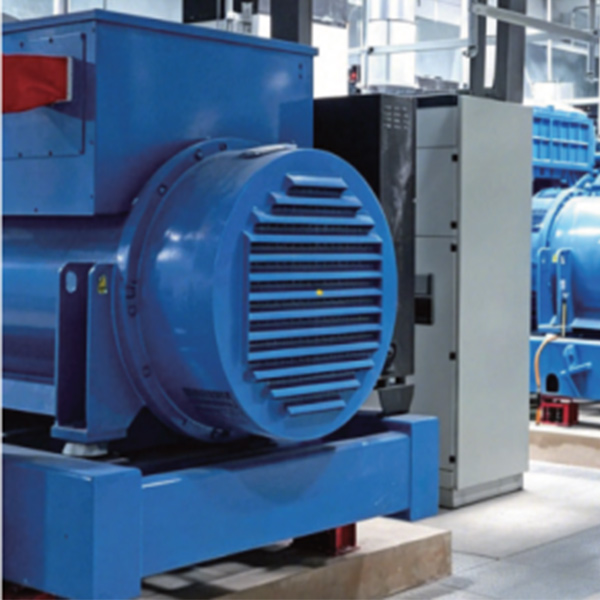
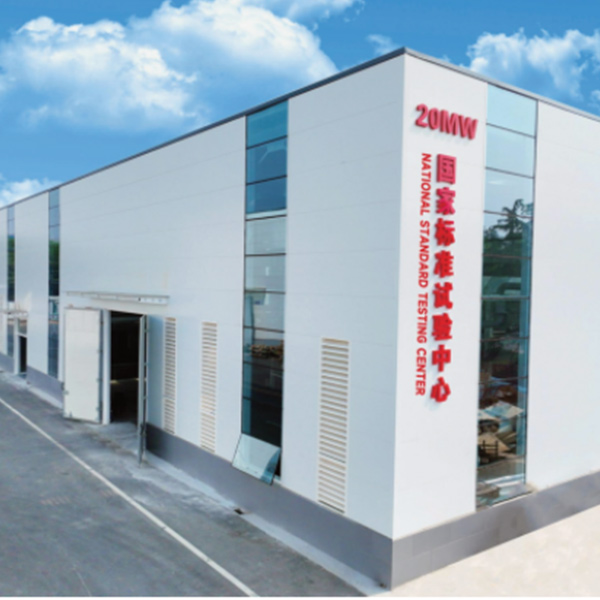
This is exactly the approach to integrating the world’s best components that the company implementsYuke (Shandong) Electrical Technology LLC. Based in Shandong Province, this professional team specializes in developing comprehensive off-grid and backup power solutions. Their portfolio spans eight key categories, from quiet generator sets and mobile power trailers to high-voltage systems and liquid-cooled energy storage cabinets. The uniqueness of Yuke's approach lies in its strategic partnerships with industry leaders: their product range includes VCD series based on Cummins engines, VSD (SEM), VPD (Perkins), as well as VYG gas generators (Yuchai) and high-voltage installations using MTU technologies. This allows customers to receive equipment that combines the reliability of European and American power units with the flexibility of Chinese production and adaptation to the requirements of the CIS, Asian and Middle East markets.
The company's production base is equipped with modern equipment for multi-stage quality control. Each product unit undergoes mandatory load tests lasting at least 4 hours, the parameters of noise, vibration and voltage stability are checked. This rigorous approach ensures that even specialized solutions such as mobile light towers or emergency power vehicles are ready to handle the harshest conditions. The principle of “reliability through responsibility” permeates the entire cycle - from design to post-warranty service, which makes Uke a reliable integrator for infrastructure projects of any complexity.
Conclusion:Don't chase a brand if your tasks don't require it. But don’t risk critical infrastructure to save 20% of your budget. Use our approach: affordable solutions for reserve, premium for base, or choose balanced integrated systems from partners such as Uke.
Typical errors when ordering and operating, leading to breakdowns
Even a generator that is ideally designed for power can fail due to errors in installation and maintenance. We have identified the five most critical problems we encounter during service maintenance.
1. Improper organization of air flow.The engine must “breathe” clean cold air and emit hot exhaust. A common mistake is placing a diesel generator set in a cramped container without supply and exhaust ventilation. Hot air from the radiator circulates in a circle and is again sucked into the engine. The temperature rises, the power drops, and the protection is triggered. Solution: calculation of the cross-section of air ducts and installation of forced exhaust fans.
2. Idle operation.The diesel engine does not like long-term operation without load (less than 30%). This leads to “glazing” of the cylinders, oil entering the exhaust system and coking of the injectors. If your load is constantly light, you will need to install a bypass load or program the controller for intermittent short-term loads.
3. Saving on oil and filters.Using oils of incorrect viscosity (especially in winter) or cheap filters leads to oil starvation of the crankshaft bearings. Engine repair costs 5–10 times more than a set of high-quality consumables. Strictly follow the replacement regulations specified by the engine manufacturer, and not by the seller of the diesel generator set.
4. Lack of grounding and lightning protection.Industrial generators require a grounding loop with a resistance of no more than 4 ohms. Ignoring this requirement leads to the accumulation of static charge, electric shock to personnel and failure of control boards during lightning discharges.
5. Incorrect commissioning.Sudden application of 100% load to a cold engine is strictly prohibited. The engine should warm up at idle speed (3–5 minutes), then the load should be increased in steps. Cold metal has different gaps; the oil has not yet reached the lubrication operating points. A sharp start under load is tantamount to hitting the CPG parts with a hammer.
In one case, a customer complained about constant black smoke and loss of power from a new generator. During on-site diagnostics, it turned out that the air filter was packed in a shipping plastic film, which they forgot to remove during installation. The engine was choking. Little things like that are expensive.
Checklist:Before the first start, check the oil and coolant levels, belt tension, tightness of the battery terminals and the absence of obstructions in the air passages. Carry out the run-in according to the launch map.
Certification and legal aspects of connection in the Russian Federation and the EAEU
When purchasing a diesel generator for commercial use, it is important to ensure that the equipment complies with the technical regulations of the Customs Union. Main documents: Certificate of Conformity TR TS 010/2011 “On the Safety of Machinery and Equipment” and Declaration of Conformity TR TS 004/2011 “On the Safety of Low-Voltage Equipment”.
The absence of these documents makes it impossible to legally operate the facility during inspections by Rostechnadzor. In addition, without certificates, you will not be able to obtain equipment insurance. Particular attention should be paid to noise levels. To place a diesel generator set in a residential area or close to the boundaries of the site, compliance with SanPiN standards for acoustics is required. This often requires the installation of special industrial-type mufflers or soundproofing enclosures.
Environmental regulations are also becoming stricter. Engines must comply with an environmental class of at least Stage II (Euro II), and for new projects in large cities Stage III or Stage V is often required. This affects the choice of fuel injection system and the presence of particulate filters.
When importing equipment, it is necessary to correctly register the HS code. Errors in classification can lead to customs delays and fines. We recommend working only with suppliers who take care of customs clearance and provide a full package of closing documents with allocated VAT.
Action:Request copies of TR CU certificates from the manager before concluding an agreement. Check their validity period and compliance with the equipment serial numbers.
Conclusion: an investment in the reliability of your enterprise
The correct selection of a diesel generator is a balance between technical necessity and economic feasibility. Using the proposed calculation method, which takes into account starting currents, climatic conditions and the actual load structure, you eliminate the risk of buying a “pig in a poke.” Remember that a diesel generator is a long-term investment. An overpayment of 10–15% at the selection stage for a model with a longer service life and a better excitation system will pay off in the absence of downtime and expensive repairs in the first three years of operation.
Don't rely on average data from the Internet. Each object is unique. If you doubt your calculations or want to get a professional audit of your project with the selection of a specific model for your budget, our engineers are ready to help. We provide free preliminary estimates and offer turnkey options, including delivery, installation and commissioning with a guarantee.
Contact us today to discuss the details of your project and receive a commercial proposal taking into account all technical nuances.Find out the current prices for diesel generatorsand you can order a specialist visit via the feedback form on the website.

-


-
-


WeChat

-
WeChat