

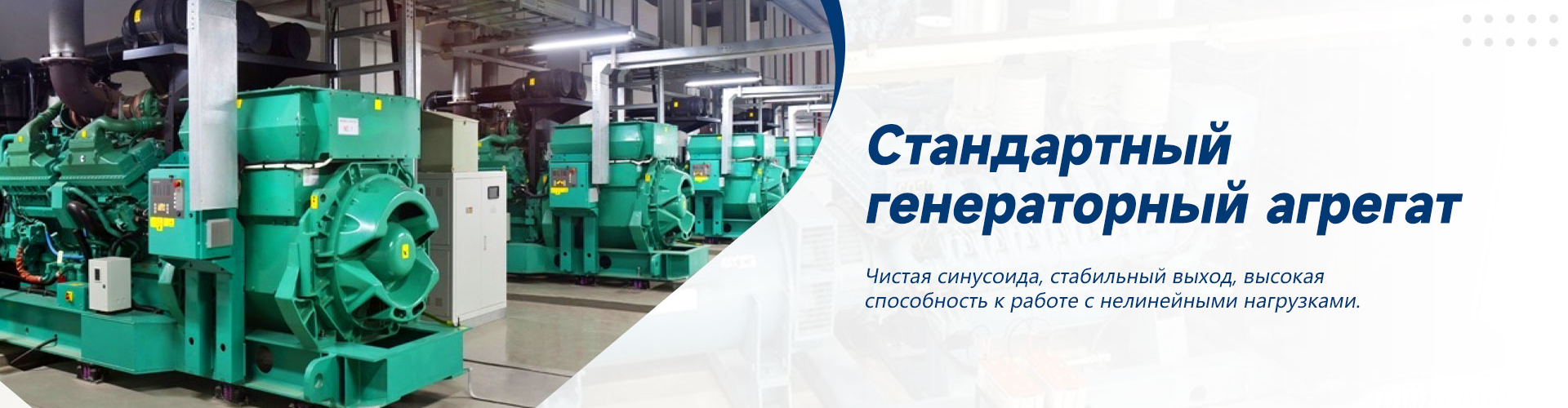
Diesel generator price: current price list for July 2026
2026-07-11
- Diesel generator price: current price list for July 2026
- Factors determining the cost of diesel power plants in 2026
- Comparison of manufacturers: Europe versus China in the realities of 2026
- Technical nuances affecting the final estimate
- How to Avoid Hidden Costs When Purchasing
- Order procedure and delivery dates in July 2026
- Yuke (Shandong) Electrical Technology LLC: Integrator of reliable energy solutions
- Frequently Asked Questions
- Conclusion and recommendations
Diesel generator price: current price list for July 2026
In this material we publishdiesel generator price, which reflects the real situation on the industrial equipment market as of July 2026. The numbers in the tables below are not marketing “from”, but the estimated costs of contracts taking into account logistics, EAEU customs duties and current exchange rates. The market has undergone major changes over the past year, with the introduction of new Stage V environmental standards in a number of regions and fluctuating steel prices rendering the old 2024-2025 price lists useless for budget planning. If you are looking for a reliable supplier for a facility in Siberia or the Far East, you need data that is relevant right now, and not forecasts from a year ago.
Our team analyzed more than 200 shipments of diesel power plants (DPS) with a capacity from 20 to 2000 kW for the first half of 2026. We have seen a clear trend: buyers are increasingly abandoning European brands in favor of proven Chinese chassis adapted to Russian operating conditions. Why? Because the delivery time for original European equipment is now 9–12 months, while high-quality Chinese analogues with GOST and EAC certificates are available from stock or on order in 3–5 weeks. In this article we will analyze specific models, explain what the final cost consists of, and show where the risks are hidden that can increase the cost of the project by 30%.
Factors determining the cost of diesel power plants in 2026
The price of a diesel generator is never a fixed value, tied only to engine power. In our practice, there have been cases where two generators of the same power (for example, 100 kW) differed in price by 40%. The difference lies in the components and conditions of adaptation. The first half of 2026 showed that the key factor in the rise in price was not the hardware itself, but logistics and compliance with the new technical regulations of the Customs Union.
The main price driver is the engine. The market is clearly divided into three segments. The first is premium engines (Perkins, Volvo Penta, Doosan), which provide maximum engine life (up to 40,000 hours before overhaul), but their cost in July 2026 increased by 18% due to the increasing complexity of spare parts supply chains. The second segment is reliable Chinese first-tier brands (Weichai, Yuchai, Lovol). This is where the best balance of price and quality is observed. For example, the Weichai WP series electronically controlled Common Rail engine now costs only 15% less than its European counterpart, but offers comparable service life if properly maintained. The third segment is budget solutions, the price of which has fallen, but reliability raises questions when operating at temperatures below -30°C.
The second important component is the alternator (generator part). Here we see the dominance of the Stamford (Cummins Generator Technologies) and Mecc Alte brands. In the July 2026 price lists, the cost of copper winding remains high. Some unscrupulous assemblers try to save money by using aluminum windings instead of copper. This reduces the installation price by 10–12%, but critically reduces the overload capacity and service life. In our practice, there was a case when a client saved money at the procurement stage by choosing a generator with aluminum winding for a construction site. After 8 months of intensive work, an interturn short circuit occurred when connecting welding machines. The renovation cost 150% of the initial savings, plus two weeks of simple construction.
The third factor is the automation system and all-weather casing. For Russian conditions, the presence of a coolant heater (PFH) and pre-heating of the oil is mandatory, not an option. The cost of high-quality northern performance (“North”) adds about 8–10% to the base price. However, an attempt to save money and buy a standard version for use in Yakutia or Norilsk will result in the engine simply not starting at -40°C. We strongly recommend that these options be included in the base specification as they may not be possible or would be extremely expensive to install later in the field.
Finally, logistics and certification. Delivery of heavy equipment from Chinese ports to inland regions of Russia in July 2026 takes an average of 25–35 days by rail. Customs clearance requires a full package of documents, including a certificate of conformity with TR CU 010/2011 “On the safety of machinery and equipment.” The absence of this document makes the operation of the generator illegal and entails fines. Our price already includes all customs duties and costs for obtaining permits, which guarantees the legality of the equipment.
Summary table of prices for popular models (July 2026)
Below are estimated prices for popular configurations. Prices are indicated in rubles including VAT, delivery to the terminal in Moscow and basic commissioning. Please note: Power is shown in kW (active), which is the standard for actual load consumption.
| Model/Power | Engine | Alternator | Execution | Price (RUB) | Delivery time |
|---|---|---|---|---|---|
| DES-20 kW (Reserve for office/shop) | Ricardo/Lovol (China) | Leroy Somer / Stamford (License) | Open frame | 385,000 – 420,000 | In stock / 3 days |
| DES-50 kW (Construction site, small workshop) | Weichai WP4.1D (China, Tier 3) | Stamford UCI224E | All-weather casing (+ noise protection) | 710,000 – 765,000 | 2 weeks |
| DES-100 kW (Production, farm) | Weichai WP6D (China, electronic pump) | Stamford UCI274C | Housing + Autostart (AMF) | 1,150,000 – 1,240,000 | 3–4 weeks |
| DES-200 kW (Factory, large facility) | Cummins 6BTAA5.9 (China/India assembly) | Stamford HCI434D | Housing “North” (-50°C) | 2,350,000 – 2,500,000 | 4–5 weeks |
| DES-500 kW (Energy center, mining) | Volvo Penta TAD1344GE (Europe/RF Assembly) | Stamford HCI534D | Container version | 5,800,000 – 6,200,000 | 8–10 weeks |
| DES-1000 kW (Industrial cluster) | MTU/Perkins 4000 (Premium segment) | Mecc Alte ECO43 | Block station in a container | 11,500,000 – 12,800,000 | 12–14 weeks |
These figures demonstrate a direct relationship: the higher the requirements for the reliability of the engine brand and operating conditions (northern version, container), the higher the final cost. However, choosing a cheaper analog Ricardo engine instead of a Weichai may save you 50,000 rubles now, but create problems with spare parts after 3,000 hours. We recommend considering the engine as a long-term investment.
Comparison of manufacturers: Europe versus China in the realities of 2026
The question of choosing between European and Chinese equipment in 2026 is no longer as pressing as it was five years ago. The quality of Chinese engineering has increased exponentially. Factories like Weichai and Yuchai have implemented robotic assembly lines and quality control systems certified to ISO 9001:2015. Moreover, many of them use licensed technologies from the same Perkins or Deutz. However, differences remain, and they are critical to your purchasing decision.
European engines (Volvo, Scania, MTU) maintain leadership in service life and fuel efficiency when operating 24/7. Their efficiency is 2–3% higher, which, with round-the-clock operation of a powerful station (500+ kW), gives significant savings on diesel fuel per year. In addition, Europeans are better able to withstand the load during sudden surges (connecting elevators, compressors). However, their main disadvantage today is not the price, but the availability of service and spare parts. In remote regions of Russia, finding an original filter or nozzle for MTU can be a task for a week. And downtime for a generator costs more than the spare part itself.
Chinese engines (Weichai, Lovol, Fawde) offer a completely different philosophy. They are structurally simpler, often have a mechanical injection pump (high pressure fuel pump), which makes them less sensitive to the quality of diesel fuel. In the conditions of the Russian outback, where diesel fuel does not always meet Euro-5 standards, this is a decisive factor. The mechanical pump can be repaired at any truck repair shop, while the electronic Common Rail system of the European will have to be replaced entirely. The price of Chinese diesel power plants is 30–40% lower, and the payback period is halved.
We conducted a comparative test of two 100 kW stations: one based on Volvo Penta, the other on Weichai. In laboratory conditions, Volvo showed lower fuel consumption (21 l/h versus 23 l/h). But in real conditions, when using winter diesel fuel of dubious quality and a temperature of -35°C, the Weichai started the first time thanks to a simple pre-start mechanism, while the Volvo electronics went into error due to the pressure in the ramp. This case shows: for the main source of energy (Base Load) in stable conditions, Europe wins. For Standby or harsh/remote environments, China is often a more practical choice.
It is also important to consider the liquidity of the equipment. Used European generators are always in demand on the secondary market. Chinese models lose value faster, but given their low initial cost, the owner's total losses in absolute numbers may be less. If you plan to use the generator for 3-5 years and then sell it, a European brand will be more profitable. If equipment is purchased for a specific project for 2 years, the Chinese solution is more cost-effective.
Technical nuances affecting the final estimate
When requesting a quote, clients often look only at the “Power” and “Price” lines. This is a big mistake. The estimate for a diesel generator set is formed from dozens of parameters, ignoring which leads to cash gaps. Let's look at what exactly changes the price in the specification and why it's important.
Degree of automation.The basic package usually includes a control panel of the first degree of automation (manual start, protection based on emergency parameters). If you need to work in offline mode (start when the network disappears, stop when the network appears, control ATS), you need a panel of the third degree of automation (Deep Sea, Datakom, ComAp). The difference in the cost of the controller and the ATS cabinet can range from 50,000 to 150,000 rubles, depending on the complexity of the switching logic. Don't skimp on the controller: cheap Chinese analogues often give false positives, leaving the object without light at the most inopportune moment.
Fuel tank.Standard equipment often includes a built-in tank for 8-12 hours of operation. For objects that require long-term autonomy (a day or more), an external fuel tank (ETT) is required. The price of an ETB with a volume of 1000 liters starts from 60,000 rubles, plus the cost of installation and piping. It is important to remember the fire safety rule: if the total volume of fuel exceeds a certain norm, the installation of a fire extinguishing and embankment system is required, which will further increase the cost of the project.
Noise protection.Open frames are cheap but noisy (85–95 dB at 1 meter). For installation in a residential area or near an office, an enclosure with a noise level of no more than 70–75 dB is required. Special mufflers and soundproofing materials add 5–8% to the price. Ignoring this parameter leads to complaints from neighbors and fines from Rospotrebnadzor. In one of our projects, the client installed an open diesel power station 15 meters from the cottage village. After a month of operation, he was forced to order the production of an expensive acoustic screen and the relocation of the station, ultimately spending three times more than the original noise-proof casing would have cost.
Cooling system.For high ambient temperatures (+40°C and above) or work in confined spaces, a larger radiator is required. A standard radiator may not cope with heat removal, which will lead to overheating and emergency shutdown. The “tropical version” option increases the price slightly, but guarantees performance in hot weather.
How to Avoid Hidden Costs When Purchasing
Buying a diesel generator is not a one-time transaction, but the beginning of the equipment life cycle. Many companies fall into the trap of low entry prices and forget about the total cost of ownership (TCO). Here are the main cost items that are often overlooked when analyzing price lists.
Firstly, commissioning work (PW). A generator is a complex device that requires professional setup. Incorrect adjustment of idle speed or injection timing can lead to increased fuel consumption and engine coking. Qualified engineers cost money, but their work pays off within the first month of operation by saving resources and preventing breakdowns. Never try to start an industrial station using a housing and communal services electrician.
Secondly, service. The maintenance schedule includes changing oil, filters and checking belt tension every 250–500 operating hours. Check with the supplier for the cost of the maintenance kit for the selected model. For some rare European engines, filters can cost 3–4 times more than for mass-produced Chinese analogues. Also inquire about service availability in your area. If the nearest service center is 500 km away, calling a repairman in the event of an accident will cost you a tidy sum.
Thirdly, the guarantee. Warranty terms vary widely. Some suppliers provide a guarantee only for the unit itself, excluding the visit of a specialist and the delivery of spare parts. Others offer a complete turnkey warranty. Read the contract carefully. A warranty of 1000 hours or 1 year (whichever comes first) is the market standard. If you are promised a 3-year warranty on a Chinese engine with no limitation on engine hours, this is a reason to be wary: most likely, there is fine print in the contract that will void the obligations at the first violation of the maintenance regulations.
We recommend asking the supplier for a reference list (list of current clients) and contacting them. Real reviews from owners who operate equipment in similar conditions will tell you more than any advertising brochures. Ask: How often did it break? How quickly did the service arrive? How much fuel does it actually consume?
Order procedure and delivery dates in July 2026
The market has stabilized, and supply chains work like clockwork, but certain rules of the game remain. The process for purchasing diesel power plants in 2026 is as follows:
- Technical specifications (TOR).You provide us with a list of consumers indicating their power and starting currents. Our engineers calculate the required generator power with a safety factor of 10–15%. An error at this stage (failure to take into account the reactive load) will result in the generator stalling when the engines start.
- Configuration selection.We create a commercial offer with 2-3 options: optimal, budget and premium. Each option specifies specific brands of components.
- Agreement and advance.After agreement, the contract is signed. For stock equipment, 100% payment is required prior to shipment. For orders for production - 30% advance, 70% before shipment.
- Production and testing.If the equipment is assembled to order, the process takes from 14 to 30 days. Each station undergoes load testing in the workshop. We provide a video report with tests, where you can see work under load of 75% and 100%.
- Delivery and installation.Equipment is delivered by road or railway. Our specialists supervise installation and train your staff.
Delivery dates in July 2026 depend on the availability of engines in distributor warehouses. Popular models (Weichai 50-200kW) are usually in stock or arrive within 2 weeks. Powerful stations (500+ kW) and specific brands (Volvo, Perkins) require a wait of 1 to 2 months. Plan your purchases in advance, especially if the project is seasonal (for example, starting construction in the spring or preparing for winter).
Yuke (Shandong) Electrical Technology LLC: Integrator of reliable energy solutions
When choosing a supplier in the dynamic market of 2026, it is important to pay attention not only to the price, but also to the production capabilities of the partner. A striking example of a company that successfully combines advanced technologies and adaptation to Russian realities isYuke (Shandong) Electrical Technology LLC. Located in Shandong Province, this professional Chinese company specializes in the development and production of complete solutions for autonomous and backup power supply.
Yuke operates as a full-fledged integrator, relying on strategic partnerships with global industry leaders. The company's portfolio includes solutions based on Cummins engines (VCD, VHCD5 series), SEM (VSD, VHSD5), Perkins (VPD), Yuchai (VYG, VHYD5) and MTU (VHMD5). This approach allows customers to receive equipment that combines the reliability of proven powertrains with the company's proprietary engineering expertise in mobile power systems and noise reduction.
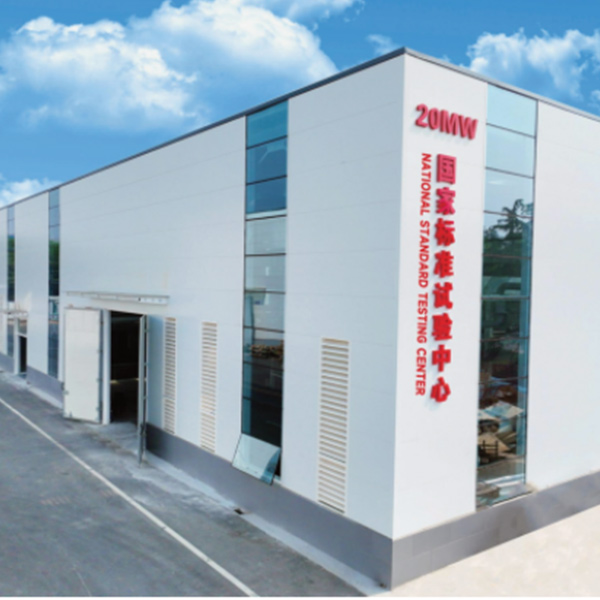
The company pays special attention to quality control, which directly affects the final reliability of the generator. The production base is equipped with modern equipment for multi-level testing. Each product, whether it is a silent generator set, a mobile trailer or a high-voltage station, undergoes mandatory stress testing for at least 4 hours under rated and partial load. The final check includes analysis of noise levels, vibration, temperature conditions and output voltage stability. This ensures that the equipment fully complies with international electromagnetic compatibility and safety requirements before shipment.
The geography of supplies of Yuke LLC covers the CIS countries, Asia, the Middle East and Africa. The company is developing a network of authorized service partners, providing customers with full support: from technical support at the design stage and consultations on choosing the optimal model to personnel training and prompt delivery of original spare parts. The philosophy of “reliability through responsibility” underlies every project. Thanks to well-functioning logistics and the ability to adapt solutions to the climatic conditions and network standards of the CIS regions, Uke is becoming the preferred choice for industrial facilities, infrastructure projects and remote areas where failure of power equipment is unacceptable.
Frequently Asked Questions
What is the real difference in fuel consumption between a Chinese and European engine?
The difference is approximately 5–8% in favor of European brands at full load. For example, a 100 kW generator on a Volvo consumes about 20–21 liters per hour, and an analogue on a Weichai consumes 22–23 liters. However, at partial load (30–40%), this difference is leveled out, and sometimes Chinese motors with a mechanical pump are even more economical due to the lack of energy consumption for the operation of complex electronics. The main thing is to prevent any diesel engine from operating without a load of less than 30% in order to avoid “oil starvation” and coking.
Is it possible to connect the generator to the home network yourself?
Absolutely not. Connection requires the installation of an ATS (automatic transfer switch) cabinet with counter-connection blocking. An error in switching will lead to current flowing into the general network, which will cause a fire, failure of the generator and electric shock to power grid workers. This is criminal liability. Entrust the connection to qualified electricians with clearance group no lower than III.
What to do if the generator does not start in winter?
In 90% of cases, the reason is the lack of preheating or the use of summer fuel. Diesel is waxed at temperatures below -5°C (summer fuel) or -15°C (winter fuel). Solution: Use arctic diesel fuel or depressant additives. Be sure to check the functionality of the glow plugs and coolant heater. If the station is placed outside without heating, it will not start at -25°C, no matter how expensive it is.
How often should the oil in a new generator be changed?
The first oil change is carried out after break-in - after 50 operating hours. This is critical for removing metal shavings generated during the grinding of engine parts. Further, the replacement interval is 250–300 operating hours for mineral oils and up to 500 operating hours for semi-synthetics. Ignoring the first replacement reduces engine life by 30–40%.
Does a high price guarantee high quality?
Not always. The high price is often due to the brand, marketing and logistics complexity, and not just the quality of the hardware. There are Chinese factories that produce luxury products under their own brands, which are cheaper than their European counterparts, but are not inferior to them in reliability. Conversely, you can buy an expensive European generator assembled from counterfeit parts from an unscrupulous dealer. The key to quality is not the price, but the reputation of a particular assembler and the availability of official service support.
Conclusion and recommendations
Choosing a diesel generator in July 2026 is a search for a balance between the project budget and reliability requirements. The market offers excellent alternatives to expensive European solutions in the form of modern Chinese stations adapted to Russian realities. The main rule: do not chase the lowest price in the price list. A cheap generator without a quality casing, the right controller and service support will turn into a headache and a source of losses.
We recommend choosing a supplier who undertakes the full cycle of work: from power calculation to commissioning and warranty service. Having your own spare parts warehouse and an experienced engineering team is more important than a 5% discount. Remember that a generator is not purchased to work every day, but to work once, when it is critically needed, and not fail.
If you are ready to discuss the details of your project, receive an accurate cost estimate taking into account all the nuances of delivery and installation, or want advice on choosing a model for your needs, contact us today. Our engineers will prepare an individual commercial offer within 24 hours.
View the full catalog of diesel generators with characteristics
-


-
-


WeChat

-
WeChat