

Generating Set Factory: Production Tour
2026-07-13
- Generating Set Factory: A Tour of the Factory from an Engineering Point of View
- Metalworking shop: why frame geometry is more important than engine brand
- Assembly section: synchronization of engine and alternator
- Electrical installation and control cabinets: the brain of the generator set
- Proving Ground: Where theory meets reality
- Quality control and certification: guarantee of compliance with standards
- Logistics and commissioning: final stage
- Why is a direct contract with a factory more profitable than buying from an intermediary?
- Frequently Asked Questions
Generating Set Factory: A Tour of the Factory from an Engineering Point of View
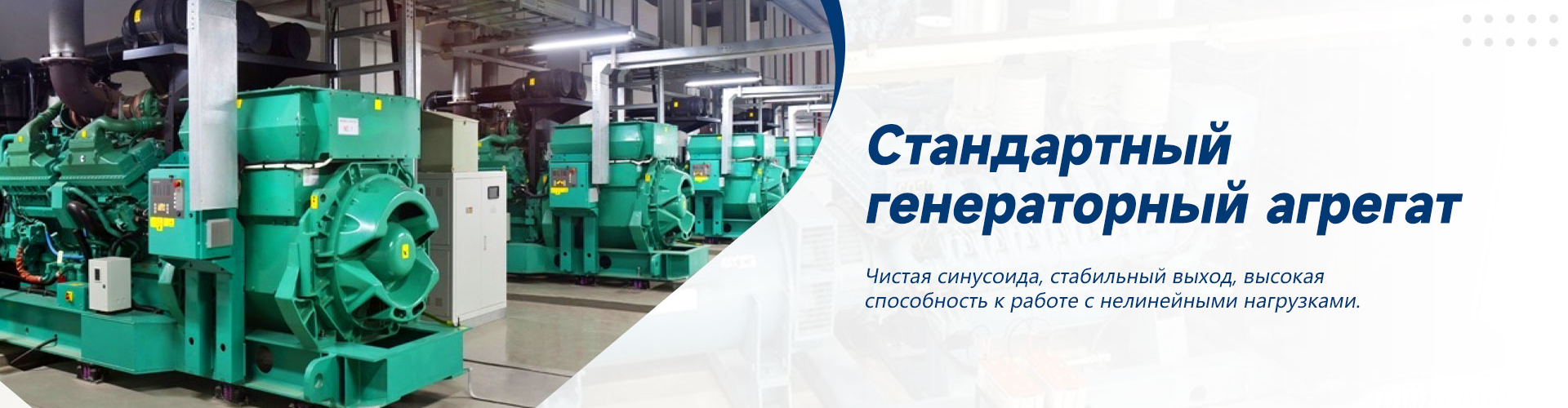
Entering the final assembly shop is not just a gate, but a crossing of the boundary between theoretical calculations and physical reality.Generating Set Factory: Production Tour, which we will conduct today, will show you processes hidden from the eyes of the average buyer, but which determine the reliability of equipment in critical situations. We won't limit ourselves to marketing brochures; instead I will guide you along the lines where metal is converted into energy. Our path lies to the production base of Yuke (Shandong) Electrical Technology LLC, a professional company that combines engineering competencies in the field of power generation and mobile power systems. Based on experience working with industrial customers from Kaliningrad to Vladivostok and partnerships with leading global brands, we will demonstrate how reliability is created.
Many people think that assembling a generator is a simple mechanical job: connect the engine to the alternator, fill it with oil and start it. In our practice, we have seen the opposite. One of our clients, a large mining company, lost three days of mine downtime because their supplier skimped on frame vibration isolation. The result was a crack in the cylinder block after 400 hours of operation. That is why our excursion will begin not with the finished product, but with the incoming control of materials, where the foundation of reliability is laid.
Metalworking shop: why frame geometry is more important than engine brand
The first stop on our route is the laser cutting and metal bending section. Here the supporting basis of any power plant is created - the frame (sled). The GOST R 53174-2008 standard and international ISO 8528-9 require that the frame withstand dynamic loads exceeding the weight of the unit by 2.5 times during transportation and 1.5 times during operation. We use steel grade St3sp5 or its European analogue S235JR, but the secret lies not in the grade of steel, but in the welding technology and subsequent processing.
In our production, each frame undergoes a sandblasting procedure to Sa 2.5 before painting. This removes scale and creates an ideal surface profile for soil adhesion. If you skip this step, the paint will begin to peel off after six months of use in a humid climate, opening the door to corrosion. We have seen batches of competitor generators where rust penetrated into the fuel tank within a year, contaminating the injectors and causing unstable engine operation. Our process involves applying a minimum 60 micron thick epoxy primer and a diesel and oil resistant polyurethane topcoat.
Particular attention is paid to the geometry of the seats for the engine and generator. The flatness tolerance should not exceed 0.5 mm per meter of length. If the engine and alternator are installed with a misalignment of even 1 mm, this leads to destruction of the elastic coupling and shaft runout. The result is vibration that gradually breaks the bearings and destroys the foundation. Our factory uses laser scanning to inspect each welded structure before sending it out for painting. This takes additional time, but eliminates the risk of equipment being returned under warranty due to design defects.
Engineers often ask why we do not use ready-made profiles, but weld frames from sheet metal. The answer is simple: a bent profile has internal stresses that can open under load. The welded sheet structure, which has undergone heat treatment to relieve stress, ensures stable geometry throughout its entire service life, which can reach 20-25 years. For the customer, this means that there is no need to re-align the unit every few years of operation.
Assembly section: synchronization of engine and alternator
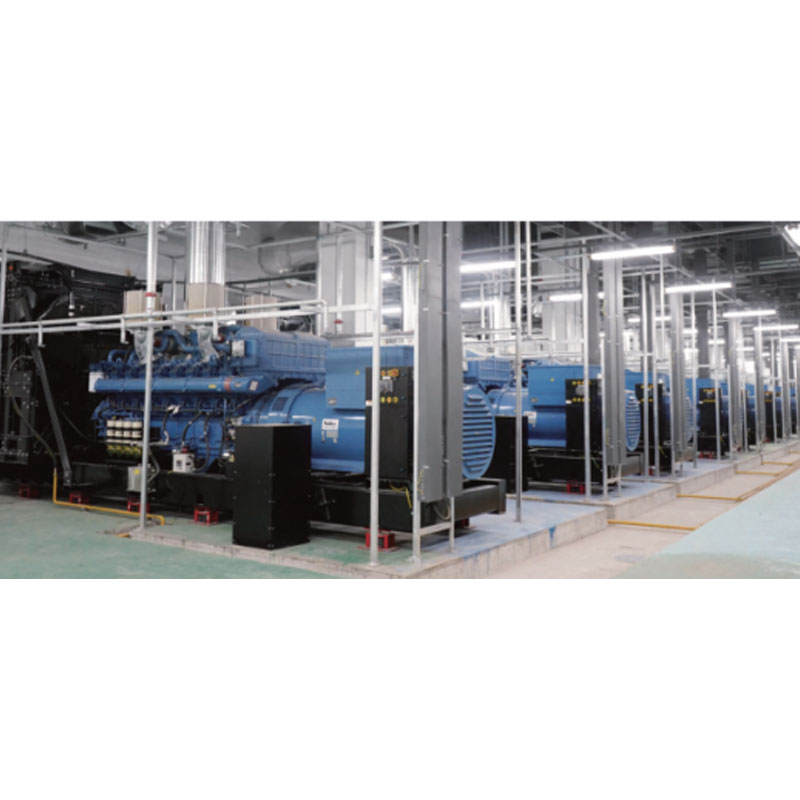
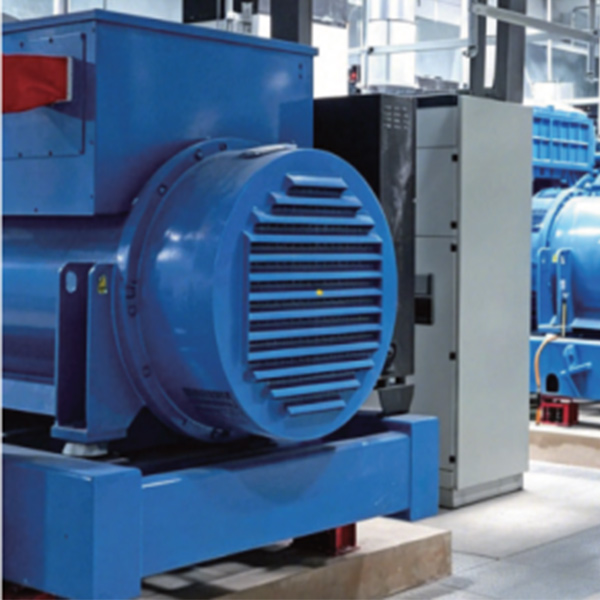
The heart of the production process is the line between the power drive and the electric machine. Here two worlds meet: high pressure and temperature mechanics (motor) and precision electromagnetic dynamics (generator). A mistake at this stage costs the most. As a solutions integrator, Yuke LLC works with Cummins, Perkins, Volvo Penta, SEM, Yuchai, MTU engines and Stamford, Leroy Somer, Mecc Alte alternators. However, the presence of branded components does not guarantee the quality of the final product without proper integration into its own design solutions.
The process begins with the installation of supports (dampers). We use rubber-metal bearings with calculated rigidity, selected for a specific shaft rotation speed (1500 or 3000 rpm). Incorrect selection of dampers leads to resonance. In our practice, there was a case when a batch of 500 kW generators produced a vibration of 12 mm/s instead of the standard 4.5 mm/s due to a batch of defective dampers from a third-party manufacturer. We immediately stopped shipment, replaced all supports with certified ones and introduced incoming inspection of each batch of components with bench testing.
The shafts are connected through a discrete coupling with an intermediate element. The critical parameter here is alignment. Our specialists use laser alignment systems that provide accuracy up to 0.05 mm. Manual alignment “by eye” or using feeler gauges is unacceptable for powers above 100 kW. After mechanical connection, the insulation resistance of the stator and rotor windings is checked. The value should be at least 2 MΩ at 20°C. If the indicator is lower, the generator is sent to the drying chamber. Ignoring this stage leads to an interturn short circuit at the first load.
The next stage is the installation of the cooling and exhaust system. The radiator is installed taking into account the direction of air flow to prevent recirculation of hot gases. We often see mistakes from other manufacturers where the radiator is mounted too close to the wall of the casing, which reduces cooling efficiency by 15-20%. This leads to engine overheating and emergency shutdown during prolonged operation at full load. Our engineers carry out thermal imaging monitoring of the cooling system during a test run to ensure that the coolant temperature does not exceed 95°C even at an ambient temperature of +40°C.
Installation of a muffler and spark arrester requires compliance with fire safety and acoustic comfort rules. For industrial facilities, we use industrial silencers with a noise level of no more than 74 dBA at a distance of 7 meters. For residential areas or hospitals, super-quiet enclosures with multi-layer sound insulation are used, reducing noise to 65 dBA. It is important to understand that noise reduction should not be achieved by increasing back pressure in the exhaust system. Exceeding the back pressure by more than 10-15 kPa above the engine standard leads to loss of power and increased fuel consumption. Our designers calculate the cross-section of exhaust tracts individually for each model, balancing between silence and efficiency.
Electrical installation and control cabinets: the brain of the generator set
If the engine is the muscle, then the automation system is the brain of the generator. The electrical installation area looks like a laboratory: clean, tidy and strict adherence to color coding of wires. We use cable products with insulation that is resistant to temperatures up to +105°C and oils. Each core is marked at both ends with tags corresponding to the electrical diagram. It's not just aesthetics; When serviced after 5 years, such markings save hours of troubleshooting.
The assembly of the automatic transfer switch cabinet (ATS) and the control controller is carried out in accordance with the requirements of the PUE (Electrical Installation Rules) and the IEC 60204 standard. We install Deep Sea Electronics (DSE), ComAp, SmartGen controllers. The choice depends on the customer’s objectives. For simple backup tasks, basic models with an autostart function when the network fails are sufficient. For complex industrial facilities that require parallel operation of several generators, we implement synchronization systems with phase accuracy of up to 1 degree, which is especially important for our high-voltage installations of the VHMD and VHCD series.
One of the most critical points is protection against short circuit and overload. We do not use universal settings. Each circuit breaker is configured for a specific short-circuit current of the network and inrush currents of the connected equipment. For example, when starting powerful electric motors or transformers, the current may briefly exceed the nominal value by 6-8 times. If the protection is not set correctly, the generator will stall every time the load starts. Our engineers calculate protection settings before shipment, taking into account the nature of the customer’s load.
Particular attention is paid to the coolant heating system (TEH). In the Russian climate, where winter temperatures drop below -30°C, starting a cold engine without preheating is impossible or will lead to serious wear. We install heating elements with a power sufficient to maintain the antifreeze temperature at +40…+50°C. The heating element is connected through a separate machine and thermostat. A common mistake in cheap assemblies is the lack of a thermostat, which is why the heating element works constantly, overheating the antifreeze and creating excess pressure in the system, which leads to depressurization of the pipes.
Checking the quality of electrical installations includes “continuity testing” of all circuits with a multimeter and checking the insulation resistance of secondary circuits. Any error in switching can lead to the fact that in the event of an emergency the generator will not start or, worse, will not turn off in the event of a short circuit, causing a fire. We apply the principle of double control: the installer checks his work, then the site foreman carries out a spot check, and the quality control department carries out a final audit before applying voltage.
Proving Ground: Where theory meets reality
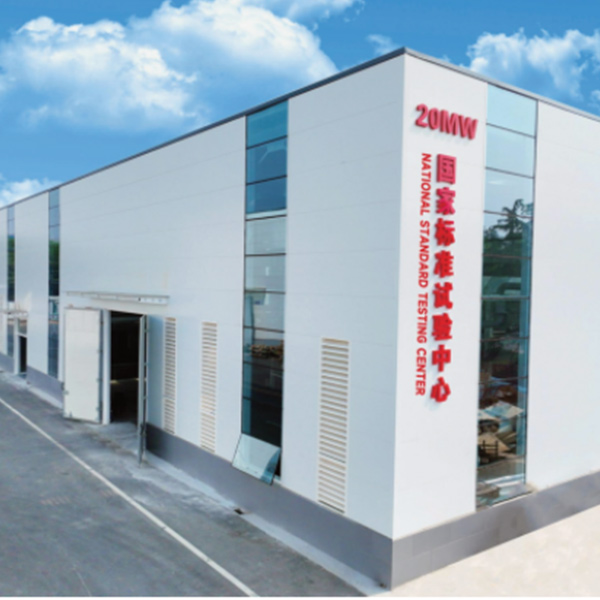
Not a single generator leaves ourgenerator set plantwithout going through a full cycle of load tests. This is not a formality, but the only way to ensure that the equipment is ready for real work. Our test site is equipped with rheostatic loads, allowing the unit to be loaded from 0% to 110% of the rated power. In accordance with Yuke LLC's internal quality control system, we test each product for at least 4 hours under rated and partial load, and not randomly, as some competitors do, in an effort to reduce costs.
The test program consists of several stages. First, a run-in is carried out at idle speed for 30 minutes to check the operation of the lubrication system and the absence of leaks. This is followed by gradual loading: 25%, 50%, 75%, 100% and 110%. At each stage, key parameters are recorded: voltage, current frequency, coolant temperature, oil pressure, vibration level and exhaust gas composition. The data is entered into a test report, which is transferred to the customer along with the equipment.
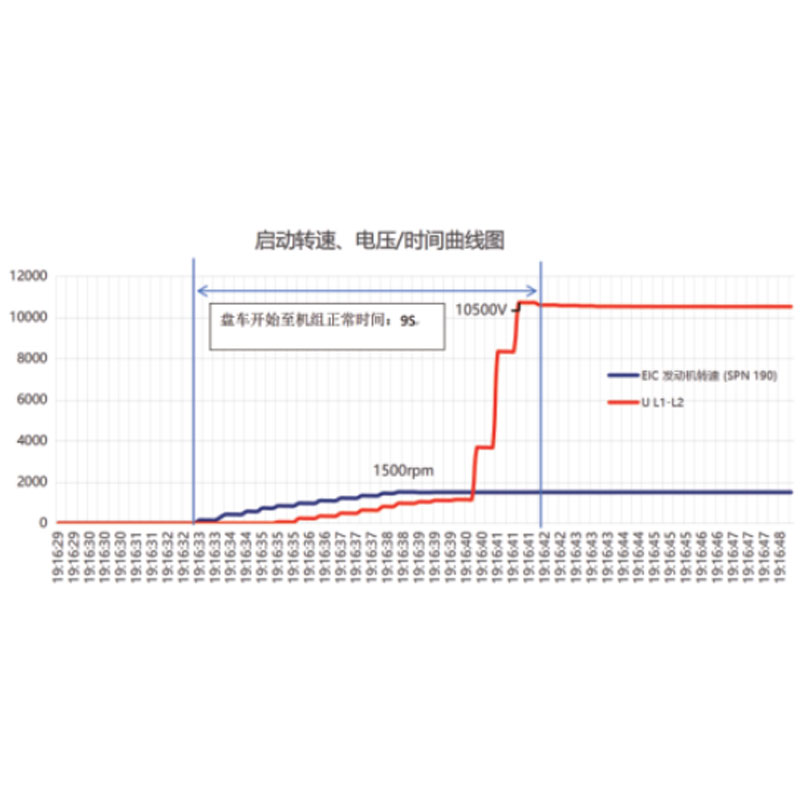
The critical test is to check the static and dynamic stability of frequency and voltage. During a sudden increase in load (for example, turning on a powerful consumer), the frequency should not drop by more than 10% of the nominal value, and restoration to a steady state should occur in no more than 3-5 seconds. If the generator “chokes” when the load increases, this indicates an incorrect setting of the engine speed controller or insufficient engine power for a given alternator. We have encountered cases where suppliers supplied an engine with a lower power than required by the ISO 8528-1 standard for the Prime power category, masking this with inflated characteristics. Our tests immediately reveal such inconsistencies.
Another important test is to check the operation of the protection system in emergency situations. We artificially create conditions of low oil pressure, high coolant temperature and overcurrent. The generator must correctly detect the accident, issue an alarm and stop, preventing engine destruction. Failure of the protection system at this stage means a defective assembly or malfunction of the sensors. Such a unit is returned for revision, no matter how much time has already been spent on its assembly.
For generators intended to operate in parallel, a synchronization test is carried out. Two or more units are connected to a common bus, and the uniform distribution of active and reactive power is checked. The load imbalance between generators should not exceed 5%. If one generator takes on 80% of the load, and the second only 20%, this will lead to overheating of the first and unstable operation of the entire system. Our experts tune the drop characteristics of the speed and voltage regulators to ensure perfect balance.
After successfully passing the tests, the generator is preserved. The engine is treated with an anti-corrosion compound, the drain holes are sealed, and the battery is disconnected. Packing is carried out in a wooden box or shrink film depending on the method of transportation. We take into account logistics risks: the fastening inside the box is designed so that the unit does not move during transportation by rail or sea, where pitching and shock loads are possible.
Quality control and certification: guarantee of compliance with standards
Documentary support is as important as the physical quality of the product. Each generator produced at our plant is accompanied by a passport, instruction manual and certificate of conformity. To work on the territory of the Russian Federation and the EAEU countries, it is mandatory to obtain a declaration of compliance with the technical regulations of the Customs Union (TR CU 010/2011 “On the safety of machinery and equipment”, TR CU 004/2011 “On the safety of low-voltage equipment”, TR CU 020/2011 “Electromagnetic compatibility”).
The presence of an EAC (Eurasian Conformity) certificate confirms that the equipment has been tested in an accredited laboratory and meets safety requirements. This is not just a piece of paper for customs; This ensures that the generator will not cause fire or electric shock. We can also provide certificates of origin of the ST-1 form for participation in government tenders and receiving customs benefits.
For exports to Europe, we issue a CE declaration confirming compliance with EU directives on equipment and electromagnetic compatibility. For CIS countries and specific industries (oil and gas, railways), additional permits may be required, for example, a GOST R certificate of conformity or a Rostechnadzor permit for the use of hazardous production facilities. Our quality service is ready to prepare a full package of documents for any customer requirements.
The quality management system at our enterprise is certified according to the ISO 9001:2015 standard. This means that all processes - from the purchase of metal to the shipment of the finished product - are strictly regulated and controlled. Any deviation is recorded, analyzed and eliminated. We keep a log of complaints and work on errors. If a customer reports a problem, we don't just replace the part, we look for the root cause in the process to ensure it doesn't happen again.
An important aspect is the traceability of components. We store data on serial numbers of motors, alternators, controllers and other components for the entire service life of the product. This allows you to quickly identify a batch in the event of a product recall by a component manufacturer or quickly select spare parts for repairs. Supply chain transparency is one of the key factors of trust among large industrial customers.
Logistics and commissioning: final stage
Generator production ends not at the workshop exit, but at the customer’s site. Correct delivery and professional installation determine how long and reliably the equipment will serve. We organize delivery using our own transport or through trusted logistics partners, using manipulators and cranes with a lifting capacity of up to 20 tons. For oversized cargo (power over 1000 kW in open version), individual transportation schemes are developed.
When accepting equipment at the site, it is necessary to check the integrity of the packaging and the absence of external damage. It is recommended to draw up an inspection report with the participation of a representative of the transport company. Before installation, the generator must stand in a warm room for at least 24 hours if it was delivered in winter, to avoid condensation inside the windings and electronics due to sudden temperature changes.
Installation must be carried out by qualified specialists with an electrical safety permit of at least Group III. The foundation for the generator must be level, horizontal and capable of supporting the weight of the unit with a margin. It is mandatory to install vibration-isolating gaskets between the generator frame and the foundation. Connections to the fuel system, exhaust and electrical network must comply with the design and safety regulations. Errors during installation (for example, dirt getting into the fuel tank or improper grounding) can negate all the benefits of high-quality factory production.
Pre-commissioning work (PW) includes a final check of all systems on site, filling of operating fluids (oil, antifreeze), charging batteries and a test run. Our engineers instruct customer personnel on the rules of operation and maintenance. We provide the engine hour log and recommended maintenance schedule. The first connection to the load is carried out under our control to ensure the correct operation of the automatic transfer switch and the stability of the power parameters.
Warranty support is an integral part of our service. We provide a warranty of up to 2 years or 2000 operating hours (whichever comes first) for the entire unit. During the warranty period, we eliminate free of charge any defects that arise through our fault. Post-warranty service is carried out by our own service center or a network of authorized partners developed in the CIS countries, Asia and the Middle East. Having a warehouse of original spare parts allows us to carry out repairs in the shortest possible time, minimizing downtime of the power facility.
Why is a direct contract with a factory more profitable than buying from an intermediary?
The generator equipment market is oversaturated with offers, but not all of them are equally reliable. Purchasing from an official manufacturing plant, such as Yuke (Shandong) Electrical Technology LLC, provides a number of undeniable advantages that are often ignored in the pursuit of the lowest price. Firstly, this is the price. Excluding the chain of intermediaries, each of which lays down its own margin (from 10% to 30%), you receive equipment at the real cost of production plus a reasonable profit of the plant.
Secondly, there is the possibility of customization. Dealers have standard solutions, but if your project requires a non-standard design (specific casing size, special control panel configuration, operation on liquefied gas instead of diesel, mobile light towers or energy storage cabinets), only the factory can quickly make changes to the design. The intermediary is forced to coordinate each change with the plant, losing time and increasing costs.
Thirdly, there is transparency of origin. When purchasing from the factory, you know exactly which engine and alternator are installed, what year of manufacture and where they were assembled. There are many cases on the market when refurbished generators or units with replaced components are sold under the guise of new ones. A direct contract eliminates such risks. You receive a passport with serial numbers, which can be verified by the component manufacturer.
Fourthly, this is technical support. Plant engineers know their equipment better than anyone else. If a complex malfunction occurs, you receive advice from the developers, and not from resellers who only saw the generator in the catalog. We maintain a database of all shipped machines and can look up the history of any unit by serial number.
Finally, there is responsibility. The plant values its reputation and is interested in long-term cooperation, following the principle of “reliability through responsibility.” The intermediary may disappear or change the assortment tomorrow. The plant remains a partner for the entire life cycle of the equipment, providing spare parts and service even 10 years after purchase. For energy-critical businesses, this reliability is worth more than any initial savings.
Frequently Asked Questions
What is the production time of the generator set?
The standard production time for a generator with a capacity of up to 500 kW is 10-14 working days from the date of signing the contract and making an advance payment. This period includes incoming inspection of components, assembly, painting, drying, load testing (at least 4 hours) and packaging. For powers over 500 kW, high-voltage installations, or when ordering a non-standard design (special casing, heating system for the Arctic, container design, mobile trailers), the period may increase to 20-30 days. If the required modification is available in the finished product warehouse, shipment is possible within 1-3 days. We recommend planning your purchase in advance, especially in the autumn-winter period, when the demand for backup energy supplies increases.
Is it possible to visit the factory before purchasing?
Yes, we welcome potential customers to visit our production facility in Shandong Province. Personal acquaintance with the technological process and the engineering team helps you make an informed decision. A tour of the workshops is free, but requires advance registration 2-3 days in advance to obtain a pass and arrange for accompaniment by a technical director. During your visit, you will be able to see real examples of assembled generators (including the VCD, VSD, VPD, VYG and high-voltage models), ask questions to the specialists and discuss the details of your project. For out-of-town and foreign clients, we are ready to organize transfers and assistance with logistics.
What warranty do you provide and what does it cover?
We provide a warranty of up to 24 months or 2000 hours (whichever comes first) on the entire generator assembly. The warranty covers defects in materials and workmanship discovered during normal operation subject to maintenance rules. During the warranty period, we replace failed components and parts free of charge, and also pay for the work of our service engineers or partners. The warranty does not cover consumables (filters, belts, brushes), damage caused by violation of operating rules (overfilling fuel, running without oil, overloading), natural disasters or the actions of third parties. Detailed conditions are specified in the warranty card attached to each unit.
Do you deliver to other regions and countries?
Yes, we organize delivery of generators throughout Russia, CIS countries (Kazakhstan, Belarus, Uzbekistan, etc.), and also export products to countries in Asia, the Middle East and Africa. Delivery is carried out by road, rail or sea transport, depending on the distance and size of the cargo. Delivery costs are calculated individually and depend on weight, volume, destination and chosen transportation method. We take care of all logistics, including customs clearance for export deliveries. The client receives turnkey equipment at his facility with a full package of accompanying documents.
Is it possible to order a generator with a specific brand of engine?
Undoubtedly. Thanks to strategic partnerships with the world's leading manufacturers, we work with a wide range of engines: Cummins (VCD, VHCD series), Perkins (VPD), SEM (VSD, VHSD), Yuchai (VYG, VHYD), MTU (VHMD), as well as Deutz, Mitsubishi, YaMZ, TMZ, MMZ. When ordering, you can select a specific engine make and model based on your reliability preferences, parts availability in your area, or budget constraints. Our engineers will help you choose the optimal engine-alternator pair to solve your problems, be it a quiet diesel unit, a gas generator or a high-power high-voltage system.
To summarize our excursion, I would like to note:generator set plantis a complex organism where every cog matters. The quality of power you receive depends on thousands of small decisions made during the design, build and testing stages. When choosing a partner, look not only at the price in the price list, but also at the technology, people and reputation of the manufacturer. A reliable generator means peace of mind for your business in any situation.
If you have any questions or are ready to discuss the project,contact us today. Our engineers are ready to provide you with an individual consultation and calculate a commercial offer. You can also check out ourcomplete catalog of generator setson the website to choose a model that is ideal for your needs.
-


-
-


WeChat

-
WeChat