

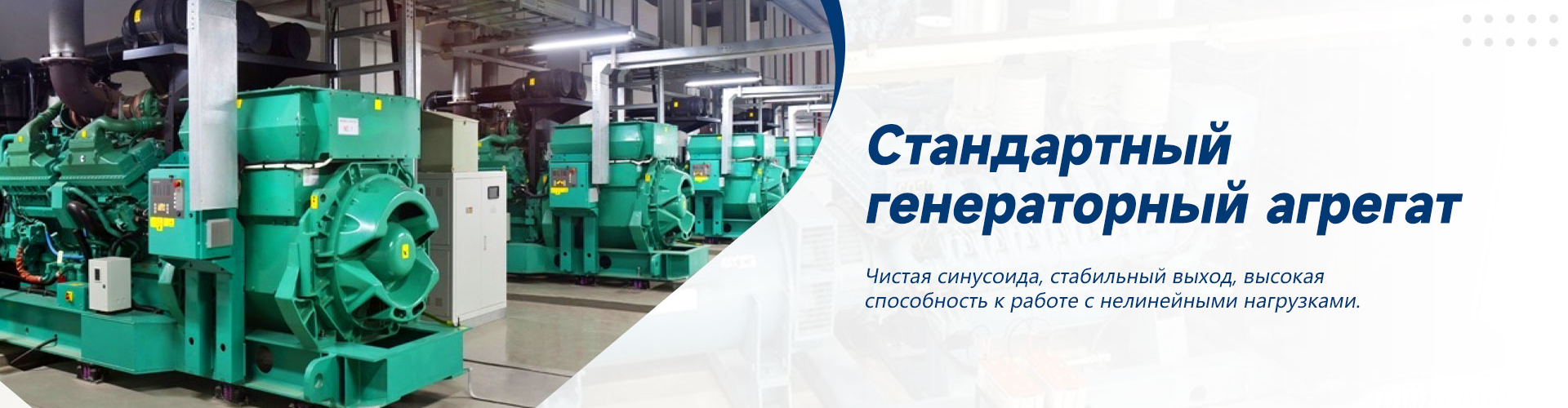
How to choose a mobile generator set?
2026-01-02
Choosing a mobile power station is not about just finding a “generator on wheels”. This is about not making a mistake when work at a facility where there is no and is not expected to have a normal network depends on this thing. Many people mistakenly believe that the main thing is kilowatts, and take it “with a reserve”. And then they are faced with the fact that the installation does not fit into the opening, does not start in cold weather, or consumes so much fuel that it would be easier to pull power lines. Let's go in order, as is usually the case in practice.
Where to start: not power, but task
The first and most important thing is to honestly answer the question: “For what?”. Will it bemobile generator setfor emergency office power once every six months or for constant, daily work on a remote construction site? The difference is colossal. For short-term, ?on-duty? goals, you can look at gasoline or compact diesel models. But if we are talking about hours and days of continuous work - only heavy diesel. Here, savings at the purchase stage will backfire very quickly: the “weak” have the resource. units are simply not designed for such modes.
Here is a real example from practice: a customer for a small woodworking shop purchased a powerful gasoline unit, focusing on the price tag. After three months of intensive work - engine overhaul, downtime, losses. Switched to dieselmobile power stationaverage power - and for two years now without serious complaints. Noisier, yes. But it works.
And another nuance - which consumers will connect. If there are electric motors (pumps, saws, compressors), take into account the starting currents. The nameplate power of 5 kW may not be enough to reliably start a 3 kW engine. It is better to have a reserve of 2-3 times. This is a common mistake that leads to constant defense activation and headaches.
Engine: the heart of the setup that can't be ignored
It all comes down to fuel and resource. Gasoline engines are usually cheaper, quieter, and easier to start in cold weather. But their service life rarely exceeds 3000-5000 hours, and the cost of an hour of work is higher due to the price of fuel and consumption. For a diesel engine, a resource of 20,000 - 40,000 hours is not uncommon. Yes, it is more capricious at subzero temperatures (you need a winter diesel engine, heating the fuel system, and sometimes a preheater), but for professional use it is the only reasonable choice.
Pay attention not only to the brand of the engine (Isuzu, Yamnar, Hatz, Lombardini are good names), but also to its availability in your area. What's the point of having an engine with optimal performance if the nearest service center that can handle it is 500 km away, and you have to wait a month for spare parts? We once encountered such a situation at one of the quarries - we were stopped for two weeks due to a faulty fuel pump of a rare model. Now this is one of the key points on the checklist.
And yes, the cooling system. Air cooling is simpler and cheaper, but it is not always sufficient for long-term loads in the heat. Liquid is more complex, more expensive, but more reliably stabilizes the temperature, which directly affects durability.
Design and mobility: ?mobile? - not just a word
There are a lot of pitfalls here. Chassis. It would seem like a small thing. But if you have to move the unit along a dirt road or construction site, look at the diameter of the wheels, the presence of brakes, and the strength of the axle. Lightweight plastic wheels from a garden cart may not even last through the season. Better - pneumatic, large diameter.
Frame and casing. An all-metal casing (hood) is not only weather protection and sound insulation (which is critical for working in residential areas). This is also protection against vandalism and equipment theft. On the open frame, everything is visible and easily accessible. There were cases when starters and batteries were removed while the crew was having lunch.
Dimensions and weight. Always check if your chosen one will passgenerator setthrough that gate, onto that elevator, or across that bridge where she would have to work. One of our clients almost abandoned the order when it turned out that the installation was half a meter higher than the opening in his hangar. I had to look for a model with a low-profile casing.
Generator and control system: where does the current come from?
Type of generator (alternator) - synchronous or asynchronous. For most tasks with active and mixed loads (tools, lighting, some types of equipment), a high-quality synchronous generator is sufficient. It tolerates starting overloads better. Asynchronous - simpler, cheaper, well protected from moisture and dust, but really does not like inrush currents. Suitable for active loads such as heating elements or light bulbs.
The control system is the brain. A simple panel with a voltmeter, sockets and a couple of circuit breakers is the minimum. Automatic transfer of reserve (ATS) is more serious, it allows the station to start itself when the network is disconnected. Advanced controllers with a display (such as Deep Sea, ComAp) provide complete information about operating parameters, count engine hours, control the load, and record errors. For responsible facilities this is a must-have. I remember how setting up such a controller helped identify a periodic drop in oil pressure due to a worn pump - they fixed the problem before the engine failed.
Don't forget about the sockets. Their type, quantity and ratings must match your equipment. It’s trivial, but often overlooked: is a three-phase 32A plug needed or will a few single-phase 16A plugs be enough?
Where to look and what else to look at
The market is saturated with offers from hundreds of brands, from “no names” to bonuses. My advice is to focus on companies that don’t just sell, but provide a full cycle: consultation, selection, delivery, service and availability of spare parts. Like for exampleYuke (Shandong) Electrical Technology Co.,Ltd(YuKe Electric). They have been working since 2003 and grew out of an engineering team, which is felt in their approach. On their websitevoyoko.ruYou can not only choose from the catalog, but also receive technical consulting on a specific task. For themmobile diesel power station- not just a product, but part of an engineering solution, which is critically important in our business.
Always request complete technical documentation and data sheet. Check the noise level (dBA), fuel consumption at different loads (often only the nominal value is indicated, which is biased), and warranty conditions. Ideally, see the installation live, if possible, or at least read reviews from specific objects, and not general words from the site.
One last thing: don't skimp on the little things. A high-quality connection cable, a stabilizer, if the network is “dirty?”, regular maintenance - all this determines whether yourmobile diesel power stationa reliable asset or an ongoing problem. Choice is just the beginning. Next comes exploitation. And you also need to be prepared for it.
-


-
-


WeChat

-
WeChat