

China: Cummins' main buyer?
2026-01-02
This is a question that constantly comes up on the sidelines of industry shows and in conversations with distributors. Many immediately imagine endless conveyors of Chinese auto giants purchasing American diesel engines in batches. But reality, as usual, is more complex and interesting. If you look only at gross powertrain shipments, then yes, China is a huge market for Cummins. However, simply calling him “the main buyer?” is to miss the essence of the transformation that has occurred over the past 15 years. This is no longer just a sales market, but a space of deep technological integration, competition and, importantly, a source of specific challenges.
From assembly shops to joint developments
Previously, everything was more transparent: CKD kits, localization, adaptation to local emission standards. Companies like Dongfeng Cummins and Foton Cummins have become familiar players. But now the key trend is not just the sale of the engine, but the salesolutionsfor a specific task. Chinese manufacturers of commercial vehicles and generator sets do not want “hardware,” but an integrated package: engine + control system + China VI emission warranty + service analytics.
I remember a story with one project for mine dump trucks. The customer’s engineers literally disassembled the Cummins offer and its competitive Chinese equivalent, piece by piece. They were not interested in peak power, but in the torque curve at low speeds in the thin air of high altitudes and, most importantly, the ability to integrate engine telemetry data into their own fleet monitoring platform. The standard J1939 protocol did not always work here - non-standard gateways were required. This is a level of demand that was rare ten years ago.
And here a paradox arises. On the one hand, Cummins is the global standard for reliability. On the other hand, Chinese manufacturers, especially in the segment of generators and pumping units, have created an entire ecosystem around alternative power plants, including gas modifications. Their units are often cheaper and “simpler” in integration. Therefore, the position of the “main buyer” has become shaky: China buys a lot, but more and more selectively and only where Western technologies provide an undeniable advantage or are a prerequisite for entering export markets.
The last mile trap in logistics and service
Sales volumes are one side of the coin. But profitability is completely different. A key headache for any parts supplier in China, including Cummins, is logistics and service support inland. You can supply a thousand engines to a plant in Shanghai, but if twenty of them go to power plants in Xinjiang or Inner Mongolia, then the cost of a service visit and the availability of original spare parts on site eats up the entire margin.
Many have tried to solve this through franchising local service centers. But we often ran into a quality problem: the center could simultaneously service and copy spare parts for “national” ones. brands, and original Cummins filters quietly coexisted with counterfeit ones on the shelf. It is physically impossible to control this. Therefore, now the emphasis is on digitalization: engines come with telematics by default, and the dealer receives a bonus not for sales volume, but for the percentage of maintenance completed on time through an official channel with data verification.
An interesting case is working with companies that themselves go international. For example, a Chinese engineering companyYuke (Shandong) Electrical Technology Co.,Ltd(Yuke Electric). They, as I understand it,their website, are engaged in complex projects in the energy sector. If such a company undertakes the construction of a mini-CHP somewhere in Kazakhstan or Africa, they will often prefer a “conservative” one. and a globally recognized powertrain such as Cummins for critical applications. This reduces project risks and simplifies service abroad. For Cummins, these B2B customers, who use their product as a component of their larger technology exports, are precisely that quality and stable segment of the “buyer”.
Price vs. Cost of ownership: an eternal debate
In China the argument is ?low total cost of ownership? (Total Cost of Ownership) breaks through the wall with great difficulty. Especially in government tenders or small private companies. The decision is often made based on the initial price. I have seen dozens of cases where a cheaper local engine was purchased for a diesel power plant, although the engineers insisted on Cummins due to better fuel consumption and service intervals.
After two years, these stations either silently suffered from high operating costs, or the engine failed prematurely and was replaced... again with an inexpensive analogue. The cycle repeated itself. The mentality of “fix/replace when it breaks?” So far, strategic cost planning is winning. This is a fundamental limitation to the growth of market share of premium brands.
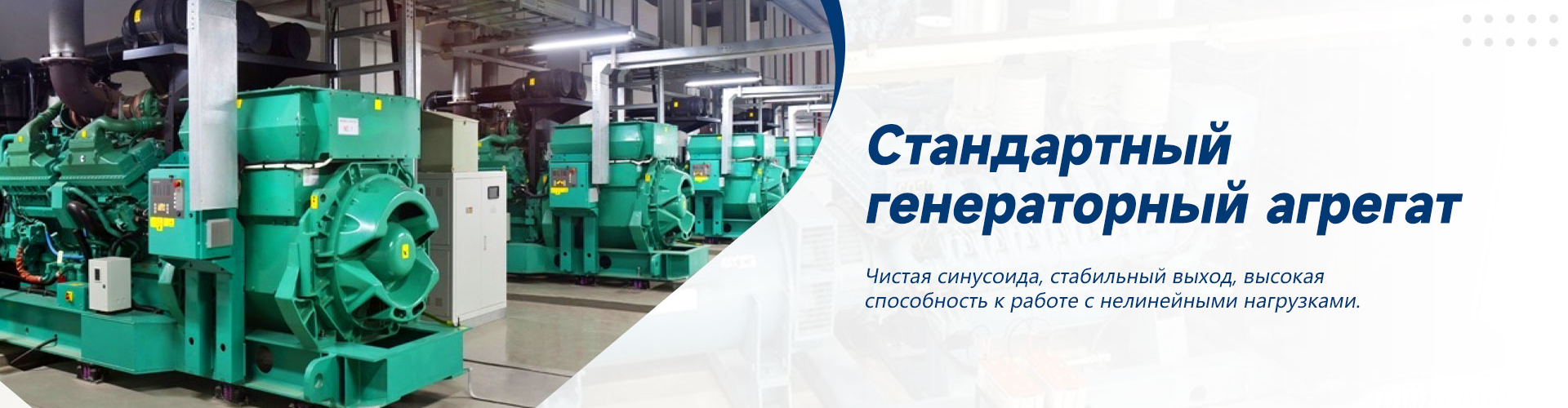
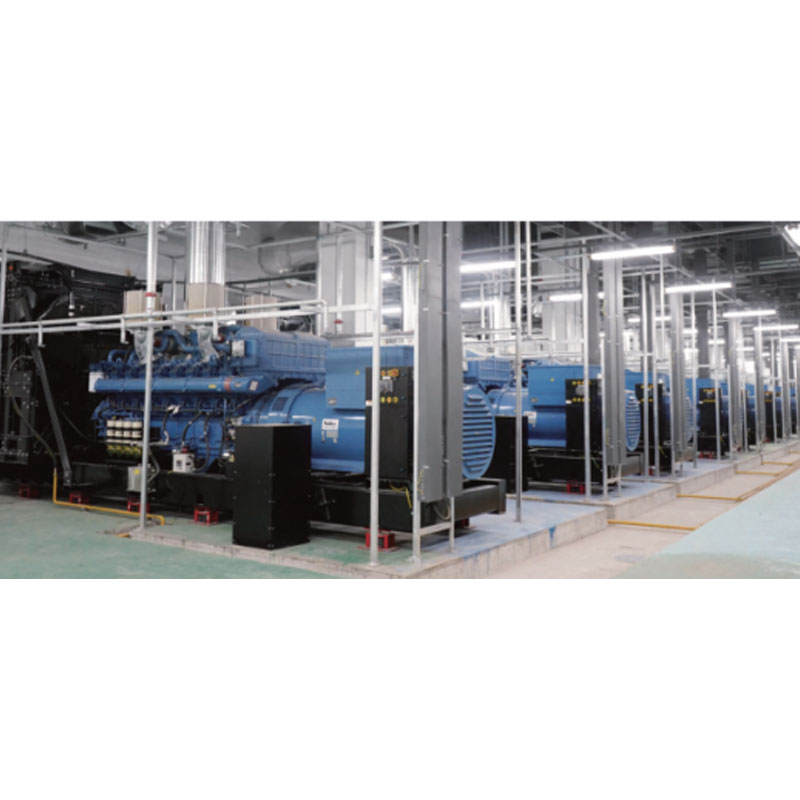
However, there are also counter examples. In the segment of emergency generators for data centers, financial institutions and hospitals, the argument of absolute reliability works 100%. Here price is not the main factor. Simply because the cost of downtime is in the millions of dollars per hour. In these niches, Cummins and others like it remain without alternative, and China is really the “main buyer” here, because it builds the most such facilities in the world.
Not a single engine: the hidden champion - components
When we say “China buys from Cummins?”, everyone thinks about ready-made QSK50 or B6.7 engines. But there is a less noticeable, but gigantic layer - these are components and licensed technologies. Common Rail systems, turbochargers, control units - all this can be produced at joint ventures and go both to conveyors in China and to global Cummins assembly lines.
In fact, China has become a critical node in the company's global value chain. Procurement in this segment is not just a “purchase”, it is part of complex production cooperation. And if this flow suddenly stops, not only assembly lines in Wuhan will come to a standstill, but also, potentially, factories in other countries that depend on Chinese components. This makes the status of ?major buyer? mutual and very fragile.
Here lies the main vulnerability. Political winds can quickly change the landscape. Increasing duties, restrictions on technology transfer, requirements for even greater localization - under these blows, a business model built over decades may crack. Therefore, at headquarters, I am sure, they look at Chinese sales not only as a source of income, but also as an area of constant strategic risk.
Result: not a buyer, but a system partner-rival
So is China the main buyer? In quantitative terms, probably yes. But this answer doesn't explain anything. In fact, China has become the main laboratory, testing ground and at the same time the toughest competitor for Cummins. He buys aerobatics technologies for the most complex projects and at the same time grows dozens of companies close to his side that bite off piece by piece from the lower and middle segment of the market.
The future is seen not in increasing the supply of finished units, but in deepening integration. Digital services, hydrogen technologies, hybrid solutions - this is where the next “customer” will lie. agreement. The Chinese market will not buy the engine, but, relatively speaking, the “guaranteed megawatt-hour under the contract?” with reference to a specific object.
Therefore, to answer the question from the title: yes, but this is not the same purchase as it was before. This is a difficult, often uncomfortable, but absolutely critical connection. And it would be a disaster for Cummins to lose this status, but maintaining it is becoming more and more difficult every year. This is the whole drama of modern global engineering based on the example of one seemingly simple question.
-


-
-


WeChat

-
WeChat