

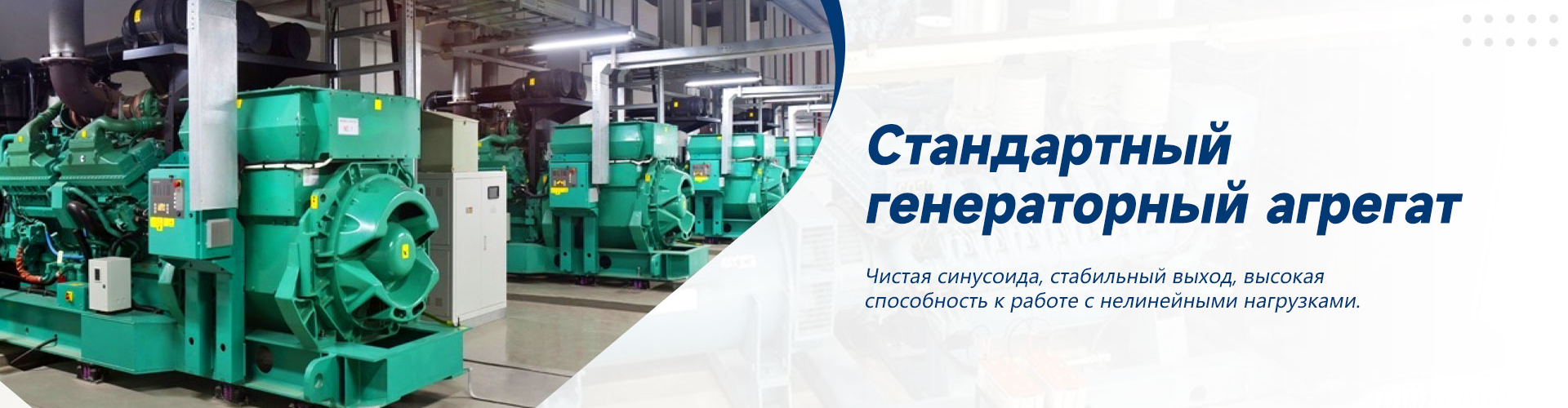
How to connect a backup power plant to the network at home?
2026-07-14
- Straight answer: How to safely connect a backup power plant
- Stage 1: Project preparation and selection of equipment for secure integration
- Stage 2: Step-by-step installation and wiring instructions
- Technical nuances: single-phase vs three-phase network
- Operation and Maintenance: Guaranteed Durability
- Answers to frequently asked questions (FAQ)
- Expert opinion and recommendations
Straight answer: How to safely connect a backup power plant
Connecting a backup power plant to the home network requires the mandatory installation of an automatic transfer switch (ATS) or a manual switch with a zero position in order to prevent the supply of voltage to the general network and protect the equipment from counter currents. In our practice as installation engineers, we have observed cases where an attempt to “power the house directly” through a regular outlet led to a fire in the wiring and failure of the generator inverter due to lack of phase synchronization. The only correct algorithm of actions includes selecting an input point, installing an input distribution device (IDU) with simultaneous switching blocking, laying a separate grounding loop and test run under load. Ignoring any of these stages violates the requirements of the PUE (Electrical Installation Rules) and creates a direct threat to people’s lives. Below we will analyze each step in detail, based on real cases of installing diesel and gas plants with a capacity of 5 to 100 kW.
Why can't you just plug the cord into an outlet?
The most common mistake we see when auditing existing systems is the use of what is called a “jumper extension.” Users buy a powerful gasoline generator, connect it to the nearest outlet in the house, and turn on the machine on the panel. Theoretically, voltage appears in all outlets in the house, but physically a catastrophe occurs for the electrical network. When the city's power suddenly returns (and it can happen at any second), two sources of voltage - the external grid and your generator - collide at one point without any synchronization.
The phase difference between the network and the generator can reach 180 degrees. This means that instead of adding voltages, a short circuit occurs with currents tens of times higher than the rated ones. The result is predictable: the generator stator winding burns out, the input circuit breakers are knocked out, and in the worst case, a fire occurs in the switchboard. Additionally, if maintenance crews are working on the line, your generator will feed current into the dead line, creating a fatal hazard for electricians. That is why the first and main task when deciding the question “how to connect a backup power plant to the home network” is to ensure galvanic isolation of power supplies.
Stage 1: Project preparation and selection of equipment for secure integration
Before picking up a tool, it is necessary to clearly define the architecture of the future system. In 90% of cases, private homeowners underestimate the inrush currents of inductive loads, which leads to the purchase of a generator that is too weak. We recommend that the calculation be carried out not according to the active power (kW) indicated in the device passport, but according to the total power (kVA), taking into account the safety factor. For example, a 1.5 kW well pump may require a starting current equivalent to 4.5–5 kW in the first seconds of operation. If the generator does not have an AVR (automatic voltage regulation) or damper starting system, it will simply stall or produce an unstable voltage that will burn out the sensitive electronics of the heating boiler.
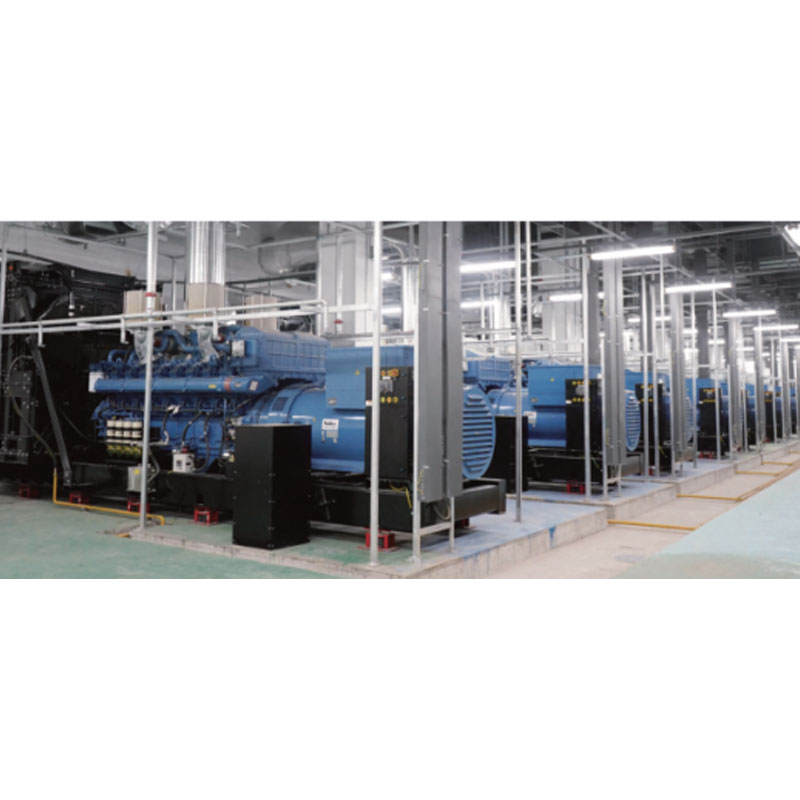
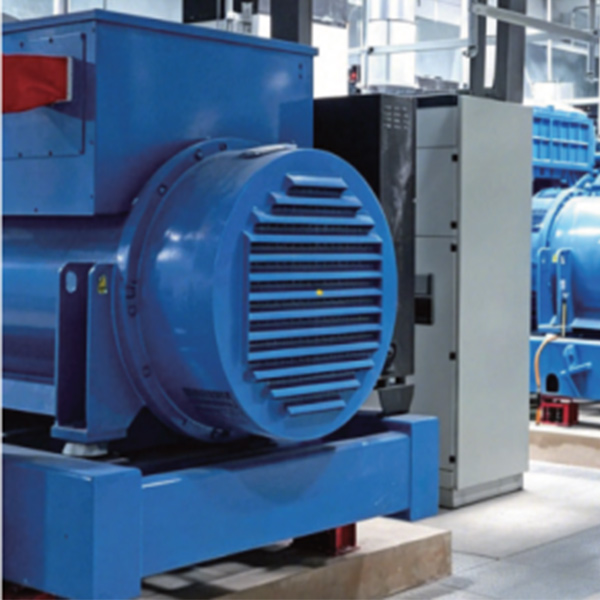
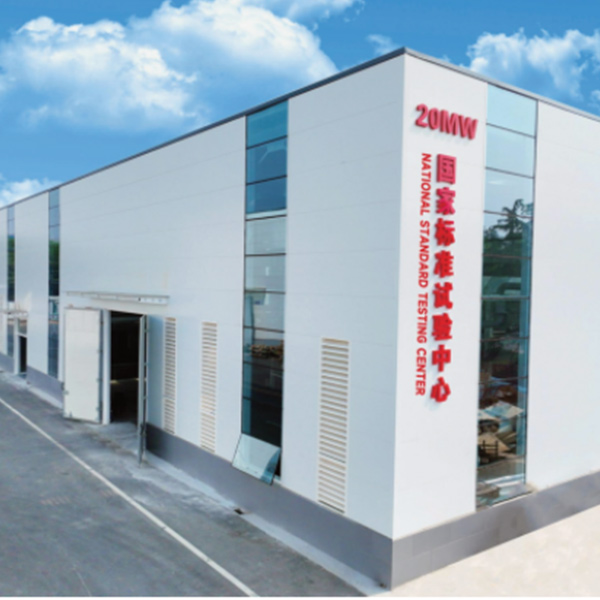
Choosing reliable equipment is the foundation for the security of the entire system. There are solutions of different levels on the market, but for facilities where uninterrupted operation is critical, it is worth paying attention to manufacturers with their own engineering competencies and a strict quality control system. A striking example of this approach isYuke (Shandong) Electrical Technology LLC" This company specializes in developing comprehensive solutions in the field of autonomous power supply, combining advanced technologies for energy generation and storage. Their products, including diesel generator series based on Cummins, Perkins, MTU engines and Yuchai gas generators, undergo mandatory stress tests of at least 4 hours before shipment. This approach ensures that the installation will operate stably both in mild climates and in harsh conditions typical for many regions of the CIS, providing the necessary compatibility with digital control systems.
Selection of switching type: ATS or manual input
The key element of the circuit is the switching device. Here the owner has two options, and the choice depends on the budget and autonomy requirements.
Automatic transfer of reserve (ATS).This is the most reliable option for modern houses with gas boilers, video surveillance systems and pumps. The AVR unit constantly monitors the presence of voltage in the main network. When the light goes out, it sends a signal to start the generator (via a relay or digital interface), waits for the engine to warm up (usually 10–30 seconds), checks the stability of the output voltage, and only then switches the load. When the network is restored, the ATS pauses to stabilize the city line, switches the load back and commands the generator to idle before stopping. This extends engine life. The cost of such cabinets starts from 15,000 rubles for simple single-phase solutions and reaches hundreds of thousands for three-phase industrial controllers.
Manual changeover switch.A more cost-effective solution that requires human intervention. The operator must independently start the generator, warm it up, make sure there is no voltage at the city input (using the indicators on the panel), move the switch handle to the “Generator” position, and after restoring the network, perform the reverse sequence. The main risk here is the human factor. In our practice, there was a case when the owner of a cottage in a hurry switched the switch without making sure that the city circuit breaker was turned off, which led to a short circuit at the input. However, with proper organization of the workplace and the presence of clear instructions, this method is quite viable for dachas or objects with non-permanent residence.
Required tools and materials
For quality installation, you will need more than just the generator itself. The list of materials must be prepared in advance to avoid downtime:
- Input cable:Copper cable VVGng-LS with a cross-section corresponding to the maximum power of the generator. For single-phase stations up to 10 kW, a cross-section of 3x6 mm² or 3x10 mm² is usually sufficient. It is strictly not recommended to use aluminum due to oxidation of contacts and different thermal conductivity.
- Switching device:Reversing switch (for example, Hager or IEK series) with a visible circuit break or a ready-made ATS cabinet.
- Grounding:A grounding loop with a resistance of no more than 4 ohms for a single-phase network and no more than 8 ohms for a three-phase network. Often it is necessary to install an additional modular-pin grounding electrode near the generator installation site.
- Tool:A torque wrench for tightening the terminals (critically important!), a stripper for stripping insulation, a multimeter with a frequency measurement function, a thermal imager to monitor the heating of the contacts after startup.
It is important to remember: all work inside a live switchboard is prohibited. Before starting installation, it is necessary to completely de-energize the house, turning off the input circuit breaker from the street side, and hang up a sign “Do not turn on! People are working."
Stage 2: Step-by-step installation and wiring instructions
The connection process can be divided into five critical steps. Failure to sequence or neglect details at any stage puts the entire power supply system at risk.
- Organizing the installation site and laying out the route.
The generator should be located in a well-ventilated room or outdoors under a canopy. The distance from the wall to the muffler must be at least 1 meter to remove heat. The cable from the generator to the input switchboard of the house is laid in a corrugated pipe or metal hose. If the route goes through the street, use armored cable or UV protection. At this stage, they often make the mistake of skimping on the cable cross-section. Remember: the voltage drop along a long route (more than 20 meters) can be up to 5-7%, which will lead to incorrect operation of home automation. Calculate the cross section with a margin of 20%. - Installation of the switching unit (Heart of the system).
This is the most critical stage. A reversing switch or ATS contactors are installed in the input panel. The circuit must provide mechanical or electrical interlocking: it is impossible to turn on “Network” and “Generator” at the same time.
Technical detail:The connection is made according to the scheme “Input 1 (Network) - Load - Input 2 (Generator)”. The zero bus (N) in the TN-C-S system must be divided. When operating from a generator, the neutral often needs to be isolated from the common house ground, depending on the type of generator used (with an isolated neutral or solidly grounded). An error in zero switching will trigger RCDs (residual current devices) immediately upon startup. We recommend using 4-pole circuit breakers to completely break all lines, including zero. - Organization of the grounding system.
Many people believe that the generator does not need to be grounded if it is on rubber feet. This is a gross misconception. The generator housing must be reliably connected to the grounding loop with a yellow-green copper wire with a cross-section no less than the phase one. Without this, if the insulation on the housing breaks down, the voltage will remain on the metal part of the unit, and the very first touch of the operator will be fatal. Grounding resistance is checked with a special device. If the soil is dry or rocky, use chemical electrodes or increase the number of pins. - Connecting control circuits (for ATS).
If you use automation, you need to lay low-current cables from the ATS unit to the generator starting system. For modern electronically controlled stations this is usually a digital interface (RS-485, CAN) or dry contacts. It is important to protect these lines from interference by laying them separately from power cables. Incorrect setting of delays in the ATS controller is a common cause of “flashing” lights. The turn-on delay should be at least 5-10 seconds to filter out short-term network failures, and the return delay should be at least 1-2 minutes to allow the generator to cool down. - Initial launch and load testing.
After assembling the circuit, do not rush to turn on all the devices. First, dry-start the generator. Check the output parameters with a voltmeter and frequency meter: 230V ±5% and 50Hz ±0.5Hz. Then connect the active load (incandescent lamps, heater) at 30% power. Only after warming up (5-10 minutes) connect the reactive load (pumps, refrigerators). Use a thermal imager to check all terminal connections after 15 minutes of operation under load. Any heating above 40°C relative to ambient indicates a poor connection, which should be immediately tightened with a torque wrench.
Common installation errors and their consequences
Over the years of work, we have compiled a list of “rake” that even experienced electricians fall into when working with backup power.
Mistake #1: Ignoring inrush currents.
The owner buys a 6 kW generator because the sum of the power of all appliances in the house is 5.5 kW. But he forgets that the refrigerator, air conditioner and pump start at the same time or have a high starting factor. As a result, when the pump is turned on, the generator goes into overload protection, and the house is de-energized again. Solution: the total power of the generator should exceed the sum of the consumer powers by at least 20-30%, and for inductive loads, take into account the starting currents (Istart = Inom × 3...7).
Mistake #2: Incorrect handling of the neutral.
In systems with RCD/Differential circuit breakers, correct zero connection is critical. If the generator has its own grounded neutral, and in the home network the neutral is also grounded at the input, stray currents arise. The RCD will trip instantly, counting a current leak to the ground. It is necessary to either use a circuit with an isolated neutral at the generator (if allowed by the manufacturer), or install a four-pole switch that breaks the neutral when switching to the generator.
Mistake #3: Saving on the fuel system.
For diesel generators, long-term operation at low loads (less than 30% of the nominal) leads to “glazing” of the cylinders and coking of the injectors. We have seen engines that failed after 200 hours precisely because of operation in the “battery recharging” mode without serious load. The rule is simple: if the load at home is small, it is necessary to artificially load the generator (turn on the heating elements) at least once a week for 15-20 minutes.
Technical nuances: single-phase vs three-phase network
The question “how to connect a backup power plant to the home network” radically changes its meaning depending on the number of phases. Both types of input are common in Russia and the CIS countries, and confusion here is unacceptable.
Single-phase network (220V)
This is the standard for most cottages up to 150-200 m². Here the circuit is simpler: one phase (L), one zero (N), one ground (PE). The generator is also selected to be single-phase. The main problem is that there is no phase imbalance by definition. However, if there are three-phase consumers in the house (for example, a powerful electric boiler or water treatment station), they will remain inoperative when the main network is turned off, unless a special switching circuit is provided or a three-phase generator is installed with the output of only one phase (which reduces its power by 3 times).
Three-phase network (380V)
For large houses and industrial premises. Here, connecting a backup station requires special attention to load balancing.
Critical rule:You cannot connect a single-phase generator to a three-phase network directly, trying to power all three phases with jumpers. This is guaranteed to damage the generator.
If a three-phase generator is installed, it is necessary to ensure that the load on each of the three phases does not differ by more than 20-25%. Phase imbalance causes overheating of the stator windings and vibration of the motor. Automatic systems (ATS) must have phase control relays that will prevent the supply of unbalanced voltage to sensitive equipment.
A situation often occurs when the main network is three-phase, and the backup generator is single-phase of high power. In this case, a “throwing” scheme is used only for the most important single-phase group of consumers (lighting, boiler, refrigerator), and three-phase loads (sauna, well) are switched off manually during an emergency.
| Comparison parameter | Manual switching (switch) | Automatic switching (ATS) |
|---|---|---|
| Implementation cost | Low (5,000 – 15,000 rub.) | High (from 25,000 to 150,000+ rubles) |
| Power recovery speed | 2–5 minutes (depending on the person's reaction) | 10–30 seconds (fully automatic) |
| Equipment safety | Medium (risk of operator error) | High (control of parameters before switching on) |
| Required Maintenance | Minimum (visual inspection) | Regular (battery check, test runs) |
| Recommended Scenario | Dachas, objects with constant presence of people | Country houses with gas heating, offices, factories |
Operation and Maintenance: Guaranteed Durability
Installing a generator is only half the battle. Failure statistics show that 70% of problems arise not because of the quality of the equipment itself, but because of improper operation in standby mode.
Preparation for the season and regular tests
The generator should not sit idle for months. Fuel (especially gasoline) tends to decompose and turn into tar, which clogs the carburetor. Diesel fuel can become waxy in the winter or pick up moisture.
Our rule:Start the generator under load at least once a month for 15–20 minutes. This allows you to warm up the engine, evaporate condensation from the oil and exhaust system, and also charge the starter battery.
In winter, pay special attention to the preheating system. If the generator is located in an unheated container, without a thermal casing and antifreeze heater, starting at -20°C may be impossible or will lead to water hammer. We recommend installing autonomous heaters (Webasto or analogues) or electric heating elements in the cooling system connected to the network.
Noise and exhaust control
When installing a generator close to the house (less than 7 meters), the noise level may exceed sanitary standards (55 dB during the day, 45 dB at night). This causes conflicts with neighbors and discomfort for residents. The solution is to install industrial-type silencers or place the station in a soundproof all-weather casing. It is also critically important to properly manage exhaust gases. The exhaust pipe must be installed above the roof ridge or at least 1.5 meters above ground level so that carbon monoxide does not enter the windows or the home's fresh air ventilation system. In our practice, there have been cases of CO2 poisoning due to improper location of the exhaust near the air intake of the recuperator.
Answers to frequently asked questions (FAQ)
We have collected the most common questions that clients ask our engineers before starting work.
Can a generator be connected to an existing wall outlet?
No, this is strictly prohibited by fire safety rules and PUE. The socket is designed for a current of 16A or 25A, and the power of a modern generator often exceeds the capabilities of household wiring. In addition, such a scheme does not provide isolation from the city network, which creates the risk of two voltages meeting and causing electric shock to neighbors at the transformer substation. The connection must be made only through the input panel and a special switching device.
Which cable is better to use for connection: copper or aluminum?
Only copper. Aluminum cables have a high coefficient of linear expansion, which is why the contact in the generator and switchboard terminals weakens over time, begins to heat up and spark. Aluminum is unsuitable for moving joints and vibration loads (the generator engine vibrates). Use flexible copper wires of grades KG or PV3 in lugs, or rigid copper wires VVGng-LS for stationary installation.
Do I need to register the generator with the regulatory authorities?
For household generators up to 50-60 kW used in private households, registration with Rostechnadzor is usually not required unless they are part of a complex industrial installation. However, if you plan to sell excess energy back to the grid or use the plant for commercial activities, the requirements may change. Always check with your local electrical system for current regulations. The main requirement is compliance of installation with GOST R 50571 and PUE.
What should I do if the generator does not start automatically?
In 80% of cases, the problem lies in a discharged starter battery. Generators in standby mode consume current to maintain the charge and operate the controller. Be sure to use an automatic charger with temperature compensation. The second most common reason is lack of fuel or air getting into the fuel system (for a diesel engine). Regularly checking the electrolyte level and fuel density will save you from surprises in the dark.
Expert opinion and recommendations
Connecting a backup power plant is an investment in the safety and comfort of your home. A properly implemented system allows you not to notice interruptions in the centralized supply, maintaining heat, light and communication. However, the price of a mistake here is too high: from burnt equipment to the risk of fire. We strongly recommend that you do not try to save money on the project and installation by doing the work “on your knees”. Entrust the installation to certified specialists who will provide a test certificate and a guarantee for the work.
Remember that high-quality installation includes not only connecting wires, but also setting up the operation logic of the ATS, checking the grounding and training the user. If you doubt your abilities or do not have the necessary tools, the risk of losing expensive equipment is many times higher than the cost of professional services.
When choosing equipment, pay attention to companies that offer not just sales, but an integrated engineering approach. For example,Yuke (Shandong) Electrical Technology LLChas established itself as a reliable integrator of solutions for the industrial and infrastructure sector. Thanks to the use of engines from the world's leading brands (Cummins, MTU, Perkins, Yuchai) and our own base of adaptation to regional standards, their installations ensure high energy efficiency and reliability even in extreme conditions. The company provides full support: from design and consultation to post-warranty service and supply of original spare parts, which is especially important for the long-term operation of complex power systems.
To receive a detailed calculation of the connection diagram, select equipment for your tasks and order professional installationcontact us today. Our engineers are ready to audit your current electrical network and offer the optimal solution that meets all GOST standards and safety requirements.
Read also our detailed reviewrules for maintenance of diesel generatorsto extend the life of your equipment.
-


-
-


WeChat

-
WeChat