

Chinese Wilson generators: who are the main buyers?
2025-12-31
To be honest, when you hear Wilson, the first thought is something American, sports. But in the generator segment this has not been the case for a long time. Many people are still confused, believing that this is a European brand or that they have their own factory. In fact, this is a purely Chinese brand, and its success is a story of competent positioning and understanding of those who actually need something inexpensive, but with a name. Let's figure out who really takes them and why.
Who is behind the name Wilson?
It is important to separate the two streams here. There is Wilson as a trademark, which is registered and promoted by various companies. Most often, these are not manufacturers in the full sense, but assemblers or even just trading houses. They work with factories in Fuzhou, Jiangsu, and partly in Shandong. The quality, accordingly, varies - from very decent for its price to frankly prefabricated no-name.
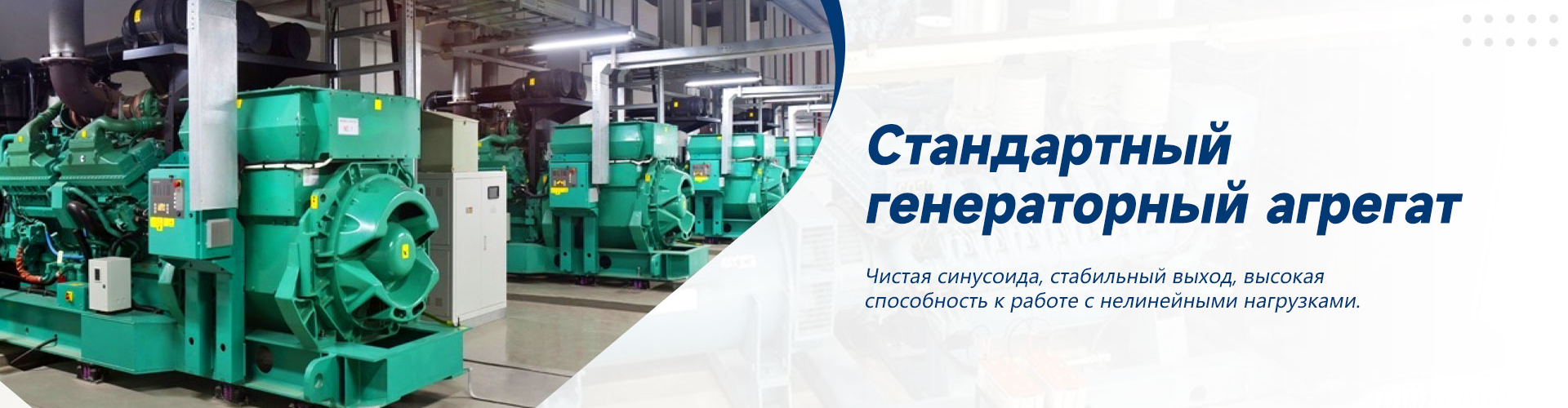
The key is that these companies are not reinventing the wheel. They take proven Chinese engine platforms (often R4105, R6105 diesel, less often gasoline Honda clones), standard Leroy Somer alternators or their local equivalents, and package them in a single casing with the Wilson nameplate. Their strength is in customization. Need 50Hz, but with a stronger heatsink for the Middle East? Please. Do you need a specific casing for installation in a container? Let's do it.
One of the striking examples of this approach is the companyYuke (Shandong) Electrical Technology Co.,Ltd. They don't just sell generators, but position themselves as a full-cycle technological enterprise. Looked at their websitevoyoko.ru— it’s clear that they rely on turnkey engineering. This is the next level, I didn’t just sell the box. For them, Wilson is probably one of the working brands in the portfolio, for which they can offer development, supply, and installation. This is important for understanding one of the buyer segments.
Portrait of the main buyer: not who you think
There are a lot of stereotypes here. It seems that since the price is average, small construction sites or garage cooperatives take them. The reality is more complicated. They can be roughly divided into three large groups.
The first is subcontractors and service companies working for large Western or Russian concessionaires. Let's say there is a contract for servicing a network of telecom towers somewhere in Siberia. The tender requires a backup power source. Buying an expensive Cummins or SDMO for each tower is ruinous. And Wilson, with its price tag and the presence of service centers (albeit not everywhere), is just right. For them, the main thing is to comply with the formal requirements of the contract and stay within the budget. Reliability is needed, but not cosmic, since the loads, as a rule, are not peak.
The second group is small and medium-sized businesses in regions with an unstable network. We are talking about small industries, workshops, refrigerated warehouses, private clinics. For them, a generator is not a backup, but often the main source of energy for part of the day. They don’t have the money for premium, but they’re also scared to take outright rubbish from the market - simple ones are more expensive. Wilson falls into their corridor of trust: a brand (even if not a global one), there is at least some kind of guarantee, and in theory, spare parts can be found. Often they are led through companies likeYuke Electric, which can offer not just sale, but a turnkey solution with load calculation and installation.
The third, less obvious group is state or municipal procurement in the framework of small tenders, where there is a requirement for the country of origin or where branding is a formal criterion for admission. Wilson, being a registered trademark, passes these criteria better than NoName's Generac Model XYZ.
Why choose them? Analysis on the fingers
Price, of course, is the first thing. But not the only thing. If everything was only in it, they would buy even cheaper noname. There are nuances.
Detailing. Wilson often has more comprehensive equipment than its direct competitors in the same price segment. Not just a complete generator, but with a basic set of cables, sometimes with a winter starter as standard, with more or less readable documentation in Russian. This is a huge plus for the installer who will install it in the field. No need to run around looking for adapters.
Supplier adaptability. I worked with one of them - they asked me to change the design of the frame for attachment to a specific foundation. At the Cummins plant you wouldn’t be held accountable for such amateurish behavior. And here - the technical department (often the same engineering manager) sent a 3D model a day later and said the price. This is appreciated in projects where there is a lot of non-standard.
But there is also a downside. Documentation and certificates are sometimes a mess. A batch may arrive where the passport for the same generator indicates different standards. Or the certificate of conformity hangs on a one-day company. This is a headache for the purchasing department of a large client, which must check everything. Risk that is included in the price.
Typical usage scenarios and rakes
Most often they are installed as a permanent or long-term reserve. For emergency starting, once a year is also an option, but here they may lose to more expensive brands in terms of automation reliability. I saw several cases at medium-sized facilities: a Wilson 200 kW generator worked in tandem with a diesel boiler to heat a small village. It worked for three years almost non-stop until a new substation was built. The engine, of course, was overhauled during this time, but served its purpose.
But for construction sites with high load cycles (sudden starts of welding machines, concrete mixers) it is not the best choice. The voltage and frequency regulation system of budget models often fails to cope, the speed fluctuates. This kills both the connected equipment and the reputation of the generator. Here it is better to look at specialized construction series, but Wilson does not always have them, or it will be a completely different price.
Another bad point is spare parts. Officially they are. In fact, you can wait a month or more for a bearing for an alternator or a fuel pump for a specific model. Experienced buyers immediately order extended spare parts, and even more experienced buyers learn to look for analogues. The engine is usually Chinese Perkins/Lovol or Weichai, this is easier. But with electronic control units it’s a lottery.
Competitors and alternatives: where are the same buyers looking?
Wilson doesn't exist in a vacuum. Its direct competitors are the same branded Chinese generators: Fubag (some models), Wert, some Elitech lines. The difference between them is often only the color of the casing and the aggressiveness of the distributor in the local market.
When the budget allows adding 15-25%, the buyer looks towards Turkish Gürsel or Italian M.T.E. (which, in fact, are also often assembled in China, but with better control). This is another level of assembly and pre-sale inspection.
An alternative route that some choose is to work directly with an engineering company. This is where we return toYuke Electric LLC. Instead of choosing from the Wilson catalog, the client comes to them with a technical specification: It is necessary to provide 150 kW for a pumping station, with an automatic transfer switch, in a container design, to be delivered in accordance with GOST R…. They no longer care what nameplate is on the body. Their job is to design and deliver a working system. And they can build it with Wilson components if it fits the requirements. In this case, the buyer is no longer someone looking for a Wilson generator, but someone looking for a turnkey solution. And there are more and more such clients.
Results: prospects and which way the wind is blowing
So who are the main buyers? To summarize: these are pragmatists with a limited, but not impoverished budget, for whom a generator is a tool, not a premium asset. Often these are specialists who know first-hand what can be repaired with a soldering iron and what cannot.
The market is changing. Previously, they only took it if it worked, but now they are increasingly asking about efficiency at partial loads, noise level, and the possibility of integration into a smart home or dispatch system. Wilson and similar brands are forced to catch up, add a CAN bus and smarter controllers. But their trump card - flexibility and price - remains.
Will they move into a more expensive segment? Hardly. Their niche is the reliable middle peasant. And those who have grown out of this niche begin to look not at the brand of the generator, but at the competence of the integrator who will correctly select, install and maintain this generator. And this is where the story with buyers comes full circle: ultimately, they do not buy hardware with a nameplate, but the confidence that there will be light. And Wilson, for many, is a pretty convincing symbol of that confidence for the money.
-


-
-


WeChat

-
WeChat