

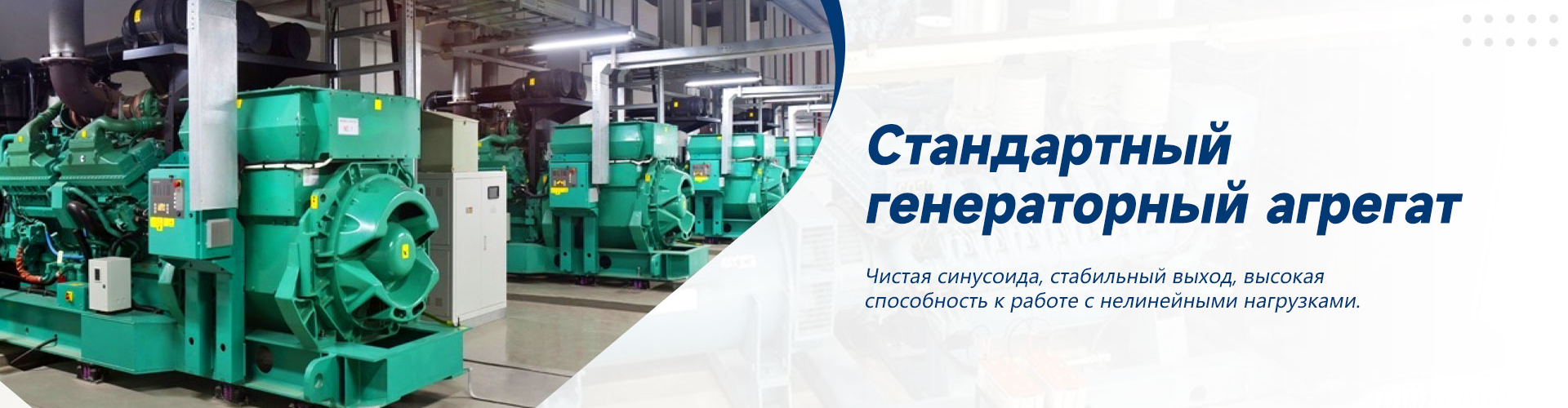
Is China the main buyer of generators?
2026-01-01
I often see this question in discussions. Many people immediately imagine giant construction sites and factories buying tons of equipment. But reality, as usual, is more complex and interesting. If we talk about net imports of finished generator sets, China is far from being in first place. Its role is different: it is the largest producer and consumer of components, as well as a key player in the supply chain for local markets around the world. Now I will explain what I mean.
Where do the legs of a myth come from?
The main buyer misconception often arises from aggregate statistics. You look at the data on world trade - China appears in the top in terms of volumes. But if you dig deeper, it turns out that a significant part of these supplies are not final products for the domestic market, but either components for subsequent assembly or re-export. Many European and Asian manufacturers order engines, alternators, and control panels from China in order to then assemble the installation at home and sell it under their own brand. It turns out that he is generating statistics, but as a node in the global network, and not as the end point of consumption.
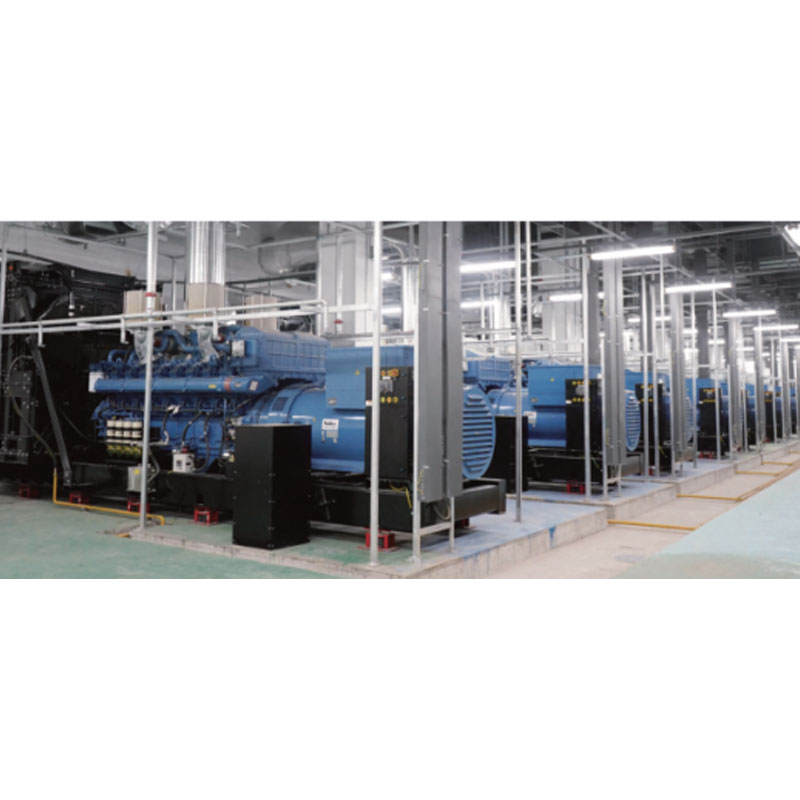
The second point is the domestic market. It is definitely huge. But its structure is specific. Mass demand is not so much megawatt-class diesel generators for stadiums (although there are such projects), but solutions for small and medium-sized businesses, backup power for commercial real estate, telecom facilities, as well as gasoline and inverter generators for domestic use. Here China is indeed the main buyer, but precisely in this segment, which is often not in focus on the global market.
I personally encountered how clients from the CIS, seeing Chinese brands on every corner, concluded that they were totally imported by China. In fact, these brands are often local; they produce for the domestic market and for export. A striking example is a company likeYuke (Shandong) Electrical Technology Co.,Ltd(Yuke Electric). Looked at their websitevoyoko.ru— it is clear that they position themselves as an innovative enterprise with a full cycle: R&D, production, engineering. This is a typical model: they do not so much buy ready-made generators as create and sell technological solutions, often for a specific project. Their history, coming from the DEVER Electric team since 2003, is just an example of evolution from, perhaps, assembly to in-house development.
What China Really Buys: Core and Periphery
If we put myths aside, the key import items are high-tech components and solutions for specific tasks. For example, high-power gas turbine units for energy districts or special class marine power plants. Here, Chinese companies do act as strategic buyers, but the transactions are isolated, valuable and do not create a mass image.
Much more often, imports go inside the chain. A Chinese manufacturer assembling a diesel generator set for export to Africa may purchase a German Deep Sea control system or a British Stamford generator. Why? Because for that market this is a sign of quality and a condition of the contract. It turns out that China formally buys, but is essentially an integrator and reseller. This is a critical nuance to understanding his role.
Another layer is licensed technologies and joint productions. Instead of simply buying a batch of generators, the Chinese company enters into a technology transfer agreement, localizes production of key components and then scales it up. Therefore, direct imports are often replaced by more complex forms of cooperation. I observed how this works in practice: first, there are several trial deliveries of finished products, then the delivery of CKD kits, and after a couple of years, a unit is assembled at a local plant, 80% consisting of locally produced parts, but using original technology and under the quality control of the copyright holder.
Failures and lessons: when buying does not mean implementing
I would like to give an example from my own experience that well illustrates the difficulties. Several years ago, we participated in a tender for the supply of powerful diesel generators for a large logistics hub in the border region. The customer wanted reliable German hardware. We proposed a proven scheme: MTU engine, Leroy-Somer generator, assembly and integration at a European partner plant. A competitor, closely associated with Chinese manufacturers, offered an option: similar hardware, but assembled in China at a factory with a German license, the price is 25% lower.
The customer chose the second option. It would seem that everything is logical: China acted here as a buyer of German technologies (licenses, possibly some components) and a manufacturer of the final product. But at the commissioning stage, problems began: adapting the control system to local climatic conditions (sharp changes in temperature and humidity) turned out to be crude. Engineers from Europe came three times, Chinese specialists worked on site for a month. The equipment eventually worked, but the launch schedule was missed, and the total cost of ownership (including downtime and additional work) was equal to our original offer.
The conclusion that I made then (and which was confirmed later): China is brilliant at mass, standardized production and chain optimization. But when it comes to complex adaptation, fine-tuning for non-standard conditions, or projects where it is not the price that is critical, but the uninterrupted life cycle, his role as the main buyer and assembler falters. He learns from this quickly, but there is still a gap.
The role of integrator companies like Yuke Electric
This is where the importance of new types of companies comes into play, which blur the boundaries between buyer, manufacturer and developer. Let's take for exampleYuke Electric LLC. Judging by the description, this is not just a plant, but a technological enterprise that combines R&D, technical consulting and engineering. For such a company, the question is: does China buy generators? sounds incorrect.
Rather, they buy (or independently develop) technologies, knowledge, and patents. And the output is not a generator, but a solution for energy supply, which may include equipment of different origins, proprietary software, design and service. In their case, China acts as an intellectual hub that processes global technological trends into specific products for its needs and for export. Looking at their website, it is clear that the emphasis is on innovation and a full range of services - this is the modern answer.
Such companies often become a channel through which, on the contrary, Chinese technological solutions (for example, in the field of hybrid systems or energy management) are purchased or implemented abroad. It turns out to be a two-way flow: China purchases the core (high technology) for complex tasks and exports packaged, optimized solutions for the mass market. And in this sense, he is the main player, but not in a simple buyer-seller paradigm.
Bottom line: not a buyer, but a system player
So is China the main buyer of generators? If we mean by this the purchase of finished products for internal use - no, and in the foreseeable future there will not be. Its economic and industrial model is built on something else.
It is the main manufacturer, main integrator and one of the main consumers in the low and medium power segment. It is a key link in the global value chain for generator equipment, often acting as a scaling and cost-cutting force. And it is increasingly becoming a source of technological solutions, especially in the field of alternative and hybrid energy.
So the next time you see import statistics, ask yourself two questions: What exactly is being imported - the finished product or the brains and components? and For what purposes - for domestic consumption or for subsequent re-export as part of another product?. The answers to these will give a much more accurate picture than any headline. Reality is always in the details and in the movement of goods and technologies along a complex, non-linear trajectory. China in this trajectory is not a point of departure or destination, but rather a powerful gravitational node.
-


-
-


WeChat

-
WeChat