

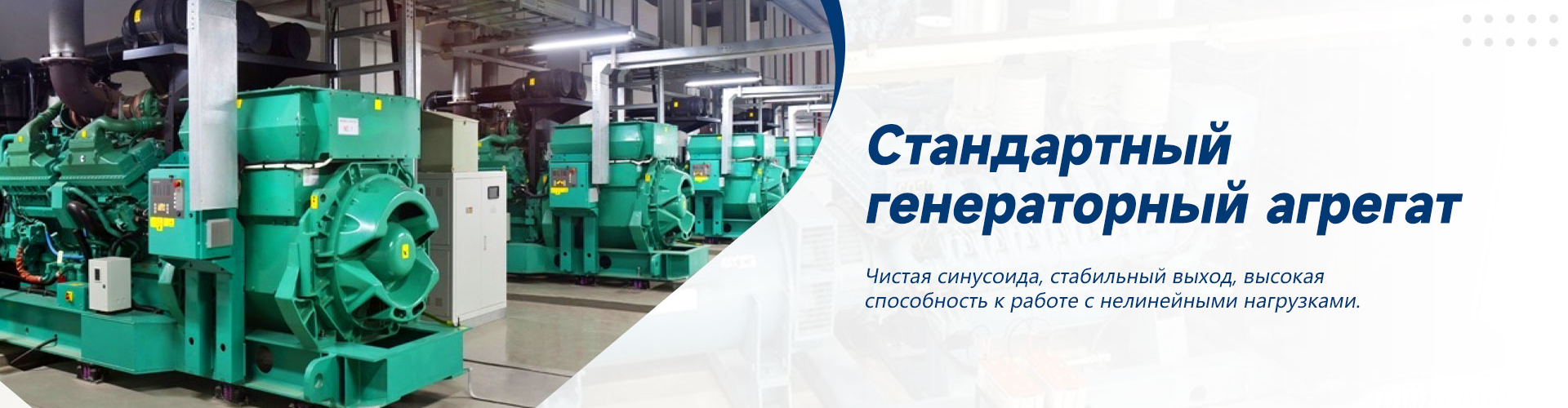
Chinese diesel generators: who is the main buyer?
2026-01-03
I often hear the same question, especially from new suppliers or investors who are just looking at the market. Everyone thinks that the main buyers are large industrial holdings or government agencies that purchase powerful installations of hundreds of kW. In fact, the picture is much more complex and interesting. If everything were so simple, our business would not consist of constant analysis and, sometimes, quite unexpected discoveries.
Waiting vs. Reality: portrait of the buyer
When we first started promoting products, for example, through a platform likeYuke (Shandong) Electrical Technology Co.,Ltd, also proceeded from standard logic. The key seemed to be power and price per kilowatt. But real requests began to quickly make adjustments.
It turned out that the mass segment is by no means gigawatt stations. These are medium and small businesses that often operate in conditions of an unstable or completely absent central network. We are talking about small industries, workshops, farms, temporary construction sites. They need a reliable, unpretentious "workhorse" at 20-200 kW, which can be quickly started, serviced without a highly qualified engineer and which will not “eat up” all profits in fuel.
This is where the main advantage of many Chinese manufacturers lies. The point is not to make the cheapest unit, but to make one that is reliable enough for these specific operating conditions. The experience of the DEVER Electric Energy Technology team behind Yuke Electric since 2003 just shows the importance of this adaptation - not just to sell hardware, but to offer a solution to the problem.
Geography of demand: not only capitals and raw material regions
It is logical to assume that the main purchases come from regions with developed industry or mining areas. This is true, but only partly. Often, more active and stable demand is formed where the infrastructure lags behind the pace of local business.
For example, we saw a surge of interest not in traditional oil and gas areas, but in agricultural regions, where processing plants began to develop. Or in small towns, where medium-sized chain retail has arrived, but the power grids cannot withstand peak loads from refrigeration equipment. For them, the generator is not an emergency, but often the main or backup source for a continuous cycle of operation.
At the same time, the buyer has become much more intelligent. Previously, the main question was “how much does it cost?”. Now one of the first sounds is: “What engine?” Yuchai, Weichai, Cummins? Controller - Deep Sea, ComAp??. The customer already knows the key component brands, and this is a game changer. Just collect ?no name? - it won’t work anymore.
Price, quality and the myth of “cheap China?”
There are a lot of stereotypes here. Yes, there is enormous price pressure. But the "main buyer" today is not someone who is looking for the cheapest. He is looking for the optimal ratio. Because the cost of downtime due to a generator breakdown at the same construction site can be many times greater than the savings on purchase.
We came across it from our own experience: we supplied a batch of inexpensive generators with an engine from a little-known manufacturer. It seems like all the tests passed. But under conditions of constant operation at 80% of the load, the resource began to be developed many times faster. The client was not so much angry about the breakdown as about the downtime of his equipment. Not only did they lose him, but also potential recommendations. The lesson was tough - now we always discuss real operating conditions and often advise choosing a model with a power reserve and a proven power unit, even if it is a little more expensive.
Companies that likeYuke Electric, focus on R&D and engineering consulting, in this situation they win. They can not only sell the unit, but also help you choose a configuration and recommend a solution for specific tasks - for example, for parallel operation or with high starting currents.
Sales channels: from Alibaba to word of mouth?
Who the final buyer is depends largely on the channel through which he came. Large wholesale quantities often go through tenders or direct contracts with manufacturers. But the segment of medium and small purchases is interesting.
Regional dealers and integrators still play a huge role here. These are people who are “on the ground”, they know local entrepreneurs and understand their problems. They can deliver, install, show how to maintain. Trust in them is often higher than in a beautiful website. Therefore, it is critically important for the supplier to work with such partners, to provide them with technical support and working documentation in Russian.
Websitevoyoko.ru- this is one of the business cards, digital representation. But real contracts are often born after lengthy negotiations, exchange of technical specifications, and sometimes after the client travels to production in China to see the assembly line and tests with his own eyes.
Trends and the future: what is the “main buyer” looking for? Tomorrow?
Demand is changing. If earlier the main question was “is there electricity?”, now more and more often the question is “what is it like?” We are talking about the quality of electricity for sensitive equipment, about fuel economy, about noise levels, about the possibility of remote monitoring and control.
The buyer increasingly wants not just a generator, but an energy solution. For example, a hybrid system: solar panels, batteries and a diesel generator as a backup. Or a heat recovery system. This is the next level, where it is not prices that compete, but engineering competencies.
That is why in the description of companies such asYuke (Shandong) Electrical Technology Co.,Ltd, you see not just “sale of generators”, but a full cycle: R&D, consulting, supply, construction. Because the ?main buyer? it gets more difficult. He doesn’t want a product, but a reliable partner who will solve his energy supply problem as a whole. And this, perhaps, is the answer to the question from the title. The main buyer today is a pragmatic businessman who values reliability and an adequate cost of ownership, and he is increasingly finding this among offers from competent Chinese manufacturers and engineering companies.
-


-
-


WeChat

-
WeChat