

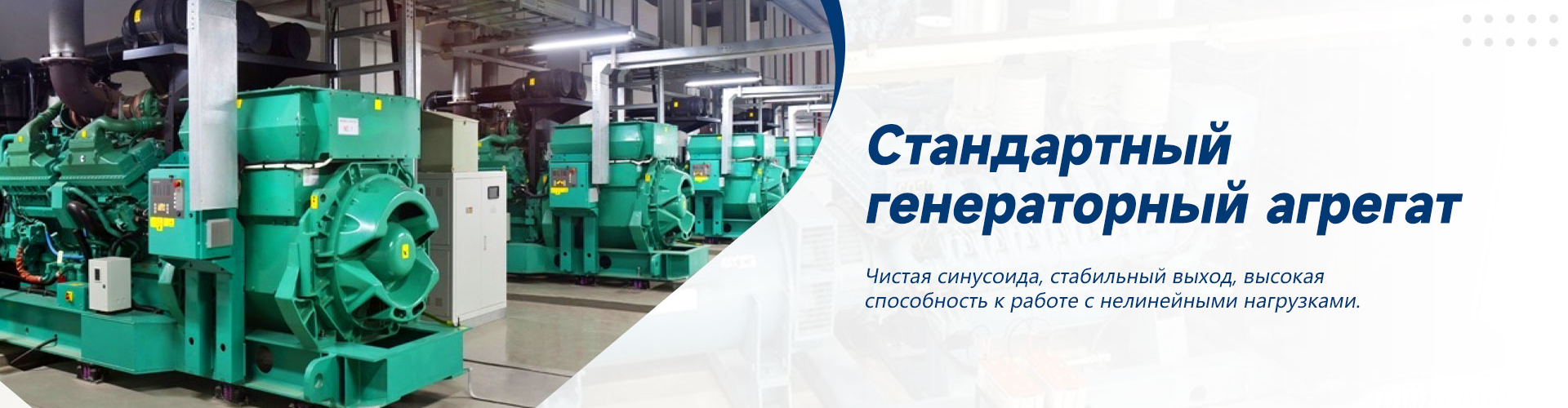
Chinese diesel generators: who is the main buyer?
2026-01-05
I often hear the same question, and from people who are just looking at the market: “Well, China produces everything, so that means everyone buys them?” This is where the first misconception lies. Production volumes are colossal, yes, but the structure of demand is a much more interesting and heterogeneous thing. If we discard general words like ?construction? or “industry?”, but digging into the specifics of supply, installation and, more importantly, long-term operation, the picture becomes clearer. And the main buyer of a Chinese diesel engine is by no means an abstract “factory”, but a very specific type of customer, for whom the key factors are not so much the initial price, but the total cost of ownership and predictability of work in harsh conditions. I made my conclusions by observing which installations ultimately do not return with warranty cards, but quietly work for years somewhere in a remote quarry or at a backup communications facility.
The myth about the "budget segment" and a real niche
At first, we, like many, thought that the main strength of Chinese generators was their low price for small businesses or summer residents. It turned out to be a trap. The one who is simply looking for “cheaper” prices often turns out to be the most problematic client: expectations are too high, the operation is incorrect, and any breakdown is a scandal. The real one, the “main one” the buyer came from where they did not expect: from the sphere of medium and even large industrial support, where a reliable, maintainable and unpretentiousdiesel generatorfor permanent or long-term work. Not to turn it on sometimes, but so that it “stands in the system?” and silently did his job.
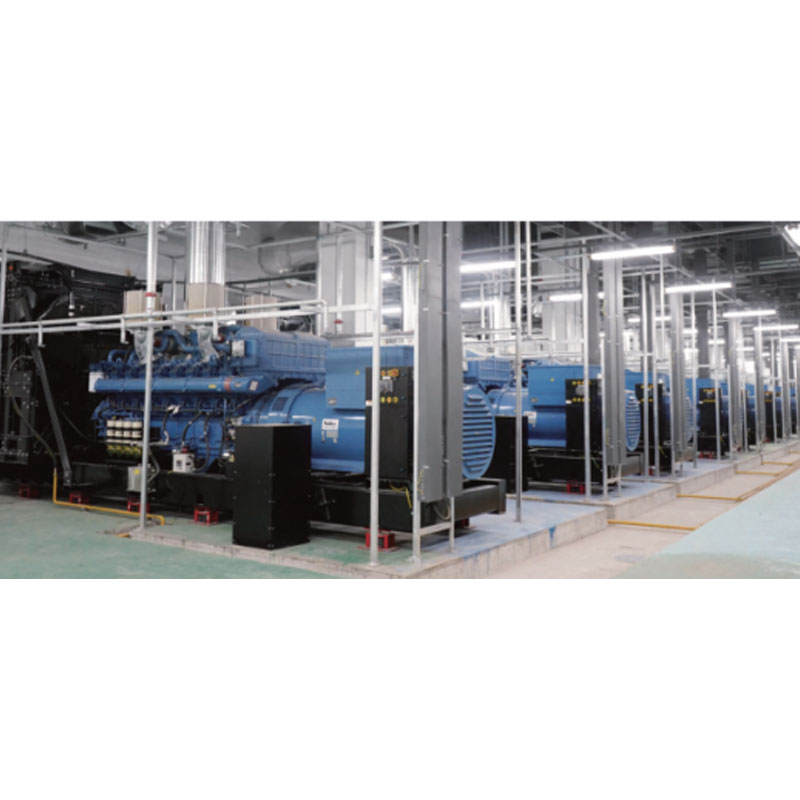
A striking example is telecommunications companies and base station operators. For them, a sudden shutdown means multimillion-dollar losses. European installations for them are often excessive in price, and budget “nonames” - too risky. This is where proven Chinese brands like those that supply, for example,Yuke (Shandong) Electrical Technology Co.,Ltd. Their websitevoyoko.ruis a good example of how not just a product, but a complex is positioned: from consultation to construction. Their team from DEVER Electric, founded back in 2003, feels this - they do not sell hardware, but guaranteed energy independence. This is what this buyer values.
Another category is contractors on government or infrastructure projects in the CIS countries, Africa, and Southeast Asia. There are specifics: financing is often tight, deadlines are tight, operating conditions are dust, heat, unstable fuel. You need a device that will survive, and its maintenance can be carried out by local, not the most highly qualified, mechanics. Design simplicity and availability of spare parts for many Chinese models become a decisive argument against more “delicate” ones. analogues.
Key selection criteria for the ?main buyer?
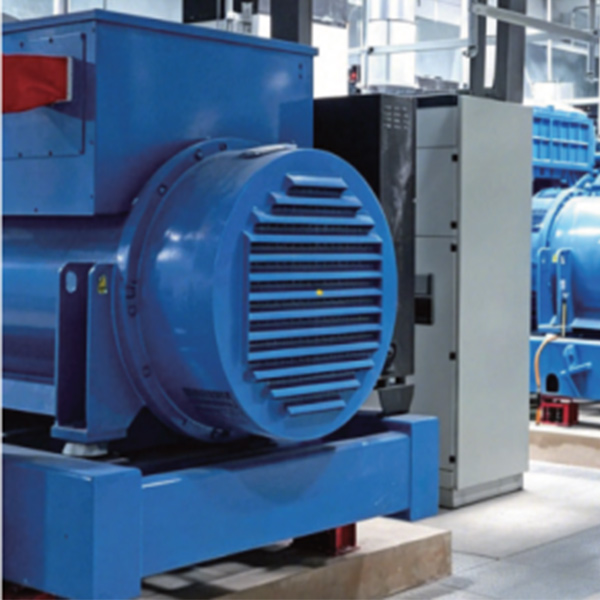
Based on experience, this buyer almost never looks at one parameter. A whole checklist is formed, often unofficial. The first is, oddly enough, not power, butengine compatibility. Widespread units in China based on Perkins, Volvo, MTU diesel engines or their licensed analogues (like Chinese Cummins) are a green light. Everyone knows these engines, everyone knows how to service them, spare parts are available anywhere in the world. Generator part - similar, Marathon, Leroy-Somer, Stanford. If the ?stuffing? recognizable, more trustworthy.
The second is the availability of full service and engineering support from the supplier. This is where many importers stumble. They sold the container and forgot about it. And a company like Yuke Electric, judging by their description as an “innovative enterprise combining R&D, technical consulting and construction,” is betting on just that. For a serious buyer, the opportunity to receive not just warranty repairs, but advice on integration into your energy system is priceless. This relieves a lot of headaches.
Third is adaptation. It seems like a small thing, but: a control panel with a localized menu (full Russian, not a crooked translation), the ability to add a noise reduction casing or an all-weather hood for a specific climate, the manufacturer’s willingness to make changes to the connection diagram. We somehow lost a good contract precisely because a competitor offered not a standard model, but a slightly modified one to suit the customer’s specifications - they moved the terminal box and added sensors. Chinese mid-tier manufacturers are now very flexible in this regard.
Stories from practice: where they make mistakes and where they win
I’ll tell you about one bad experience that taught me a lot. We ordered a batch of generators for a network of gas stations. The price was great, the specs on paper were perfect. But they didn’t take into account one nuance: the operating mode. The units were designed for long-term operation at 70-80% load, and at gas stations they were turned on briefly, but often, and often at low load. This led to rapid coking and problems with fuel equipment. The manufacturer complained that you were using it incorrectly. But it was necessary to initially discuss not only kilowatts, but alsooperating mode. Now this is the first question in the questionnaire.
Here's a positive case. A company mining non-metallic materials in Kazakhstan. Dust, frost, work 24/7. We chose a Chinese generator based on a Dongfeng engine (Cummins license) with reinforced air filters and heated fuel system. The key was that the supplier (this was just one of the partner companies working on the Yuke model) sent an engineer to start up and train the local mechanic. The installation operated for three years before the first major intervention, which is an excellent result for such conditions. The buyer was not satisfied with the price, but with the lack of downtime.
Another point is logistics and customs. ?Main buyer? often has established channels. He doesn’t want to bother with customs clearance of individual containers. Therefore, they value suppliers who take care of the entire cycle “from plant to site” and have experience and understanding of the customs legislation of the EAEU. Is this the same “invisible” one? a job that distinguishes just a seller from a partner.
Evolution of demand: what happens next?
Previously, the main question was “will it start?” Now - “how does it integrate into my smart network?” Demand is shifting towards generators with developed telemetry systems, remote monitoring, and compatibility with new generation ATS (automatic transfer switch) systems. Chinese manufacturers have caught on to this. It is no longer uncommon for a factory to offer not just a control module, but a cloud service for monitoring the operating parameters of all of its client’s installations. This is the next level.
The second trend is hybridization and work with renewable energy sources. The buyer, especially in remote regions, is thinking about the combination of “solar panels + diesel generator + storage system”. He does not need an isolated device, but a component that can work in such a combination, controlled by a single controller. Those who offer such solutions (and on the websitevoyoko.ru, by the way, it is clear that the company positions itself precisely as an integrator of technologies) will capture this growing segment.
And finally, ecology. Emission requirements are becoming stricter even in developing countries. The buyer of the future is one who looks not only at the price per kilowatt, but also at compliance with environmental classes. Chinese factories are actively developing production to Stage II, Tier 4 standards. Anyone who ignores this factor will lose large government and infrastructure contracts.
Result: portrait of the main buyer
So who is he? This is a professional, pragmatic customer, often representing medium or large businesses in the fields of telecoms, mining, processing, agriculture or a contractor on infrastructure projects. He buys not at the lowest price in the catalog, but at the lowest risks and total costs for 5-10 years in advance.
The following are critically important to him: the recognition and reliability of the power platform (engine + generator), the availability of a full cycle of engineering support from the supplier (from design to service), the adaptability of equipment to specific conditions and, what is becoming increasingly important, the ability to integrate into more complex energy systems.
Therefore, to answer the question from the title: the main buyer of Chinese diesel generators is not the one who is looking for the “cheapest Chinese generator?”. This is someone who is looking for “the most predictable and reliable source of energy for business, which, moreover, has an optimal price-quality ratio?”. And Chinese industry, together with competent integrators likeYuke Electric, is getting better and better at meeting this particular need, pushing into the background the old myths about “cheap consumer goods?”. They have learned to sell reliability packaged at a competitive price. And this is exactly what the market needs.
-


-
-


WeChat

-
WeChat