

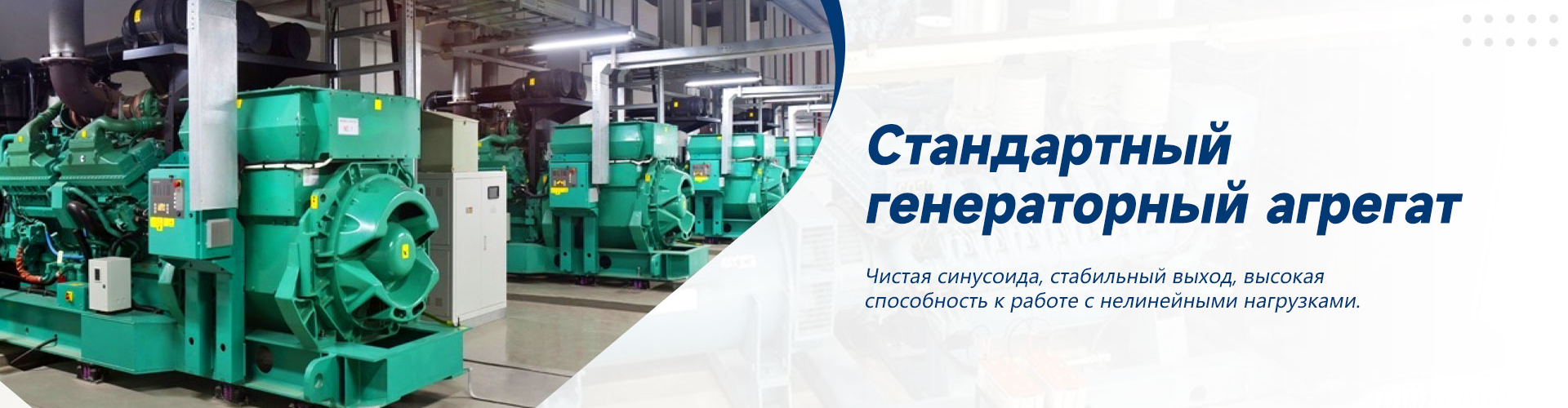
Is China the main buyer of gas generators?
2026-01-07
The question in the title sounds like the answer is obvious. Many in the industry will immediately say “yes”, and in general they are right. But if you dig deeper, as happens in practice, everything turns out to be not so simple. ?Main buyer? - this is not only about volumes, but also about the structure of demand, the specifics of application and, most importantly, about who is behind this demand. It is often thought that China is one huge market with the same needs. In fact, these are dozens of different markets within the country, and gas generators are needed there for completely different reasons.
Where do the legs of demand come from?
When we talk about the Chinese market, we cannot discount the underlying infrastructure. Yes, the country has covered networks, but there is a nuance. We are talking not only about remote areas, although there, of course, diesel and gas installations are the basis. The situation in industrial clusters is much more interesting, especially in provinces like Shandong, Jiangsu, and Guangdong. There, production operates 24/7, and any, even short-term, power outage leads to colossal losses. This is where the question of backup energy supply arises.
But ?reserve? - the concept is flexible. Previously, they often installed diesel generators and calmed down. Now the trend is shifting towardsgas piston power plants(GPU), and the reason is not only environmental. It all comes down to economics and fuel availability. The development of the gas pipeline network, including projects like the Power of Siberia, and the growth of LNG terminals have made natural gas much more accessible. And if there is associated petroleum gas or biogas from wastewater treatment plants nearby, the project pays off even faster.
I had experience in supplying equipment for a textile factory near Ningbo. The customer initially wanted a powerful diesel generator, but after a detailed calculation of the fuel component and taking into account the already installed gas line, the choice fell on a gas generator. The key argument was not so much the price of fuel, but the stability of its supply and the possibility of a long-term contract. This is a typical story.
Not just a reserve: cogeneration as a trend
This is where many outside-in analysts often miss the mark. They see China as a market for simple backup installations. However, the real growth driver iscogeneration plants(CHP based on GPU). Government policy actively encourages distributed energy and increasing the overall efficiency of power systems. For a plant that needs both electricity and heat for technological processes (drying, water heating, workshop heating), cogeneration is the ideal solution.
Worked on a project for a food processing plant in Shandong. The task there was to utilize biogas from wastewater treatment plants. Simply burning it is wasteful. We installed a gas piston cogeneration unit, which covered about 30% of the demand for electricity and almost completely for process steam. The payback period was less than 4 years. And there are more and more such examples, especially in the food, chemical, and textile industries.
It’s no longer just “buying a gas generator”. This is a comprehensive energy solution, where the generator itself is only the core of the system. It requires competent engineering, integration with existing networks, and resolution of issues with permissions and connections. Companies that simply offer “hardware” are gradually losing their positions in this market.
Who is the real buyer?
But this is perhaps the most interesting moment. The end user is, of course, industrial enterprises. But the key players who shape demand and make decisions are often not themselves, but engineering companies and integrators. They take care of the entire cycle: from audit and design to installation and service.
For example, when we consider cooperation with Chinese partners, we look not only at equipment manufacturers, but also at strong engineering players. One such example isYuke (Shandong) Electrical Technology Co.,Ltd(YuKe Electric). By going to their websitevoyoko.ru, it is clear that their approach is exactly in line with the trends: it is not just a sale, but a full cycle from R&D and technical consulting to construction and services. The company, which grew out of the DEVER team founded back in 2003 in Qingdao, understands local specifics from the inside. For such an integratorgas generating unitsis one of the key elements in the line of solutions for distributed energy, and their choice is determined by specific project parameters, and not abstract preferences.
Direct sales to the manufacturer also happen, but usually in the case of very large, flagship projects, where the customer has its own strong technical team. In most cases, the plant trusts the integrator.
What problems do you encounter in practice?
There are no ideal projects. One of the common problems is inflated expectations from the efficiency or service life of equipment. Someone somewhere heard beautiful numbers and demands their strict observance in any conditions. We have to explain that the specifications are valid for ideal gas, ideal cooling conditions and timely maintenance. But in reality, the gas may contain impurities, the inlet water temperature may be higher than calculated, and maintenance intervals may shift “according to production needs.”
Another stumbling block is service and availability of spare parts. China is a huge territory. Placing the installation in a remote area is half the battle. Providing prompt service support is an order of magnitude more difficult task. Successful integrators, like Yuke Electric, build their own spare parts logistics and have a network of service partners. Without this, even the best equipment will quickly develop a bad reputation.
There was an unsuccessful experience in the early years: they supplied good American engines for the GPU to one plant in Henan province. But they didn’t think through the channel for supplying consumables and training local personnel. As a result, the first breakdown resulted in several weeks of downtime, and the client was furious. Lesson learned: equipment is only part of the package.
So is China the main buyer?
Returning to the title. Yes, China is one of the largest, if not the largest, market in terms of volume. But it is important to understand what kind of market this is. This is not a market for simple “boxes” that turn on when the lights go out. This is an increasingly mature, technologically advanced and demanding market for integrated energy solutions, where the gas generator is an important, but not the only component.
Demand here is driven not by fashion, but by tough economics, environmental regulation and the desire for energy independence at the individual enterprise level. The buyer has become picky. It compares not only the price per kilowatt, but also the total cost of ownership, noise level, compatibility with monitoring systems, and the terms of the service contract.
Therefore, for a supplier or integrator, the question is not “whether to sell to China?”, but “what kind of solution and with what service can we offer here?” The one who gives a complete, transparent and technologically verified answer will be successful in this market. And the market itself, with its complex structure and high requirements, will continue to grow, confirming its status as a key, but extremely difficult player in the world of gas generation.
-


-
-


WeChat

-
WeChat