

Chinese diesel generators: who is the main buyer?
2026-01-10
I often hear the same question, especially from new suppliers from China: Who should we sell to? It seems that the answer lies on the surface - everyone who has money. But in practice, everything comes down to specifics: power, budget, operating conditions and, most importantly, an understanding of why the buyer needs this installation at all. Many people mistakenly believe that the main market is large industrial giants. In part, yes, but this is just the tip of the iceberg, and the competition there is hellish. The real, daily story of sales and deliveries of Chinese diesel engines unfolds in another segment.
The Big Industry Misconception
When I first started working with Chinese factories, I myself sinned by aiming at large tenders, to replace a fleet of generators on oil rigs or in metallurgy. I quickly realized that this was a dead end for a small or medium-sized trading company. The orders are huge, but they have long had their own, proven channels, their own agreements. A Chinese generator for 500 kW is a consumable item for them, but they have been choosing it for years and undergo a bunch of certifications. Competing with local Caterpillar or Cummins dealers on their field is almost useless if you are not ready to invest incredible amounts of money in the logistics of service and spare parts.
The main problem is not even the price. Chinese installations, especially from top factories like Weichai, Yuchai, SDEC, are no longer consumer goods in terms of quality. The problem is perception and long-term commitment. A large purchasing plant asks not only about the price, but also how service will be organized in 5 years in the Arctic? And this is where many importers stumble. Personal experience: we lost a good contract for 3 installations precisely because we could not provide a clear, contractually supported service coverage plan for the entire service life. Selling is half the battle.
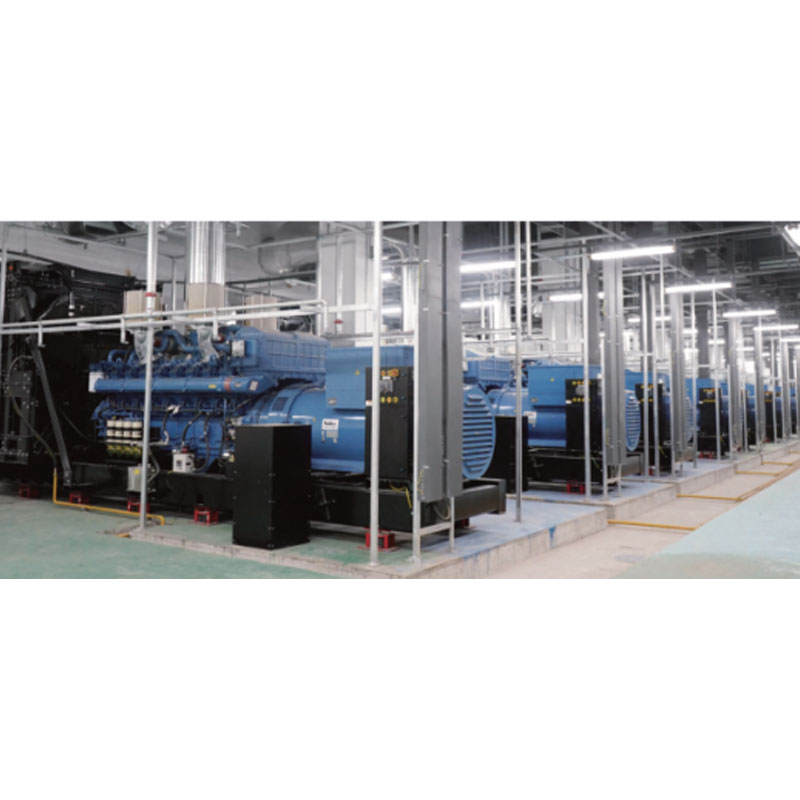
Therefore, industry is the main buyer for a wide range of importers and integrators only in name. It creates volume, but is not an entry point for most. The exception is when you work not just as a reseller, but as an engineering-oriented company that can take on the entire cycle. Like for exampleYuke (Shandong) Electrical Technology Co.,Ltd. Looked at their websitevoyoko.ru- it is clear that they position themselves not as simple sellers, but as a technological enterprise with a full cycle: from R&D to construction. For such players, a large industrial customer is its own story. But there are only a few of them on the market.
Real bread: medium and small businesses, infrastructure
But where real life is in full swing is in the 20-400 kW segment. This is where our main buyer is located. To generalize, these are owners of medium-sized businesses who cannot afford downtime. Not a giant plant, but, say, a food processing plant in a regional center, a network of car washes, a logistics warehouse, a plastic processing workshop. They often have an old power grid, outages, and the cost of downtime is hundreds of thousands per day. They are not looking for a name, but for a reliable and affordable solution here and now.
This is where Chinese diesel generators hit their stride. The price/quality/functionality ratio is ideal for them. Let me give you an example: a standard 100 kW installation on a chassis from Weichai. The client is the owner of a cold storage warehouse. His key questions were: Will it start at -25?, How much diesel will it consume at 75% load? and If it breaks, where can I get a spare part and how long should I wait? In terms of the first and second points, Chinese technology will now give a head start to many European analogues in its class - the air preparation and control systems have become very worthy. But on the third... This is a sore spot.
The success of sales in this segment depends 90% on the importer’s willingness to create the illusion (or better yet, reality) of local service. You can’t just bring a container and forget it. We need spare parts in a warehouse in the region, we need at least one trained mechanic who can come. We stepped on this rake ourselves: we sold a batch of generators for the construction of a remote hotel. When one of the high-pressure fuel pumps jammed, we had to transport it from China. Simple - a month. The client was naturally furious. After that, we began to form a warehouse of the most popular spare parts (fuel pumps, injectors, starters, control units) - this immediately eliminated 70% of after-sales problems.
Hidden Champion: Service Industry and Warranty Reserve
There is another category of buyers that is often forgotten, but in vain. This is not a business in the literal sense, but organizations for which the generator is not a tool for making money, but insurance against reputational or even legal risks. Let's take, for example, private medical centers, laboratories, small data hosts, premium residential complexes. For them, stopping the power supply is not lost profit, but collapse, courts, and loss of face.
Their requirements are specific. Often they do not need a lot of power, but they do need impeccable automation (AVR), quiet operation (the hood sound insulation is on par), and appearance also matters - the installation should not look like a rusty box in the corner. This is where Chinese manufacturers have made a huge leap over the past 5 years. You can order the same diesel generator in an all-weather casing with customized painting, with a remote monitoring system via GSM. And in terms of price, it will still be 1.5-2 times cheaper than its European counterpart with similar options.
The key to working with these clients is documentation and compliance. They need not only certificates, but also detailed connection diagrams and test reports. They can send their electrician to tinker with the control panel. And if he finds a collective farm there, good for nothing. Therefore, it is important to work not with the first plant you come across, but with those who understand these subtleties. From my experience I can say that companies that are initially designed for complex solutions, like the sameYuke Electric(judging by the description, they combine development, supply and construction), they have an advantage here. They think in terms of a project, not just a product unit.
Geography matters: from Moscow to remote villages
The portrait of the main buyer varies greatly depending on the geographical coordinate. In Moscow, St. Petersburg, million-plus cities, this is most often the same reserve for a guarantee in commercial real estate or a strict contractor at a construction site who needs equipment for the period of connection to the networks. The requirements are high, the competition is fierce, and you have to sell mainly due to additional services: fast delivery, turnkey installation, extended warranty.
But in the regions, especially in remote ones - Siberia, the North, the Far East - everything is different. HereChinese diesel generatorFrom the category of optional equipment, it moves into the category of a means of survival for businesses and sometimes even villages. The buyer here can be the owner of a gold mining artel, a fish processing plant in Kamchatka, or simply the administration of a village where electricity is provided according to a schedule. They don't care about the brand. They are worried about whether it will start in -40 degree frost, how easy it is to fix it in the field, and how long it will last until capital repairs are completed.
For this market, the Chinese make special northern versions: with reinforced heaters, oil and fuel heaters, and frost-resistant plastics. And what is important is maintainability. The design of many Chinese engines is simpler than some refined European ones, which means that a local craftsman with a set of keys has a better chance of handling it. We supplied installations for logging in the Arkhangelsk region - so the mechanics there themselves sorted out the engines, ordering spare parts through us. By the way, they did not break down more often than others, but the simplicity of the design was the decisive factor for the client.
Not a buyer, but a partner: the role of the integrator and the future of the market
So who is in charge anyway? According to my observations, there is no abstract buyer. There are specific niches, each with its own logic. But they have one thing in common: they are not buying hardware, but a solution to their electricity problem. Therefore, the main link in the chain is not the Chinese factory or the end user, but a competent importer-integrator. Someone who can choose the right installation, adapt it to local conditions (climate, fuel, standards), provide day-after-tomorrow service and give one guarantee for the entire complex.
The future, I am sure, lies with companies that move away from the sell-and-give model. The client is tired of this. He wants to have one responsible partner. As in descriptionYuke (Shandong) Electrical Technology Co.,Ltd— technical consulting, custom processing, construction. This is the formula for success. The buyer becomes a partner for the long life cycle of the equipment.
Conclusion? The main buyer of Chinese diesel generators is the one whose problems you, as a supplier, are ready to solve comprehensively. Be it the owner of a provincial bakery who needs stable operation of the ovens, or the management company of an elite clinic that cannot risk its reputation. Chinese technology has long since left the era of cheapness, and the market has understood this. Now the question is who can convey this understanding to the end user, backing it up not with words, but with real service infrastructure and engineering expertise. That's who the real hunt is now.
-


-
-


WeChat

-
WeChat