

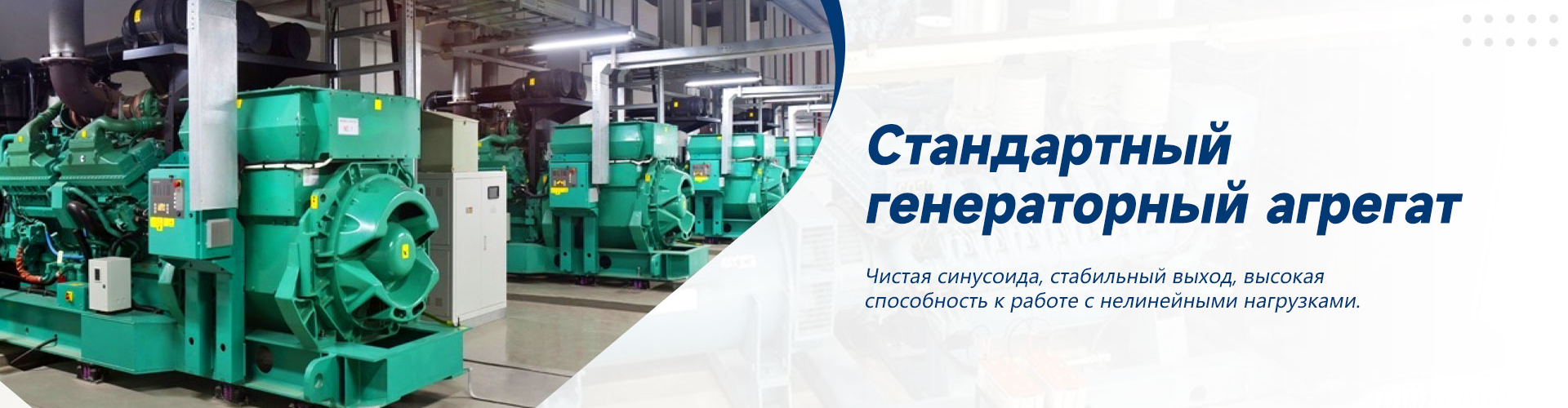
Is China the main buyer of diesel generators?
2026-01-10
I often hear this question, and it always makes me smile a little. Because it is formulated from the point of view of an external observer who sees only the tip of the iceberg - the huge volumes of production in China. But if you dig deeper into supply chains and logistics, the picture becomes much more interesting and less clear-cut. China is certainly a gigantic market, but to call it a “major buyer”? in the classical sense, this is a simplification that does not take into account where and why these generators end up going. Let's figure it out.
Production capacity and domestic demand: two sides of the coin
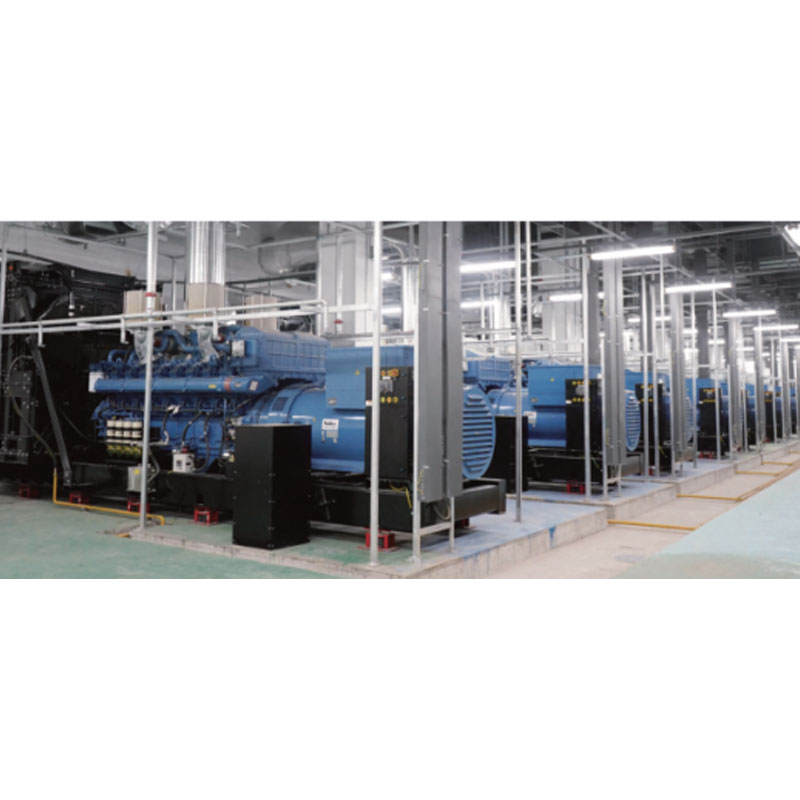
Let's start with the obvious: China is the world's factory. A colossal number of diesel power plants of all capacities and configurations are produced here. Companies likeYuke (Shandong) Electrical Technology Co.,Ltd(Yuke Electric) is a prime example. Go to their websitevoyoko.ru— and you see a picture typical of a serious Chinese manufacturer: a wide range of models, an emphasis on R&D and comprehensive “turnkey” solutions. This is not just an assembly shop, these are technological enterprises with deep engineering.
But here’s the paradox: a significant part of this production is oriented outward. There is, of course, domestic demand, and it is huge - infrastructure projects, backup power for growing cities, industrial zones. However, its structure is specific. State and large private projects often require localized solutions and participation in tenders, which creates its own, somewhat separate market. The same Yuke Electric, judging by their portfolio, works on both internal and external projects, which is the standard for survival today.
Where then is the ?purchase?? It often occurs within the production chain. One plant buys a Weichai engine from another, a block container from a third, and a control system from a fourth. This is more intra-Chinese cooperation than final consumption. Therefore, looking at the statistics of “production”, it is easy to draw a false conclusion about “consumption”.
Re-export and global chains: where does everything actually flow?
And here is the most interesting thing. The vast supply of Chinese diesel generators was never intended to operate domestically. They come off the assembly line according to the requirements of a specific foreign market: with a certain certification (CE, UL), specific equipment, even painted to match the client’s color. China acts as the main supplier, not the buyer.
I myself have encountered this in practice. I remember a project for a mining company in Africa. The technical specifications came from a German engineering holding, but procurement and customization went through a partner in Qingdao. The actual "buyer" there was an African company, but in China’s customs statistics it could be classified as an export of a finished product. And there are thousands of such schemes.
This is especially true for the markets of Asia, Africa and the Middle East. Demand there is often higher due to less developed network infrastructure or harsh climatic conditions. And Chinese manufacturers, with their flexibility and price advantage, are covering this demand. Sites likevoyoko.ruwork as showcases specifically for this global flow.
Purchasing specifics: not only “buy”, but also “make for yourself?”
Another nuance that blurs the line between “purchase?” and “order?”. Large international players or mining corporations often do not buy ready-made generators off the shelf. They host contract manufacturing (OEM/ODM) in China. That is, they provide their technical specifications, design, brand, and the Chinese factory (such as the team behind Yuke Electric, founded in 2003) embodies this in metal.
This is a complex process full of pitfalls. I remember how we spent three months agreeing on a noise reduction system for a Scandinavian company. Their engineers nitpicked every decibel, demanding test reports using methods our technicians had never heard of before. In the end they did it, but the deadlines moved forward. This is not a simple purchase, it is a joint development.
In such cases, China is the manufacturing and engineering site. The financial flow comes from a foreign customer, and the ?purchase? components (engines, alternators) is already an internal operation of the Chinese manufacturer to fulfill an external contract. Confused again.
The influence of domestic politics and ?green? turning
Internal factors cannot be ignored either. Environmental regulation in China is becoming stricter. In key regions (for example, in the vicinity of Beijing), it is becoming increasingly difficult to use diesel generators for constant operation - the highest class exhaust cleaning systems are needed, which increases the cost of the product. This is pushing demand within China towards gas or hybrid systems.
Consequently, part of the production capacity focused on diesel is naturally reoriented towards export to countries with less stringent standards. This is another argument against the “main buyer” thesis. Rather, it is a “master adapter” that adapts the product to the requirements of a particular market.
Interestingly, Chinese companies are now promoting “green” themselves. export solutions. On the samevoyoko.ruin the technology section there is probably a mention of innovation and efficiency - this is already a response to a global trend, and not just to internal rules.
Personal experience and unsuccessful attempts
Working with different clients, I realized that the direct question is “Who is the main buyer?” often leads to a dead end. Once we tried to build analytics specifically for end consumers in China. We collected a bunch of data on procurement of government agencies and large factories. But the picture came out blurry because it did not take into account the re-export capacities of the same factories and the shadow (or semi-shadow) turnover of equipment.
More revealing was the analysis of requests on portals like Alibaba and specific requests that come directly to manufacturers’ websites. They show that requests from Nigeria, Vietnam, the UAE and Kazakhstan in terms of frequency and specificity (they often ask about marine performance or the tropics) sometimes overtake domestic ones. Internal requests more often relate to service, spare parts or modernization of the existing fleet.
Therefore, my conclusion, based on practice, is this: China is the main node in the global network of production, customization and distribution of diesel generators. It is a colossal consumer of components and manufacturing services, and a large but not absolutely dominant domestic market. Call him the “main buyer?” ready-made installations means not seeing all the complexity and multi-layered nature of this business, where the same installation can change through three “owners”. in documents before working in a mine in another part of the world.
-


-
-


WeChat

-
WeChat