

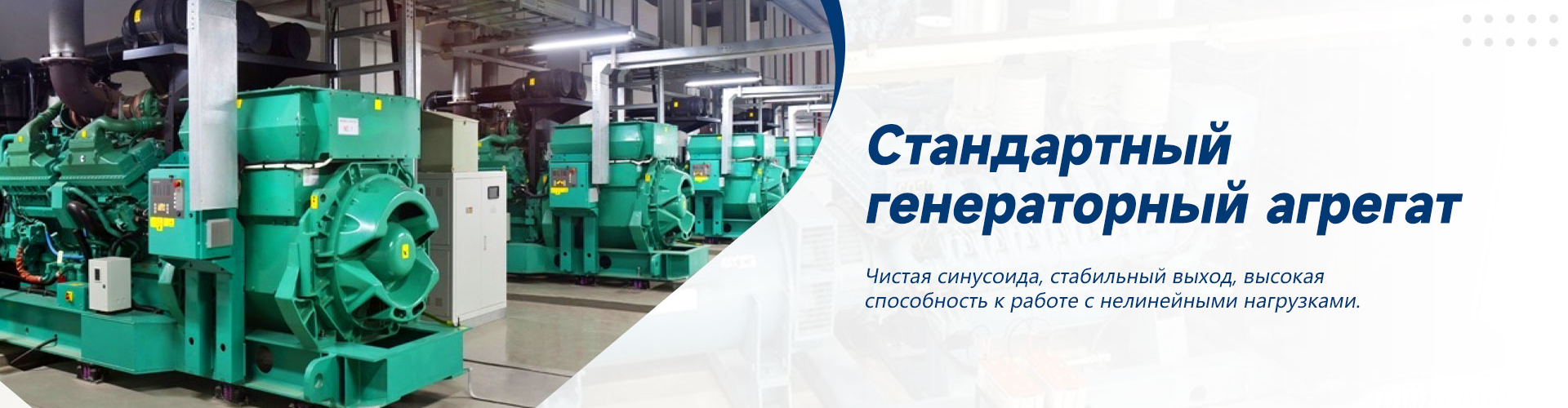
Chinese diesel generators: who is the main buyer?
2026-01-18
I often hear the same question, especially from new suppliers or investors looking at our market: Who, in the end, is buying up all these Chinese diesel power plants? The answer that one would like to give immediately - everything - actually says nothing. Because behind all this lies a completely different logic of purchase, different pain points and, most importantly, different degrees of understanding of what they are buying. Many people mistakenly believe that the main driver is low price, period. But if everything were so simple, we would not waste so much time on technical consultations and would not see so many equipment returns due to banal non-compliance with operating conditions.
Not the construction segment everyone thinks about
Yes, construction sites are a showcase. You see yellow generator casings everywhere and hear their roar. But here the buyer is often not the final customer, but a contractor who rents equipment or buys the cheapest option for the duration of the project. For them, the key is the availability of spare parts (most often, Perkins, Cummins, Deutz) and survivability in spartan conditions. The brand of the generator itself is secondary. They rarely chaseChinese diesel generatorswith automatic transfer systems (ATS) or noise reduction. Their choice is, conditionally, a 50-200 kW workhorse, which is not a pity.
However, real volume, and more importantly, stable, recurring demand, does not come from here. Construction is cyclical. But objects where the power plant is part of an engineering system, insurance against losses, are where the main solvent buyer is hiding. A striking example is chains of grocery stores, warehouses with refrigeration units, and small industries. For them, an hour of downtime means direct financial losses and damage to goods. They are willing to pay more for reliability, but within a reasonable budget. Here, Chinese installations with a high-quality power unit (for example, with a Weichai engine, if we talk about powerful models) and a high-quality generator (Leroy Somer, Stanford) pose serious competition to European brands.
We had an illustrative case: a customer was looking for a diesel generator set for backup power to a boiler room in a small village. At first I looked at a cheap option with a little-known filling. After long conversations and risk calculations (what will happen if the generator does not start in cold weather of -30°C?) I settled on the configuration fromYuke (Shandong) Electrical Technology Co.,Ltd. Their proposal included pre-heating, a reinforced automatic transfer switch, and, most importantly, a detailed engineering calculation for its specific loads. This is not just selling hardware, it is selling a working solution. Their websitevoyoko.ru, is often used as a directory by our more technically savvy clients.
Communication providers and data centers: silent consumers of premium China
Here's a segment that many people overlook. Small cellular hubs, hubs of Internet providers, server rooms of regional companies. They need absolute uninterrupted operation, but the scale is not like that of giants like Yandex, who need entire power plants. Their budget is limited and their requirements are high.
Here it is not so much the engines that come to the fore (although their quality is critical), but rather the control and monitoring system. Demand fordiesel generatorswith the possibility of integration into a general dispatch system (remote start, parameter control, statistics collection) is growing by leaps and bounds. Chinese manufacturers, especially those like Yuke Electric, which position themselves as innovative technology enterprises, have quickly embraced this trend. Their control panels are now often not inferior in functionality to branded European ones, but are several times cheaper.
We supplied a batch of such smart diesel generator sets for a network of telecom hubs in Siberia. The client initially wanted something simpler. But when we took the scenario apart: failure of the city network, automatic start, load, monitoring of fuel consumption in autonomous mode, reporting for engineers - it became clear that a simple generator was not suitable. We took the option with a customized panel. This is precisely the area where China ceases to be just a factory and becomes a co-developer.
Where we are sometimes set on fire: nuances of adaptation and service
None of this looks like a rosy success. The main headache that shapes the opinion of Chinese equipment is the unpreparedness for our realities out of the box. The climate is a different matter. The standard Chinese equipment for the temperate zone is not about our -40°C. Batteries, oil, fuel filters - all this requires replacement or addition before commissioning. Not every seller honestly warns about this, hence the myths about unreliability.
The second problem is the service history. A Weichai or Cummins engine assembled in China under license is one thing. But some analogue, assembled in a small workshop, is completely different. A supplier who values \u200b\u200breputation like the sameYuke Electric, always provides full traceability: where the engine comes from, who the alternator manufacturer is, what certificates. Without this, it’s a game of roulette. I have personally seen generators with a wild hodgepodge inside: an American controller, a Chinese engine, an Italian generator, assembled in a hurry with inconsistencies in phase voltages.
And the third point is the logistics of spare parts. Selling a generator is 30% of the work. The remaining 70% is to ensure its life cycle. Serious players, who, as indicated in Yuke’s description, are engaged not only in supplies, but also in the full cycle from R&D to engineering construction, have established supply channels for original components. One-dayers do not. A customer who bought 15% cheaper may discover after two years that the only way to replace a fuel pump is with a similar one that will last six months.
Regional cross-section: from Moscow to the Far East
The buyer persona varies greatly depending on geography. In Central Russia and around million-plus cities there is more civilized demand: emphasis on automation, environmental friendliness (noise, exhaust), integration. They often work with official distributors and require EAEU certificates.
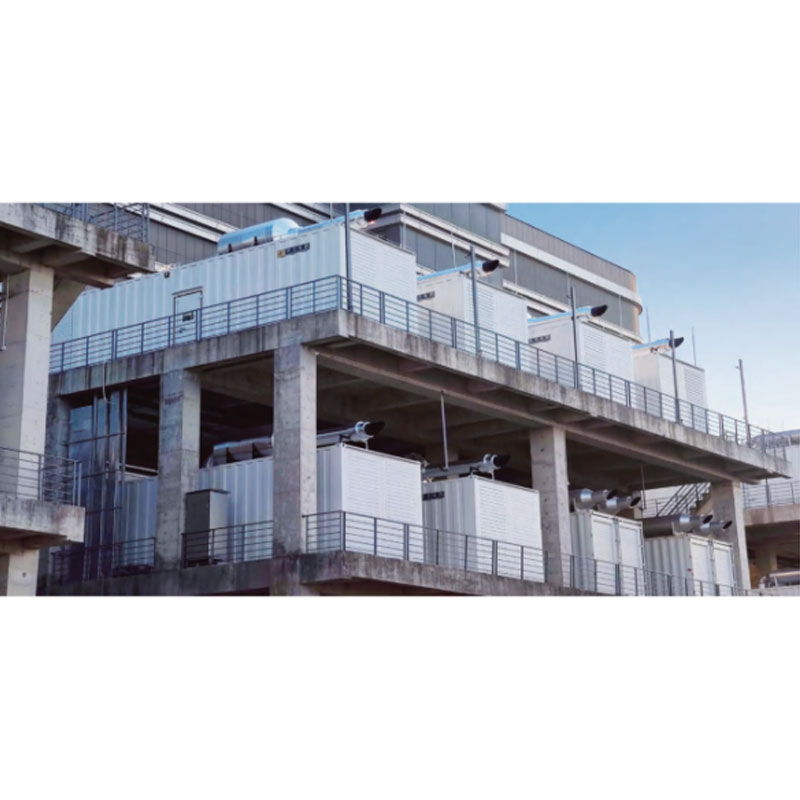
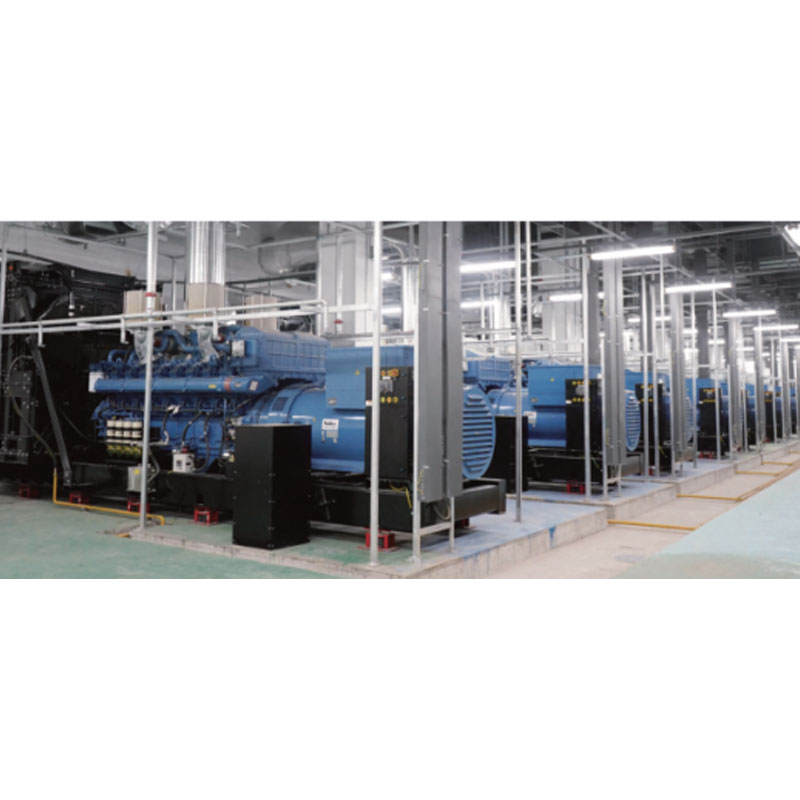
In the Urals, in Siberia, in the Far East - a different world. There the generator is often not a backup, butmain or onlysource of energy for rotational camps, geological exploration bases, and mines. Here, powerful stations are in use, from 500 kW and above, often in container version Sever. The buyer here is stern and pragmatic. It doesn't need bells and whistles, it needs to work at -50°C, so that a mechanic with a basic set of tools can fix half the systems, and so that the fuel consumption is adequate. In this segment, Chinese manufacturers, who can make a version enhanced to suit our conditions, cannot compete in terms of price/quality. The European analogue will cost 2.5-3 times more, which is often unacceptable for such projects.
Interestingly, it is precisely for such remote facilities that turnkey services offered by full-service companies become critical. Not just deliver the container, but install it, connect it, train the staff, and sign a service contract with on-site visits. This is no longer a product story, but a project story.
So, who is he, the main buyer?
To summarize, this is not one character, but three. First -technical director or chief engineera commercial enterprise (warehouse, store, factory), which is responsible for the smooth operation and considers not only the purchase cost, but also the total cost of ownership. He chooses among reliable solutions providers known to him, and not just hardware.
Second -business owner or managerin regions with poor or non-existent infrastructure. For him, the generator is an opportunity to do business in general. His choice is based on recommendations, the endurance of the equipment and the availability of service within reach.
And the third, gaining strength, isstate or quasi-state customerswithin the framework of infrastructure development programs (schools, hospitals, boiler houses). The correct package of documents, certification, formal tender requirements are important here, but price also plays a huge role. Here, Chinese manufacturers who know how to work with such documentation win.
Thus, talking about the main buyer is not entirely correct. It is more correct to talk about the mainselection criteria, which dominate the market: reliability for specific tasks, availability of service and engineering support and, yes, ultimately, economic feasibility, where cheap does not mean the purchase price, but the price of uninterrupted operation throughout the entire service life. And the Chinese manufacturers who understood this have long ceased to be just factories, but have become the very solution providers that the real, solvent market is looking for.
-


-
-


WeChat

-
WeChat