

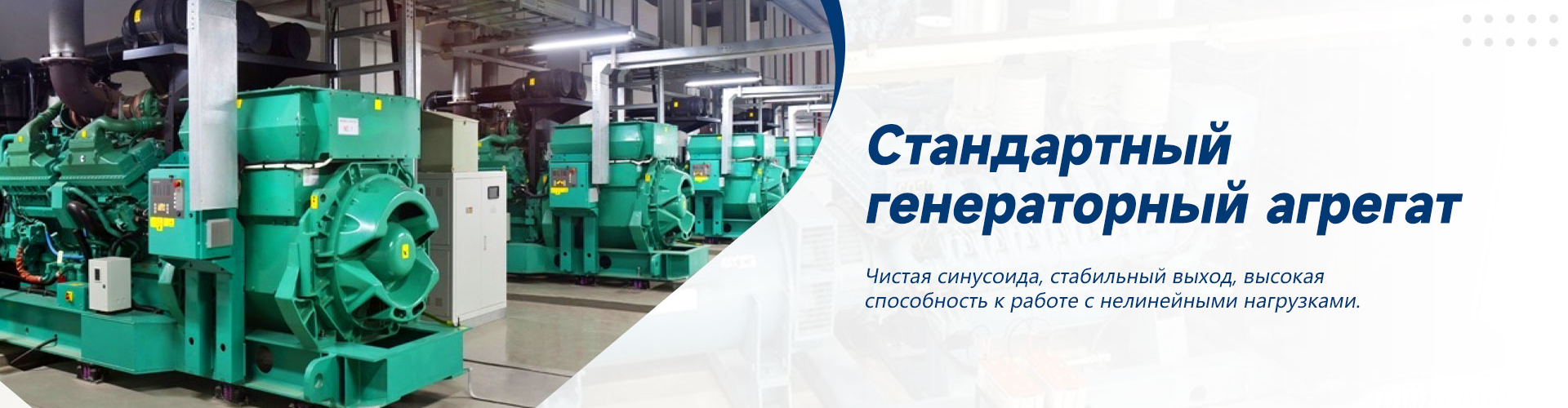
Chinese diesel power plants: 30 buyer countries?
2026-01-26
You see a headline like this in a search and immediately think: well, the marketers have gone their separate ways again. ?30 countries? - a beautiful, round number that raises questions rather than provides answers. In reality, if we talk about the Chinese diesel power plant (DPP) market, everything is much less straightforward and much more interesting. The number itself doesn’t mean anything; what matters is who these buyers are, what they buy and, most importantly, why they turned to China in the first place. I’ll try to sort it out based on what I saw myself in this market for ten years.
Where do these ?30 countries come from? and what is behind them
If we take export data, the list of 30 recipient countries for Chinese energy equipment is even a modest estimate. The problem is aggregation. It also includes CIS countries that purchaseChinese diesel power plantsfor small businesses or as backup sources for infrastructure facilities, and African states, for which this is often an issue of energy security for an entire region, and even buyers from South America or the Middle East. But the ?buyer? - the concept is flexible. This could be a one-time supply of three stations for the mine through a local distributor, or it could be a government contract to equip dozens of medical centers. When they say “30 countries,” they usually mean the first, broad cross-section.
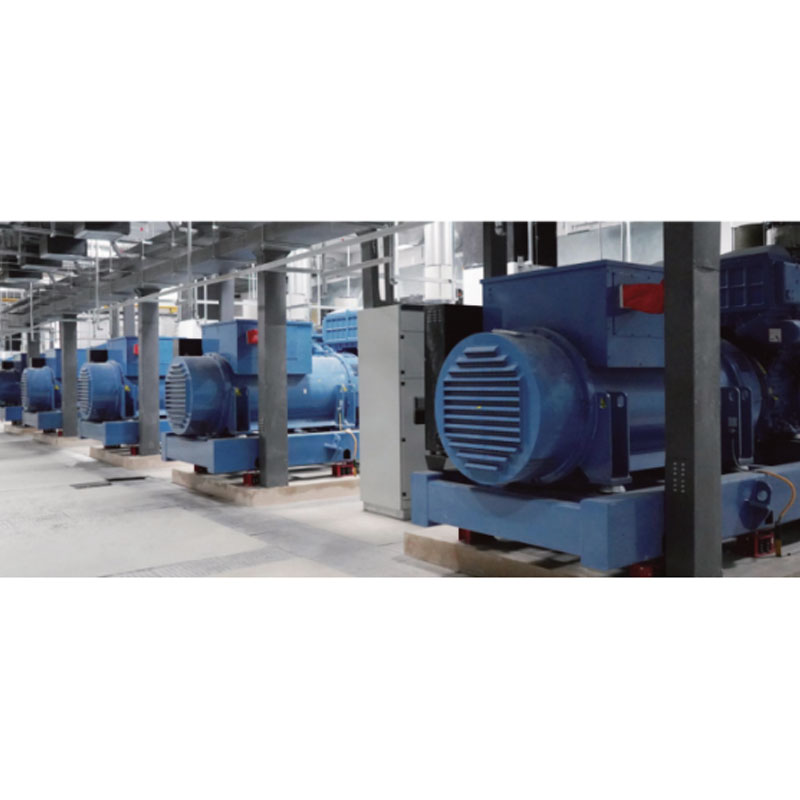
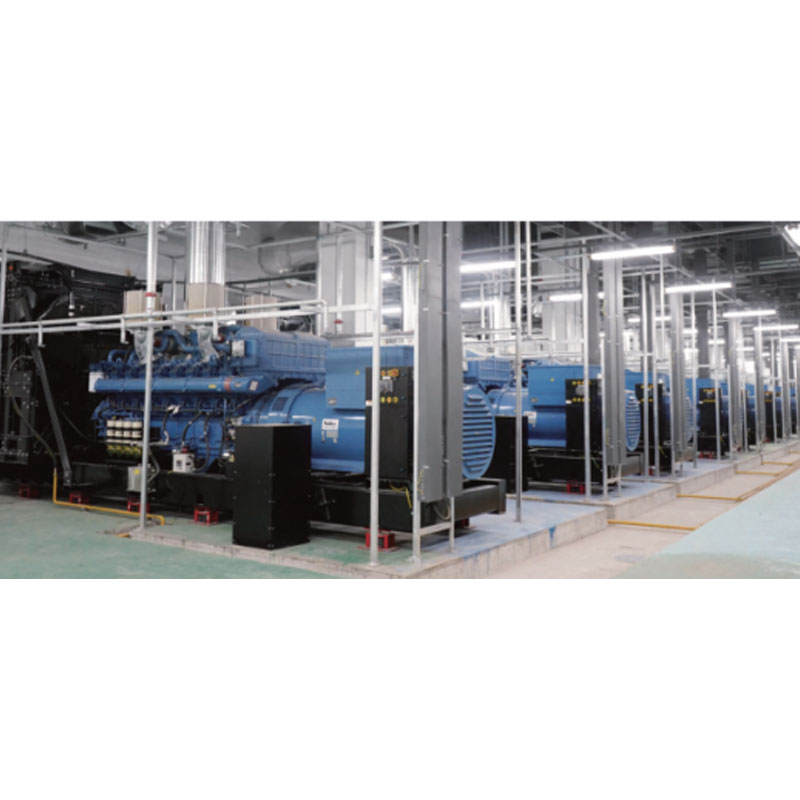
A key point that is often missed: the geography of buyers is directly related to the type of product and price segment. Conventionally, inexpensive diesel power plants based on Weichai engines or R&D engines more often go to developing economies, where the initial capital investment is critical. But the projects withdiesel power plantsbased on Cummins, MTU or even Chinese Perkins (which, by the way, have long been localized and the quality has leveled out), in full container or block-modular design - this is a different level of contracts and other countries, including those where there are strict environmental standards.
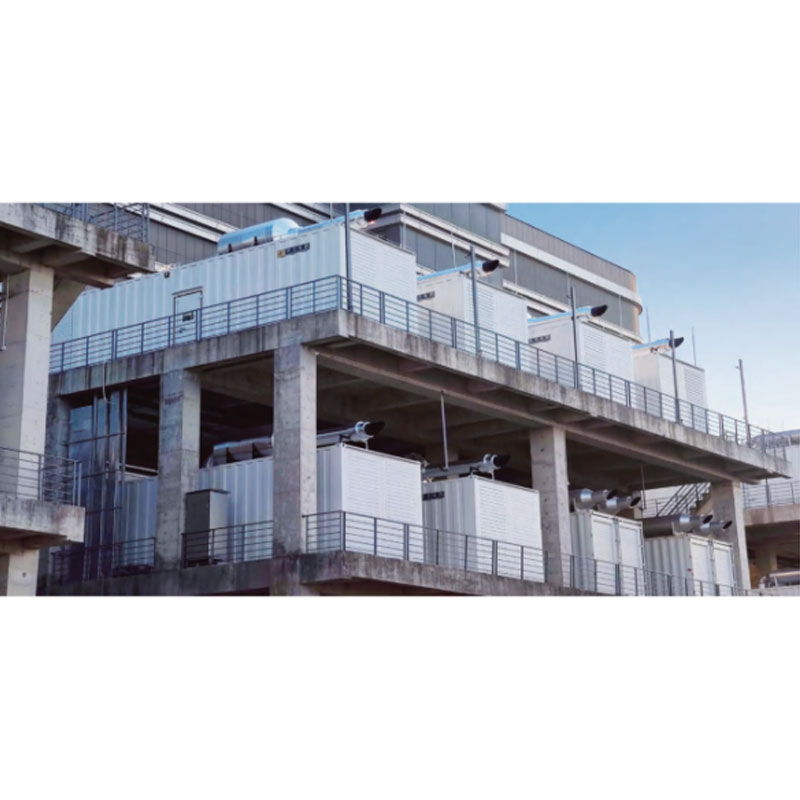
I personally came across a situation where the same Chinese manufacturer supplied equipment to both Kazakhstan and Germany. But in the first case, it was a simple station in a casing for a car service center, and in the second, a complex UPS complex (DGS + uninterruptible power supply system) for a data center, with solid containerization and compliance with noise directives. These are two completely different market niches, but in export statistics they merge into one line “DES”. So we get a large list of countries.
Why choose China? Not only the price
Yes, the initial argument is always cost. But if it were only her, the market would have collapsed long ago due to quality complaints. In fact, over the past 10-15 years, Chinese manufacturers have made huge leaps. This is not about everyone, of course. The market is segmented: there are hundreds of workshops that assemble “construction sets”. from available components, and there are companies that build production as a full-fledged engineering.
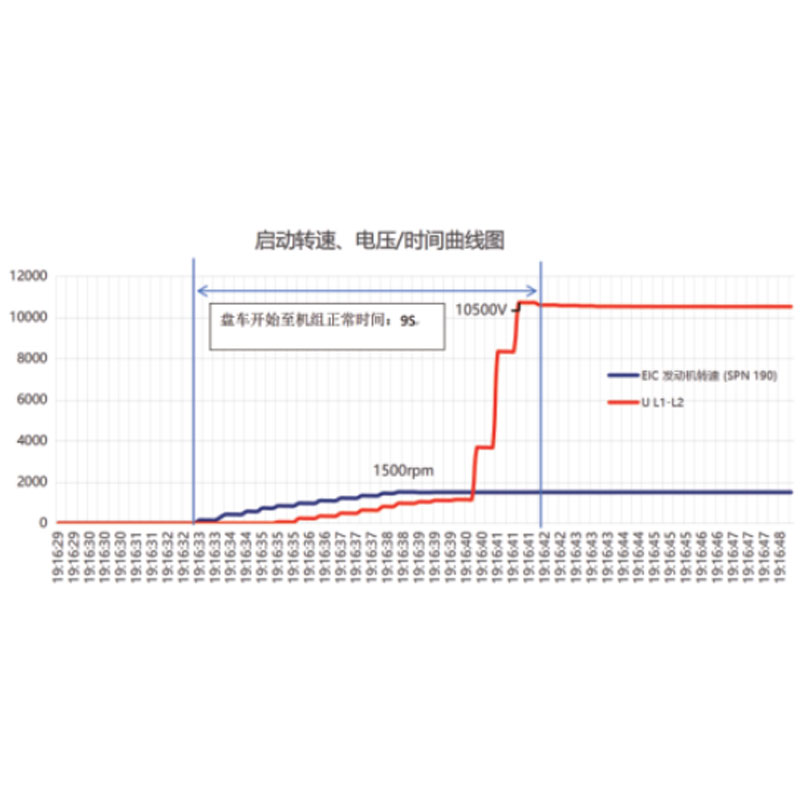
Let's take, for example, a companyYuke (Shandong) Electrical Technology Co.,Ltd(YuKe Electric). Their websitevoyoko.ruis a good example of a modern approach. The company, which grew out of the DEVER Electric team, founded back in 2003 in Qingdao, positions itself not just as an assembler, but as a technological enterprise with a full cycle: R&D, engineering, construction. This is important. Such a player offers not just a box with a motor and an alternator, but a solution - be it a station for a telecom tower in a desert environment or a backup source for a hospital with a load ramp-up time requirement.
What did clients from the same countries in Africa or Central Asia really come with? They needed adaptation. A ready-made European unit is not always designed to operate at +50°C and in high dust conditions, and its service network is thousands of kilometers away. Chinese manufacturers, especially like Yuke Electric, which are “tested” complex projects in China itself and beyond, we are often ready to modify the design: strengthen cooling systems, install special air filters, offer flexible schemes for installation supervision and training of local personnel. This is no longer a price, but a value for a specific task.
Pitfalls and how to avoid them
The experience, of course, came with its share of bumps. The most common failure of newbies in this business is focusing on technical specifications on paper. The client sees: a Weichai engine, 500 kW, the price is 30% lower than the analogue - and is ready to buy. And then it turns out that the alternator is a no-name with a low insulation class, the control system is a simple manual one, without the possibility of integration into an automated process control system, and the package does not include a muffler, batteries or cable lugs. Total cost "turnkey" grows by 25%, but the functionality does not meet expectations.
Hence the main advice that I always give: you need to demand not just a commercial proposal, but a full specification (BOM - bill of materials) indicating the models and manufacturers of ALL key components. Engine, alternator (Stamford, Leroy-Somer, Mecc Alte or Chinese analogs such as Shanghai KEPU), control system (ComAp, Deep Sea, or our own design), circuit breaker. This is exactly what you need to study. A good sign when the manufacturer is like the sameYuke Electric, openly writes on its website about cooperation with leaders in the field of components - this reduces risks.
Another pitfall is logistics and customs. The story about how a station got stuck in the port for a month due to problems with certificates or an incorrect HS code is a classic of the genre. Successful suppliers have well-established schemes for working with freight forwarders and are ready to provide a full package of documents, including certificates of origin and conformity, and often even help with preliminary consultations on customs clearance in the destination country. This is the part of the service that you pay for.
Case studies: not only to sell, but also to provide work
I’ll tell you about one project in Central Asia that well illustrates the evolution of demand. The customer neededdiesel power plantsfor a network of mining sites. The first request was typical: “give 5 stations of 800 kW each?”. During the dialogue, it became clear that the sites are scattered, the personnel are unqualified, and the fuel is sometimes “substandard.” As a result, instead of five identical units, we put together a solution: three stations in noise-absorbing casings with an enhanced fuel preparation system and automation that allows for remote control of parameters (this is for the main sections), and two simpler ones, but with a power reserve and an automatic start system when the network voltage drops (for auxiliary ones). Plus a contract for the supply of spare parts for three years and an on-site engineer for commissioning and training.
This is the very transition from selling hardware to selling solutions. The client bought not just generators, he bought a guarantee of power supply to his remote sites. After the successful launch of this project, there was talk about the next one - for a backup power system for social infrastructure facilities in the same region. A chain of trust has been built.
There was also the opposite example, when an attempt to save money on everything led to reputational losses. We delivered a batch of inexpensive diesel power plants to one of the Eastern European countries. Six months later there was a wave of complaints: oil leaks, problems with automation. It turned out that the local distributor, wanting to increase margins, put pressure on the manufacturer (not one of the top ones) in order to reduce the price as much as possible. He, in turn, replaced a number of components with cheaper ones without warning about it. As a result, everyone was left in the red: customers, the distributor, and in the long term, the reputation of Chinese equipment in that segment.
The Future: Where is the Market Heading?
Now the trend is hybridization and “smart” solutions. The demand is no longer for bare kilowatts, but for a system that can work in conjunction with solar panels, energy storage devices, be controlled remotely and predict maintenance. Chinese manufacturers are in a very advantageous position here, because this whole trend towards “green” and digital energy is rapidly developing within China itself. They quickly transfer the experience gained in the domestic market to export models.
It can be seen that companies such as the one mentionedYuke (Shandong) Electrical Technology Co.,Ltd, place emphasis on innovation and complete engineering. On their websitevoyoko.ruit is clear that they offer not just diesel power plants, but “engineering construction and services?”. This is the language of the modern market. Future ?30 buyer countries? will not buy generator sets, but energy services and guaranteed reliability.
And one more point - ecology. Emission standards (Euro 3, Euro 4, Tier) are becoming a critical selection factor for an increasing number of countries. Chinese manufacturers who have invested in meeting these regulations have a major advantage. A buyer from Europe or even Russia now looks not only at the price, but also at the emission level. And here the entire low-quality segment of the market is already cut off.
Instead of a conclusion: so how many countries are there?
Returning to the original question. 30 countries? Quite possibly even more. But the point is not counting the flags on the map. The bottom line is that Chinese diesel power plants have ceased to be synonymous with “cheap and cheerful”. The market has become stratified. There are streaming, budget products that find their buyers in times of austerity. And there are complex, turnkey engineering solutions that no longer compete on price, but on total cost of ownership, adaptability and service.
For a potential buyer from any of these 30 countries, my advice is simple: ask the right questions. Not ?how much does 100 kW cost??, but ?what solution do you propose to provide backup power to my hospital, taking into account local fuel conditions and the need to quickly load the load?? The answer to this question will tell you whether you are dealing with a competent supplier who can be a partner, or just a hardware dealer. And then the choice in favor of a high-quality Chinese manufacturer may not become a forced measure, but an absolutely conscious and profitable decision.
-


-
-


WeChat

-
WeChat